Veteran Cursor Engineer: Agent Harness Self-Eliminates via Data Flywheel

A former Cursor engineer says the Agent harness self-eliminates as models improve and via the data flywheel.
The article presents a counterintuitive idea from a former Cursor engineer: the Agent harness's ultimate goal is to eliminate itself. As model capabilities grow, compensatory designs that cover model deficiencies become redundant, driven by a data flywheel where user interactions train stronger models that further simplify the harness. Developers are advised to avoid over-engineering, invest in the data loop, and keep abstraction layers thin.
Introduction: A Counterintuitive Engineering Philosophy
As AI coding tools evolve rapidly, a point raised by a former Cursor engineer is worth pondering: the ultimate goal of the Agent harness is to eliminate itself. This sounds like a paradox—why would developers who carefully build scaffolding actively delete it? The logic behind it: when the underlying model becomes powerful enough, the engineering code that exists to compensate for model deficiencies becomes redundant instead.
What Is an Agent Harness?
In AI coding assistants like Cursor, the harness refers to the engineering framework built around the large model. It is responsible for breaking down user requests into tasks the model can understand, managing context, calling tools, parsing outputs, and providing fallbacks with rules or post-processing when the model's capabilities fall short. In short, the harness is the "adapter" between the model and real-world development tasks.
Over the past two years, much of the performance improvement in AI coding tools has depended on harness optimization. For example, through carefully designed prompt templates, tool-calling chains, and error-correction logic, even models with limited capabilities could complete complex code generation. But this veteran Cursor engineer points out that this reliance is being broken.
Context Window is a key backdrop for understanding harness design. It refers to the maximum number of tokens a model can process in a single inference (including input and output), determining "how much information the model can see at once." In tools like Cursor, user projects often far exceed the window capacity, so the harness must handle context selection and truncation: picking relevant files, compressing conversation history, and deciding which content gets priority in the prompt. Early models had small windows and weak long-context capabilities, so the harness's truncation strategy required a lot of manual rules; newer-generation models have larger windows and higher utilization of long context, so the logic originally used to "prevent overflow" and "compensate for attention decay" gradually loses its necessity. This is a concrete mechanism by which the harness self-eliminates: improvements in the model's context capability directly erode the most tedious category of engineering code in the harness.
Tool Calling / Function Calling is the core interface through which the harness collaborates with the model. The model itself does not execute code or access the file system; instead, the harness declares a set of available tools (reading files, searching, running commands, etc.), the model outputs structured call requests, and the harness executes them and feeds the results back to the model, looping until the task is complete. Therefore, much of the harness's complexity lies in tool definitions, parameter validation, error retries, and call-chain orchestration. When the model understands tool semantics more accurately and can autonomously plan multi-step calls, the call order and error-correction logic originally hardcoded by the harness can be trimmed—this is also the technical root of why "multi-step reasoning guidance" becomes redundant in the article.
Core Viewpoint: As Models Get Stronger, the Harness Automatically Shrinks
"Eventually, the models get so good that the harness can actually delete the things it needed to do to make those tasks work in the first place," he describes in the video. This process is described as "very interesting"—because it is not a deliberate reduction by humans, but rather the compensatory designs in the harness naturally becoming redundant as model capabilities improve.

For example, code-format correction, context truncation strategies, and multi-step reasoning guidance that early harnesses had to handle explicitly may, on newer-generation models, achieve the same effect with just a simple prompt. Continuing to retain this logic at this point not only increases maintenance costs but may also limit the model's room to perform.
Data Flywheel: The Driving Force of Self-Elimination
The key to why this process can continue is the data flywheel. Every interaction between users and the Agent generates feedback data—which tasks succeed, which fail, and where the model needs the harness to intervene. This data is used to train the next generation of models, and stronger models in turn allow the harness to be further simplified. This cycle repeats, creating positive acceleration.

Interestingly, the speed of the flywheel depends on product scale. As a coding tool with a large number of users, Cursor's interaction data volume provides ample fuel for model iteration. This is also why the engineer emphasizes that "the harness will eliminate itself"—the decision to eliminate does not come from the subjective judgment of the engineering team, but is an inevitable result driven by data.
Data Flywheel is a concept borrowed from business strategy, referring to a self-reinforcing cycle in which product usage generates data, data improves the product, and a better product attracts more usage. In the AI field, its specific form is usually: users' interaction trajectories in real tasks (prompts, tool calls, model outputs, success or failure signals) are collected and filtered for supervised fine-tuning or reinforcement learning, thereby training a stronger next-generation model. The key to the flywheel is not the data volume itself, but the quality of feedback signals and the speed of the closed loop—whether task success or failure can be accurately labeled, and whether failure cases can be converted into training samples. This also explains why product scale is crucial: the more users there are, the broader the long-tail tasks covered, and the more ample the fuel for model iteration. For the harness, the flywheel means that every intervention it makes to "catch" failures in real interactions can be recorded and become material for model learning, thereby reducing the need for similar fallbacks in the future.
Implications for Developers
For teams building AI Agents, this viewpoint offers several practical perspectives:
- Avoid over-engineering: Complex harnesses designed for model deficiencies may quickly become obsolete; prioritize pluggable, easily removable architectures.
- Invest in the data closed loop: The speed at which the harness is simplified is directly related to the efficiency of the data flywheel; collecting and utilizing interaction data is more important than short-term feature polishing.
- Keep abstraction layers thin: Give every layer of the harness a clear "deletion condition" so it can be quickly stripped away when model capabilities meet the bar.

Conclusion
This sharing from the veteran Cursor engineer reveals an easily overlooked rule: in AI-native applications, the value of engineering scaffolding lies not in existing permanently, but in helping the model get through the stage of insufficient capability, and then making a graceful exit. The data flywheel is the invisible engine driving this process. In the AI coding tools race, whoever can make the harness self-eliminate more efficiently will gain the upper hand when model capabilities leap forward.
One-line Summary
A former Cursor engineer believes the Agent harness will self-eliminate as models get stronger and via the data flywheel.
Paragraph Summary
The article introduces a counterintuitive idea from a former Cursor engineer: the ultimate goal of the Agent harness is to eliminate itself. The harness is the engineering adaptation layer built around large models, responsible for task decomposition, context management, tool calling, and output fallbacks, and much of the performance improvement in AI coding tools over the past two years has depended on its optimization. But as model capabilities grow, the compensatory designs that exist to cover model deficiencies (such as code-format correction, context truncation, and multi-step reasoning guidance) naturally become redundant. Driving this process is the data flywheel: user interaction feedback trains stronger models, and stronger models further simplify the harness. Based on this, the article advises developers to avoid over-engineering, invest in the data closed loop, and keep abstraction layers thin, letting the harness make a graceful exit after helping the model through its capability-deficient stage.
Related articles
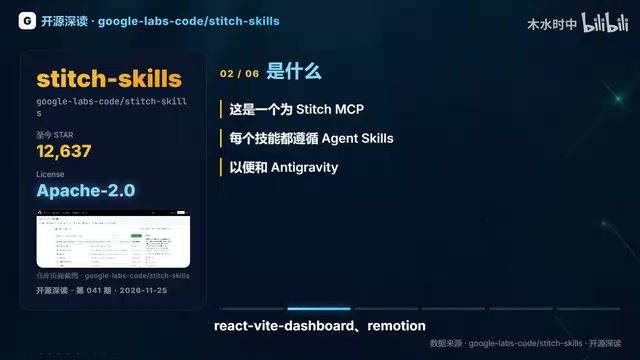
Google Stitch Skills: Connecting Coding Agents to the Design Workflow
Google Stitch Skills is an Agent Skills library following the open standard, adding a design-to-code workflow to the Stitch MCP Server. This article breaks down its three skill groups, SKILL.md directory structure, installation paths, and dependency pitfalls.

40.5-Inch Color E-Paper Art Frame: An Art Display You Charge Once a Year
The Ink Poster Tella 40.5-inch color e-paper art frame uses the E Ink Spectra 6 full-color solution: A1 format, no backlight, no noise, about one charge a year, 2,000+ licensed artworks built in, and automatic adaptation of phone photos.

Jingle Jam Memories: RT's Awkward First Encounter with Lewis
RT shares his awkward first Jingle Jam experience: unexpectedly pushed into the studio, meeting Lewis and Yogg's cast, and Toddy appearing in armor.