Veyra-NRVideo: The Windows Player That Claims to Bring PS5 GTA6 to 120FPS with DLSS 5
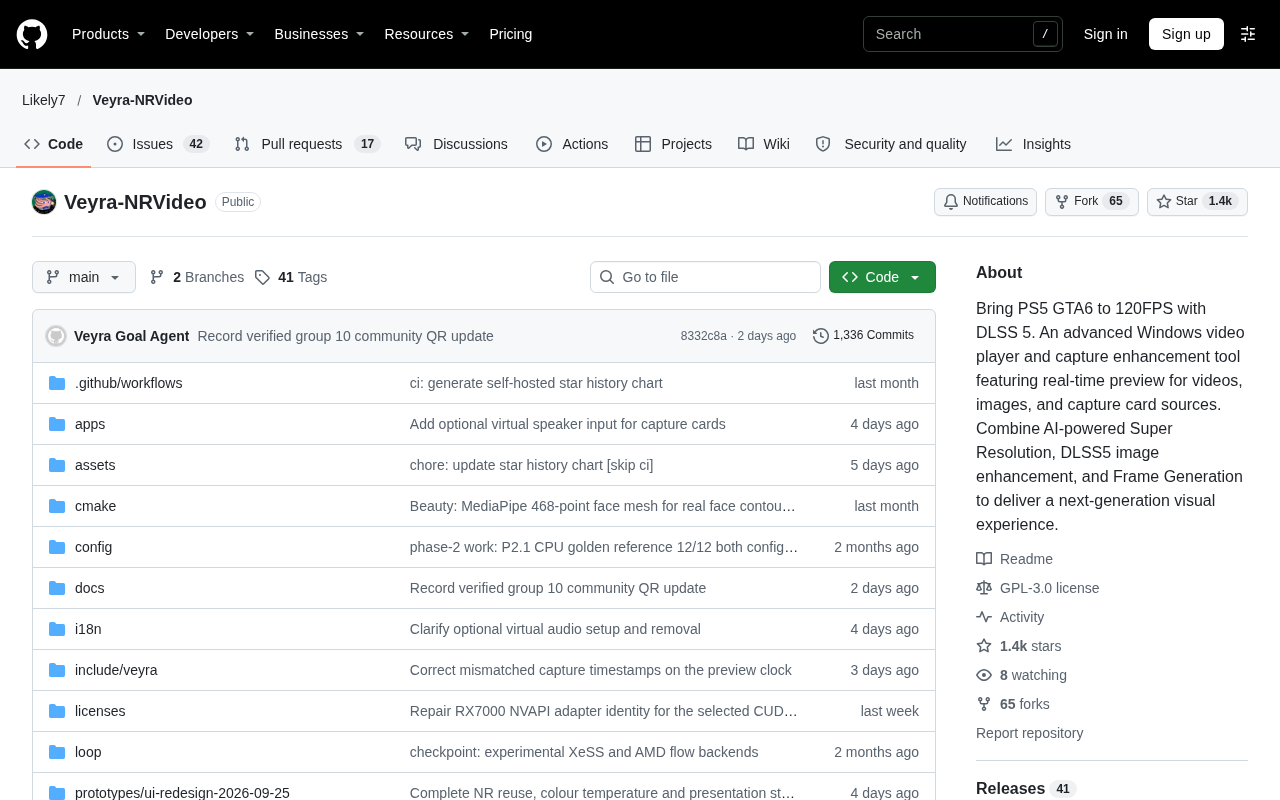
Open-source tool Veyra-NRVideo challenges real-time image quality limits with AI super-resolution, DLSS 5 enhancement, and frame generation.
Veyra-NRVideo is a C++ Windows video playback and capture enhancement tool with 1,392 GitHub stars and 245 new stars in a single day. It chains AI super-resolution, so-called DLSS 5 image enhancement, and frame generation into a real-time preview pipeline, serving as both a player and a capture card signal enhancer for advanced users with dual demands for image quality and smoothness. The "PS5 GTA6 to 120FPS" in the title means post-processing enhancement of captured footage, not running the game on a PS5. The article also cautions that DLSS 5's implementation and licensing, GPU compute requirements, and frame generation latency are issues to evaluate rationally before testing.
A media player that dares to take on PS5 and GTA6?
A project called Likely7/Veyra-NRVideo has been surging in popularity on GitHub: 245 new stars in a single day, 1,392 total stars, and 65 forks. Its tagline is bold—"Bring PS5 GTA6 to 120FPS with DLSS 5." Breaking it down, this isn't a game at all. It's an advanced Windows video playback and capture enhancement tool that uses real-time preview to tie together video, images, and capture card signals, then layers on a trio of AI super-resolution, DLSS 5 image enhancement, and frame generation to bring the "next-generation visual experience" to ordinary PC screens.
Core capabilities: how the three pillars work together
AI super-resolution: from low-res sources to high-density frames
The first layer of Veyra-NRVideo's capability is AI-driven super-resolution. It goes beyond traditional interpolation upscaling, using models to reconstruct details so that low-resolution video or capture signals stay sharp even after upscaling. For users who often deal with old footage, network streams, or low-bitrate capture content, this is the most direct way to improve image quality. The project is written in C++, which shows its emphasis on real-time performance and low-level hardware calls—the key to whether a media-player tool feels responsive.
DLSS 5 image enhancement: bringing game tech into the player
DLSS 5 in the title is the biggest attention-grabber. DLSS is originally a deep learning super sampling technology from the gaming world; Veyra-NRVideo brings it into the video playback and capture preview pipeline, meaning the player no longer just "decodes and displays"—it applies an AI enhancement pass to the image before display. This cross-domain approach is uncommon among open-source players, and it's one reason the project has attracted attention.
DLSS (Deep Learning Super Sampling) is a set of deep-learning-based image enhancement technologies introduced by NVIDIA, originally for game rendering. Its core idea is to have the GPU render at a lower resolution, then use trained neural networks to reconstruct the image to the target resolution—greatly improving frame rates while keeping quality close to native high resolution. Different DLSS versions have different capability scopes: early versions focused on super-resolution, while later versions gradually added modules such as frame generation and ray reconstruction. It's worth noting that the official DLSS implementation depends on specific generations of NVIDIA RTX GPUs and Tensor Cores, and typically requires game engine integration; applying it to a video playback and capture preview pipeline is a non-typical cross-domain use, and actual usability depends on whether the project implements similar algorithms itself or calls available inference backends.
Frame generation: the key to sprinting toward 120FPS
Super-resolution and enhancement alone aren't enough—frame generation handles "filling in time." By inserting AI-generated intermediate frames between two frames, the player can push low-frame-rate content toward high frame rates. This is exactly where the confidence behind "PS5 GTA6 to 120FPS" comes from—though it should be clarified that this isn't running the game on a PS5, but rather post-processing enhancement of captured footage.
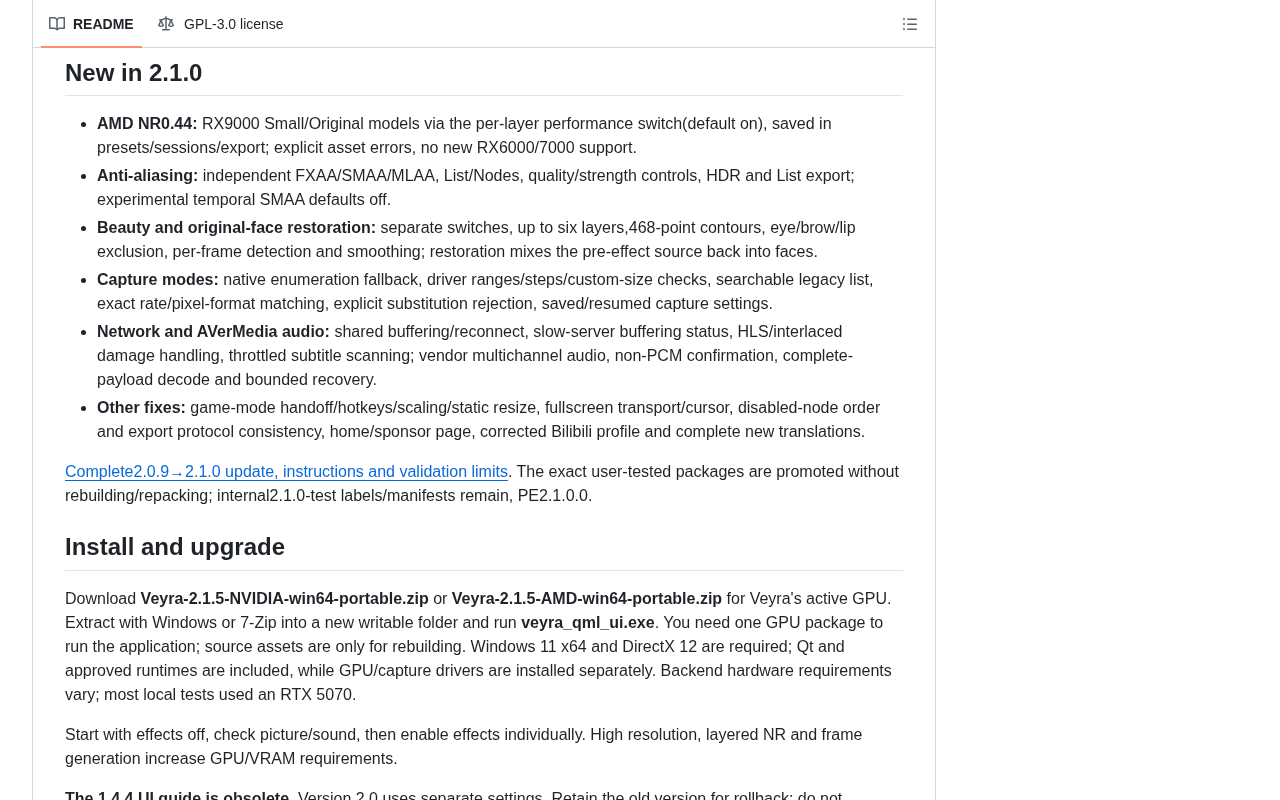
Frame Generation is a class of technology that inserts synthetic intermediate frames between two existing frames, aiming to make display-side image updates denser and motion smoother without increasing the source content's frame rate. It typically combines optical flow estimation or neural networks to infer object motion and generate intermediate images. Unlike super-resolution, which only improves single-frame clarity, frame generation changes the temporal dimension, so it introduces additional processing time and may cause visual artifacts, UI jitter, and other issues; in scenarios requiring low input latency (such as competitive gaming), frame generation often needs to be paired with a low-latency mode or enabled cautiously. For video playback, frame generation is better suited to viewing-oriented content, and its applicability to interactive content is reduced.
Design positioning: a two-in-one of player and capture enhancement
Judging from the feature description, Veyra-NRVideo targets a relatively empty intersection: it's both a player and a capture card signal enhancer. Traditional players (like PotPlayer, VLC) focus on decoding and compatibility, while capture software (like OBS) focuses on streaming and recording. Veyra-NRVideo bundles real-time preview, AI enhancement, and frame generation together, targeting advanced users with dual demands for image quality and smoothness—for example, people who play console games through a capture card and want smoother visuals on a large screen.
A Capture Card is a hardware device that inputs video signals such as HDMI from external devices (game consoles, cameras, another PC) into a PC. Common uses include console game streaming, recording, and previewing on a large screen. Once the capture card signal enters the PC, capture software such as OBS typically handles preview, streaming, and recording. The capture pipeline is very sensitive to latency: the signal goes through capture, buffering, processing, and display, and any added time in any step affects the "what you see is what you get" experience. This also explains why layering AI super-resolution and frame generation on capture preview faces greater real-time pressure than offline video processing.
A sober look behind the hype
The growth curve of 1,392 stars and 245 stars in a single day shows the project has hit a community interest point, but a few things deserve rational consideration:
- The "DLSS 5" claim: The project title uses the term DLSS 5, but public materials don't explain its specific implementation or licensing source, so actual results need to be verified by testing.
- Hardware requirements: AI super-resolution and frame generation demand GPU compute power, and real-time processing of capture signals is far more demanding than offline video file processing.
- Latency issues: Frame generation introduces additional processing time, which may not be friendly to operational scenarios requiring low latency (such as competitive gaming).
The project is implemented in C++, giving it an inherent performance advantage, but ecosystem maturity, format compatibility, and stability still need time to prove themselves. For those interested in AI video enhancement and open-source tools, this is a sample worth keeping an eye on—it represents a trend: AI enhancement is spreading from the game rendering pipeline into the general pipeline of playback and capture.
Background notes
AI Super-Resolution refers to technology that reconstructs high-resolution images from low-resolution images using neural networks; common models include ESRGAN, Real-ESRGAN, SwinIR, and others. Compared with traditional interpolation upscaling such as bilinear and Lanczos, AI super-resolution can "hallucinate" textures and edge details based on learned priors, but it may also produce over-sharpening, texture distortion, or amplification of compression artifacts. In real-time playback scenarios, model inference speed is a key constraint: models with more parameters offer better quality but are harder to run in real time, so practical tools often need to balance model size, resolution tiling, and GPU compute.
One-line Summary
Open-source tool Veyra-NRVideo challenges the limits of real-time image quality with AI super-resolution, DLSS 5 enhancement, and frame generation.
Paragraph Summary
Veyra-NRVideo is a Windows video playback and capture enhancement tool written in C++, with 1,392 GitHub stars and 245 new stars in a single day. It chains together AI super-resolution, so-called DLSS 5 image enhancement, and frame generation in a real-time preview pipeline, serving as both a player and a capture card signal enhancer for advanced users with dual demands for image quality and smoothness. The "PS5 GTA6 to 120FPS" in the title doesn't mean running the game on a PS5, but rather post-processing enhancement of captured footage. The article also reminds readers that the specific implementation and licensing of DLSS 5, GPU compute requirements, and the latency introduced by frame generation are all issues that need rational consideration before real-world testing.
Related articles

FBI Warns: Hackers Weaponize AI Agent ARTEX to Attack 200+ Organizations
FBI warns that AI penetration framework ARTEX is being used to attack 200+ organizations, with CrowdStrike tracking the VaporPanda group. We break down ARTEX's agent orchestration architecture, the real attack chain, loss data, and the FBI's five defense recommendations.
FBI Warns: Free AI Hacking Tool Artex Spirals Out of Control, Breaches Cloud Systems in Three Hours
FBI warns that the free open-source AI penetration tool Artex is being abused by criminals and state-backed hackers to breach cloud systems in as little as three hours. This article analyzes real attack cases, overlooked side-door risks, and defense measures enterprises and individuals can take immediately.

Verse Engine: Turn Blender/Unity/Unreal Scenes into Browser 3D Links in One Click
Verse Engine by Ctruh is a browser-native 3D and XR engine that publishes Blender, Unity, and Unreal scenes as browser links in one click. View-based streaming opens a 1.03 billion-triangle city scene on a laptop. It offers embeds, API, and SDK for developers, 3D artists, architecture, and e-commerce teams.