Vibe Coding at Big Tech: Frontend Practices and an AI Programming Interview Guide

How major tech frontend devs use Vibe Coding, plus AI programming interview questions and answers.
This article analyzes Vibe Coding (AI-assisted programming) practices at major tech companies across the tool, engineering, and architecture layers. Using three real AI coding interview questions, it reveals how junior roles face AI replacement and how developers can rebuild competitiveness through architectural thinking.
Introduction: AI Programming Has Become a Must-Learn for Frontend Development
A topic closely tied to every frontend developer is being re-examined—Vibe Coding (AI-assisted programming). According to sharing from tech content creators on Bilibili, interviewers at major companies like ByteDance have made a clear point: junior and mid-level frontend positions are being wholesale replaced by AI. This isn't fear-mongering—it's a real shift happening in the industry.
Today, whether in frontend or backend development, a large number of scenarios already involve deep use of AI in coding. If a developer still lacks the basic mindset of "programming with the help of AI" by now, they are indeed falling behind in the fiercely competitive tech job market. This article revolves around Vibe Coding practices at major tech companies, combined with the latest AI coding interview questions, analyzing the topic across three dimensions: the tool layer, the engineering layer, and the architecture layer.

What Is Vibe Coding
From Hand-Writing Code to "Vibe Programming"
Vibe Coding is a programming paradigm that emerged over the past year or two. Its core lies in the fact that developers no longer write code line by line, but instead describe requirements in natural language, letting AI models generate, modify, and refine the code. The developer's role shifts more toward that of a "conductor" and "reviewer"—responsible for breaking down requirements, steering architectural direction, and reviewing code quality.
It's worth noting that the term Vibe Coding was coined and quickly popularized by Andrej Karpathy, OpenAI co-founder and former Tesla AI director, in early 2025. He described a completely new state of programming: fully immersed in the "vibe" of conversing with AI, saying whatever comes to mind, accepting AI's suggestions, and even no longer reviewing code word by word. This description precisely captures the paradigm shift brought by AI-assisted programming—moving from "humans write code, machines execute" to "humans describe intent, machines generate implementation." Although Karpathy's original description carried a somewhat playful tone, "Vibe Coding" was quickly adopted seriously by the industry to refer to a development model driven by natural language and dominated by AI code generation. Understanding the origin of this term helps developers recognize that it is not merely a tooling upgrade, but a fundamental restructuring of the human-machine collaboration relationship.
Behind this is a rapid leap in model capabilities. Coding-focused large models represented by the Claude series, Codex, and GPT-5-level models, combined with tools like Cursor, Claude Code, and Codex, are now capable of handling fairly complex development tasks. For major tech companies, Vibe Coding is no longer a novelty to try out—it has already entered the daily R&D workflow as a productivity tool.
Why Junior and Mid-Level Positions Are Hit First
The work of junior and mid-level frontend developers often centers on relatively standardized tasks such as building pages, encapsulating components, and integrating APIs—precisely the areas where AI currently excels. When a senior engineer with architectural thinking is equipped with AI tools, their output efficiency can cover the workload previously handled by multiple junior developers. This is the underlying logic behind the assertion that "junior and mid-level frontend roles will be replaced by AI."
Interview Question One: Understanding the Tool Layer and Model Layer

Which Models and Tools Have You Used
The first question in a major tech company interview usually examines a candidate's practical understanding of the AI programming ecosystem: In past projects, have you tried Vibe Coding? Which models and tools are you familiar with?
This question seems basic but is highly effective at filtering candidates. A developer who genuinely uses AI programming in practice can clearly distinguish the positioning of different tools—Cursor excels at context-aware completion and refactoring within the IDE, while Claude Code and Codex lean toward agent-style autonomous development on the command line. Different models (such as Claude's Composer mode and the GPT-5 series) each have their own strengths in code generation stability, context length, and reasoning ability.
The technical foundation supporting Vibe Coding is precisely the maturation of these coding-specific large models and agent-style development tools. Anthropic's Claude series (especially Claude 3.5 Sonnet and later versions) stands out in code generation, long-context understanding, and instruction following, making it a top choice for many developers. OpenAI's Codex family, on the other hand, was the earliest model lineage focused on code, and the GPT series continues to evolve in general reasoning. On the tooling side, Cursor achieves precise context awareness through deep IDE integration and building codebase indexes; Claude Code and Codex CLI represent the agent mode on the command line, capable of autonomously executing multi-step tasks—reading files, running tests, fixing errors, and committing code in a closed loop. The core breakthrough of these tools lies in "context engineering," that is, how to enable the model to obtain the most relevant project information within a limited context window, thereby generating high-quality output that conforms to the existing code style.
How to Solve the "Code Chaos" Problem in AI Programming
This is a core pain point that every developer using AI programming inevitably encounters. Once a project grows in scale, AI-generated code tends to suffer from inconsistent styles, duplicated logic, chaotic directory structures, and lost context.
The key to solving this problem lies in engineering constraints:
- Constrain AI's output style through explicit project specification files (such as rules and convention documents);
- Adopt small-step iteration rather than generating large amounts of code all at once, keeping each change reviewable;
- Establish clear module boundaries so that AI works within a controlled context scope;
- Always keep manual review as the last line of defense to ensure controllable code quality.
Candidates who can systematically answer this question are often the ones who have genuinely mastered AI programming in production environments.
Interview Question Two: Engineering Implementation of Complex Products

Building Complex Products with Vibe Coding
The second, more advanced question targets mid-to-senior positions: If you were to complete the foundational development of complex products like Feishu-level collaborative spreadsheets or online documents based on Vibe Coding, how would you ensure code quality and performance?
The complexity of such products far exceeds that of ordinary CRUD applications, involving challenges like real-time collaboration, conflict resolution, large-scale data rendering, and complex state management. Simply relying on AI to "push through in one shot" cannot accomplish this—AI's capabilities must be embedded into a mature engineering methodology.
Take Feishu collaborative spreadsheets and online documents as an example: their technical core is real-time collaborative editing, which relies on complex distributed consistency algorithms. There are currently two mainstream approaches: one is OT (Operational Transformation), which guarantees eventual consistency by mathematically transforming concurrent operations—adopted by Google Docs in its early days; the other is CRDT (Conflict-free Replicated Data Type), which uses special data structure designs so that concurrent modifications are naturally mergeable, without requiring central server coordination. These algorithms, combined with mechanisms such as WebSocket long connections, incremental synchronization, and offline editing merges, enable seamless multi-user collaboration. Getting AI to understand and correctly implement such systems is precisely the scenario that most tests the combined capabilities of "engineer + AI"—AI can write the algorithmic skeleton, but decisions about which approach to choose, how to handle edge-case conflicts, and how to optimize sync frequency still require the engineer's architectural judgment.
Dual Control of Code Quality and Performance
At the quality level, the key is to let AI work within the correct architectural framework. Developers need to first design the overall architecture, data flow, and module division, then let AI fill in the implementation within the established framework. This leverages AI's coding speed while avoiding loss of control.
At the performance level, applications like collaborative spreadsheets have extremely high demands on rendering performance, memory usage, and network synchronization. Developers need to guide AI to adopt optimization strategies such as virtual scrolling, incremental rendering, debouncing and throttling, and data sharding, and verify the results with performance profiling tools. AI can provide the implementation, but locating performance bottlenecks and determining optimization directions still rely heavily on the engineer's experience.
Interview Question Three: The Architectural Challenge of One-Hour Full-Stack Development

The Paradigm Shift in Hands-On Tests
The most striking is the third expert-level question. In the past, hands-on tests usually consisted of a few algorithm problems, but now major tech companies are changing their testing methods: You have one hour to complete the full-stack development of a core feature—from frontend to backend, to database design, to the entire pipeline.
In the pre-AI era, this was an almost impossible task. But with tools like Cursor, Claude Code, and Codex, powered by Claude Composer and GPT-5-level models, an engineer with a global perspective and architectural thinking can genuinely complete the core feature of a full-stack application similar to a Feishu collaborative spreadsheet within one hour.
The Essence Is Architectural Thinking
Interestingly, what this question truly examines is not typing speed, but whether the candidate can, in an extremely short time:
- Quickly break down requirements and identify the core pipeline;
- Design a reasonable technology stack and database structure;
- Use precise prompts to direct AI to efficiently produce code across all layers;
- Rapidly integrate frontend and backend and verify pipeline connectivity.
In other words, when coding itself is greatly accelerated by AI, an engineer's value shifts from "being able to write code" to "being able to design systems" and "being able to direct AI." This is precisely where senior and junior developers pull apart.
Conclusion: Embrace Change and Rebuild Your Competitiveness
The progression of these three interview questions clearly reveals the evolution of talent requirements at major tech companies: tool awareness is the threshold, engineering capability is the watershed, and architectural thinking with a global perspective is the true moat.
Vibe Coding and AI programming are spreading rapidly—this is both a threat and an opportunity. For junior and mid-level developers, rather than worrying about being replaced, it is better to proactively break upward—build hands-on experience with AI programming as soon as possible, hone architectural design skills, and learn to collaborate efficiently with AI. In an era where AI is reshaping software development, engineers who can master AI are the irreplaceable ones.
Key Takeaways
Related articles
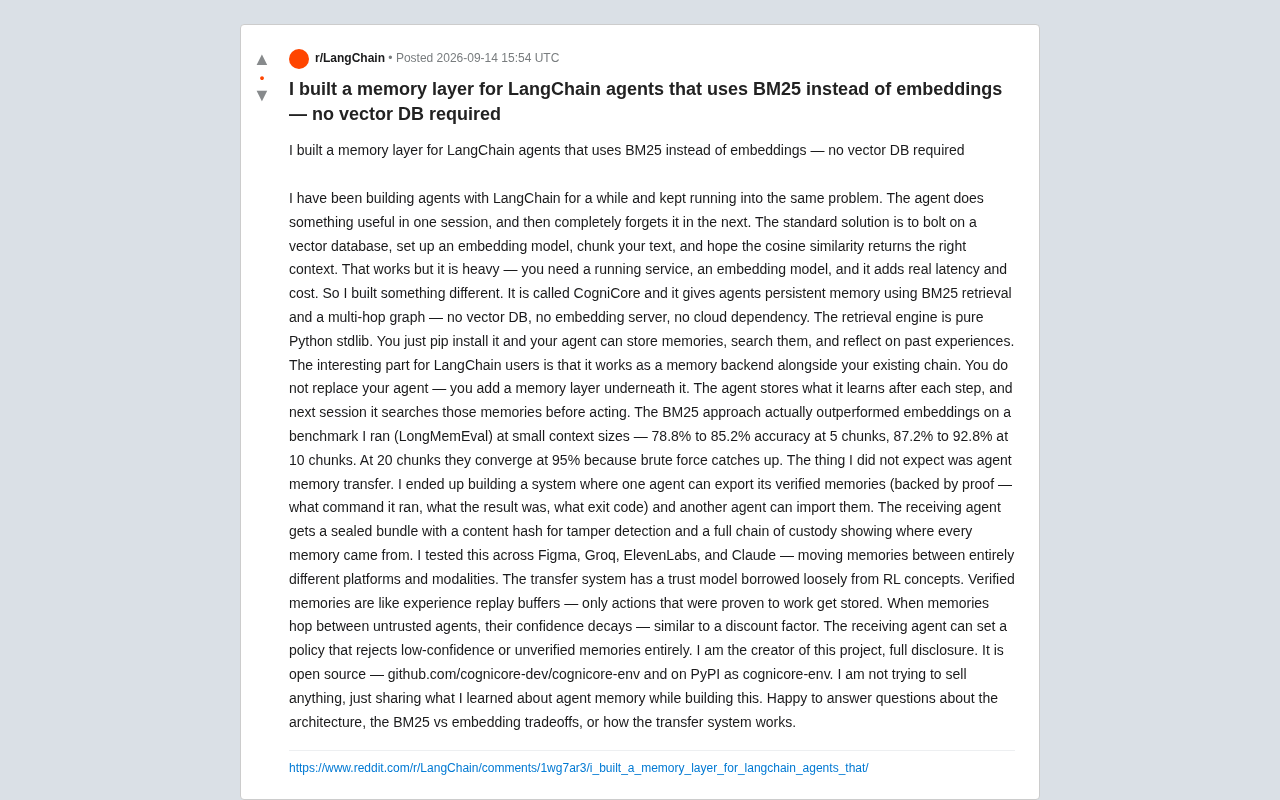
Ditch the Vector Database: Building a Memory Layer for LangChain Agents with BM25
CogniCore replaces vector databases with BM25 retrieval for LangChain agent memory, outperforming embeddings in small-context benchmarks with zero external dependencies.
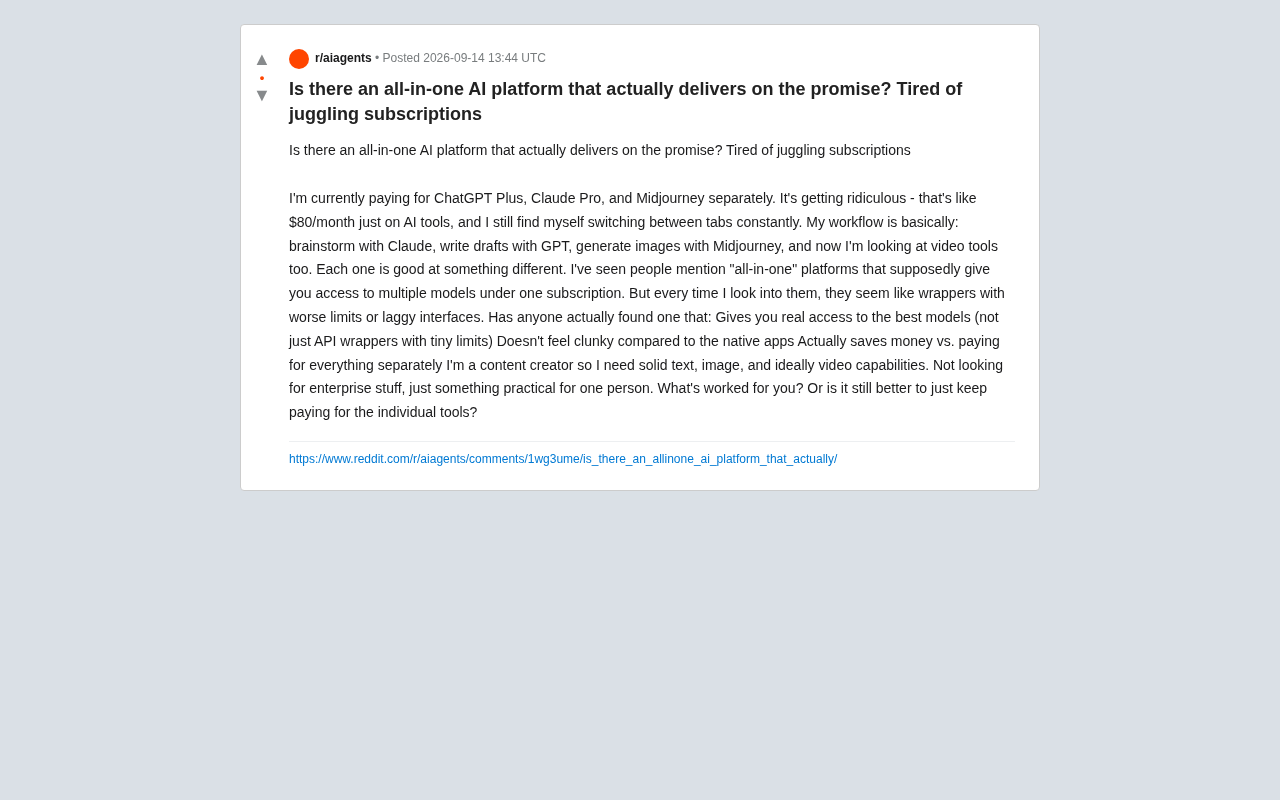
Are All-in-One AI Platforms Actually Worth It? A Practical Guide to Escaping Subscription Overload
Tired of paying for ChatGPT, Claude, and Midjourney separately? We break down whether all-in-one AI platforms are actually worth it — and what a smarter subscription stack looks like.
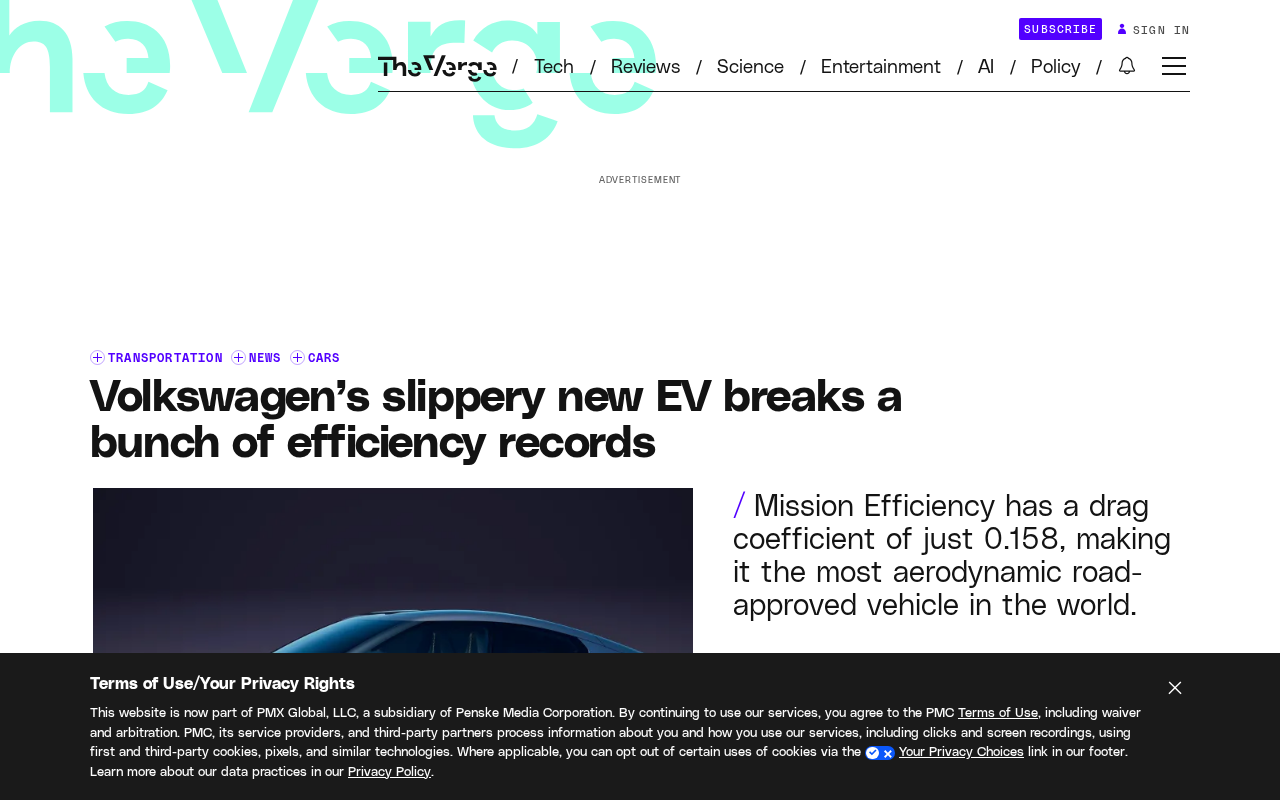
Volkswagen Mission Efficiency: The World's Lowest-Drag EV Breaks Multiple Efficiency Records
Volkswagen's Mission Efficiency prototype claims the world's lowest drag coefficient, built on MEB+ platform with ID. Polo and ID. Cross components. Here's what it means for EV efficiency.