Vibe Coding Full-Stack in Practice: How One Person Builds a Commercial-Grade Product with AI
Vibe Coding teaches people to direct AI through the full product delivery chain, from requirements to operations.
The article introduces the Bilibili course Vibe Coding Full-Stack in Practice, arguing that AI is transforming product development from multi-role collaboration into a single person completing the entire chain. The core philosophy of Vibe Coding is that humans direct AI to write code, rather than staying at the level of workflow orchestration tools like Coze and Dify; what can truly achieve industrial-grade implementation is the system of AI + code + agents + engineering. The course targets the "one-person company," emphasizing full-chain closure from requirements analysis, UI design, development and testing, deployment and launch, to AI-driven operations and promotion, and lowers barriers through tool collaboration (Claude Code, MCP, Skills, Figma) and UniApp's develop-once-run-everywhere approach. It ultimately cultivates five capabilities—independent development, AI collaboration, engineering, multi-platform development, and automated operations—serving future super-individuals and AI entrepreneurs.
AI is transforming from a tool into an entirely new form of productivity. In the past, developing a product required coordination across multiple roles—product managers, designers, frontend and backend developers, testers, and operations staff. Now, a single person can complete the entire chain from requirements analysis to launch and promotion. The course Vibe Coding Full-Stack in Practice on Bilibili is a systematic response to this trend—it doesn't teach a single tool, but rather a "one-person company" methodology for AI-driven engineering development.
What Is Vibe Coding?
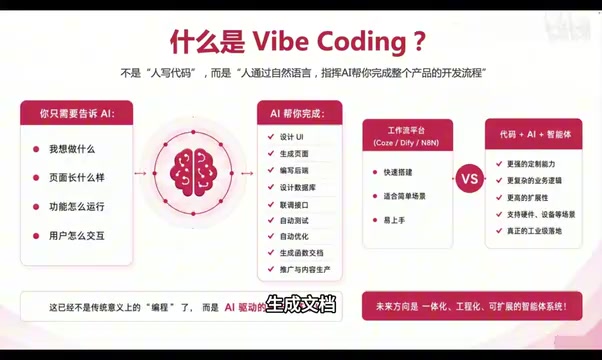
The core philosophy of Vibe Coding can be summed up in one sentence: It's no longer about humans writing code, but about humans directing AI to write code. You tell AI what page you want, what it should look like, and how the functionality should work, and AI can generate the page, write the code, connect to the database, automatically test and fix bugs, generate documentation, and even produce promotional copy and short videos.
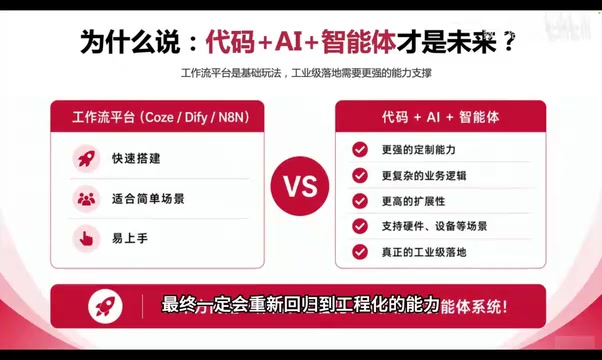
The course instructor, "Fenjing Yingyuan" (Storyboard Cinema), points out at the outset that many people's understanding of AI development is still stuck on workflow orchestration tools like Coze, Dify, and n8n—thinking that connecting a few nodes and running a few flows counts as AI development. But that's only a relatively basic use of AI. The core direction that can truly achieve industrial-grade implementation, develop complex systems, and build future AI products is the system of AI + code + agents + engineering. What will truly be valuable in the future isn't simple chatbots, but applications like AI e-commerce, digital human automation systems, and AI enterprise platforms—all of which ultimately come back to engineering capability.
Vibe Coding was coined by AI researcher Andrej Karpathy in early 2025, referring to developers describing intent in natural language while large language models generate and iterate code, with humans playing more of a "director" role than a "typist." Its key difference from traditional low-code/workflow orchestration (like Coze, Dify, n8n) is that the latter assembles capabilities within preset nodes, while the former directly produces maintainable real codebases—and can therefore carry complex business logic and engineering-grade delivery. Vibe Coding doesn't mean never looking at code at all; rather, it shifts human effort from syntax details to architecture design, requirements decomposition, and result validation, placing higher demands on users' systems thinking and acceptance skills.
Why a "One-Person Company"?
In the past, building a product alone was extremely demanding: you needed to understand design, frontend, backend, databases, servers, and even operations. Many people don't lack ideas—they lack the ability to turn ideas into reality. AI is flattening these technical barriers—previously humans had to adapt to code; now AI understands human language.
The course has two clear purposes: first, learning—helping students truly master the ability to ship AI-engineered products, rather than just knowing how to use a few AI tools; second, earning money—because the future will certainly see a large number of one-person companies, AI entrepreneurs, and super-individuals. For many people, the way forward will no longer be finding a job, but using AI to build products. This course is therefore more like a "one-person company实战 course for the AI era" than a simple tool course.
Full-Chain Closure: Not a Demo, but a Product
The most distinctive feature of the course is full-chain closure. A real product isn't just hand-written code—it's requirements analysis, UI design, page development, backend logic, databases, testing, deployment, and operations promotion all connected together.
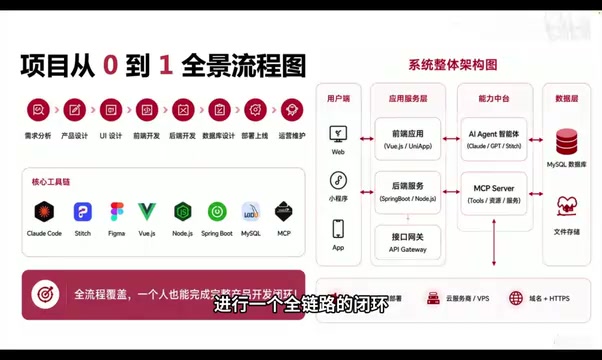
In terms of the technical stack, the course emphasizes AI-collaborative development: tools like Claude Code, Stitch, MCP, Skills, and Figma work together, with AI no longer just chatting but genuinely participating in the entire process of design, development, testing, optimization, and operations. For multi-platform development, the course uses UniApp combined with AI code generation and component reuse to achieve "develop once, run everywhere" (Web, App, Mini Programs), greatly lowering the multi-platform barrier—this is precisely the key that makes the "one-person company" possible.
MCP (Model Context Protocol), mentioned in the article, is a protocol open-sourced by Anthropic in late 2024 that enables AI models to connect to external tools, data sources, and services in a standardized way—essentially installing a universal "interface layer" for AI. Skills, on the other hand, encapsulate the operational steps, domain knowledge, and scripts for specific tasks into reusable capability units, allowing AI to invoke them on demand rather than reasoning from scratch every time. Together, these enable coding agents like Claude Code to read project files, execute commands, and call design-file APIs, thereby genuinely participating in the development process from design to testing rather than staying at the conversation level.
UniApp is a Vue-based cross-platform development framework where a single codebase can be compiled and published to Web, iOS/Android apps, and multiple Mini Program platforms such as WeChat. Its value lies in consolidating the repetitive work of multi-platform adaptation into a unified codebase, and when combined with AI code generation and component reuse, it further reduces labor costs. For a "one-person company," this means the same product can cover multiple traffic entry points at low cost, avoiding the need to maintain a separate codebase for each platform—precisely the engineering scale that solo developers could hardly achieve in the past.
AI Operations: Let the Product Promote Itself
Many people think product development is the end, but the real difficulty is promotion. The course points out that AI has entered the operations domain: automatically generating WeChat official account articles, promotional copy, video scripts, and even product promo videos.
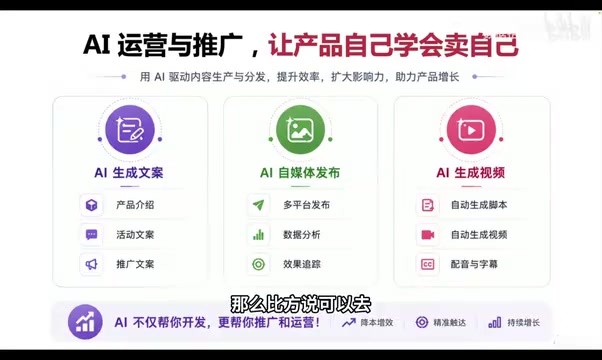
This means the truly capable people in the future will be those who master both development capability + AI operations capability. Building the product is only the starting point; using AI to make it promote itself is the endpoint of the loop.
What Will You Gain?
The course promises to cultivate five core capabilities: the ability to independently develop products, full-chain AI collaboration, AI engineering, multi-platform development, and AI-automated operations. The ultimate goal is for students to truly possess the complete ability to build products alone.
The instructor's judgment is this: in the coming years, AI will eliminate a large amount of repetitive labor, and at the same time will certainly give rise to a large number of super-individuals, one-person companies, and AI entrepreneurs. Opportunities belong to those who prepare in advance. The value of this course isn't in teaching you a few prompts, but in organizing "one person + AI" into a complete production line capable of delivering commercial-grade products.
For zero-foundation learners, the appeal of this path is that it doesn't require you to become a programmer before talking about products—instead, it has you aim for product delivery from day one, filling in engineering skills through AI collaboration. Of course, full-chain means the learning curve isn't gentle; the real test is whether you can persist through every link from requirements to operations—and that is precisely the real threshold for turning the "one-person company" from concept into reality.
One-line Summary
Vibe Coding teaches people to direct AI through the full chain of product delivery, from requirements to operations.
Paragraph Summary
The article introduces the Bilibili course Vibe Coding Full-Stack in Practice, arguing that AI is transforming product development from multi-role collaboration into a single person completing the entire chain. The core philosophy of Vibe Coding is that humans direct AI to write code, rather than staying at the level of workflow orchestration tools like Coze and Dify; what can truly achieve industrial-grade implementation is the system of AI + code + agents + engineering. The course targets the "one-person company," emphasizing full-chain closure from requirements analysis, UI design, development and testing, deployment and launch, to AI-driven operations and promotion, and lowers barriers through tool collaboration (Claude Code, MCP, Skills, Figma) and UniApp's develop-once-run-everywhere approach. It ultimately cultivates five capabilities—independent development, AI collaboration, engineering, multi-platform development, and automated operations—serving future super-individuals and AI entrepreneurs.
Related articles
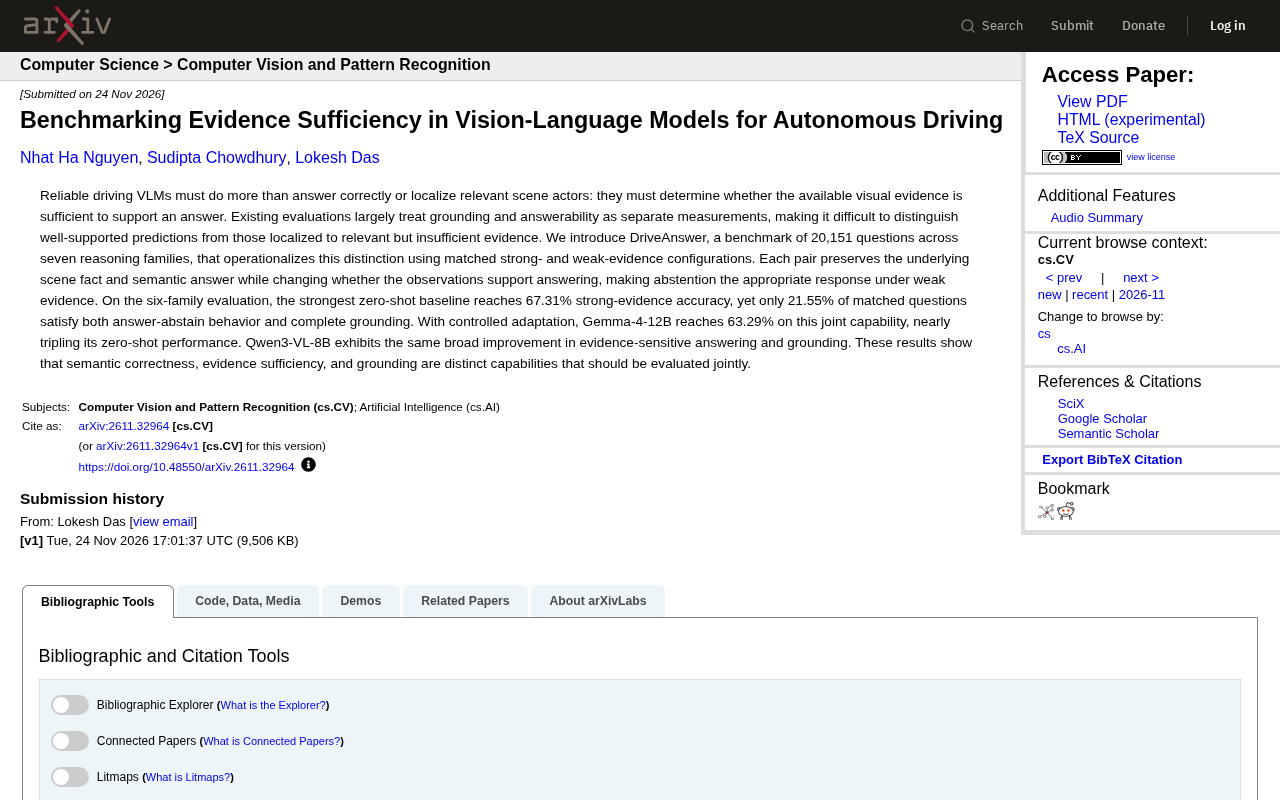
DriveAnswer Benchmark: Evaluating Evidence Sufficiency in Autonomous Driving VLMs
DriveAnswer benchmark with 20,151 questions uses strong/weak evidence pairing to jointly evaluate answer correctness, evidence sufficiency, and visual grounding in autonomous driving VLMs, revealing zero-shot joint capability of only 21.55%.
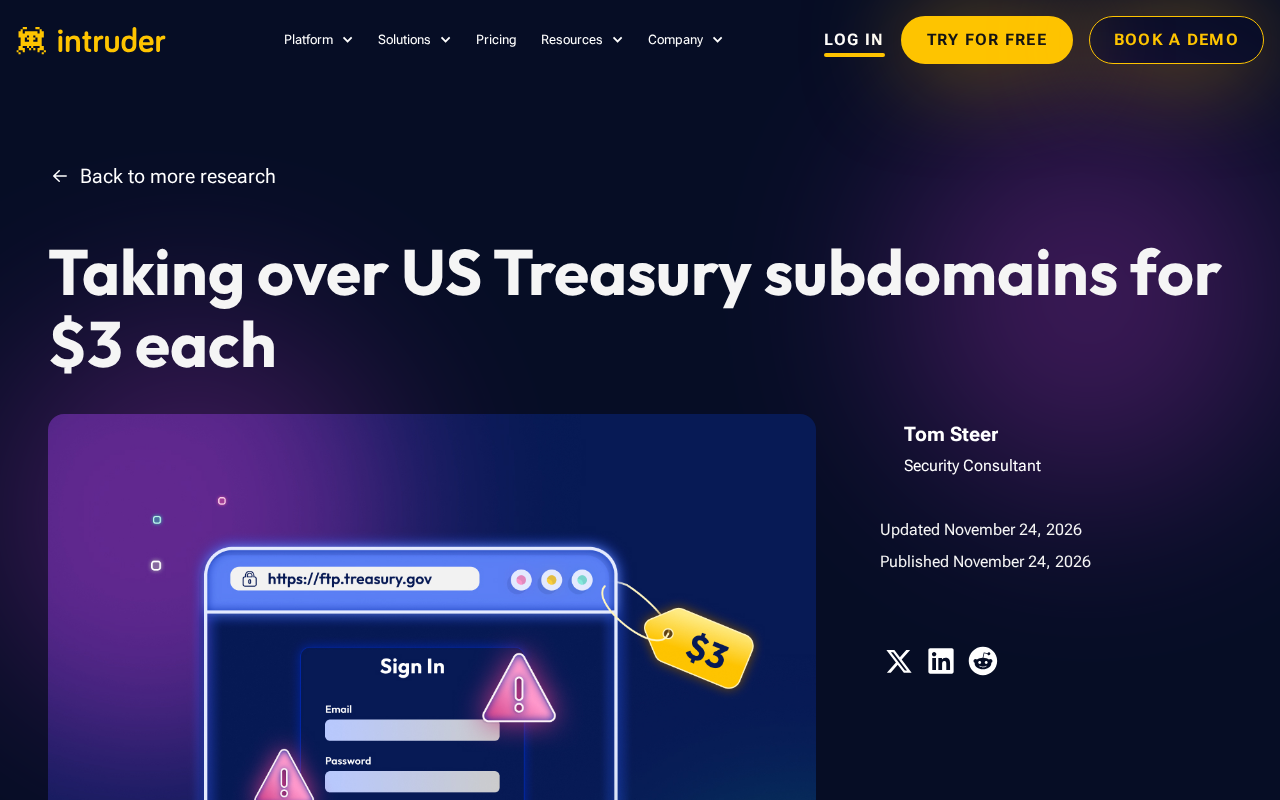
Hijacking a US Treasury Subdomain for $3: The Overlooked Vulnerability
An attacker can take over a US Treasury subdomain for just $3. This article explains how subdomain takeover works, the special risks facing government domains, and how organizations can close this low-cost security gap through asset discovery and DNS cleanup.

LoomKV: Lossless KV Cache Compression Extending from GPU Memory to SSD
LoomKV proposes lossless KV cache compression using head-wise calibrated two-level 3-bit codebooks to compress BF16 high bytes, operating on both external storage and the GPU KV pool. Tier mode delivers 2.7-3.6x effective throughput near the LRU cliff; pool mode holds 1.31-1.34x more GPU tokens, bit-identical to the original tier.