Vibe Coding Hands-On: 50 Million Free Tokens Daily, Build Websites and Mini-Programs with Zero Coding Skills
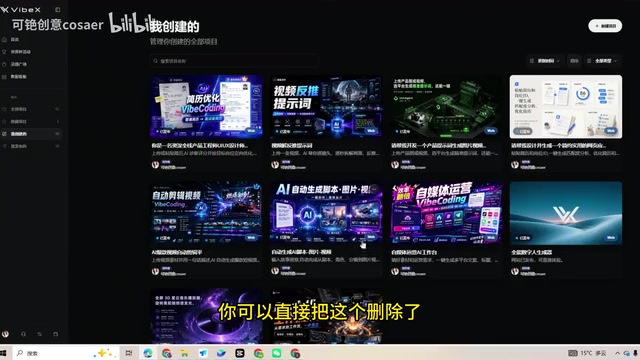
A free Vibe Coding platform lets anyone build and monetize web apps using only natural language.
A hands-on review reveals a Vibe Coding platform that grants 50 million free Tokens daily, enabling users with zero programming experience to generate websites, mini-programs, and AI Agents through natural language. The platform covers hosting, domains, and payments, offers revenue sharing for published apps, and features an Inspiration Square with tens of thousands of ready-made applications—though users should be mindful of slot limits, data privacy, and the platform's evolving business model.
When AI Programming Meets "Zero Cost"
For anyone looking to get into web development without a technical background, the biggest hurdle often isn't the technology itself—it's the cost. Domains, servers, payment systems—every piece requires real money. But the emerging Vibe Coding model is trying to flatten all of these barriers at once.
The concept of Vibe Coding was first coined by Andrej Karpathy—former AI Director at Tesla and co-founder of OpenAI—in February 2025. He described a radically new approach to programming: developers fully immerse themselves in the "vibe," forget about the specific code, and simply express their intent in natural language while AI handles all the code generation. This is fundamentally different from traditional AI-assisted programming (like GitHub Copilot's code completion)—the latter still requires developers to understand and review code, whereas Vibe Coding advocates placing complete trust in AI output, with developers focusing solely on whether the final result meets their expectations. The concept quickly sparked widespread discussion in the tech community because it fundamentally redefines what "programming" means.
According to a hands-on review shared by Bilibili creator Ke Se, there are now platforms offering completely free Vibe Coding services: users don't need to write any code—they simply describe their requirements in natural language, and the system automatically generates web applications, mini-programs, and even AI Agents. Hosting, domains, payment infrastructure—everything is covered by the platform. This means someone with zero programming background could theoretically turn an idea into an accessible product at absolutely no cost.
This article, based on that hands-on review, breaks down the core mechanics of these platforms, the reality behind free quotas, and the underlying business logic and potential considerations.
50 Million Free Tokens Per Day: Is It Actually Enough?
The most eye-catching feature is undoubtedly the "free Tokens." According to the reviewer, the platform gives every account 50 million Tokens per day, which users consume directly to generate applications—and this quota refreshes daily.
It's worth explaining what Tokens actually are. In the large language model (LLM) space, a Token is the basic unit of text processing. It doesn't equate to a single character or word—rather, it's the smallest semantic fragment determined by the model's tokenizer. For English, one Token corresponds to roughly 4 characters or 0.75 words; for Chinese, a single character typically consumes 1.5 to 2 Tokens. By this conversion, 50 million Tokens is roughly equivalent to processing 25 to 33 million Chinese characters—enough to support dozens of complete web application generations and multiple rounds of iterative dialogue. For reference, GPT-4o's API pricing is approximately $2.50 per million input Tokens, meaning 50 million Tokens would cost about $125 (roughly ¥900 RMB) at market rates. This daily free quota is genuinely substantial.
Looking at actual usage data, this quota isn't just a marketing gimmick. The reviewer's dashboard showed that over the past 30 days, they received 64 rounds of free subsidies, with total Token consumption reaching 270 million—all without a single payment.

However, "free" has its limits. The reviewer explicitly mentioned that each account can only create a total of 10 applications (web apps, mini-programs, and Agents combined, capped at 10). To create new projects, you need to delete old ones to free up slots. In other words, the Token supply is generous, but project "slots" are limited.
This design is actually quite deliberate: generous Token supply encourages users to experiment and iterate freely, while limited project slots control the platform's hosting and operational costs, preventing unlimited resource consumption. From a technical perspective, the platform's free hosting relies on modern cloud computing's Serverless architecture and edge computing technology. Traditional website deployment requires renting servers (like Alibaba Cloud ECS or AWS EC2), costing anywhere from tens to thousands of yuan per month, plus manual configuration of domain resolution, SSL certificates, load balancing, and more. Under a Serverless architecture, code runs as functions on demand, consuming virtually no computing resources when there are no requests. This allows the platform to host lightweight applications for each user at extremely low marginal cost—platforms like Vercel and Netlify have long proven this model's viability. The 10-app slot limit is specifically designed to control the fixed costs of persistent storage and domain resources.
From Natural Language to Working Product: Vibe Coding's Complete Loop
Unlike simple code generation tools, these platforms offer a relatively complete product lifecycle.
Describe Your Requirements in Natural Language to Generate Applications
The creation process is remarkably straightforward: open the creation interface, describe the web page or mini-program you want in natural language, and the system generates the corresponding interface and code. The reviewer also noted that generation isn't a one-and-done deal—if you're not satisfied with elements like models or leaderboards on the page, you can update and iterate directly within the project.
Publish Applications to Earn Revenue Sharing
Even more noteworthy is the "publishing" step. According to the reviewer's demonstration, published works enter the platform ecosystem for others to use, generating two tiers of revenue:
- Usage Revenue: When other users use your published web pages, mini-programs, or Agents, you earn a share of the revenue.
- Base Incentive: Even if nobody uses your creation, the platform provides a base publishing incentive.
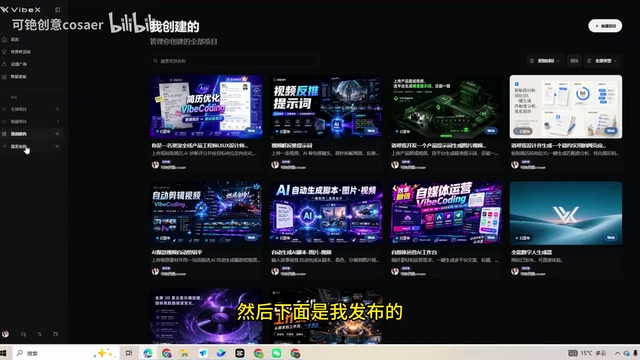
This "create—publish—monetize" mechanism is essentially the Creator Economy concept of the Web3 era landing in the AI programming space. The model draws from multiple mature platforms: YouTube's ad revenue sharing, Apple App Store's in-app purchase commissions, and the contribution incentive mechanisms of communities like Hugging Face. The core logic of the creator economy is a "two-sided market"—platforms need to attract both content producers and content consumers simultaneously, and solving the "cold start" problem typically requires subsidizing the supply side first. The platform's base publishing incentive (revenue even with zero users) is a textbook supply-side subsidy strategy, aimed at rapidly accumulating enough application content to reach a critical mass that's attractive to consumers.
For ordinary users, this lowers the psychological cost of "building something nobody uses"; for the platform, it rapidly fills out the app ecosystem at relatively low cost.
Inspiration Square: Tens of Thousands of Ready-Made Applications
If you can't even be bothered to describe your requirements, the platform also offers an "Inspiration Square." This aggregates a large collection of web pages and mini-programs generated and published by other users. According to the reviewer, the count has already reached tens of thousands, all available for direct use.

The Square supports keyword search, with an "exact match" function in the upper right corner for precisely locating the application you need. This effectively upgrades the platform from a "generation tool" to an "app marketplace"—serving as both a productivity tool and a consumption portal.
Additionally, the reviewer mentioned compiling a dedicated set of prompts for generating web pages and mini-programs, covering the entire web page creation workflow and code generation details. This reminds us that in the Vibe Coding era, prompts themselves are becoming a reusable, shareable means of production.
In fact, Prompt Engineering has evolved from a skill-based practice into an independent professional field. As LLM capabilities improve, the quality difference between a carefully crafted prompt and a casually written one can be enormous. Core prompt techniques include Role Prompting, Chain-of-Thought reasoning, Few-shot Learning, and structured output constraints. In Vibe Coding scenarios, prompt quality becomes even more critical—prompts need to simultaneously convey UI design intent, business logic, data structures, interaction flows, and more. This is why high-quality prompt templates have spawned their own marketplaces—platforms like PromptBase specialize in buying and selling prompts, with individual prompts priced from a few dollars to tens of dollars. The reviewer's collection of web generation prompts is essentially a validated "digital production toolkit."
Business Logic and Usage Tips for Free Vibe Coding Platforms
It should be noted that the above content is primarily based on a single creator's hands-on demonstration and lacks cross-verification from multiple independent sources. Readers should exercise rational judgment when trying these platforms.
From a business logic perspective, these "completely free" platforms typically have several possible monetization paths:
- Scale First, Charge Later: Use free quotas to capture users and creators, then charge for premium features, higher quotas, watermark removal, or other value-added services once the ecosystem matures. This is the classic internet industry "burn money first, harvest later" strategy—from Dropbox to Slack to Notion, nearly every successful SaaS product has followed a similar path.
- Data and Ecosystem Value: The massive volume of user-created content and usage behavior is itself a valuable data asset. This data can be used to train and optimize the platform's own AI models, and can provide insights into user preferences—which types of applications are most popular, common patterns in how users describe requirements, typical iteration paths—all of which are extremely valuable for AI product development.
- Traffic and Advertising: Once the app marketplace aggregates enough traffic, it can monetize through ads or promoted placements.
For regular users, a few tips are worth keeping in mind:
- Don't bet your core business on a free platform. Free policies can change at any time, so back up important data. The shutdowns of Google Reader and Heroku's free tier caught countless users off guard.
- Pay attention to data and privacy, especially when payment systems are involved—make sure you understand where funds flow and verify regulatory compliance. Confirm whether the platform holds the necessary qualifications, and if generated applications involve user data collection, ensure compliance with relevant regulations such as China's Personal Information Protection Law.
- Treat it as a low-cost sandbox for experimentation—using it to validate ideas and learn AI programming workflows is an excellent deal.
Conclusion
Regardless of how the business model ultimately evolves, the trend represented by Vibe Coding tools is already clear: AI is rapidly erasing the barriers to software development.
This transformation has deep historical roots. The rise of Vibe Coding is the latest evolution of the No-Code/Low-Code movement, which traces back to the early 2010s when visual website builders like Wix and Squarespace first lowered the barrier to web creation. Later, platforms like Bubble, Webflow, and Airtable extended the no-code philosophy to more complex application development. According to Gartner, by 2025, 70% of new enterprise applications will use low-code or no-code technologies. AI's entry has pushed this trend to new heights—leaping from "drag-and-drop building" to "conversational generation." McKinsey's 2024 research report noted that generative AI can boost software development efficiency by 20% to 45%, with the most significant acceleration seen in junior-level development tasks.
When "building a website at zero cost with zero experience" transforms from a slogan into actionable reality, the truly scarce resource will no longer be technical ability—it will be good ideas and insight into real needs. The software development industry is undergoing a democratization revolution similar to how the printing press transformed knowledge dissemination—when production tools are no longer scarce, the value of content and creativity is amplified. For anyone with an idea, now might just be the perfect time to give it a try.
Related articles
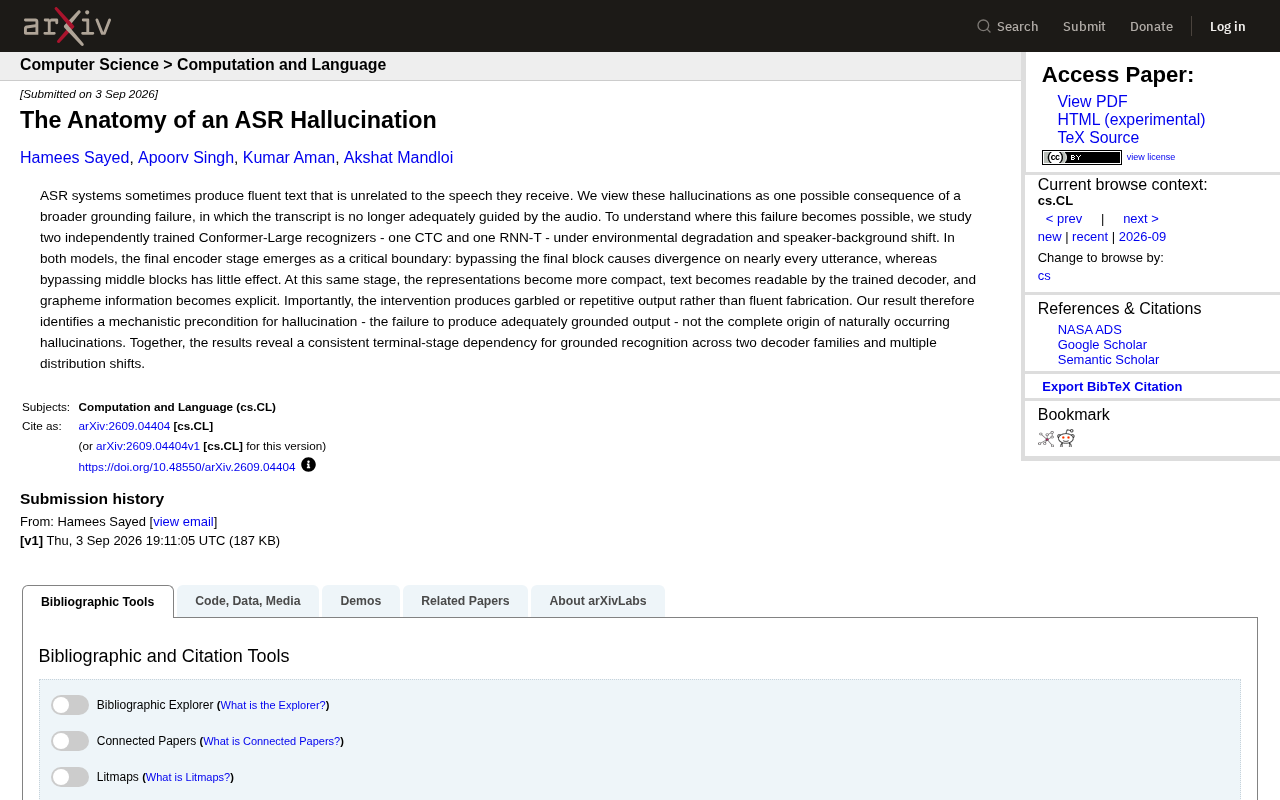
ASR Hallucination Explained: Why Speech Recognition Produces False Outputs
Dissecting the hallucination mechanism in ASR speech recognition systems. Research reveals the final encoder stage as the critical node for grounding failure, uncovering why speech recognition produces false outputs.

RAMageddon: AI Devours Chip Capacity, Consumer Electronics Supply Under Siege
AI training demand sparks a "RAMageddon" memory crisis as HBM and DDR5 chips are devoured by data centers, threatening consumer electronics with shortages and price hikes.

Claude Code Academic Research Skills: A Deep Dive into the Five-Stage End-to-End AI Research Assistant Framework
Deep dive into the GitHub project academic-research-skills: how Claude Code's five-stage Skills framework (Research, Write, Review, Revise, Finalize) builds a structured AI-assisted academic workflow.