Vibe Coding in Practice: A Complete AI Programming Guide for Non-Developers

A practical guide helping non-developers leverage Vibe Coding with Cursor for real-world AI programming.
This guide covers the three evolutionary stages of AI programming (code completion, Vibe Coding, and SPACDD), explains why Cursor is the ideal tool for beginners, and walks through a complete hands-on workflow—from idea generation to automated testing. It offers actionable strategies for managing AI hallucinations and collaborating effectively with AI agents.
The Three Stages of AI Programming
AI-assisted programming didn't appear overnight—it evolved through a clear progression. Understanding this history helps us grasp the best practices for Vibe Coding today.
Stage One: Code Completion. Represented by GitHub Copilot, programmers write a function name or a comment, and AI completes the rest. The fundamental problem with this stage is that you still need to know how to code, set up environments, and write that first line. For product managers, testers, and operations staff, deep participation was nearly impossible.
Stage Two: Vibe Coding. Users can describe requirements directly in natural language, and AI uses an Agent to autonomously decide intermediate steps—whether to check existing code, search technical documentation, or generate new code—then completes the entire development task step by step. The Agent here is an advanced form of large language model application. Unlike simple Q&A-style AI, an Agent has autonomous planning, tool invocation, and multi-step reasoning capabilities. It can break down a complex task into multiple sub-steps, autonomously decide which tools to call (such as file systems, terminal commands, or web searches), and dynamically adjust subsequent strategies based on intermediate results. This architecture stems from the ReAct (Reasoning + Acting) paradigm, transforming AI from passive answering to active execution. This is currently the most suitable AI programming approach for zero-experience users.
Stage Three: SPACDD (Specification-Powered Development). People began asking: Is there an optimal interaction method that minimizes error probability and reduces the number of interactions? This gave rise to research on standardizing requirements documents—using structured specifications to drive AI development. The core idea of SPACDD (Specification-Powered Autonomous Code-Driven Development) borrows from formal methods in traditional software engineering—by standardizing requirements documents into machine-parseable structures (such as fixed fields, constraints, and acceptance criteria), AI "hallucinations" and misunderstandings can be drastically reduced. Essentially, it transforms the ambiguity of natural language into the certainty of structured expression.
Who Benefits from AI Programming?
A Second Chance for Senior Developers
Rich experience but limited energy is the typical profile of older programmers. With AI, working hours are no longer the decisive factor. AI can produce 500-1,000 lines of standard code per day (even reaching 4,000 lines at peak), while a typical human programmer writes about 100 lines. When an experienced senior developer gains 5x production speed, they're immediately no longer on the "age 35 chopping block."
A Capability Leap for Average Programmers
Experience and skills that previously required over a decade to accumulate can now be supplemented by AI at any time. The only thing you need to improve is your thinking—once your quality awareness and requirements awareness are in place, your AI output can approach expert-level work.
Empowerment for Non-Programming Roles
Testers can have AI maintain automated test cases; operations staff can develop their own monitoring dashboards and status panels; product managers can turn ideas directly into working prototypes. During a live demonstration, an operations engineer used AI on the spot to pull server status data and create a visualization, exclaiming it was "more comfortable than 12 tools combined."
Accelerated Hands-On Experience for Students
A college internship might only produce 2,000-5,000 lines of code, but with AI assistance, producing projects with hundreds of thousands of lines within 100 days is entirely possible. This means that upon graduation, you don't just have "I studied it but never used it"—you have genuine hands-on experience.
Tool Selection: Why Cursor Is Recommended

The mainstream AI programming tools currently include GitHub Copilot, Cursor, and Claude Code. For zero-experience users, Cursor is the most recommended choice for the following reasons:
- No VPN required: Unlike Claude Code which blocks Chinese users, Cursor can be used directly
- AI-native workspace: Built on VS Code, but it's not just for writing code—you converse with it, and it can write code, documentation, deployment scripts, and configure servers
- High model quality: Although the top-tier models have restrictions for Chinese users, the highest available models are already quite powerful
Regarding pricing, Cursor has three tiers at $20/$60/$200. The $60 version (approximately ¥500/month) offers the best value—"the work it does is absolutely not something you could buy for ¥6,000." For professional use, the $20 tier will be exhausted and result in speed and quality degradation, so it's not recommended for long-term use.
Among domestic tools, Tongyi Lingma (Alibaba) is relatively good, but the core gap isn't in software features—it's in compute power. Foreign tools are backed by stronger models, resulting in higher code quality.
Vibe Coding in Practice: The Complete Workflow from Zero to Running Software
Step 1: Let AI Help You Decide the Product Direction
No need to preset a project—just ask AI to randomly generate 12 software product ideas, then randomly select one. The final choice was "Requirements Prism"—a tool that performs multi-dimensional decomposition of scattered user feedback and automatically calculates priority weights.
Step 2: Describe Requirements in Natural Language
In Cursor, first use Plan mode to communicate technology stack choices with AI: Next.js for the frontend, Python for the backend. Next.js is a full-stack framework based on React, maintained by Vercel, supporting Server-Side Rendering (SSR), Static Site Generation (SSG), and API routes—it's one of the mainstream choices for current frontend development. Python as the backend language is typically paired with FastAPI or Flask frameworks, with the advantage of its rich AI/ML ecosystem (such as LangChain and Transformers libraries), making it convenient for later integration of large model capabilities. This frontend-backend separation architecture allows AI to handle each layer's logic independently, reducing code coupling.
Then switch to Agent mode and let AI start developing automatically.
Key principle: Don't dump all requirements at once. Give only one feature point at a time, maintain control, and avoid AI running too long with unpredictable results.

Step 3: Let AI Handle All Environment Configuration
After AI generates code, it will tell you "run these commands." But we don't need to learn these—just say "please install these things for me," then request "please put a .bat file in the root directory so I can double-click to run both frontend and backend simultaneously."
Core mindset: Don't do anything manually until AI says it can't.
Step 4: Commit Code Frequently
AI programming is fast—it might produce 4,000 lines of code in a day—so commit frequency should increase dramatically. Aim for about 20 commits per day. Just say "please commit the code for me," and AI will automatically summarize the changes.
Git is a distributed version control system, and each Commit is like taking a "snapshot" of the code. In AI programming scenarios, Git's importance is amplified several times—because AI might introduce hard-to-detect regression bugs in any given modification. Frequent commits mean you can roll back to the last working state at any time. This is why "20 commits per day" is recommended: lock in a safe point after each small feature is completed, preventing a single AI mistake from destroying large amounts of work.

Step 5: Automated Testing
Have AI write automated tests for backend APIs, covering all CRUD endpoints. CRUD stands for Create, Read, Update, and Delete—the four basic types of data operations. Nearly all web application backend APIs are built around these four operations. Automated testing involves writing test scripts that simulate API calls to verify whether each endpoint behaves as expected under normal inputs, boundary conditions, and error scenarios. In AI programming, having AI automatically generate test cases is itself a quality assurance mechanism of "AI checking AI."
In the demonstration, AI automatically generated 22 test cases. The first run had 72 warnings, but after having AI fix them, all tests passed. The time it would take a human to do this manually is self-evident.
Key Lessons for Collaborating with AI
Control Scope, Progress Incrementally
Never say "please optimize the entire project." The correct approach: first have AI analyze problems (using Ask mode), list specific issues, then solve them one by one. For example, after AI lists 8 problems, select only "Problem 2" for AI to analyze solutions, then specify "use Solution 2 to fix Problem 2."
Understand AI's Temperament
The demonstration looked smooth because "I'm very familiar with its temperament—I know when things will go wrong and preemptively work around them." For example:
- Don't add to the Git whitelist, preventing AI from auto-committing code on a whim
- Explicitly tell AI "only analyze the problem, don't solve it"
- Require AI to summarize in Chinese to avoid default English output
These strategies are essentially responses to the AI Hallucination problem. AI hallucination refers to large language models generating content that appears reasonable but is actually incorrect. In programming scenarios, this might manifest as calling non-existent APIs, using incorrect function signatures, or generating code that is logically self-consistent but functionally wrong. Effective countermeasures include: narrowing the scope of each task to reduce reasoning chain length, requiring AI to analyze before executing to separate thinking from action, verifying output through automated testing, and using Rules to preset constraints that limit AI's creative freedom.
Make Good Use of Rules and Docs
In Cursor's Settings, you can add project Rules and Docs. For example, write "please summarize each Git commit in the following format," or import your company's testing specification documents—AI will automatically follow them.

Learning Path: The Logic Behind a Four-Week Course Design
The course follows a progressive design:
- Week 1: Write runnable software (complete frontend-backend project)
- Week 2: Write high-quality software (design patterns, automated testing, maintainability)
- Week 3: Integrate AI capabilities (large model API calls, image recognition, etc.)
- Week 4: Enterprise-level practices (data desensitization, convincing your boss to purchase tools, YAML data architecture)
4 hours of coursework + 8 hours of practice per week, with Q&A on Fridays. The core philosophy is teaching "human thinking" rather than tool operations—how to steer AI, when to commit code, keeping each production unit to no more than one entity, and how to eliminate AI hallucinations.
Final Thoughts
The goal of AI programming is to give every ordinary person programming capabilities with an extremely low barrier to entry. Practice across 112 projects using Cursor—covering course schedules, public lectures, commercial products, and various other scenarios—proves that Vibe Coding is fully capable of handling everyday development needs.
The era of AI programming has arrived. It's not an exclusive tool for programmers—it's a productivity multiplier for every working professional. Whether you're a product manager, tester, or operations engineer, now is the best time to start.
Related articles
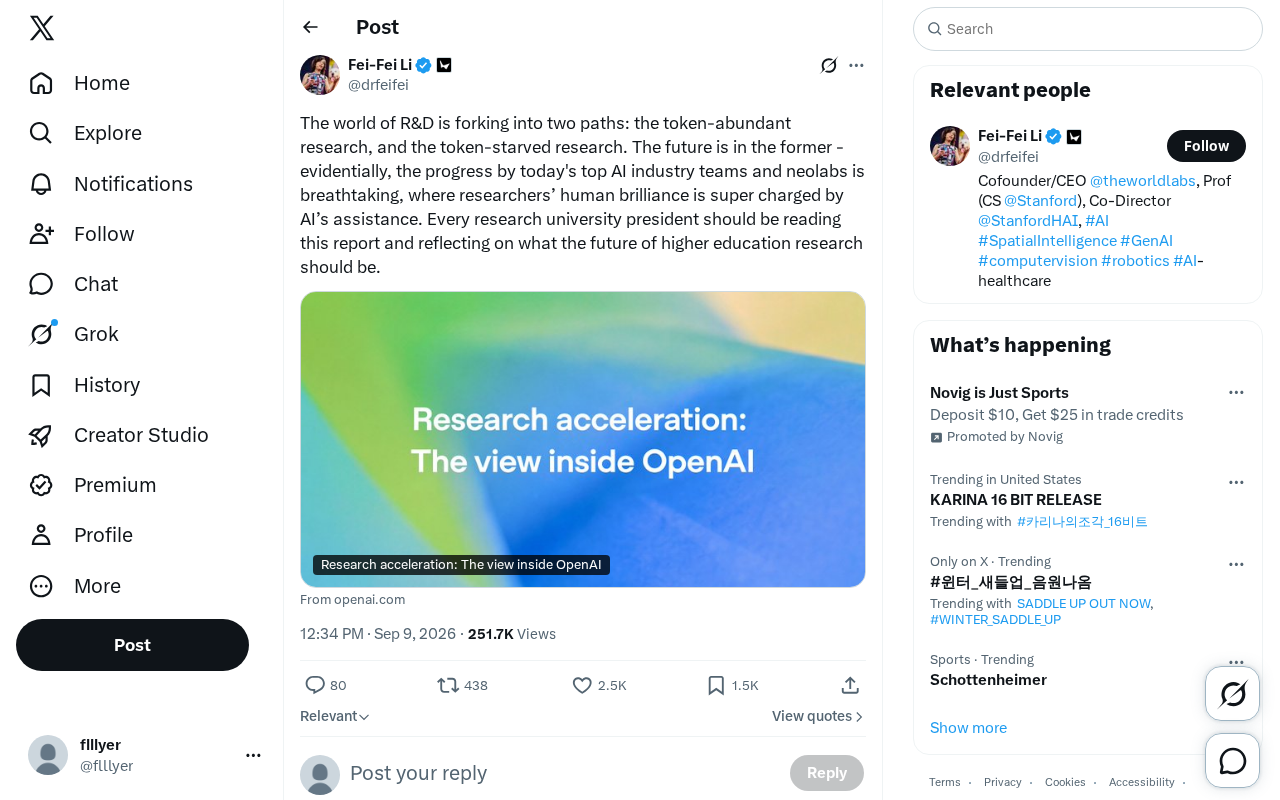
R&D Is Forking: The Coming Battle Between Token-Abundant and Token-Starved Research
R&D is splitting into token-abundant and token-starved research. Top AI labs are pulling ahead—here's what it means for universities and the future of science.
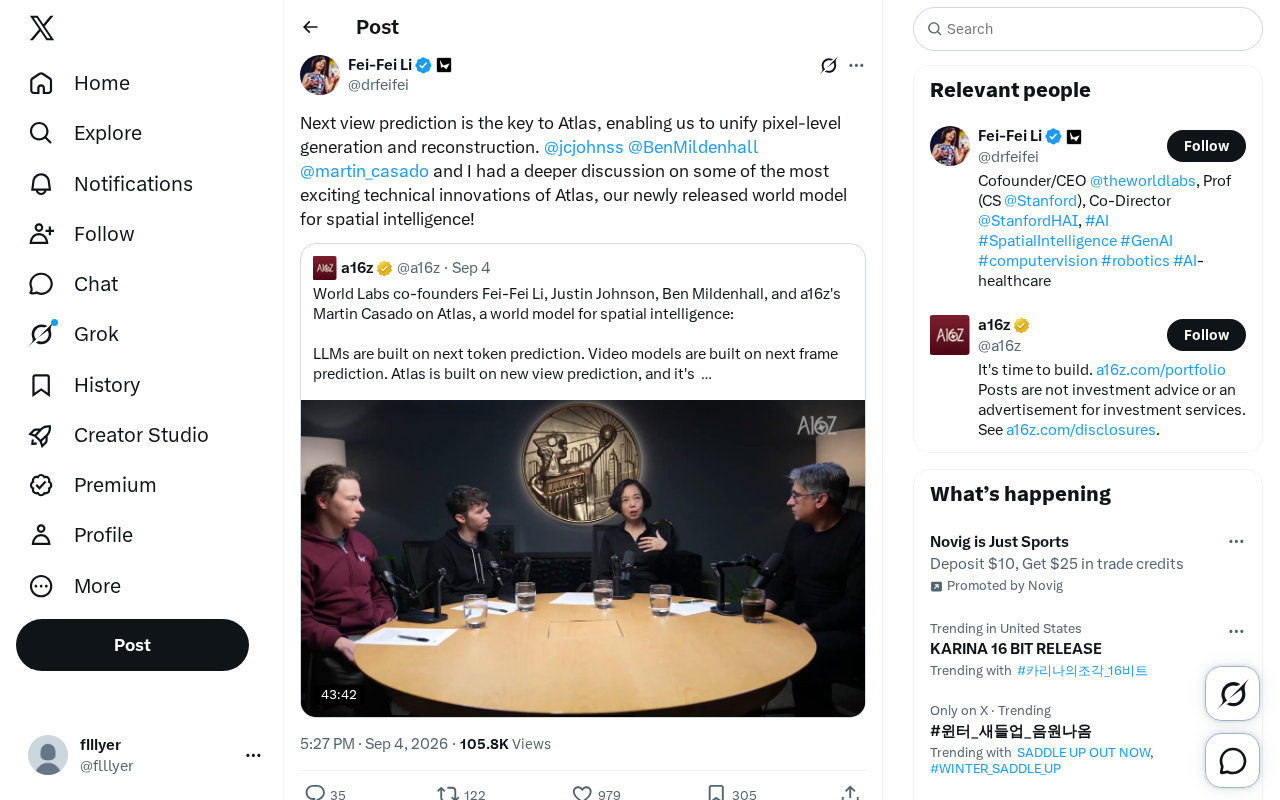
Atlas World Model Explained: How Next View Prediction Unifies Generation and Reconstruction
The Atlas world model uses Next View Prediction as its core to unify pixel-level generation and reconstruction, offering a new approach to spatial intelligence.
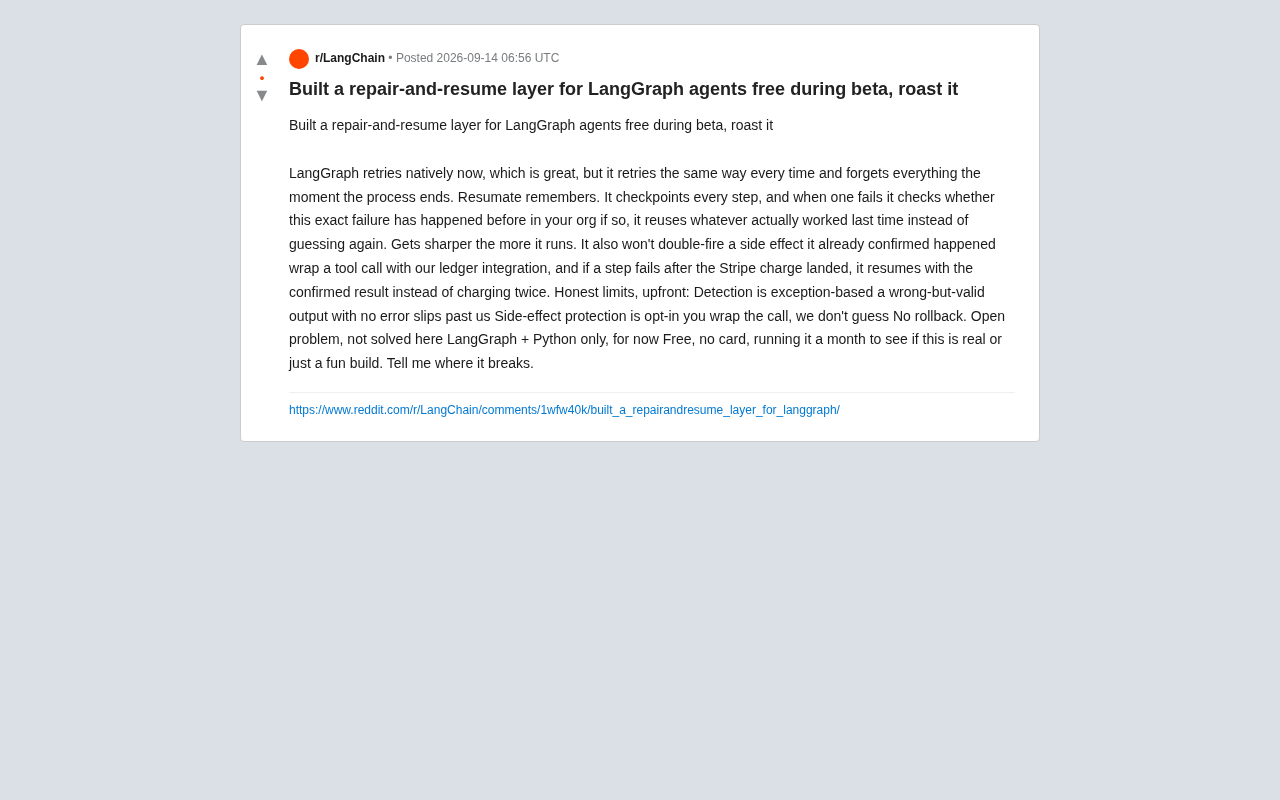
Resumate: A Deep Dive into the Repair-and-Resume Layer for LangGraph Agents
Resumate adds memory-aware checkpointing and idempotent side-effect protection to LangGraph agents, preventing issues like duplicate Stripe charges on retry.