Vibe Coding: The New AI Programming Paradigm for Full-Stack Development with Zero Coding Experience

Vibe Coding lets non-programmers build full-stack apps using natural language and AI tools.
Vibe Coding is a new AI programming paradigm coined by Andrej Karpathy that shifts development from imperative coding to intent-based natural language descriptions. This article covers three practical scenarios—frontend UI generation, backend API creation, and DevOps deployment—along with a four-step beginner's guide and honest discussion of current limitations including deep bug debugging, project memory loss, and security risks.
What Is Vibe Coding? From Imperative Programming to Intent-Based Programming
In traditional software development, developers need to master multiple tech stacks—frontend, backend, databases—and write every line of code by hand. A single misplaced semicolon can crash an entire program. Vibe Coding is fundamentally changing all of this—it lets you describe your intent in natural language, and AI handles the code generation.
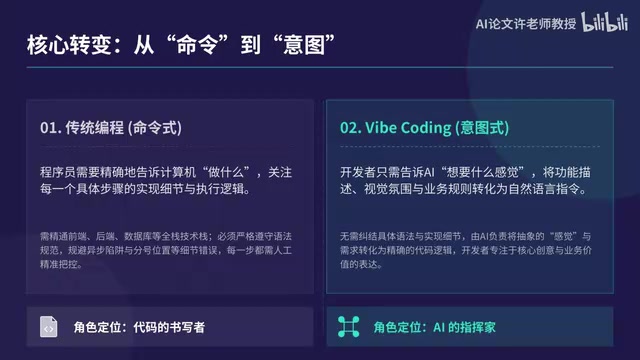
The concept of Vibe Coding was first introduced in February 2025 by Andrej Karpathy, former Tesla AI Director and OpenAI co-founder. He described an entirely new way of programming: fully immersing yourself in the "vibe," embracing exponentially growing codebases, and even forgetting that the code itself exists. Behind this idea is a fundamental shift in programming paradigms—from "imperative" to "declarative/intent-based." Imperative programming requires developers to precisely describe every step of a process, while intent-based programming only requires expressing the end goal, letting the system automatically figure out how to get there. This shift didn't appear out of nowhere—from SQL's declarative queries to Kubernetes' declarative configurations, technology has always been evolving toward "higher levels of abstraction." Vibe Coding is simply the latest milestone on this path.
In simple terms, the core idea of Vibe Coding is: you no longer tell the computer "how to do it"—you tell it "what I want." The developer's role shifts from being a "coder" who writes code line by line to a "conductor" who expresses creative ideas and business requirements. This transformation unleashes developers' creative instincts, makes programming more human, and opens up the possibility for people with zero programming experience to independently build complete applications.
Three Real-World Scenarios: How Vibe Coding Covers Full-Stack Development
Scenario 1: Frontend UI Generation—From Reading Manuals to Speaking Naturally
Implementing a complex interface used to require poring over CSS documentation, memorizing various properties, and dealing with browser compatibility issues. With Vibe Coding, you simply describe what you want:
"I want a frosted glass navigation bar with buttons that have a subtle bounce effect on hover."
The AI generates clean, standards-compliant code written directly in Tailwind CSS with high readability, and automatically incorporates component libraries like shadcn/ui.
It's worth explaining why Tailwind CSS and shadcn/ui have become the go-to tech stack for AI code generation. Tailwind CSS is a "utility-first" CSS framework that, unlike traditional frameworks like Bootstrap, doesn't provide preset UI components. Instead, it offers a large set of atomic CSS class names (e.g., p-4 for padding, bg-blue-500 for background color), and developers build interfaces by combining these classes. This approach is particularly well-suited for AI code generation because each class name has clear semantics, allowing AI to precisely control styles like assembling building blocks. shadcn/ui is a collection of copy-and-paste components built on Radix UI primitives—it's not a traditional npm dependency package but rather places component source code directly into your project, giving developers full customization control. The combination of these two has become the de facto standard for AI-assisted frontend development.
Even more impressively, you can upload a design screenshot, and the AI will reproduce the corresponding interface code.
Work that used to take hours of tweaking styles and handling compatibility can now produce a complete interface in minutes. Developers can focus entirely on interaction design and user experience.
Scenario 2: Backend API Implementation—Say Goodbye to Repetitive CRUD
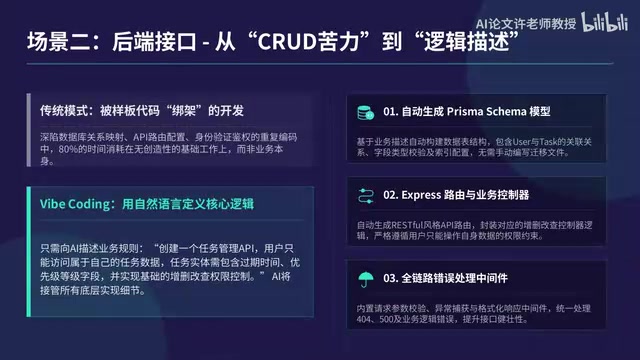
In traditional backend development, building an API endpoint requires: designing the database model → writing CRUD operations → configuring routes → handling authentication and permissions. This highly repetitive boilerplate code consumes enormous amounts of developer time, leaving little energy for actual business logic. CRUD—Create, Read, Update, Delete—refers to the four basic data operations that form the foundation of virtually every business system and represent the most repetitive work in backend development. Studies show that in a typical enterprise application, over 60% of backend code is boilerplate centered around CRUD operations.
Vibe Coding's solution: describe your business rules in natural language. For example:
"I need a task management API where users can only operate on their own tasks. Tasks should have expiration dates and priority levels."
The AI automatically generates:
- Prisma Schema models: Including table relationships, field validation, and index configuration
- Express routes and business controllers: Fully RESTful compliant
- Security mechanisms: Request parameter validation, global exception handling, unified response format (including 404/500 error handling)
- Permission checks: Automatically integrated user-level access control
Several key technologies mentioned here deserve further explanation. Prisma is a next-generation ORM (Object-Relational Mapping) tool for Node.js and TypeScript. It uses an intuitive Schema definition language to describe data models, then automatically generates type-safe database client code. Compared to traditional ORMs, Prisma's Schema syntax is closer to natural language, which enables AI to generate data models very accurately from business descriptions. RESTful is an API design architectural style that defines resource URL naming conventions (e.g., /api/tasks for a task collection), HTTP method semantics (GET for reading, POST for creating, PUT for updating, DELETE for deleting), and status code usage standards. This standardized set of conventions gives AI-generated APIs inherently good maintainability.
The entire process requires no manual migration files, and the robustness of the APIs is well assured.
Scenario 3: Integration and Deployment—One-Click DevOps
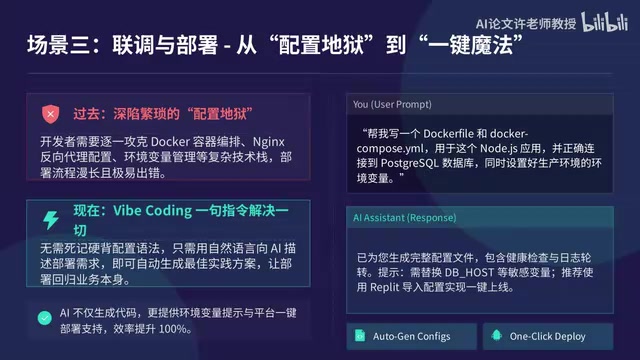
Deployment has always been a headache for developers: writing Dockerfiles, configuring Docker Compose, setting up Nginx reverse proxies, managing environment variables… A single typo can stall a deployment for half a day.
To understand why deployment is so complex, you need to know the role each technology plays. Docker is a containerization technology that packages an application and all its dependencies into a standardized "container," ensuring the application runs consistently in any environment—completely solving the classic "it works on my machine" problem. A Dockerfile is a script for building container images, while Docker Compose is used to define and manage the orchestration of multiple containers (e.g., running an application server and database simultaneously). Nginx reverse proxy acts as a middle layer between clients and backend services, handling load balancing, SSL termination, static resource caching, and more. DevOps (Development + Operations) is a culture and practice emphasizing collaboration between development and operations teams, encompassing continuous integration (CI), continuous deployment (CD), infrastructure as code (IaC), and more. While these configuration tasks are highly pattern-based, they're tedious in detail and error-prone—exactly the kind of work AI excels at.
With Vibe Coding, you simply say:
"Write me a Dockerfile and docker-compose.yml for a Node.js application connecting to a PostgreSQL database, with production environment variables set up."
The AI not only generates optimal configuration files but also tells you which environment variables need to be replaced, and integrates one-click deployment capabilities from platforms like Replit. Complex DevOps workflows are compressed into a few sentences of natural language.
Getting Started from Scratch: Four Steps to Vibe Coding
For people with absolutely no programming background, here's a learning path for Vibe Coding:
Step 1: Choose the right toolchain. Pick Cursor or Windsurf as your code editor, pair it with prototyping tools like V0.dev or Bolt.new, and use AI models like Claude or GPT-4. Your choice of toolchain directly determines your development efficiency.
These tools each have different strengths, and understanding their positioning helps you make the right choice. Cursor is an AI-native code editor deeply rebuilt on VS Code, developed by Anysphere. It deeply integrates large language models into every aspect of the editor—from code completion and multi-file editing to project-level conversational development. Windsurf (formerly Codeium) is another AI code editor known for its "Cascade" feature, which automatically senses project context and executes multi-step code modifications. V0.dev is an AI UI generation tool from Vercel where users describe interfaces in natural language or upload design mockups to generate frontend component code based on React and Tailwind CSS. Bolt.new, developed by StackBlitz, can generate, run, and deploy full-stack applications directly in the browser. Together, these tools form the infrastructure layer of Vibe Coding, with their core differences lying in context understanding capability, code generation quality, and workflow integration depth.
Step 2: Generate a project skeleton with one click. Enter your requirements in Cursor, and the AI will generate a full-stack project structure with foundational features like user authentication and theme switching, letting you jump straight into feature development.
Step 3: Iterative modular development. Break your requirements into small modules, preview the results after completing each one, and adjust visual and interaction details at any time. This incremental development approach is ideal for beginners.
Step 4: AI-assisted debugging. When you encounter errors, don't panic—copy the error message to the AI, describe the problem scenario, and the AI will help you locate and fix the issue. It's like having a debugging expert available 24/7.
Limitations of Vibe Coding: It's Not a Silver Bullet

While Vibe Coding dramatically lowers the barrier to development, we must honestly address several key limitations:
Difficulty Debugging Deep Bugs
When AI generates large blocks of code, you may not understand the internal logic. Once a deep bug surfaces, someone with no programming mindset will find themselves stuck. Vibe Coding lowers the barrier to programming, but it hasn't eliminated the need for computational thinking.
Project Memory Loss
As projects grow in scale, AI gradually "forgets" the original architectural design details. The technical root of this problem is directly related to the "context window" limitation of large language models—even the most advanced models have an upper limit on how much text they can process in a single conversation (typically tens of thousands to hundreds of thousands of tokens). When a project's codebase exceeds this window, the AI can't "see" all the code simultaneously, causing newly generated code to potentially conflict with the existing architecture. Current solutions include RAG (Retrieval-Augmented Generation) technology—having the AI retrieve the most relevant code snippets from the project before generating code—project rule files (such as Cursor Rules and .cursorrules files) to constrain AI behavior, and manually maintaining architecture documentation for AI reference. Developers need to organize and maintain this "project memory" themselves to ensure the AI doesn't deviate from the overall architecture during subsequent development.
Security Risks Cannot Be Ignored
AI-generated authentication and permission code may contain unexpected security vulnerabilities. This risk primarily stems from the training data and generation mechanisms of large language models: during training, models learn from vast amounts of open-source code, which inevitably includes examples with security vulnerabilities (such as SQL injection, XSS cross-site scripting attacks, insecure password storage methods, etc.), and the AI may "learn" these bad practices. Additionally, AI lacks deep understanding of security requirements for specific business scenarios and may generate code that is functionally correct but insufficiently secure—for example, using outdated encryption algorithms or missing edge cases in permission checks. Therefore, always have the AI generate unit tests and conduct rigorous security reviews—this step must never be skipped.
Looking Ahead: Redefining the Full-Stack Developer's Role
Vibe Coding is redefining the core competency model for full-stack developers. For future tech talent, the importance of code-writing ability may decline, replaced by these key capabilities:
- Product intuition: Can you accurately identify user pain points and translate them into AI-executable goals?
- Aesthetic and vibe sensibility: Can you define excellent user experience standards?
- Logical decomposition: Can you break complex requirements into AI-understandable instructions?
- AI collaboration skills: Can you efficiently work with AI and guide it toward the desired outcome?
Full-stack developers are evolving from "code executors" to "AI conductors." Vibe Coding isn't about replacing programmers—it's about empowering more people with creativity and product thinking to turn their ideas into reality. This paradigm shift in programming has only just begun.
Key Takeaways
Related articles
SoulFlow-Orchestrator: A Self-Hosted, Vendor-Lock-In-Free AI Agent Runtime
SoulFlow-Orchestrator is an open-source, self-hosted AI agent runtime with no vendor lock-in. Supports 9 neutral backends (Claude, OpenAI, Ollama), 141-node workflow engine, multi-agent loops, and HITL gates.
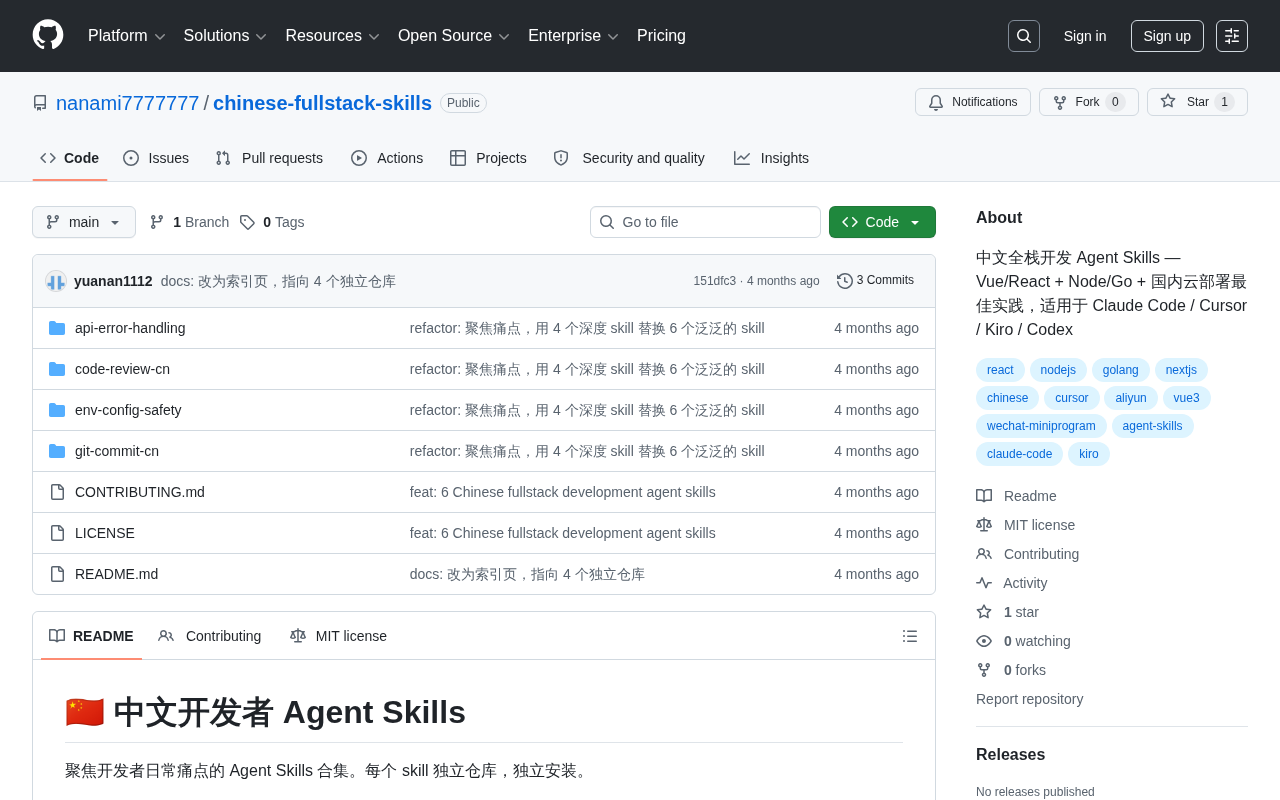
Chinese Full-Stack Agent Skills: A Skill Library Tailored for Domestic AI-Assisted Development
chinese-fullstack-skills is an Agent Skills library for Chinese full-stack development, covering Vue/React, Node/Go, and domestic cloud deployment best practices. Compatible with Claude Code, Cursor, Kiro, and Codex.
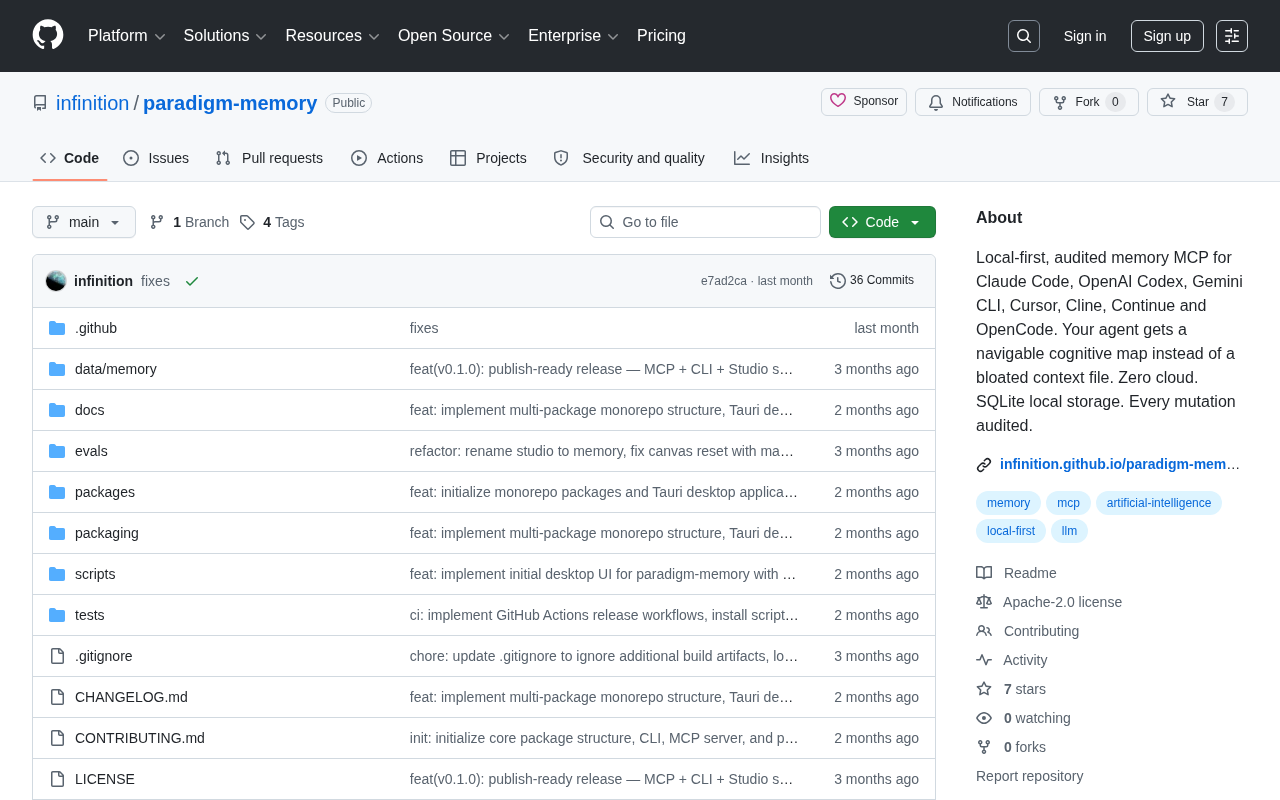
Paradigm Memory: A Local-First Memory System for AI Coding Assistants
paradigm-memory is a local MCP memory tool for Claude Code, Cursor, and Cline. It uses SQLite local storage, zero cloud, full audit trails, and a navigable cognitive map instead of bloated context files.