Vibe Patenting: Can LLM Judges Reliably Evaluate Patent Drafting?
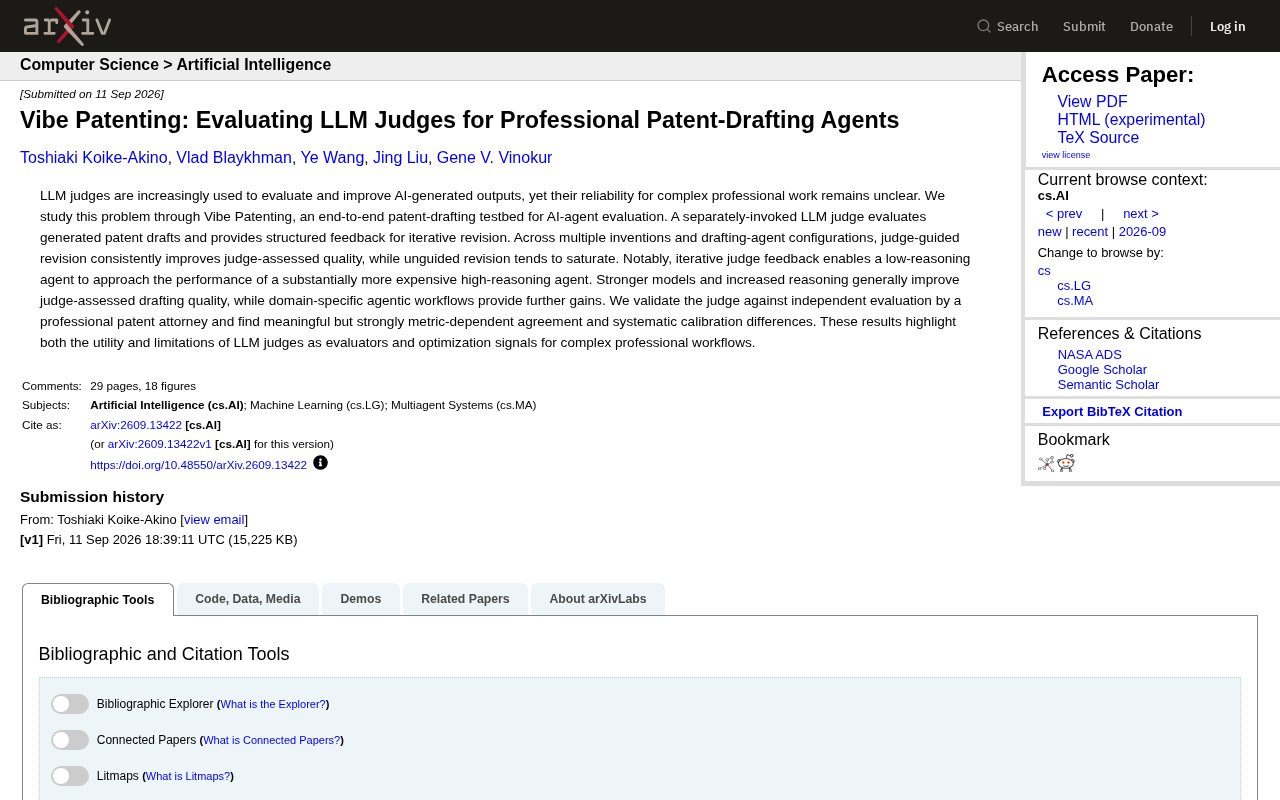
LLM judges can reliably guide patent draft iteration, but alignment with expert attorneys varies sharply by metric.
This arXiv paper uses the "Vibe Patenting" platform to systematically evaluate the value and limitations of LLM judges on the high-expertise task of patent drafting. Review-guided iteration consistently improves draft quality while unguided revision quickly plateaus; notably, an effective review feedback mechanism can even bring a low-cost "low-reasoning" agent close to a far more expensive "high-reasoning" configuration. However, when LLM judge scores were compared against a professional patent attorney's independent assessments, agreement was found to be strongly metric-dependent and affected by systematic calibration gaps — affirming the engineering value of LLM judges while warning developers that automated evaluation in high-expertise domains must be carefully calibrated against human judgment on specific dimensions.
When LLMs Become the "Judges" of Professional Work
Large language models (LLMs) are increasingly being used to evaluate and refine AI-generated content — models playing this evaluative role are known as "LLM judges." They can quickly produce scores and feedback, seemingly providing a closed loop for AI systems to iteratively improve themselves. But a critical question remains unresolved: in complex tasks that demand deep domain expertise, how reliable are these AI judges?
A recent paper on arXiv (arXiv:2609.13422) tackles this question through one of the most demanding scenarios imaginable — patent drafting. The researchers built an end-to-end evaluation platform called Vibe Patenting, specifically designed to assess AI agents on patent drafting tasks while simultaneously examining whether LLM judges are reliable as both evaluators and optimization signals.
How Vibe Patenting Works
At the core of the platform is an iterative "draft–review–revise" loop. A separately invoked LLM judge evaluates generated patent drafts and produces structured feedback, which the drafting agent uses to guide the next round of revisions. This decoupled design — keeping the judge separate from the drafter — is intended to mirror the "author" and "reviewer" role separation found in real professional workflows.
The study spans multiple invention topics and various drafting agent configurations to ensure the findings generalize beyond any single case. This setup enables systematic comparison between revision guided by reviewer feedback versus unguided free revision, measuring how much each approach actually improves draft quality.
The Real Gains from Review Feedback
The most striking finding is that review-guided revision consistently improves draft quality, while unguided revision tends to plateau quickly — meaning the model rewrites its own output repeatedly but stops making meaningful progress after a certain point.
An especially valuable insight is that iterative review feedback can bring a "low-reasoning" agent close to the performance of a far more expensive "high-reasoning" agent. Rather than simply stacking more compute or upgrading to a pricier model, introducing an effective review feedback mechanism can achieve near-high-end output quality at a fraction of the cost. This has direct implications for cost management in real-world deployments.
The research also confirms several intuitive patterns: stronger base models and greater inference investment generally yield higher-quality drafts, while patent-domain-specific agent workflows can push quality even further on top of that.
Comparing Against Human Patent Attorneys: A Critical Validation Step
If LLM judges only evaluate each other, the whole loop risks becoming an echo chamber — models may simply optimize for metrics they themselves favor, rather than genuine professional quality. To address this, the researchers performed a crucial validation: comparing LLM judge evaluations against independent assessments by a professional patent attorney.
The results reveal what the authors describe as "valuable but strongly metric-dependent" agreement. In other words, on certain evaluation dimensions, AI judges align quite well with human expert judgment; on others, that alignment weakens considerably. The study also identified systematic calibration gaps — stable scoring biases between AI judges and human experts.
This finding is both encouraging and cautionary: LLM judges do capture real quality signals, but they are not a perfect substitute for human experts, and their reliability depends heavily on which specific metrics you are looking at.
Implications for AI in Professional Applications
The significance of this research extends well beyond patent drafting. It exposes the dual nature of LLM judges in complex professional workflows: useful optimization tools, but with clearly defined limitations.
For developers looking to apply AI to high-expertise tasks — legal documents, medical reports, financial analysis — several takeaways are worth keeping in mind:
- Review-feedback-driven iteration is an effective lever for improving output quality, and can partially substitute for relying on more expensive models;
- LLM judge scores should not be trusted blindly, especially when comparing across metrics — human calibration against specific dimensions remains necessary;
- Domain-customized workflow design is still indispensable; general-purpose models paired with professional-grade orchestration yield the best results.
The real value of Vibe Patenting lies in going beyond the surface-level question of "can AI write patents?" to ask something deeper: is the measuring stick we use to judge AI outputs itself trustworthy? As AI systems increasingly rely on automated evaluation to improve themselves, the answer to that question directly determines the integrity of the entire optimization loop.
Related articles
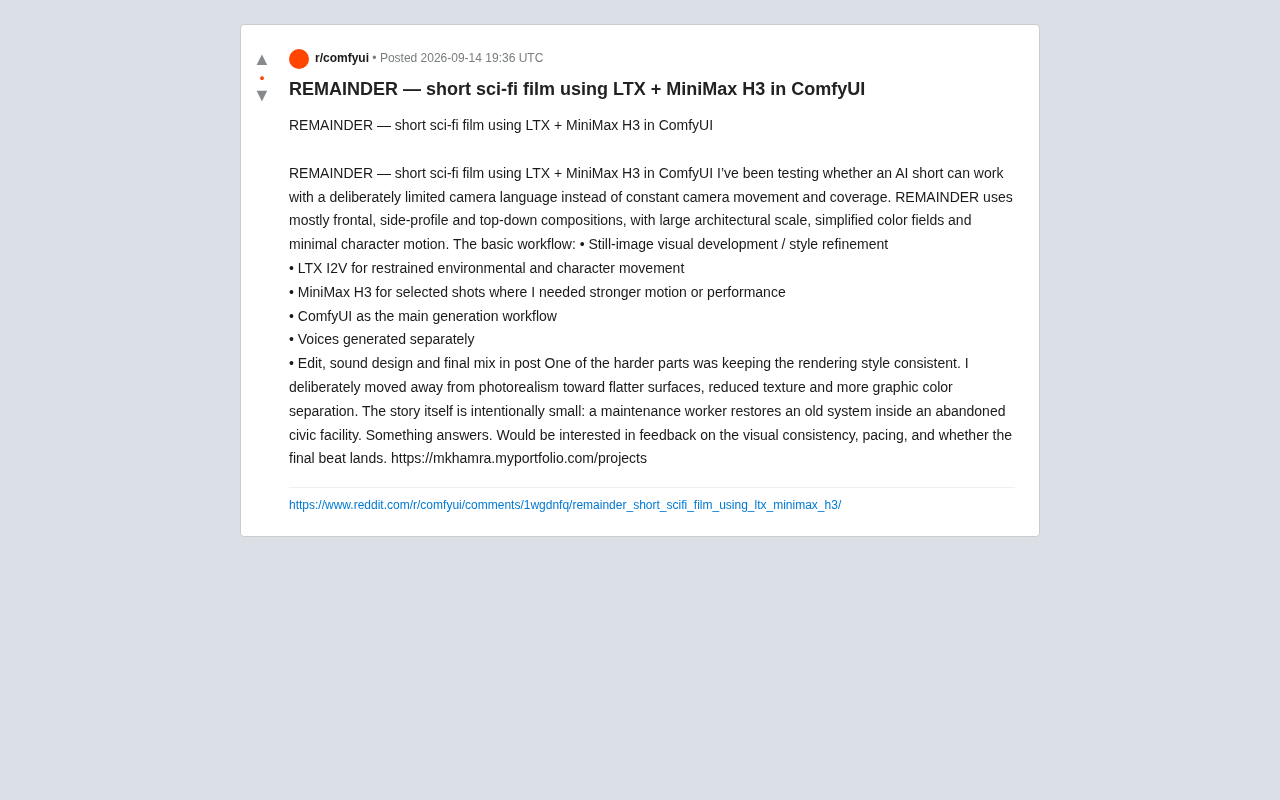
Building an AI Sci-Fi Short with LTX + MiniMax H3: Restrained Cinematography in ComfyUI
Sci-fi short REMAINDER uses LTX, MiniMax H3, and ComfyUI with restrained cinematography and flat aesthetics to solve visual consistency in AI filmmaking.
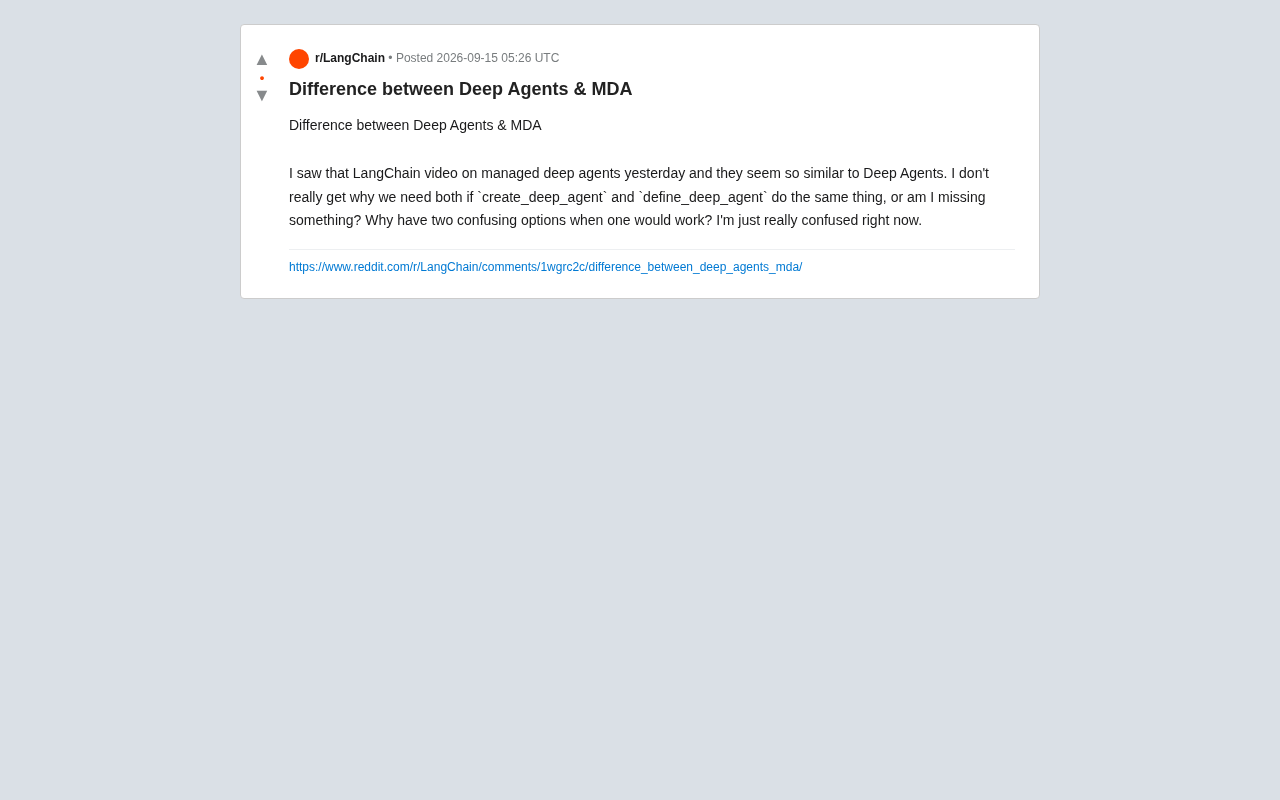
LangChain Deep Agents vs. MDA: Clearing Up the Confusion for Developers
What's the difference between LangChain's Deep Agents and MDA (Managed Deep Agents)? We break down create_deep_agent vs. define_deep_agent and help developers choose.
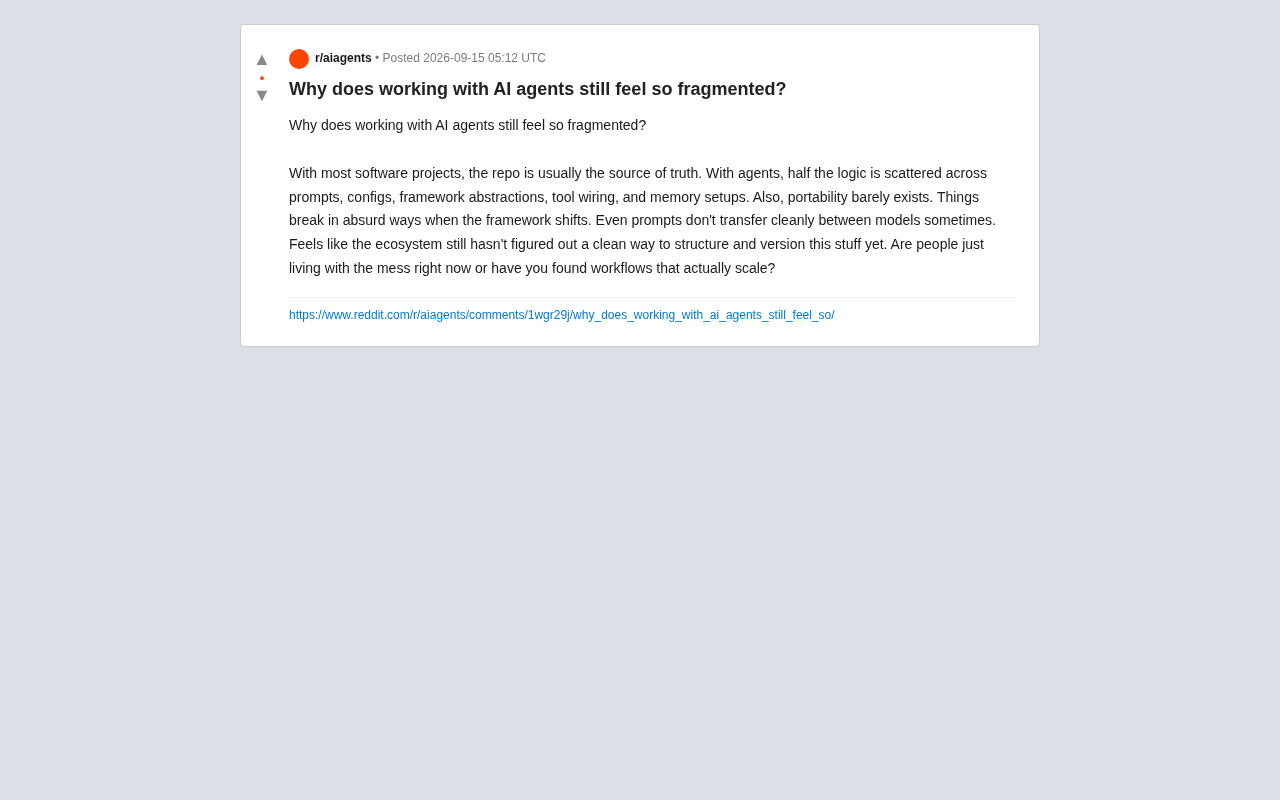
Why Is AI Agent Development So Fragmented? The Real Causes and How to Work Around Them
Why does AI Agent development feel so fragmented? Logic scattered across prompts, configs, and frameworks makes portability nearly impossible. Here's why — and how to cope.