Vimgolf.ai: Learn Vim Through a Level-Based Game

Vimgolf.ai gamifies Vim learning through progressive level-based challenges enhanced with AI assistance.
Vimgolf.ai is a new learning tool that tackles Vim's notoriously steep learning curve through gamified level-based challenges. Drawing inspiration from the Vim Golf community tradition of minimal-keystroke editing, it adds AI capabilities for personalized feedback and adaptive difficulty. The article compares it with existing tools like VIM Adventures and vimtutor, and discusses how gamification psychology and AI-assisted learning could make mastering Vim more accessible.
Why Vim Is So Hard to Learn
Vim, a text editor born in 1991, remains a beloved tool for countless developers. It's renowned for its powerful keyboard operations and extreme editing efficiency, yet its steep learning curve has deterred many beginners. "How to exit Vim" has even become an enduring meme in programming circles.
Vim (Vi IMproved) was developed by Bram Moolenaar as an improvement on the earlier Vi editor (created by Bill Joy in 1976). Its design philosophy is rooted in Modal Editing — the editor switches between different modes: Normal mode for navigation and commands, Insert mode for text input, Visual mode for selecting text, and Command-line mode for executing complex instructions. The intent behind this design is to keep both hands on the keyboard's Home Row, maximizing editing efficiency. Born in the terminal era, Vim doesn't rely on a mouse or graphical interface — all operations are completed through key combinations. This makes it nearly irreplaceable in scenarios like SSH remote connections and server administration. And precisely because of this, understanding the switching logic between these modes becomes the first psychological barrier for beginners.
Addressing this pain point, a product called Vimgolf.ai made its debut on Hacker News as a Show HN post. It attempts to make the Vim learning process more fun and progressive through gamified level-based challenges.
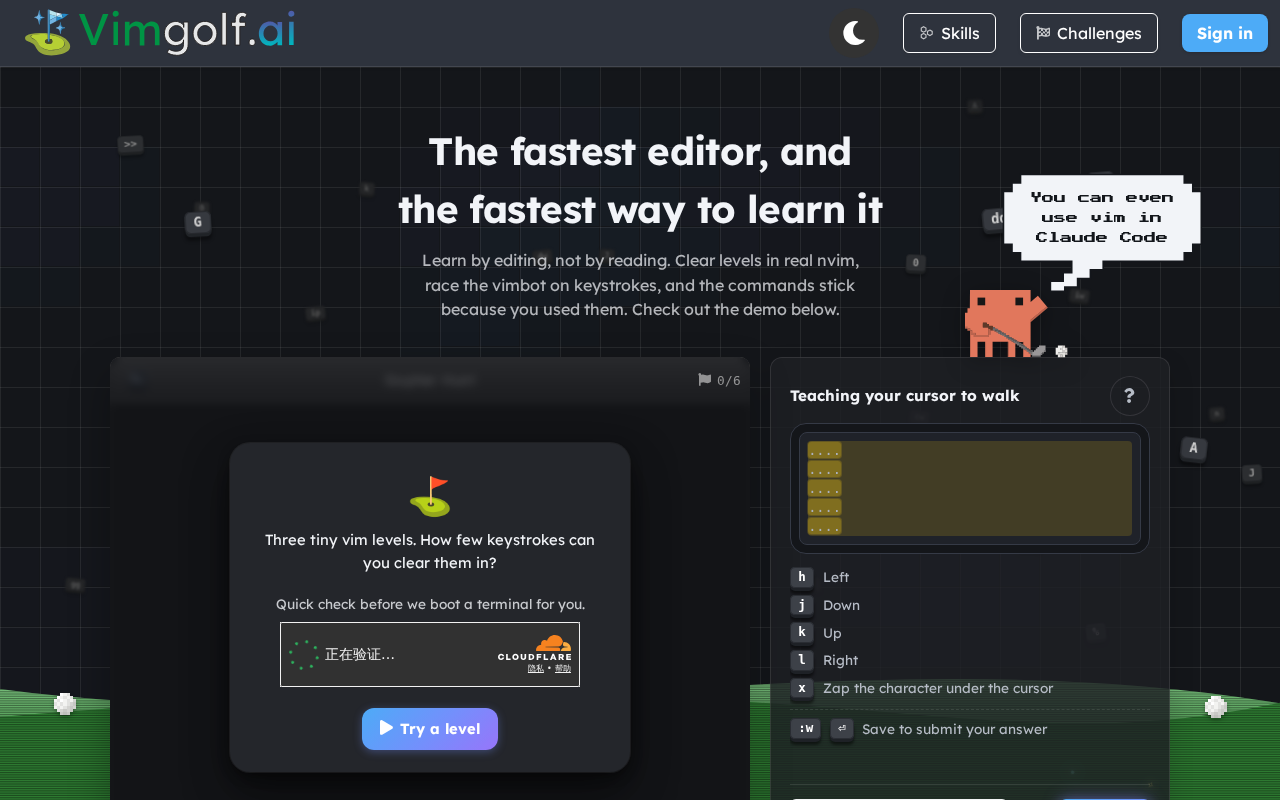
What Is Vimgolf.ai: A Level-Based Vim Learning Tool
From a product positioning perspective, Vimgolf.ai's core philosophy is "learn Vim through a map of levels." Users no longer need to face dry command manuals or lengthy tutorials. Instead, they progress through levels like playing a game, gradually mastering various Vim commands.
The Meaning Behind the Vimgolf Name
The name "Vimgolf" itself has deep roots. In the Vim community, there's a classic challenge called Vim Golf — completing a text editing task with the fewest possible keystrokes (just like golf aims for the fewest strokes). This challenge tests familiarity with Vim commands while inspiring developers to continuously optimize their operation paths.
Vim Golf (vimgolf.com) is an online competitive platform created by developer Ilya Grigorik. Each challenge provides a starting text and a target text, and participants must complete the transformation with the minimum keystroke sequence. A global leaderboard mechanism fuels the competitive spirit among geeks. This "code golf" style minimalist challenge culture originated from the Perl community and later expanded to multiple programming domains. Vim Golf works because Vim commands have extremely strong composability — a verb (operation) + noun (text object) grammar structure, such as daw (delete a word) or ci" (change inside quotes), enables experts to accomplish complex edits with minimal keystroke sequences, while beginners often need many times more keystrokes to achieve the same result.
Vimgolf.ai clearly draws from this concept, adding the ".ai" suffix to suggest it may incorporate AI capabilities to assist learning or evaluate user operation efficiency.
Core Advantages of Gamified Vim Learning
Gamefying the learning process is an important trend in educational technology in recent years. Compared to traditional linear tutorials, level-based design offers several clear advantages:
- Instant feedback: Upon completing each level, users immediately gain a sense of achievement, forming a positive reinforcement loop.
- Progressive difficulty: The level map design introduces knowledge from easy to advanced, preventing beginners from being overwhelmed by too many commands at the start.
- Sustained motivation: Gamification mechanisms (such as progress tracking, scoring, and leaderboards) effectively extend learners' persistence.
The theoretical foundation of gamified learning draws from multiple psychological research fields. Mihaly Csikszentmihalyi's Flow Theory states that when task difficulty precisely matches a person's skill level, they enter a highly focused and enjoyable "flow" state. B.F. Skinner's operant conditioning theory explains how immediate rewards reinforce behavioral patterns. In the EdTech space, Duolingo is a benchmark case for gamified learning — through streak mechanisms, experience points, and league systems, it has multiplied daily user retention rates for language learning. For skills like Vim that require repetitive practice to build muscle memory, gamified design's "short-cycle rewards" are particularly effective because they transform otherwise monotonous repetitive practice into goal-oriented challenges.
For a tool like Vim with numerous commands requiring extensive muscle memory, this phased, visual learning path is especially fitting.
How AI Assistance Improves Vim Learning Efficiency
In the field of AI-assisted learning, Large Language Models (LLMs) have demonstrated powerful personalized teaching potential. AI can analyze users' keystroke sequences in real-time, compare them with optimal solutions, and identify redundant operations and inefficient patterns. For example, if a user repeatedly uses hjkl for character-by-character movement instead of w/b for word-by-word jumping, AI can precisely recommend corresponding advanced commands.
Adaptive Learning Systems can dynamically adjust content delivery based on user proficiency — a technology already validated in educational platforms like Knewton and Carnegie Learning. For Vimgolf.ai, AI's value could manifest on multiple levels: path optimization suggestions (telling you a shorter keystroke sequence exists), personalized level recommendations (pushing targeted exercises based on weak points), and operation pattern recognition and diagnosis (detecting that you consistently forget to use text object commands). This intelligent feedback far surpasses the static "check against the answer" mode of traditional tutorials, potentially achieving truly personalized instruction.
Vim Learning Tool Ecosystem Comparison
It's worth noting that Vimgolf.ai is not the first product attempting to lower Vim's learning barrier. Several well-known tools have already established themselves in this space:
Vim's Built-in vimtutor
Vim itself includes the vimtutor command, providing an approximately 30-minute interactive tutorial that serves as many people's first contact with Vim. It covers core operations like basic movement, editing, and saving, but its format is relatively limited.
VIM Adventures
This is a widely acclaimed browser game where players control a character moving across a map, solving puzzles by using Vim's movement and editing commands. Vimgolf.ai's "level map" design approach shares notable similarities with it.
Vim Genius, OpenVim, and Other Online Tools
These tools have also attempted to teach Vim operations through interactive approaches from different angles, each with their own focus.
If Vimgolf.ai wants to stand out in this competitive space, its integrated AI capabilities may be the key differentiator — for example, intelligently analyzing users' keystroke efficiency, providing personalized optimization suggestions, or dynamically adjusting level difficulty based on learning progress.
Current Status and Prospects of an Early-Stage Product
It should be objectively noted that based on Hacker News data, this product currently has limited attention — only 7 upvotes and 1 comment. This indicates it's still in a very early stage, and the actual user experience, AI feature maturity, and richness of level content all await further market validation.
For indie developers, Show HN is an excellent validation channel. Show HN is a section of Hacker News (a tech community under Y Combinator) where developers showcase products or projects they've built, receiving public review from the tech community. Unlike Product Hunt which emphasizes marketing narratives, Show HN's audience is primarily engineers, and feedback typically focuses more on technical implementation and practical utility. Historically, early versions of well-known products like Dropbox and GitLab received critical feedback on HN. Seven upvotes on HN represents relatively low engagement, usually meaning the product hasn't yet hit the community's excitement threshold — perhaps due to an insufficiently compelling title, poor posting timing, or insufficient product differentiation. However, many successful products' first Show HN posts were also unremarkable; the key is whether founders can extract direction from limited feedback and iterate quickly.
Conclusion: Can Gamification Solve the Vim Learning Challenge?
Vimgolf.ai represents an approach worth affirming: using gamification and AI technology to solve a problem that has persisted for over thirty years. Vim's value is beyond question, but its learning barrier has genuinely turned away too many potential users.
If Vimgolf.ai can truly polish its level design to be sufficiently elegant and make its AI-assisted features deliver real results, it has the potential to become an engaging starting point for a new generation of developers entering the world of Vim. Of course, how far the product can ultimately go still needs time and users to provide the answer. Interested readers might want to try it out for themselves and experience the joy of "learning Vim through play."
Related articles
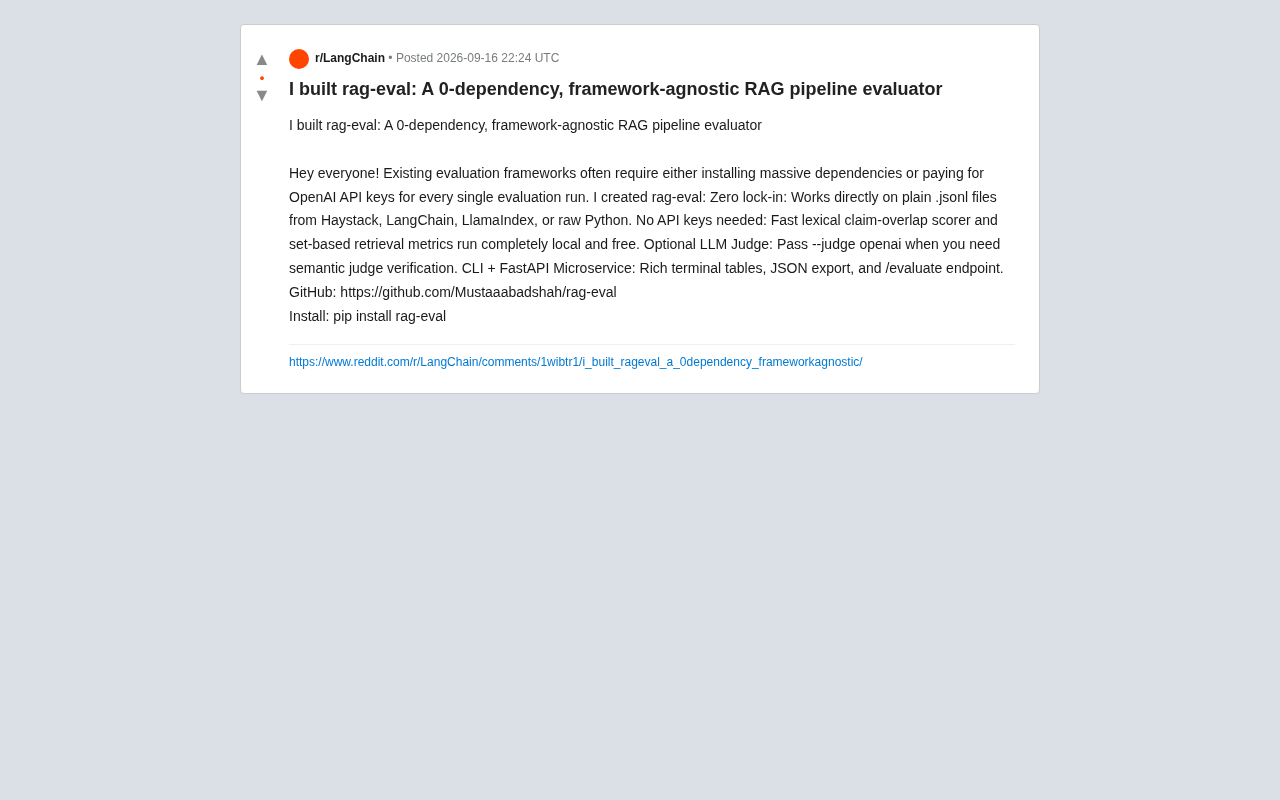
rag-eval: A Zero-Dependency, No-API-Key RAG Evaluation Tool
rag-eval is a zero-dependency, framework-agnostic open-source RAG pipeline evaluation tool. It supports free local lexical and retrieval metrics with no API keys required, and offers optional LLM Judge for semantic validation. Compatible with Haystack, LangChain, and LlamaIndex.

Vercel AI SDK Releases workflow-harness 1.0.115 Patch Update
Vercel AI SDK releases @ai-sdk/workflow-harness 1.0.115 patch update, syncing the @ai-sdk/harness dependency. Learn about the update, release mechanism, and what it means for developers.
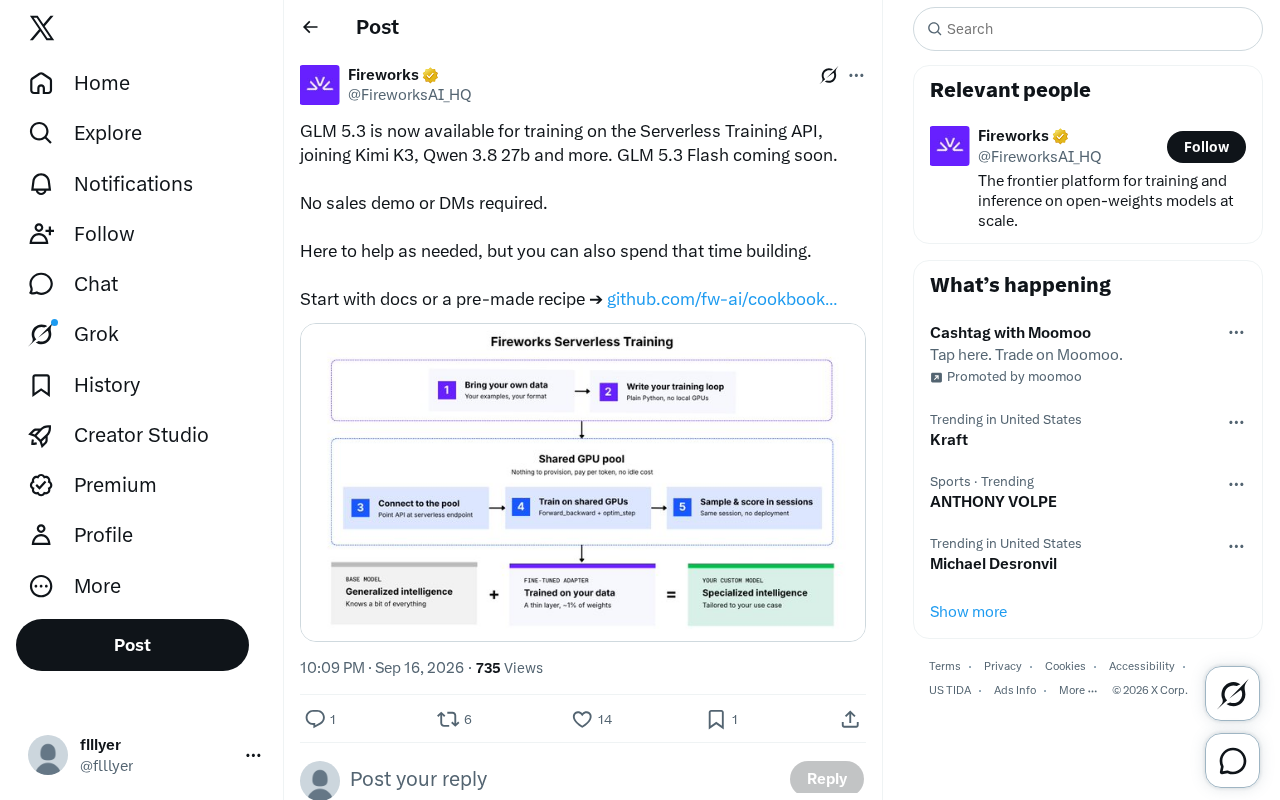
GLM 5.3 Now Available on Serverless Training API — No Sales Process Required
GLM 5.3 is now available on Serverless Training API alongside Kimi K3 and Qwen 3.8 27b. No sales process needed — start fine-tuning directly via docs or pre-made recipes.