Voicemod Launches Portable Device: Real-Time Voice Changing Goes Mobile

Voicemod's new portable hardware brings real-time voice changing directly to smartphones for everyday mobile use.
Building on its console-focused Voicemod Key dongle, Voicemod has unveiled a pocket-friendly portable device that brings real-time voice changing directly to smartphones — no longer requiring the phone to act as a bridge between a console and an app. The move reflects a broader market shift away from hardcore PC and console gaming toward more casual mobile use cases like short-form video and social audio. Voicemod is following a clear "software → console peripheral → portable hardware" expansion path. Key specs including price, battery life, platform support, and actual latency have yet to be disclosed.
Voicemod Puts Real-Time Voice Changing in Your Pocket
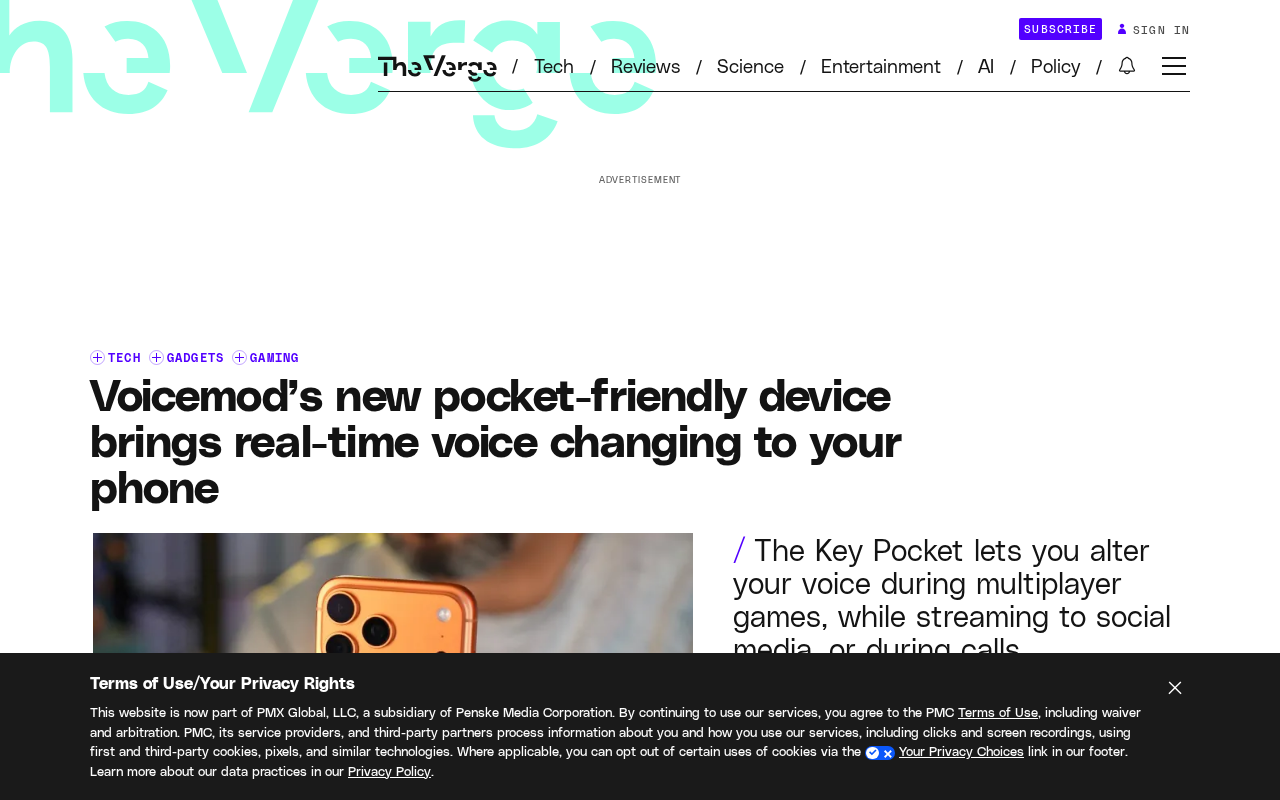
Voicemod has officially released a new mobile device that extends the capabilities of its previously launched Voicemod Key dongle. The company — best known for its real-time voice changing technology — has primarily operated in PC and gaming contexts, but is now setting its sights on broader mobile use cases.
According to original reports, the Voicemod Key dongle was initially designed to bring the company's real-time voice changing technology to console platforms, including Xbox and PlayStation. In that setup, the smartphone played the role of a "bridge" between the app and the console, without directly handling voice output itself. The newly announced portable device represents a meaningful expansion beyond that model.
From Console Accessory to Standalone Portable Hardware
The biggest shift with this new device is moving the primary use case from "console peripheral" to "direct mobile connection." Previously, users who wanted Voicemod's voice effects on a console had to rely on a phone app as an intermediary bridge. The new device takes things further — bringing real-time voice changing directly to the phone itself, with a focus on a pocket-friendly, on-the-go form factor.
For content creators, live streamers, and online gamers, the significance of dedicated hardware like this lies in lowering the barrier to real-time voice changing. Compared to software solutions that depend on device performance and system configuration, a compact dedicated hardware unit typically delivers more stable, low-latency output — and is easier to move between different devices.
The core technical challenge in real-time voice changing is latency control. The entire pipeline — from audio capture through algorithm processing to output — must complete within a window short enough that the human ear perceives no lag. The industry generally sets the acceptable end-to-end latency ceiling at around 20 milliseconds. Software solutions running on general-purpose CPUs are susceptible to resource contention and driver scheduling, which can cause latency fluctuations. Dedicated hardware — such as DSP chips or custom ASICs — can offload the voice-changing algorithm to a specialized processing unit, bypassing the OS scheduling layer entirely for more consistently low-latency output. This is the primary technical motivation behind Voicemod's choice to ship standalone hardware in dongle form, rather than relying solely on software processing within the phone app.
A Shift in Positioning for the Real-Time Voice Changing Market
Voicemod's move reflects a broader trend: real-time voice changing is expanding beyond the "hardcore player" contexts of PC and console gaming, toward more everyday, mobile-centric use cases. Voice changing technology has historically served gaming voice chat and streaming entertainment, but with the rise of short-form video, social audio, and online interaction, there's a new imaginative space for always-with-you voice changing hardware.
From a product strategy perspective, Voicemod has followed a progressive path: software first, then hardware, then portable. It started by building a user base with its app and PC software, then entered the console market with the Voicemod Key, and is now launching a portable device to round out the mobile experience. This iterative approach both leverages existing technical investment and steadily expands the addressable user base.
The "dongle" in Voicemod Key takes its name from the USB hardware tokens historically used for software license verification in the computer industry — a form factor still widely used in audio, video, and professional software today. Within Voicemod's product ecosystem, this compact USB device serves a dual role: it acts as a license carrier while also housing onboard audio processing capabilities, enabling it to plug into a console controller or mobile device and handle voice-changing computation without relying on the host device's processing power. This all-in-one "licensing + processing" hardware design is one of its core differentiators from purely subscription-based software products.
Key Questions Worth Watching
Publicly available information remains limited, and several critical details have yet to be officially disclosed — including the device's specific price, battery life, range of supported platforms, and real-world voice changing latency. These specs will directly determine how competitive it proves in actual use.
For potential buyers, whether it's worth picking up comes down to personal use frequency and context: high-frequency streamers and gamers may value the stability and convenience of dedicated hardware, while casual users may prefer to stick with free or subscription-based software solutions. Until more complete reviews and full specifications are available, the prudent move is to keep watching and wait for real-world test data.
Related articles

Databricks Genie: The AI Analytics Assistant That Tripled a Marketing Team's Data Usage
Databricks' AI analytics assistant Genie tripled marketing team data usage. Discover how this conversational NL2SQL tool lowers the data access barrier and what it means for enterprise AI adoption.

How The Oregon Trail Became a Cultural Icon for Generations
How The Oregon Trail grew from educational software into a multigenerational cultural icon — through classrooms, "You have died of dysentery," and shared childhood memories.

Health Benefits Platform Thatch Hits $1B Valuation as Healthcare Costs Surge
Thatch raises $108M and hits a $1B valuation, backed by a16z, Index Ventures, and General Catalyst, as surging U.S. healthcare costs drive demand for flexible benefits platforms.