Voxelo 3.0: Turn a Phone Video into a 3D Model and JSON-LD in One Hour

Voxelo 3.0 turns phone videos into 3D assets and publishes them as JSON-LD so product pages serve both humans and AI agents.
Voxelo 3.0 converts a three-minute phone video into a realistic 3D digital twin in about an hour, stressing "captured, not generated." The 3D assets support interactive previews, AR placement, and AI-driven imagery. Its key differentiator is publishing 3D data as JSON-LD with 2-3x the attributes of typical product pages, helping AI shopping agents and search engines parse product features. Voxelo also offers free hosting for 100 existing 3D Gaussian splatting assets, plus a new API, analytics, and SuperSplat publishing. Challenges remain: time cost per model, limited AR adoption, and the long-term nature of structured data returns.
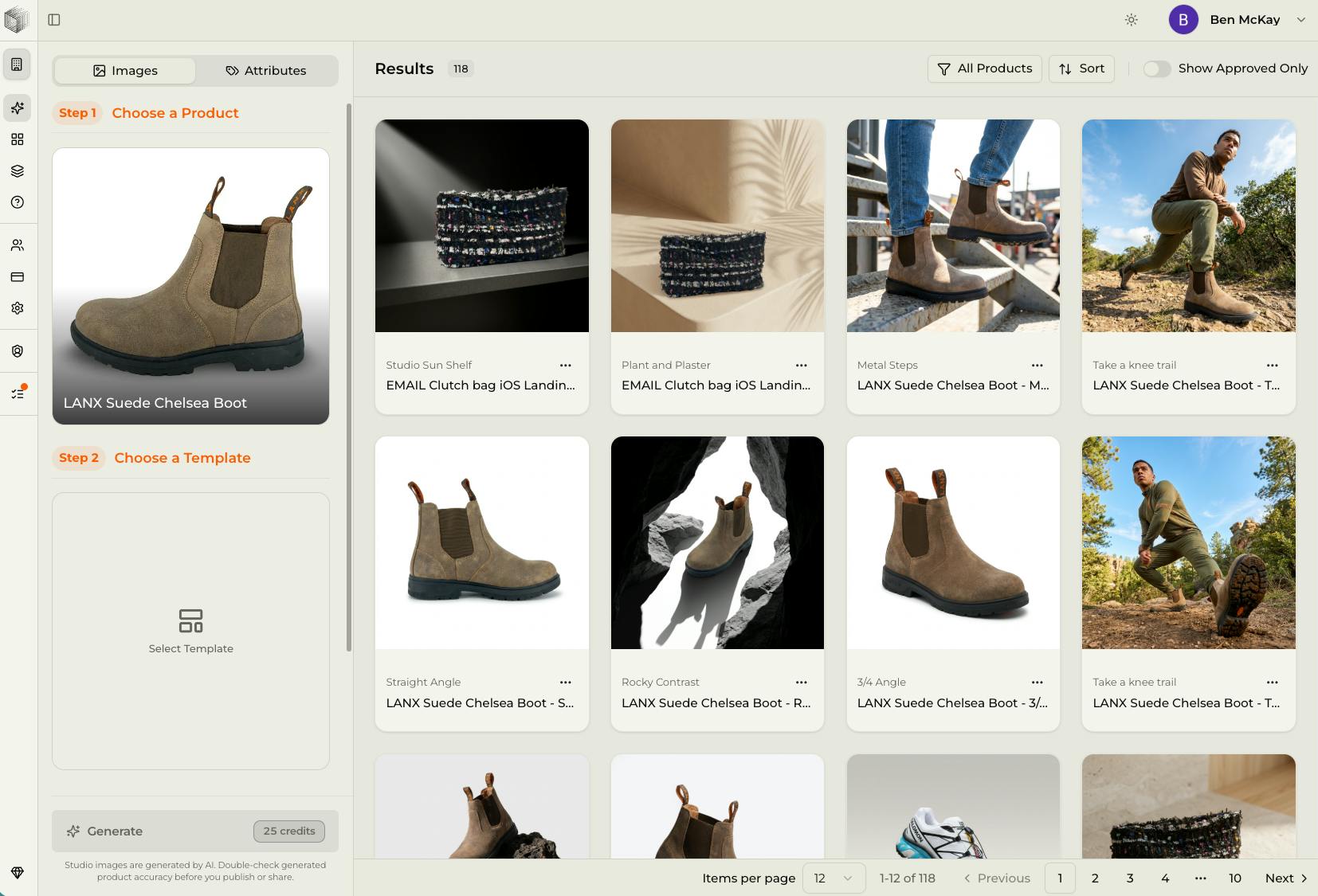
While brands are still racking their brains over product page conversion rates, a new group of "consumers" has quietly emerged: AI agents. Voxelo 3.0 aims to solve a problem that has been overlooked: your product information not only needs to be understandable by humans, but also machine-readable.
From phone video to interactive 3D assets
Voxelo's core capability is turning a three-minute phone video into a realistic 3D digital twin in about one hour. This 3D model is not "fabricated" by generative AI—it is "captured" from real footage. The company emphasizes "Captured, not generated," a distinction that matters greatly in e-commerce, where the accuracy of product presentation directly affects consumer trust.
The resulting 3D assets can be used in multiple forms: interactive 3D previews, AR space placement triggered without any installation, and AI-driven product and lifestyle images. This means merchants don't need a professional studio or a 3D modeling team—a phone shoot alone can produce a reusable set of visual assets.
JSON-LD: Making your products readable by AI agents
What sets Voxelo 3.0 apart even more is that it publishes captured 3D information as JSON-LD and provides 2-3x more product attributes than a typical product page. JSON-LD is a standard format for structured data that search engines and AI agents can parse directly.
The thinking behind this: future product page traffic will come not only from human browsing but also from machine-side channels like AI shopping assistants and intelligent agents. If product data isn't sufficiently structured, AI agents may fail to accurately understand product features when retrieving and recommending. Voxelo converts the spatial and material information obtained during 3D capture into machine-readable attributes—effectively optimizing the product page for two consumers at once: "humans" and "AI."
JSON-LD (JavaScript Object Notation for Linked Data) is a lightweight linked data format based on JSON, recommended by the W3C as a standard serialization for structured data. On web pages, it is typically embedded via the <script type="application/ld+json"> tag to describe the entities, attributes, and relationships of page content. For e-commerce product pages, common Schema.org vocabularies (such as Product, Offer, AggregateRating) can be annotated via JSON-LD, allowing search engines (like Google) and AI agents to extract key information directly without parsing HTML structure. Compared with Microdata or RDFa, JSON-LD separates structured data from the presentation layer, making it easier to maintain and generate dynamically. Voxelo maps spatial and material information from 3D capture into JSON-LD attributes, leveraging exactly this machine-readable advantage to provide AI agents with richer semantic context than traditional product pages.
Hosting and toolchain for existing 3D Gaussian splatting assets
For users who already have 3D Gaussian splatting (splats) assets, Voxelo offers free hosting for 100 models, complete with a viewer, AR links, an editor, and an API. Version 3.0 adds an API, analytics, and the ability to publish to SuperSplat.
The positioning of this toolchain is clear: it's not just a capture tool but a hosting and distribution platform for 3D assets. The addition of the API means merchants can embed 3D display capabilities into their own e-commerce systems, while the analytics feature lets teams track how 3D assets are actually being used.
3D Gaussian Splatting is an emerging real-time 3D reconstruction and rendering technique proposed in 2023 by institutions including INRIA. It represents scenes with millions of anisotropic 3D Gaussian ellipsoids, each carrying position, covariance, opacity, and spherical harmonics (for view-dependent color), and achieves fast training and real-time rendering through a differentiable rasterization pipeline. Compared with Neural Radiance Fields (NeRF), 3D Gaussian Splatting significantly improves rendering speed while maintaining realism, and the model can be edited and streamed directly. In e-commerce, this technique can reconstruct high-fidelity product appearances from multi-view video, especially suited to objects with reflective, transparent, or complex textures. Voxelo's "capture" capability is likely based on such methods, and its free hosting service lowers the barrier for merchants to use Gaussian splatting assets.
The reality and limits of 3D in e-commerce
Voxelo 3.0 received 88 upvotes and ranked 11th on Product Hunt, showing genuine market interest in "low-cost 3D product display." But it's worth taking a sober view: generating one 3D model per hour is still a significant time cost for merchants with large SKU counts; and consumer adoption of AR placement is limited by device availability and user habits.
Moreover, the value of "2-3x product attributes" depends on whether those attributes are actually adopted by mainstream search engines and AI agents. The benefits of structured data tend to be long-term and indirect, making it hard to attribute directly to conversion rate improvements in the short term.
Voxelo's direction is worth watching: it's betting on a shift in product content from "made for humans to see" to "made for humans and machines to see together." For e-commerce teams looking to get ahead on AI agent traffic, this kind of tool offers a testable entry point.
AI shopping assistants and intelligent agents typically rely on structured data, APIs, and natural language understanding to retrieve and recommend products. Unlike human browsing, agents focus more on attribute completeness, unit standardization, and entity relationships. For example, an agent might filter products based on fields like material, color, and width in JSON-LD; if this information is missing or unstructured, the agent may fail to accurately match user intent. Therefore, optimizing product pages for machines means providing more fine-grained, semantically explicit attributes and ensuring data is accessible through standard protocols (such as Schema.org and OpenAI function calling). If Voxelo's claimed "2-3x product attributes" can be parsed by mainstream agent platforms, it will boost product visibility in AI-driven traffic—but actual adoption still depends on ecosystem support.
One-line Summary
Voxelo 3.0 turns phone videos into 3D assets and publishes them as JSON-LD, letting product pages serve both humans and AI agents.
Paragraph Summary
Voxelo 3.0 is a tool that turns a three-minute phone video into a realistic 3D digital twin in about one hour, emphasizing "captured, not generated" to ensure product presentation accuracy. The resulting 3D assets can be used for interactive previews, AR placement, and AI-driven imagery. Its differentiator is publishing 3D information as JSON-LD structured data, offering 2-3x the attributes of a typical product page, so AI shopping agents and search engines can directly parse product features—optimizing both human and machine consumers. Voxelo also offers free hosting for existing 3D Gaussian splatting assets (100 models) and adds an API, analytics, and SuperSplat publishing. Despite its Product Hunt traction, the one-hour-per-model time cost, limited AR adoption, and the long-term nature of structured data benefits remain real challenges. Overall, Voxelo is betting on product content shifting from "made for humans" to "made for humans and machines alike," offering e-commerce teams an entry point to test AI agent traffic.
Related articles

Red Flags for Product-Market Fit: A Practical Guide from Top VCs and the Superhuman Founder
Investors from Iconiq and Sapphire Ventures and Superhuman founder Rahul Vohra share PMF red flags and practical methods, including the 40% disappointment rule, retention curves, and acquisition costs.

Vercel CLI Adds Budget Management: Control Team Spending from the Terminal
Vercel CLI adds Spend Management budget features: view, set, and delete team budgets with `vercel budgets`, query alert history, and use `--pause` to suspend production deployments on overspend.

MIT Lecture: Legal Scholar on Using AI to Save and Transcend Democracy
At the MIT Compton Lecture, legal scholar Martha Minow warned that AI could lead to a "loss of the Enlightenment," arguing that democracy must use AI to enhance participation and transparency while also transcending algorithmic logic through institutions and civic spaces to prevent technology from hollowing out democracy's substance.