Wagtail 8.0's New API: Bringing AI to Your CMS, Not Building an AI CMS
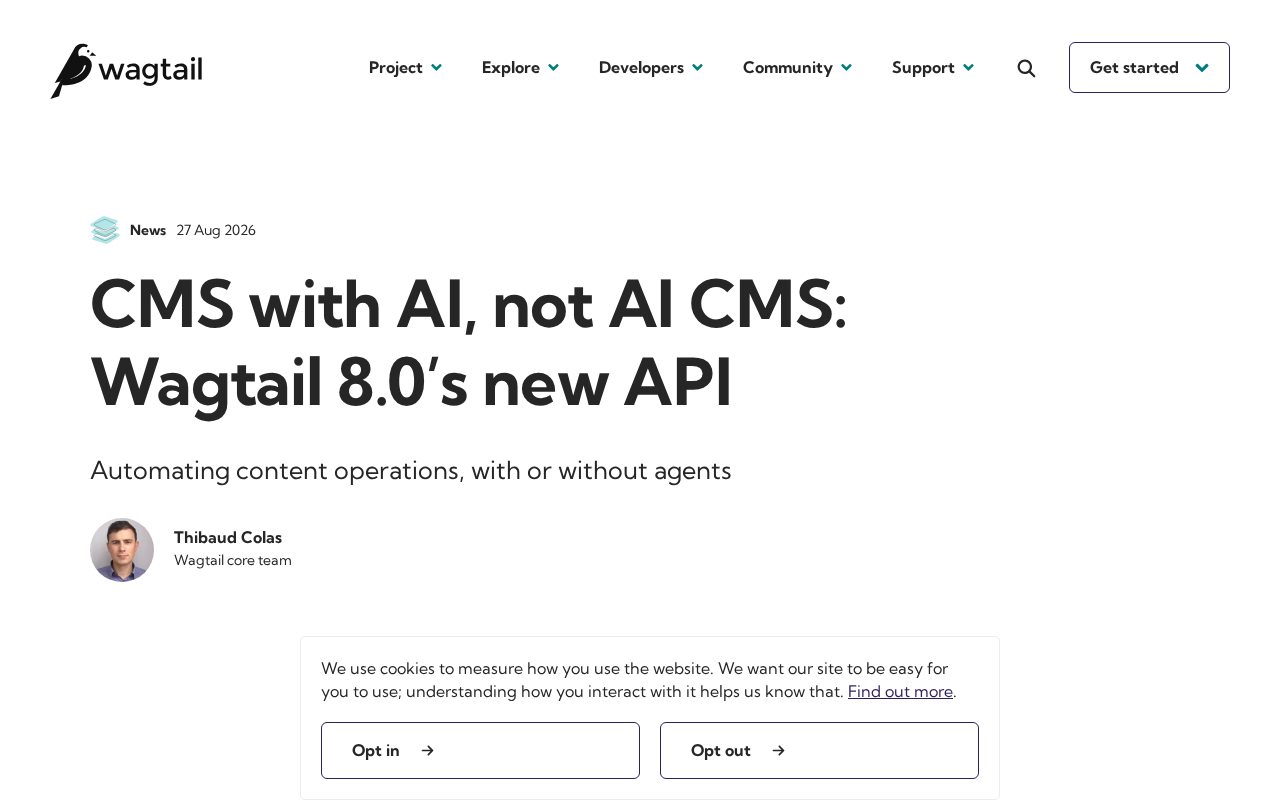
Wagtail 8.0 adds AI via a standardized API, treating it as an optional enhancement rather than the system's core.
Wagtail 8.0 is built around the philosophy of 'CMS with AI, Not AI CMS' — refusing to place AI at the system's center, instead embedding AI capabilities as an optional enhancement layer through a standardized API. Two key motivations drive this design: Wagtail's primary users (government agencies and major media) require high content accuracy, auditability, and accountability, making full AI automation a compliance and hallucination risk; and an API abstraction layer decouples the underlying model, effectively avoiding vendor lock-in. The new API supports use cases like copy refinement, SEO metadata generation, and semantic search, while maintaining a Human-in-the-loop principle that keeps editors in final control.
A Pragmatic AI Strategy: CMS with AI, Not AI CMS
As generative AI sweeps through the software industry, nearly every content management system (CMS) is rushing to slap "AI-native" or "AI-powered" labels on itself. Against this backdrop, the release of open-source CMS Wagtail 8.0 offers a refreshingly nuanced take — "CMS with AI, Not AI CMS."
This subtle distinction in wording actually reflects two fundamentally different product philosophies. The first treats AI as an optional enhancement layer, embedded into a mature content management workflow. The second puts AI at the system's core, redesigning the entire product around large language models. The Wagtail team has clearly chosen the former — a decision that sparked discussion on Hacker News (24 points / 9 comments) and reflects the developer community's growing pushback against AI hype.

Why "CMS with AI" Instead of "AI CMS"?
AI Should Be a Tool, Not the Star
Wagtail is a mature, Django-based open-source CMS that has long served government agencies, major media organizations, and enterprise websites. These users have exceptionally high demands for content accuracy, controllability, and auditability. Placing AI at the system's core — letting large models directly generate, modify, or even publish content — would introduce uncontrollable risks. Hallucinations, factual errors, and copyright disputes could all undermine content credibility.
Wagtail 8.0's design philosophy, therefore, is to preserve the CMS's existing rigorous content architecture while exposing AI capabilities through a standardized API that developers can integrate on demand. Content editors always retain final decision-making authority; AI is an efficiency assistant, not a replacement.
Avoiding Vendor Lock-In to a Single AI Provider
Building AI as a pluggable capability rather than a core dependency has another significant advantage: avoiding vendor lock-in. The large model landscape is still evolving rapidly, with OpenAI, Anthropic, Google, and various open-source models constantly shifting in prominence. If a CMS's core logic is deeply tied to one provider's capabilities and API, any model iteration or pricing change puts the entire system at the mercy of that vendor.
Wagtail's API abstraction layer, in theory, lets developers freely swap out the underlying model. This decoupled design is especially valuable for enterprise-grade projects that need long-term maintainability.
Core Features and Value of Wagtail 8.0's New API
A Standardized Gateway for AI Integration
The new API's primary function is to create a standardized bridge between third-party AI services and Wagtail's content ecosystem. Developers can use this API to enable a range of AI-enhanced scenarios:
- Smart content assistance: Offering editors features like copy refinement, summary generation, and translation suggestions
- Metadata automation: Automatically generating SEO titles, descriptions, image alt text, and other structured information
- Enhanced content discovery: Semantic search and intelligent content recommendations
All of these features appear in an "assistive" capacity — they never override the final form of the content. Editors can accept, modify, or completely ignore AI suggestions.
A Pragmatic Choice for the Open-Source Ecosystem
As an open-source project, Wagtail's approach also reflects the open-source community's characteristic restraint and pragmatism. Rather than blindly chasing AI trends, it first clearly defines the interfaces and boundaries, returning the choice of whether and how to use AI to developers and content teams. This may not be the flashiest approach, but it better aligns with enterprise users' needs for stability and maintainability.
Implications for the Content Management Industry
AI Adoption Requires a Sense of Boundaries
Wagtail 8.0 offers a valuable AI adoption model: not every product needs to be rebuilt with AI at its core. For fields like content management — where accuracy and accountability are paramount — positioning AI as a pluggable enhancement layer is often far more sensible than starting from scratch.
This also addresses the growing industry skepticism around "AI wrapping" — where many so-called "AI products" simply bolt a chat interface onto existing features, actually degrading the user experience. Wagtail's approach is more grounded: first identify the specific problems AI can solve, then carefully integrate it into existing workflows.
Human-in-the-Loop: Keeping People in the Decision Chain
No matter how powerful the API, Wagtail 8.0 consistently keeps human editors at the center of the decision loop. This Human-in-the-loop principle is highly instructive for any serious content production context. AI can handle tedious, repetitive support work, but the value judgments, fact-checking, and ultimate accountability for content should remain with people.
Conclusion
Wagtail 8.0's new API may look like a routine version update on the surface, but the tagline "CMS with AI, Not AI CMS" represents a measured response to the current AI wave. In an era where everyone wants to be "AI-native," having the confidence to position AI as a supporting player rather than the central protagonist is actually a sign of maturity.
For content teams and developers, this offers a more sustainable path forward: one that captures the efficiency gains AI provides without sacrificing the rigor and controllability that a content management system demands. Perhaps this is what truly pragmatic AI adoption looks like in enterprise-grade CMS.
Related articles
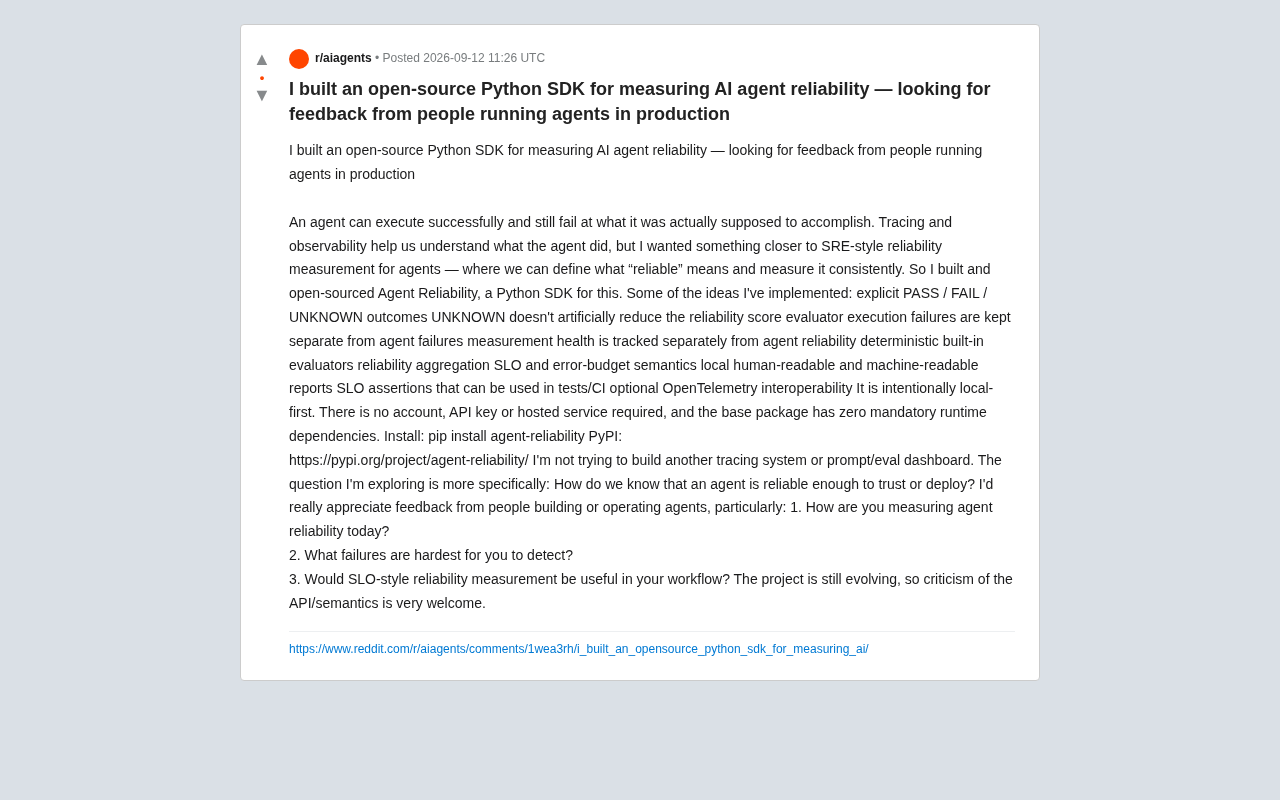
Open-Source Python SDK: Measuring AI Agent Reliability with SRE Principles
Agent Reliability is an open-source Python SDK that applies SRE's SLO and error budget concepts to AI Agent evaluation, with PASS/FAIL/UNKNOWN states, CI assertions, and zero forced dependencies.
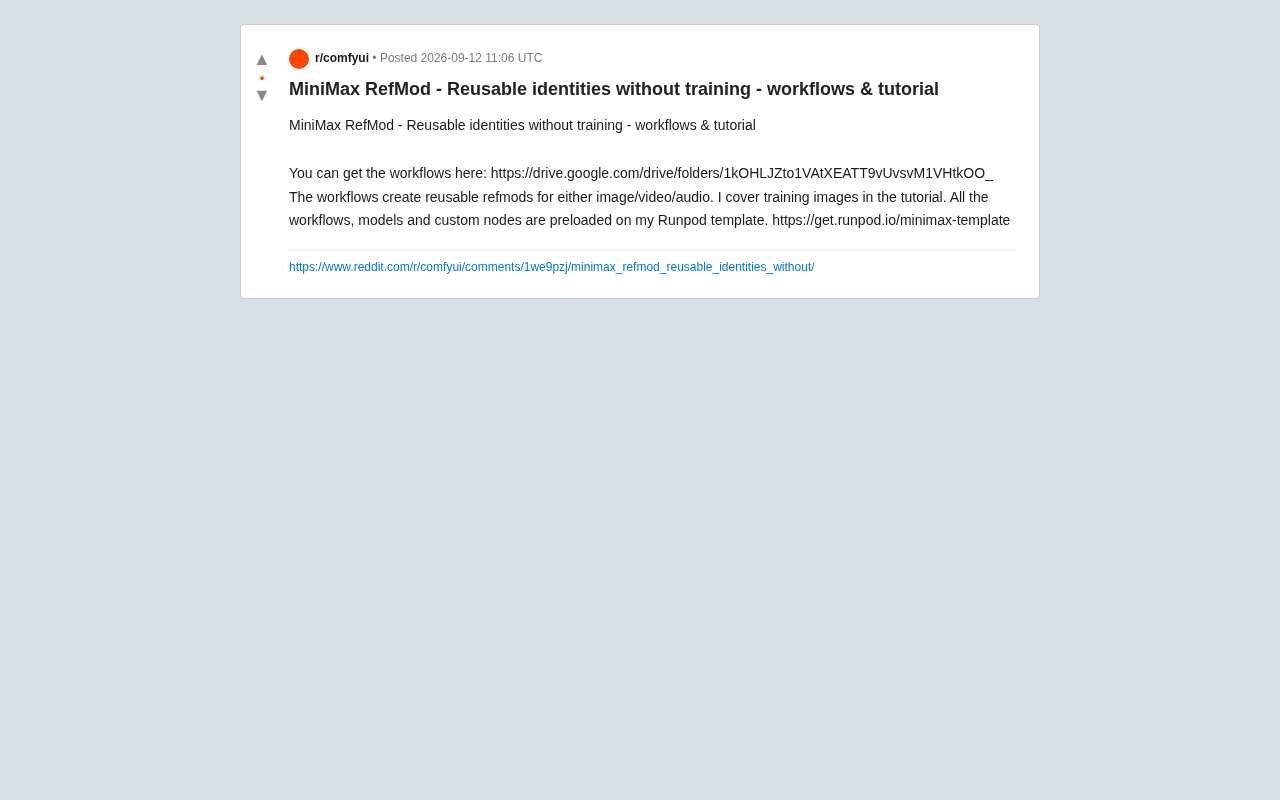
MiniMax RefMod: A Complete Guide to Training-Free Reusable Identity Workflows
MiniMax RefMod offers training-free reusable identity workflows for image, video, and audio generation. Includes Runpod template and tutorial for quick setup.

Invalid Source Material Notice
The source material provided lacks substantive information and is unrelated to AI/tech topics, making it impossible to produce a complete professional article.