WeatherNext 3 Achieves 5km Precision — Breakthroughs in AI Weather Models and Inference Costs

WeatherNext 3 hits 5km precision as AI inference costs drop 300x and OpenAI declares the AGI era.
Google DeepMind's WeatherNext 3 delivers 5km-resolution hourly weather forecasts, bypassing physics simulations entirely. Meta's Muse offers real-time multi-speaker transcription at $0.18/hour across 70+ languages. Microsoft reports GPT-4-level inference costs have fallen 300x in three years, while OpenAI executives declare entry into the AGI era. Other highlights include Uber founder Kalanick's $1.7B robotaxi venture and China's booming AI face-licensing economy.
AI Industry Panorama
This was a particularly news-dense day for AI: from foundational models reshaping weather forecasting, to a price war in real-time audio transcription, collective proclamations about the AGI era, and a quietly emerging business of "face licensing" — taken together, these events paint a vivid picture of the AI industry's true landscape in autumn 2026.
Google DeepMind Releases WeatherNext 3: AI Weather Forecasting Enters the 5km Precision Era
Bypassing Physics Simulations to Learn Weather Evolution Directly from Satellite Data
WeatherNext 3, jointly released by Google and DeepMind, represents a paradigm shift in AI weather modeling. The core approach of traditional Numerical Weather Prediction (NWP) involves dividing the atmosphere into three-dimensional grids and numerically solving a set of partial differential equations — including the Navier-Stokes equations, thermodynamic equations, and moisture equations — at each grid point. This methodology has evolved continuously since the advent of computers in the 1950s. Today, the world's top operational models (such as ECMWF's IFS) typically run on global grids of approximately 9 kilometers, with each global forecast requiring several hours on supercomputers. The computational costs are enormous, and the models remain insensitive to local terrain details. WeatherNext 3's core breakthrough lies in completely bypassing physics simulation, instead learning weather evolution patterns end-to-end directly from real-time satellite observation data. Rather than explicitly solving physical equations, it uses deep learning to learn spatiotemporal evolution mappings of atmospheric states from historical reanalysis data and real-time observations, with inference speeds typically hundreds of times faster than traditional NWP.
In terms of specific performance metrics, the model delivers hourly forecasts on a 5-kilometer grid, achieving 5x the spatial resolution of its predecessor. This means it can capture small-to-medium-scale weather features previously smoothed away — mountain-valley winds, sea-land breezes, urban heat islands — all of which are critically important for urban emergency management and precision agriculture. For example, at 5km resolution, the temperature difference between a city's downtown and its suburbs, or the wind speed gradient on either side of a river valley, can be effectively resolved by the model — features that are completely invisible on a 25km grid.
Customized Data Output for Renewable Energy
Notably, WeatherNext 3 has added dedicated data interfaces for the renewable energy sector, capable of outputting radiation data relevant to solar power generation and wind speed/direction profiles for wind energy, while also enhancing precipitation forecast accuracy. As the global energy transition accelerates, the need for deep integration between weather forecasting and power grid dispatch is becoming increasingly urgent. In power grids with high shares of renewable energy, fluctuations in wind and solar output directly affect grid stability. Accurate weather forecasts can help grid dispatch centers arrange backup power sources and energy storage systems hours in advance — making this design direction remarkably forward-thinking.
Competition among AI weather models is already fierce — Huawei's Pangu-Weather, GraphCast, and others have successively broken forecast accuracy records. By leading with a 5x resolution improvement, WeatherNext 3 shifts the competitive dimension from "global medium-range forecast accuracy" to "localized short-term high-resolution forecasting" — a clear expression of differentiated competition.
Meta Releases Muse Real-Time Audio Transcription Model: Low Latency, Multi-Speaker, 70+ Languages
Architecture Design: 80-Millisecond Chunks and Dynamic Latency Adjustment
Meta's Muse VoiceTranscribe integrates speech transcription, sentence boundary detection, and speaker diarization into a single model, supporting up to 20 distinct speakers without relying on a cascaded architecture of multiple independent subsystems. Traditional speech processing pipelines typically employ a Cascaded Pipeline, splitting tasks like Voice Activity Detection (VAD), Automatic Speech Recognition (ASR), punctuation restoration, and Speaker Diarization into independent modules executed sequentially. The main problem with this architecture is error accumulation: upstream module errors propagate irreversibly to downstream modules. Muse's end-to-end approach integrates all subtasks into a unified neural network for joint optimization, enabling the model to simultaneously learn speech content, sentence boundaries, and speaker identity within a shared representation space, thereby reducing cascading errors and lowering system latency.
On the engineering side, the model slices audio into 80-millisecond chunks for streaming processing and dynamically adjusts latency based on the recognition difficulty of the current word — outputting simple words quickly while allocating more computation time for complex or polyphonic words. This adaptive mechanism achieves a better trade-off between speed and accuracy, rather than simply sacrificing one for the other.
Priced at Just $0.18 Per Hour, Below Major Competitors
Pricing is Muse's most direct market signal: just $0.18 per hour, reportedly lower than OpenAI's Whisper API and ElevenLabs among other competitors. It supports over 70 languages, covering a vast non-English market.
Multi-speaker scenarios (meeting transcription, podcast transcription, multi-party interviews) have long been pain points for transcription services, typically requiring transcription first followed by speaker diarization, with errors compounding across both steps. If Muse's end-to-end approach can validate its multi-speaker accuracy in real-world scenarios, it will put substantial pressure on existing service providers. From a commercial perspective, the speech transcription API market is undergoing a price race similar to that of large language models — when transcription costs drop low enough, application scenarios previously constrained by cost — real-time subtitles, comprehensive meeting records, customer service quality inspection — will see massive scaling.
OpenAI Executives Make Intensive Statements: Declaring the AGI Era While Advancing Cost Optimization
Brockman and Altman: We Are Entering the AGI Era
OpenAI co-founder Brockman posted on social media with direct language: "We are now entering the AGI era," emphasizing the deep ties with close partners in this process. CEO Altman promptly reposted an article by Chief Scientist Jakub, calling it "an important article." This rare joint statement was widely interpreted by observers as OpenAI proactively staking its claim on the AGI definition and roadmap.
AGI (Artificial General Intelligence) refers to AI systems possessing cognitive abilities on par with or exceeding those of humans across a broad range of tasks, capable of autonomous learning and reasoning on tasks for which they were not specifically trained. However, AGI still lacks a rigorous definition universally accepted by academia and industry. OpenAI has internally proposed a five-level AI capability classification framework: from chatbots (L1) to reasoners (L2), agents (L3), innovators (L4), and organizers (L5). Notably, each company's definition of AGI directly affects its profit-sharing agreements with investors and partners — for example, the partnership terms between OpenAI and Microsoft use AGI achievement as a key milestone, with Microsoft's licensing terms for OpenAI's technology changing substantially once OpenAI declares AGI has been reached. Therefore, "declaring the entry into the AGI era" is not merely a technical judgment but a speech act with commercial and strategic consequences.
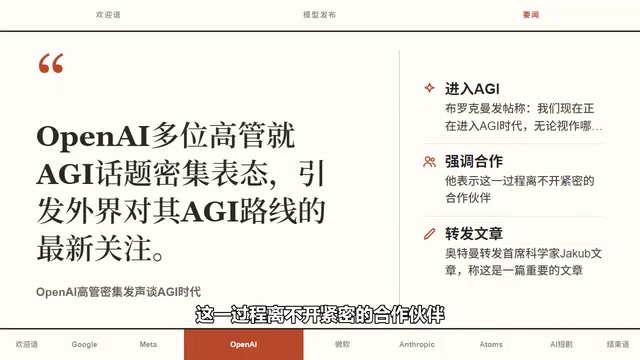
What you may not have noticed is that this round of statements comes during a window of intensifying competition — models from Google, Meta, Anthropic, and others continue to close the capability gap, and OpenAI's choice to consolidate its mindshare with the "gateway to AGI" narrative framework at this moment reveals clearly strategic intent.
Astra Model Usage Optimization: Same Subscription Supports Longer Work Sessions
Paralleling the grand narrative are pragmatic engineering improvements. A member of OpenAI's Sora team posted that for heavy users logging in with ChatGPT accounts, the Astra model's resource consumption in common scenarios has dropped significantly — subscription usage can be reduced by 3 to 4 times, with the team emphasizing "no change in quality whatsoever, pure gain."
For users who frequently use Astra on a daily basis, this means the same subscription quota can support longer workloads — a silent optimization with direct value for user experience. The technical approaches behind such optimizations typically include model distillation, inference cache reuse, dynamic batching, and similar methods aimed at reducing computational resource consumption per inference call without degrading output quality.
Microsoft on Two Fronts: AI Inference Costs Down 300x in Three Years, Copilot Demo Autonomously Completes Month-Long Tasks
Suleyman: GPT-4-Level Inference Costs Have Dropped 300x in Three Years
Microsoft's AI chief Mustafa Suleyman delivered a striking data point: the inference cost for GPT-4-level intelligence has dropped 300-fold in three years. He further noted that it's difficult to find any other technology in history that has compressed costs at such speed.
The implication behind this figure is clear: more powerful AI capabilities are becoming cheap and ubiquitous at exponential speed, and the process has not yet stopped. The cost reduction stems from synergistic advances across multiple dimensions: at the hardware level, GPUs have progressed from A100 to H100 to B200, with each generation improving Transformer inference efficiency by 2-3x; at the architecture level, Mixture of Experts (MoE), Speculative Decoding, quantization compression (e.g., INT4/FP8), and similar techniques have dramatically reduced the computation required per inference; at the systems level, inference engines like vLLM have boosted GPU utilization from 30% to over 80% through optimizations such as PagedAttention and continuous batching. The 300-fold decline is the cumulative effect of these technical dividends. From an industry perspective, the rapidly falling cost curve is reshaping the commercial viability frontier of AI applications — each order-of-magnitude decrease unlocks a batch of scenarios previously impossible due to cost, from search augmentation that was initially the only affordable use case to the long-duration autonomous agent tasks that are now within reach.
Copilot Autopilot Demo: Autonomously Browsing a Month of Footage and Generating Complete Reports
CEO Nadella demonstrated a Copilot Autopilot case powered by OPPO technology running on a secure Windows 365 cloud PC: the system autonomously browsed a month of wildlife camera footage, identified all animal appearance segments, created highlight reels, annotated information, compiled catalog spreadsheets, generated PowerPoint presentations, and shared everything to Teams.
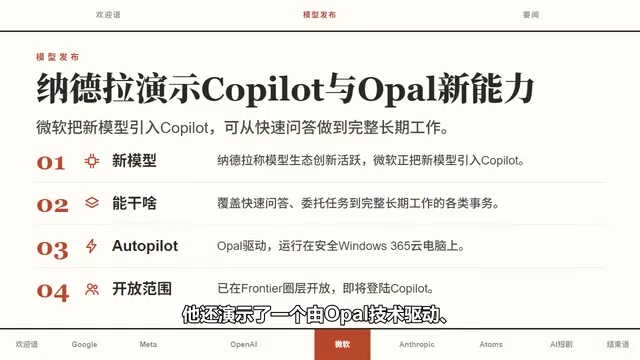
The core of this demo is not any single capability, but rather long-horizon, multi-step, cross-tool autonomous task execution — from raw footage to shareable deliverables, entirely without human intervention. This capability is referred to as "Agent" in AI research, with technical challenges including long-term memory management, multi-tool orchestration, error recovery, and self-correction. Unlike simple single-turn Q&A, an Agent must maintain a persistent execution state, making hundreds of decisions over task periods spanning hours or even days, where each misstep can trigger cascading failures in subsequent steps. This feature is already available in the Frontier tier and will soon officially launch in Copilot.
Anthropic Copyright Settlement Faces Payout Disputes, AI Training Data Compliance Under Renewed Scrutiny
According to TechCrunch, some authors who should have received compensation from Anthropic's $1.5 billion copyright settlement received unexpected notices that other individuals were claiming payouts belonging to them. The class-action lawsuit originated from Anthropic's use of copyrighted works to train AI models. The court previously ruled that the training itself constituted fair use, but the act of obtaining materials through piracy was not lawful. The settlement agreement received final approval in July this year, with authors of nearly 500,000 books eligible for $3,000 per pirated work.
Copyright compliance for AI training data currently occupies a gray area within global legal frameworks. U.S. courts have offered varying interpretations of the Fair Use doctrine across multiple lawsuits: some rulings consider training AI models with copyrighted works as "transformative use," since the outputs are fundamentally different from the original works; others point out that the means of obtaining training materials (e.g., downloading from piracy websites) may itself constitute infringement. The EU's AI Act and Digital Single Market Copyright Directive require AI developers to maintain transparency in training data usage and grant copyright holders the right to "opt out." Japan takes a relatively permissive approach, with Article 30-4 of its Copyright Act explicitly allowing the use of copyrighted works for information analysis purposes. This global legal fragmentation presents complex compliance challenges for multinational AI companies.
The identity-claim confusion that has emerged during the payout process reflects the operational complexity of large-scale copyright settlements, and serves as a reminder to the industry: compliance management for AI training data is not just a legal issue, but also an engineering and process challenge.
Uber Founder Enters Autonomous Driving, AI Short Dramas Spawn a New Face-Licensing Economy
ATOMS Secures $1.7 Billion in Funding, Targeting Robotaxi Market
According to the Financial Times citing TechCrunch, ATOMS — the startup founded by Uber founder Travis Kalanick — is preparing for large-scale hiring and acquisitions, targeting the autonomous taxi market. The company completed a $1.7 billion funding round led by a16z this summer, with the founder previously keeping a low profile about the company's specific direction.
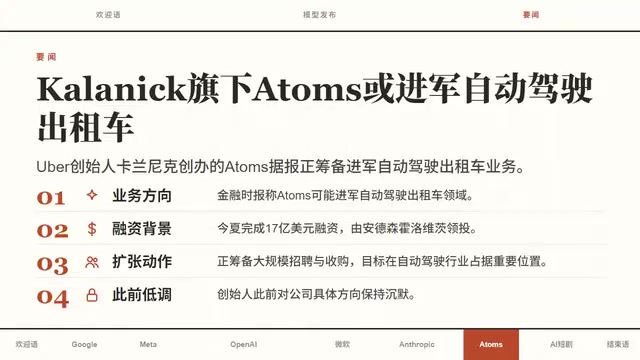
The Robotaxi market is at a critical stage of transitioning from technical validation to commercial operation. Waymo (under Alphabet) currently offers commercial driverless ride-hailing in San Francisco, Los Angeles, Phoenix, and other cities, completing over 200,000 paid trips per week; Tesla, with its pure-vision approach at the core, plans to launch an unmanned taxi service in 2026; Baidu Apollo's "Apollo Go" has completed over 8 million trips across cities including Wuhan and Beijing. In terms of technical approaches, the industry is divided between LiDAR + HD maps and pure-vision solutions. Kalanick profoundly transformed the mobility market when he founded Uber. If ATOMS truly enters the Robotaxi arena, it will be in direct competition with these established players, and its execution capabilities and capital backing warrant ongoing attention.
Face Licensing: A New Form of Digital Labor Born from AI Short Dramas
According to CCTV Finance, with the rapid expansion of AI short dramas and digital avatar industries, "face licensing" is emerging as a new business. Ordinary people can earn income simply by licensing their facial likeness without appearing on camera: a digital portrait earns approximately 100 yuan per short video, while professional actors are priced based on usage scope and series length, ranging from 500 to several thousand yuan. Platforms can filter assets by age, gender, and style, sharing revenue with licensors after transactions are completed.
Research institutions estimate that in the first five months of 2026, the AI short drama market has exceeded 22 billion yuan, with the full year projected to reach 40 billion yuan. The essence of this model is treating faces as licensable digital assets, creating a new form of "digital labor" while also raising compliance risks around portrait rights protection and deepfake abuse that deserve vigilance. Article 1019 of China's Civil Code explicitly states that no one may create, use, or publish a person's portrait without their consent; the Personal Information Protection Law classifies facial information as "sensitive personal information," requiring separate consent with disclosed purposes. However, once a face is licensed for AI-generated content, controlling its usage scenarios becomes enormously challenging: licensing contracts may not cover derivative uses such as secondary processing, deepfakes, or cross-platform distribution. Furthermore, the maturity of AI face-swapping technology (such as DeepFake) means that only a small amount of facial footage is needed to generate highly realistic fake videos, further amplifying the risk of portrait rights abuse. The industry urgently needs to establish standardized licensing agreement frameworks and technical provenance mechanisms to ensure the healthy development of this emerging market.
Related articles
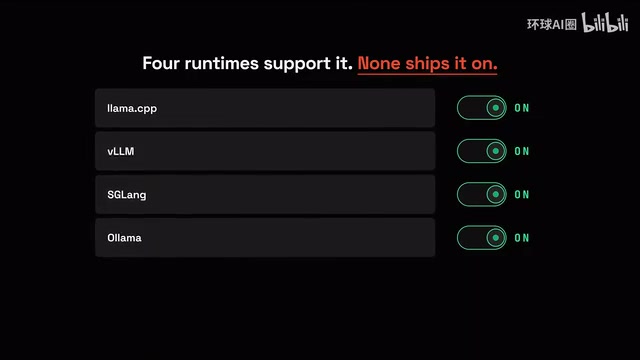
MTP Multi-Token Prediction: The Hidden Switch Behind Qwen3's 3x Performance Boost
Deep dive into Qwen3's MTP multi-token prediction: how a single default-off flag delivers up to 3x inference speedup with no extra hardware or quality loss.

Multi-Agent Collaboration with Coze: A Complete Guide to Building AI Agent Teams
A deep dive into Coze's multi-Agent collaboration, covering agent types, RAG knowledge bases, and workflow orchestration with a complete practice guide from basics to enterprise deployment.

WAS Node Suite v3: A Comprehensive ComfyUI Node Pack Upgrade That Eliminates Dependency Hell
WAS Node Suite v3 overhauls the ComfyUI node pack with zero external dependencies, native PyTorch conversion, doubled node count, and flexible feature gating to eliminate dependency hell.