WeChat Mini Game Development Spec: A Skill Guide for Getting Claude Code to Write Correct Code
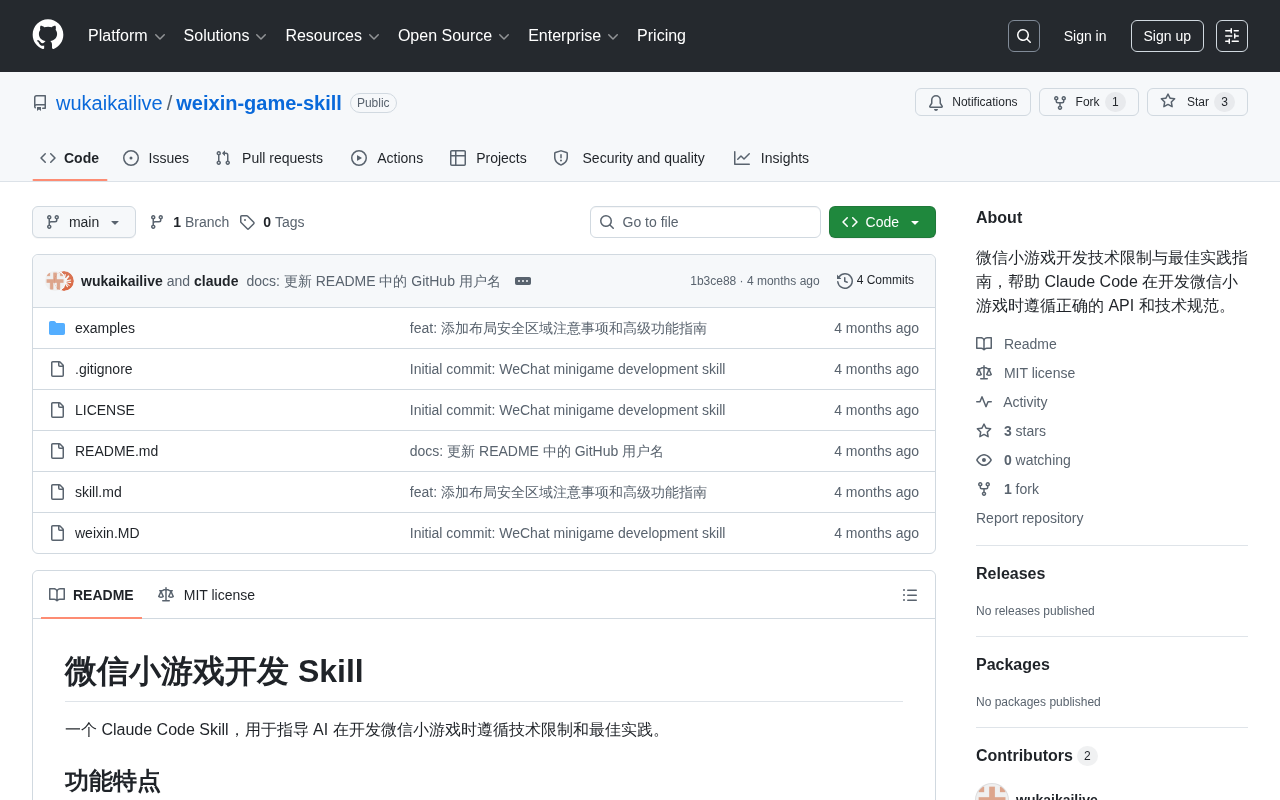
An open-source Skill guide that structures WeChat Mini Game platform constraints for AI coding assistants like Claude Code.
`weixin-game-skill` is an open-source guide for WeChat Mini Game development designed for AI coding assistants like Claude Code. WeChat Mini Games run in a closed JavaScript sandbox without full DOM/BOM support — all image, audio, network, and storage operations must use the `wx.` API family, yet general-purpose LLMs tend to generate standard browser-based code by default, causing frequent errors. This project structures platform constraints and best practices into a Skill document that injects the right context before code generation. The project is in very early stages (3 stars), so treat it as a reference alongside official docs — but the underlying idea of "Skill-ifying" vertical platform knowledge represents a practical direction for AI-assisted specialized development.
A WeChat Mini Game Skill Built for AI Coding Assistants
As AI-assisted programming becomes increasingly mainstream, tools like Claude Code and Cursor have become everyday companions for many developers. But when it comes to platforms with unique technical constraints — like WeChat Mini Games — general-purpose LLMs tend to generate non-compliant code. Common issues include calling non-existent DOM APIs, misusing browser environment features, and ignoring WeChat's sandbox restrictions.
The GitHub project wukaikailive/weixin-game-skill was created specifically to address this pain point. It's a "WeChat Mini Game Development Technical Constraints and Best Practices Guide" — designed to help Claude Code follow the correct APIs and technical specifications when developing WeChat Mini Games, reducing rework caused by platform differences.
Why WeChat Mini Games Need a Dedicated Development Spec
WeChat Mini Games run inside a closed runtime environment provided by WeChat. While the syntax is JavaScript, it is not a standard browser environment. This means many capabilities that frontend developers take for granted simply don't exist here.
Key Differences from the Browser Environment
WeChat Mini Games lack the full DOM and BOM object model — most methods on document and window are unavailable. Image loading, audio playback, network requests, and local storage all need to be handled through WeChat's wx. API family. Canvas creation, the event system, and file system access all follow platform-specific conventions.
For human developers, these constraints can be mastered gradually by consulting official documentation. But for AI coding assistants, without explicit contextual boundaries, they'll readily generate code based on the standard Web environment — resulting in runtime errors or unexpected behavior.
From an architectural standpoint, WeChat Mini Games run on a JavaScript engine built into the WeChat client. The underlying rendering approach is called GameCanvas, which essentially exposes a single global canvas object as the rendering entry point. Developers cannot manipulate an HTML element tree as they would in a browser — all visual content must be drawn through the Canvas 2D or WebGL interfaces. On the networking side, neither XMLHttpRequest nor the Fetch API is available; you must use wx.request(). For local persistence, localStorage is off the table — use wx.setStorageSync() or its async variant instead. Audio playback requires creating an instance via wx.createInnerAudioContext(). These aren't simple one-to-one mappings: the parameter structures and callback conventions also differ, making them exactly the kind of detail where AI-generated code is most prone to mistakes.
Codifying Best Practices as Reusable Knowledge
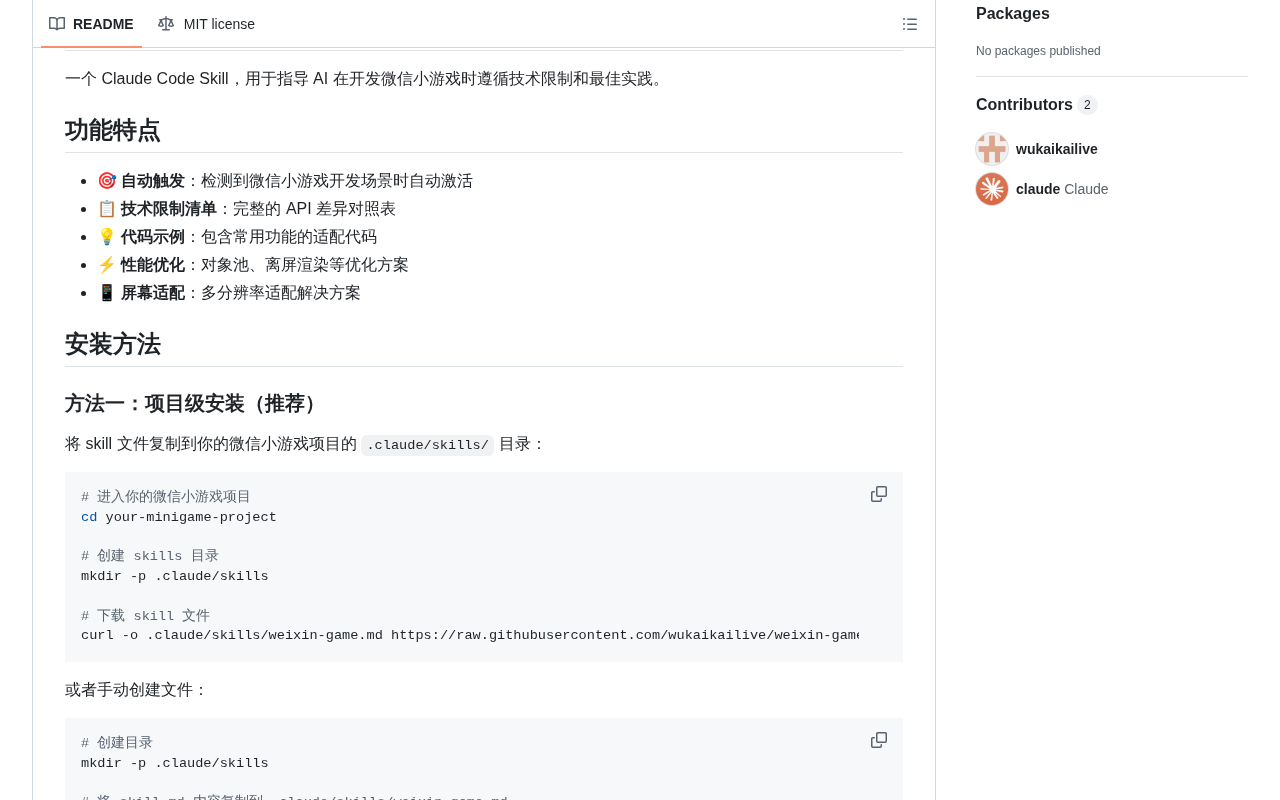
The value of this project lies in organizing WeChat Mini Game technical constraints and best practices into structured documentation, injecting it into the development workflow as a "Skill" for the AI assistant. When Claude Code loads this spec before generating code, it operates within the correct boundaries — avoiding common pitfalls from the very start.
The Skill Pattern: A New Collaboration Paradigm for AI Programming
In recent years, the practice of building "rules files" and "skill packages" for AI coding assistants has grown increasingly popular. Whether it's Cursor's rules or Claude Code's custom instructions, the core idea is the same: providing domain-specific constraints and knowledge to the underlying LLM.
From General Capability to Domain Expertise
General-purpose LLMs have broad but shallow knowledge — they often fall short when it comes to the nuanced specs of specific platforms. But through a carefully crafted Skill document, developers can "teach" the AI the experience they've accumulated in practice, making it behave like a senior engineer who knows the platform inside and out.
The benefits of this approach are clear: write it once, reuse it indefinitely; share it across teams, maintain consistent standards. For development scenarios with well-defined technical boundaries like WeChat Mini Games, Skill-based specs are an especially natural fit.
Who Is This For
This guide is primarily aimed at teams and individuals using AI tools like Claude Code to develop WeChat Mini Games. If you're trying to use AI to accelerate mini game development but keep running into code that doesn't comply with platform specs, introducing a Skill document like this could meaningfully improve the experience.
In engineering practice, there are several approaches to injecting domain knowledge into AI: pasting spec text directly into the conversation (context injection); using a tool's persistent configuration — for example, Cursor reads .cursorrules from the project root, while Claude Code supports presetting constraints in CLAUDE.md or custom instructions; or using emerging protocols like MCP (Model Context Protocol) to dynamically supply structured knowledge to the model as tool calls. The Skill document format used by weixin-game-skill is a variant of the second approach — by pre-loading an external Markdown document, the model follows its constraints throughout the entire session. The core advantage of this method is "write once, reuse many times," and the document itself can be version-controlled and collaborated on just like code.
Project Status and a Realistic Perspective
It's worth being objective here: this project is still in its early stages. At the time of writing, the repository had 3 stars and 0 forks, with no substantial community feedback yet. This means its actual coverage breadth, spec completeness, and maintenance activity all remain to be seen.
Developers looking to adopt it should treat it as a reference starting point rather than an authoritative standard. WeChat Mini Game platform APIs are continuously updated, and any static spec document needs to be maintained in sync with official changes. It's best used alongside the official WeChat documentation for cross-verification.
That said, the idea this project represents — codifying platform-specific knowledge into AI-usable Skills — is a direction worth paying attention to. As AI programming penetrates deeper into specialized vertical platforms, similar domain spec packages are likely to become increasingly common, serving as standard components for improving AI code quality.
Summary
weixin-game-skill is a technical spec guide for WeChat Mini Game development, designed for AI assistants like Claude Code. It addresses the longstanding problem of AI "writing bad code" on unfamiliar platforms — providing structured constraint descriptions and best practices so that AI-generated code better aligns with WeChat's real-world platform requirements. The project is still in its early stages, but the Skill-based collaboration concept behind it offers a concrete and practical model for AI-assisted development in vertical domains.
Related articles
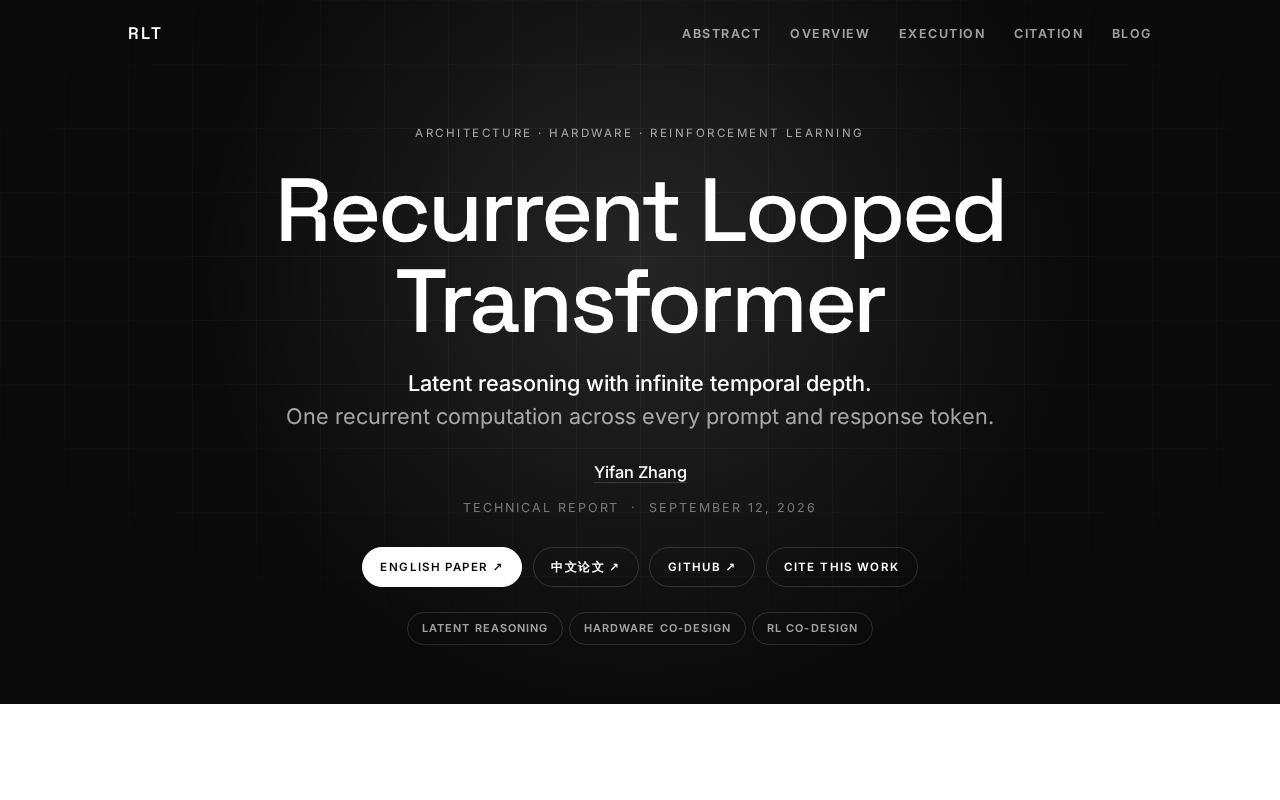
Recurrent Looped Transformers: A New Architecture That Teaches Models to "Think Again"
Recurrent Looped Transformers repeatedly apply the same Transformer block to decouple compute from parameters, enabling variable reasoning depth without scaling model size.

"Everyone Else Should Slow Down AI — Except Me": The Double Standard Trap in Big Tech
A viral Hacker News quip — "Everyone should slow down AI, except me" — exposes the double-standard at the heart of the AI race. We unpack why it's a Prisoner's Dilemma, not mere hypocrisy, and why institutions matter more than moral self-discipline.
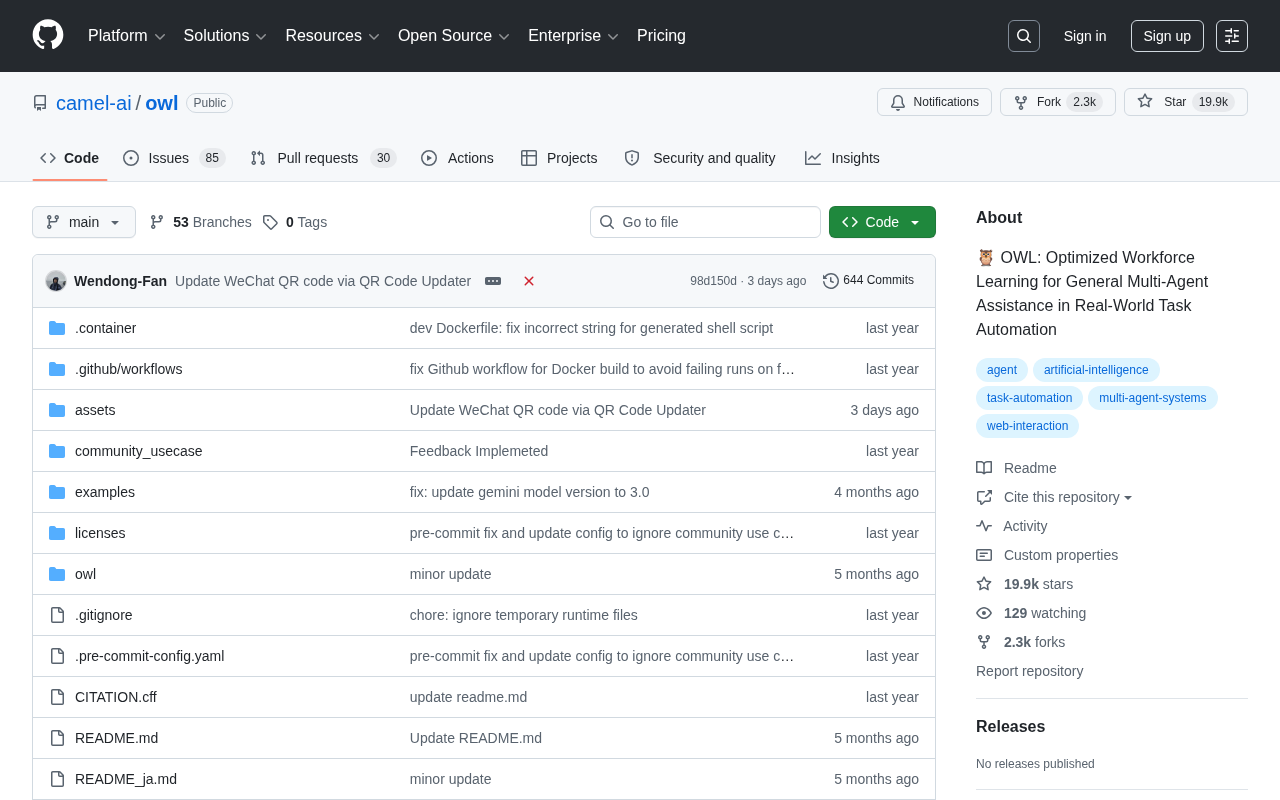
OWL: An Open-Source Multi-Agent Framework for Real-World Task Automation
OWL (Optimized Workforce Learning) is an open-source multi-agent framework by camel-ai for real-world task automation, with 19K+ GitHub Stars. Learn how it works.