WeChat Mini Program Global Challenge Finals: Youth Using AI to Solve Real-World Problems

WeChat Mini Program Global Challenge finals showcase youth AI programming and product thinking skills.
The WeChat Mini Program Global Innovation Challenge finals brought together tens of thousands of youth teams, with projects spanning pet care monitoring, smart restroom finding, AI-powered educational equity, and more. The grand prize went to a project focused on AI mental health companionship. The competition evaluated not just programming skills, but also product thinking, AI literacy, teamwork, and pitch presentation abilities, with award-winning projects consistently demonstrating a strong social purpose orientation.
Tens of Thousands of Teams Compete: Inside the WeChat Mini Program Global Challenge Finals
The finals of the WeChat Mini Program Global Innovation Challenge were held recently. This AI programming competition, which brought together over ten thousand youth teams from around the world, culminated in a final defense presentation round. Contestants spanned elementary school (Dragon group) and middle school (Flying Dragon group) divisions, presenting their AI mini program projects before a panel of expert judges.
The competition was held in a bilingual school's gymnasium, with the main stage at the center and interactive exhibition areas around the perimeter showcasing the finalists' projects and design concepts. The atmosphere was electric, with generous prizes on display.
WeChat Mini Program Technical Background: WeChat Mini Programs are a lightweight application format officially launched by Tencent in 2017. They require no download or installation, leveraging WeChat's ecosystem of 1.2 billion monthly active users for instant access. The underlying technology uses a web-like stack (WXML/WXSS/JavaScript) and provides a rich set of native API interfaces, making the development barrier relatively low. As of 2024, there are over 4 million WeChat Mini Programs covering virtually every vertical, including lifestyle services, education, and healthcare. It is precisely this "low barrier, high reach" characteristic that makes them an ideal vehicle for youth AI programming education — students can quickly turn ideas into usable products and reach real users directly through the WeChat ecosystem for immediate feedback.

Youth AI Programming Education: From "Learning to Code" to "Using AI to Solve Problems"
Notably, this competition represents a profound paradigm shift underway in global youth programming education. The early model of programming literacy centered on Scratch and basic Python syntax is being supplanted by AI-native development powered by large language models (LLMs). Tech giants including Microsoft, Google, and Tencent have all launched AI programming platforms for young people, such as Microsoft MakeCode and Google Teachable Machine.
The core logic behind this shift is clear: when AI can auto-generate code, the educational focus moves from "how to write code" to "how to define problems, design solutions, and evaluate AI outputs." This is precisely the core competency tested by this challenge — the integration of product thinking and AI literacy, rather than pure programming skill.
Three Finalist Presentations: From Pet Care to Educational Equity
During the finals defense round, three teams were observed presenting, each demonstrating a keen awareness of real-world problems:
AI-Powered Pet Feeding Monitor Mini Program
The first team focused on the pain point of pet care among neighbors, developing a mini program with AI monitoring capabilities. When pet owners are away, they can use the tool for remote feeding management and status monitoring, effectively addressing the common community challenge of pet sitting.
Smart Restroom Finder App
The second team, three students from Macau, targeted a seemingly simple yet universally relatable daily problem — quickly finding a restroom in an unfamiliar environment. While the entry point may seem small, it embodies the product thinking principle of "starting from real needs." This approach of tackling minor everyday pain points closely aligns with Silicon Valley's "solve real problems" product philosophy — many successful consumer applications began with an overlooked daily inconvenience before growing into platforms that changed behavioral habits.
AI for Educational Equity
The third team's project carried the greatest social value — using AI technology to break down barriers of unequal educational resources and help students improve their college entrance exam scores.
Unequal distribution of educational resources is a structural problem worldwide. In China, the gap between urban and rural areas, and between eastern and western regions, has persisted for years, with quality teachers and teaching content heavily concentrated in first-tier cities. AI technology is seen as a crucial tool for breaking these barriers: personalized learning systems can dynamically adjust content based on a student's knowledge graph, and LLMs can serve as "always-available private tutors." Products like Khan Academy's Khanmigo and TAL Education's AI solutions in China are already exploring this direction. However, the real challenge facing "AI educational equity" is the digital divide — regions lacking quality educational resources often also lack stable internet access and smart devices. If competing teams can account for this obstacle in their product design, the social value of their projects becomes even more complete.
This project combined AI capabilities with the ideal of educational equity, showcasing the depth of young people's thinking about social issues.

It's worth mentioning that the judging panel included Xiao Shi, the well-known blogger behind "Xiaoshi Diary." He was one of the most active and detailed questioners among the judges, posing significant challenges to the contestants.
Grand Prize Winner: Using AI to Accompany Authentic Self-Expression
During the awards ceremony, the grand prize team delivered an impressive project presentation. Their core concept was transforming abstract psychological exercises into a warm AI mini program — "No probing, no judging, no rushing — just accompanying users as they slowly express their truest selves."
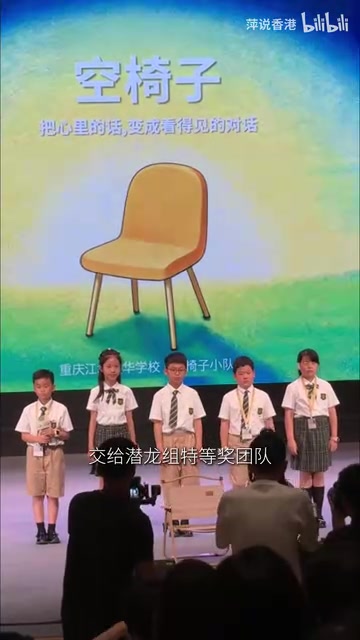
Using AI for mental health support is one of the most closely watched and controversial application areas in recent years. AI mental health companion products like Woebot and Replika have already accumulated millions of users worldwide, with core technology built on the combination of natural language processing (NLP) and cognitive behavioral therapy (CBT). However, the central ethical challenge these applications face is that AI "empathy" is simulated rather than genuine, and over-reliance may delay users from seeking professional help.
The grand prize team's design principles of "no probing, no judging, no rushing" represent a conscious effort to mitigate the risks of excessive AI intervention, positioning the product as an "expression tool" rather than a "treatment tool." This kind of boundary awareness is rare even in professional adult product design — the fact that it was proposed by young people makes it all the more remarkable. The design philosophy behind this project deserves deep reflection: in an era of increasingly powerful AI, these young people chose to cast AI in the role of a "listener" rather than a "problem-solver." Their grasp of technology's human warmth surpasses the understanding of many adult developers.
Common Traits of Award-Winning Projects: Social Purpose and Problem Awareness
Looking at the award results, all three teams observed during the defense round received awards. Across all winning projects, one striking common trait stands out — a strong sense of social purpose.

These young people weren't just solving their own problems; they were paying attention to the needs of their classmates and even broader social groups. Judges gave higher marks to projects with a social good orientation that leveraged AI to solve real-world problems.
Beyond Programming Skills: What This Youth AI Competition Really Tests
The value of this WeChat Mini Program challenge extends far beyond AI programming skills. Contestants needed to demonstrate a comprehensive set of abilities:
- AI Literacy: Understanding the capabilities and limitations of AI tools, and applying AI programming appropriately to solve problems
- Teamwork: Dividing responsibilities and collaborating within a team to advance the project
- Pitch Presentation: Clearly presenting product logic and value propositions before expert judges
- Thinking on Your Feet: Flexibly responding to various follow-up questions and challenges from judges
Among these, pitching ability is considered a core competency on par with technical skills in Silicon Valley's startup culture. A classic product pitch typically includes
Related articles
 Tech Frontiers
A Rare Quiet Day in AI: Recursive Self-Improvement Stirs Beneath the Surface
A rare quiet day in AI sees multiple sources go silent simultaneously. Behind the calm, Recursive Self-Improvement (RSI) research continues. What this means for the industry.
 Tech Frontiers
Reve 2 vs. Ideogram 4: A Deep Dive into Layout Control in AI Image Generation
A deep comparison of Reve 2 and Ideogram 4's layout control capabilities, covering technical approaches, real-world use cases, and industry trends for designers and creators.
 Tech Frontiers
In the Weights: Check Your Influence Score in the AI World
In the Weights is an AI influence search engine that quantifies your presence in the AI world with a score. Explore how it evaluates practitioners and what it means for digital identity.