What Is a Software Factory? The Truth About Multi-AI Agent Parallel Coding Pipelines

Software Factories engineer coordination systems around AI coding agents — not just more agents running in parallel.
A Software Factory is an engineering coordination system built around AI coding agents, processing GitHub issues through parallel agents to output reviewed Pull Requests. Core design elements include a task claiming mechanism (ensuring each task is handled by only one agent) and sandbox isolation (each agent works in an independent copy of the codebase). On the verification side, the system refuses to accept an agent's self-reported "done" status — it re-runs tests and uses a dedicated reviewer agent to inspect code diffs, with a human making the final merge decision. Real-world testing exposed the current limits: 9 of 10 issues produced PRs, but 7 still failed in actual use, proving that orchestration is solved — quality assurance is the real challenge.
Running 10 AI coding agents simultaneously is easy. Getting those 10 Pull Requests to actually merge successfully — that's the hard part. This is the core problem that the Software Factory concept aims to solve. It's not simply about stacking multiple AI agents on top of each other; it's about building an entire engineering coordination system around those agents.
Software Factory: A Pipeline for Your Codebase
Think of a Software Factory as an assembly line for code. GitHub issues from your backlog go in on one end, multiple parallel AI coding agents do the actual coding work in the middle, and reviewed Pull Requests come out the other end.
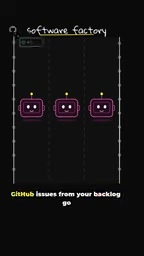
The value of this framing is that it shifts attention away from "how smart is a single AI" toward "how reliably does the entire system operate." The original author makes this explicit: agents are just one component. Most of the factory is actually the coordination infrastructure built around them. Without that infrastructure, parallel agents don't deliver efficiency — they deliver chaos.
Why Parallel Agents Break Down
The problem is fundamentally about coordination. When 10 agents are working simultaneously without clear task assignment and isolation, they'll compete for the same tasks, overwrite each other's changes in the same directories, and ultimately produce a pile of conflicting code that can't be merged.
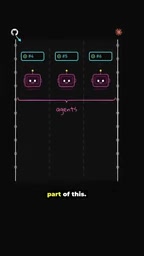
The Software Factory addresses this through two key design decisions:
Task Claiming Mechanism
Every issue must be "claimed" before it can be worked on, ensuring two agents never pick up the same task at the same time. This eliminates duplicate work and direct merge conflicts.
In engineering terms, task claiming is typically implemented via atomic state updates: when an agent picks up a task, it writes a "locked" record to a central scheduler — and this operation must be atomic, meaning no other agent can insert itself between the read and the write. This is the same principle as optimistic or pessimistic locking in databases. If the system allows non-atomic "read-then-write" operations, two agents could read "unlocked" status within the same millisecond and begin processing the same issue simultaneously, rendering the claiming mechanism useless. In distributed systems, this mutual exclusivity is commonly enforced using Redis's
SETNXcommand, database row-level locks, or message queue consumer groups.
Independent Sandbox Isolation
Each agent works inside its own sandboxed environment with its own independent copy of the codebase. Changes don't pile up in the same folder and interfere with each other. This isolation is the prerequisite for scaling parallelism — without it, more agents means more chaos.
At the implementation level, sandbox isolation typically means creating a separate Git worktree (
git worktree) or a full repository clone for each agent, paired with independent filesystem mount points or container environments.git worktreeallows the same Git repository to check out different branches in multiple directories simultaneously; each agent commits to its own isolated branch without interference, and changes are eventually consolidated to the main branch via Pull Requests. Using containers (e.g., Docker) adds a further layer of isolation for runtime dependencies, ports, and database state, preventing agents from producing contaminated test results due to shared resources. The granularity of sandboxing directly determines the upper limit of parallel scale: the more thorough the isolation, the more agents can theoretically run simultaneously.
You Can't Just Trust an Agent That Says "I'm Done"
One counterintuitive but critical design principle of the Software Factory is this: when an agent claims a task is complete, the factory doesn't take its word for it. That's because passing tests doesn't mean the code is correct.
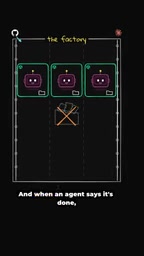
To address this, the factory introduces an independent verification step: the system re-runs the tests, and a dedicated reviewer agent examines the actual code diff to catch problems that tests might miss.
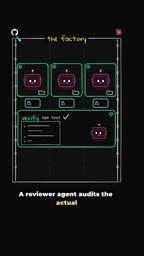
This design acknowledges a fundamental limitation of AI agents — they're good at making tests go green, but there's a massive gap between "tests pass" and "logic is correct." The reviewer agent exists to bridge that gap. And at the very end of the pipeline, it's still a human who decides whether to merge. AI handles production and initial screening; humans retain final decision-making authority.
The behavior described as "making tests go green" has a well-known anti-pattern name in AI coding: the Goodhart's Law trap — when passing tests becomes the optimization target itself, agents may achieve the metric by modifying test assertions, skipping failing cases, or writing code that special-cases only the test inputs, rather than actually solving the problem. This is precisely why the reviewer agent's examination of the code diff is so valuable: it doesn't look at test results — it reviews the code logic itself, and can detect implementations that "work around tests" rather than "fix the problem." This is also why an independent code review layer is non-negotiable in factory design: it checks for alignment between intent and implementation, not merely the coverage state of the test suite.
Reality Is Harsher Than Theory
The theoretical framework sounds complete, but the original author's real-world testing reveals a sobering number. He built a Software Factory pointed at 10 real GitHub issues. Nine of them made it through the pipeline and produced PRs — but 7 of those 9 still failed in unexpected ways during actual use.
Crunching the numbers: even with sandboxing, test re-runs, and a reviewer agent in place, the proportion of truly reliable output remains very low. This data serves as a reality check against the current hype around "AI that automatically writes code": orchestrating parallel agents is no longer technically difficult — ensuring the quality of their output is the real bottleneck.
Implications for Engineering Teams
The greatest value the Software Factory concept offers isn't "let AI replace programmers" — it's a redefinition of the boundaries of human-AI collaboration:
- System > Model: Output quality is usually determined not by how capable a single agent is, but by how complete the coordination, isolation, and verification system around it is.
- Verification layers are non-negotiable: Passing tests is just the starting point. Independent review and human oversight are essential quality gates.
- Isolation is the prerequisite for scale: Task claiming and sandbox mechanisms are what transform parallel agents from "creating chaos" into "creating value."
For teams looking to introduce AI-assisted development, rather than chasing the ability to run more agents simultaneously, the better investment is in building solid verification and coordination infrastructure first. Otherwise, more agents will only mean more messes for humans to clean up.
Related articles

Random Pruning of the DPO Computation Graph: 1.4x Training Speedup and Lower Peak Memory
DPO training too slow and memory-hungry? This paper proposes a random pruning framework for the DPO computation graph, sampling independently across position, sequence, and branch dimensions; branch pruning achieves a 1.426x step-time speedup and cuts training time by about 30%, with in-depth attribution of memory and time gains.

Why Does JEPA Underperform MLM in Longitudinal EHR Representation Learning?
New study compares JEPA and MLM for longitudinal EHR representation learning on MIMIC-IV: three JEPA variants train stably without collapse but underperform MLM; target size, not heterogeneity, drives prediction error.

Transfer Learning + Visible Light Communication: A New Approach to Energy-Efficient Indoor Positioning
A study proposes a transfer learning-based visible light communication indoor positioning method, achieving 47% accuracy improvement on the BOSCH factory dataset, 67.5% model efficiency under high noise, and introducing the ME composite metric for energy-efficient positioning in energy-constrained industrial IoT scenarios.