What Is AI Fast Mode? Fable 5 Users Call for the Same Dual-Mode Experience as Sol and Opus

A Reddit request for Fable 5 fast mode reveals the growing demand for speed-quality toggle options in AI products.
A Reddit post requesting a "fast mode" for AI product Fable 5 highlights a core question in LLM product design: how to give users flexible control over reasoning depth versus response speed. Fast mode reduces latency and compute cost by compressing or skipping Chain-of-Thought steps, making it ideal for lightweight daily interactions. With Sol and Opus already validating this feature, cross-product expectations are rising. The request also points to a key design principle: letting users choose their mode based on task complexity is becoming standard in leading AI products, and response speed is emerging as a key differentiator as model capabilities converge.
A Reddit Request That Reflects an Industry Trend
A user request posted to Reddit recently sparked widespread discussion about AI model interaction experiences. The message was straightforward: "Please add a fast option to Fable 5 like Sol and Opus have," with the user emphasizing their desire to "integrate a fast mode into Fable 5."
Short as it may be, this request touches on a topic that's gaining increasing attention in AI product experience — the ability to choose between inference speed and response mode. As more and more large language models begin offering the option to switch between a "fast mode" and a "deep reasoning mode," user expectations for a consistent experience across tools are rising accordingly.

What Is Fast Mode in an AI Model?
"Fast mode" (also called fast option) refers to an operational mode in which an AI model sacrifices some depth of reasoning in exchange for quicker response times. This concept is becoming increasingly common across large language model products.
The Speed-Quality Tradeoff
Modern large language models — especially those with reasoning capabilities — often go through a series of internal "thinking" steps before generating a response. While this Chain-of-Thought mechanism significantly improves answer quality for complex problems, it also introduces noticeable response latency.
For many everyday use cases — simple Q&A, content rewriting, creative generation — users don't need the model to engage in lengthy deep reasoning. They want immediate feedback. This is precisely the core value of fast mode:
- Reduced latency: Skip or simplify reasoning steps to return results quickly
- Lower compute cost: Fewer tokens consumed, reducing usage costs
- Smoother interaction: Ideal for high-frequency, lightweight conversational scenarios
The Precedent Set by Sol and Opus
Sol and Opus, the two models referenced in the request, represent AI models that already offer a fast mode. By using them as a benchmark, the user signals that this feature has already been validated and well-received in certain products. Once users get accustomed to toggling between "fast" and "deep" modes, it's natural for them to expect the same from their other frequently used AI tools — like Fable 5.
What This User Request Reveals About AI Product Design
This seemingly minor feature request actually cuts to the heart of one of AI product design's core tensions.
The Importance of Cross-Product Consistency
When users switch between multiple AI tools, consistency in features significantly affects the overall experience. If Product A has a fast mode and Product B doesn't, users feel a clear functional gap. This kind of horizontal comparison across products is becoming a powerful force driving feature alignment among AI products.
Fable 5, as an AI product geared toward creative writing or roleplay scenarios, receiving this type of request from its users shows that they want more flexible speed control without sacrificing content generation quality.
Putting Mode Control in the User's Hands
You may have noticed that the user asked for an "option" — not a forced replacement of the existing mode. This detail matters. Good AI product design should give users the power to choose their mode, letting them decide based on the task at hand:
- For deep creative work, use full reasoning mode for higher-quality output
- For rapid iteration, switch to fast mode for greater efficiency
This "optional dual-mode" design philosophy is fast becoming a standard feature in mainstream large language model products.
Takeaways for AI Product Developers
From this real user feedback, AI product teams can draw several valuable lessons.
Pay Attention to Feature Alignment Requests in Communities
Communities like Reddit are often the first signal source for product feature demand. When users proactively cite a competing product as a benchmark for their request, it means that feature has already established a certain industry expectation. Responding promptly to these alignment requests can help improve user retention and product satisfaction.
Response Speed Optimization Is a Long-Term Competitive Advantage
As large language models increasingly converge in raw capability, response speed and interaction experience are becoming the new battleground for differentiation. Offering flexible speed options not only meets varying use-case needs but also gives users more agency in managing their own costs.
Conclusion
This brief Reddit request may seem small, but it clearly communicates a shared expectation among AI users: between generation quality and response speed, we want the freedom to choose. As models like Sol and Opus lead the way with fast mode support, similar feature alignment requests are only going to multiply. For Fable 5 and other comparable AI products, whether or not to follow this trend could become an important factor influencing user perception and market competitiveness.
In an era where AI interaction experiences are becoming increasingly refined, listening and responding to genuine, front-line user feedback is exactly what drives continuous product evolution.
Related articles
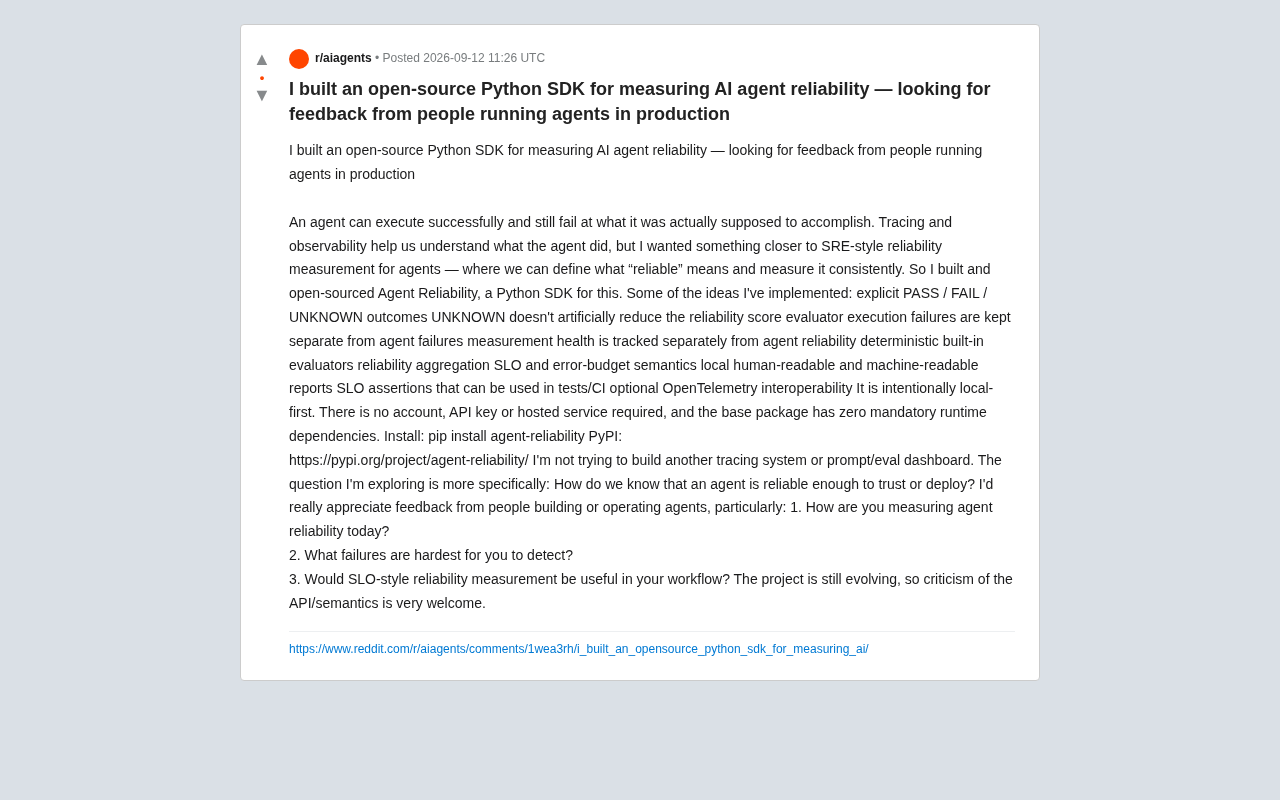
Open-Source Python SDK: Measuring AI Agent Reliability with SRE Principles
Agent Reliability is an open-source Python SDK that applies SRE's SLO and error budget concepts to AI Agent evaluation, with PASS/FAIL/UNKNOWN states, CI assertions, and zero forced dependencies.
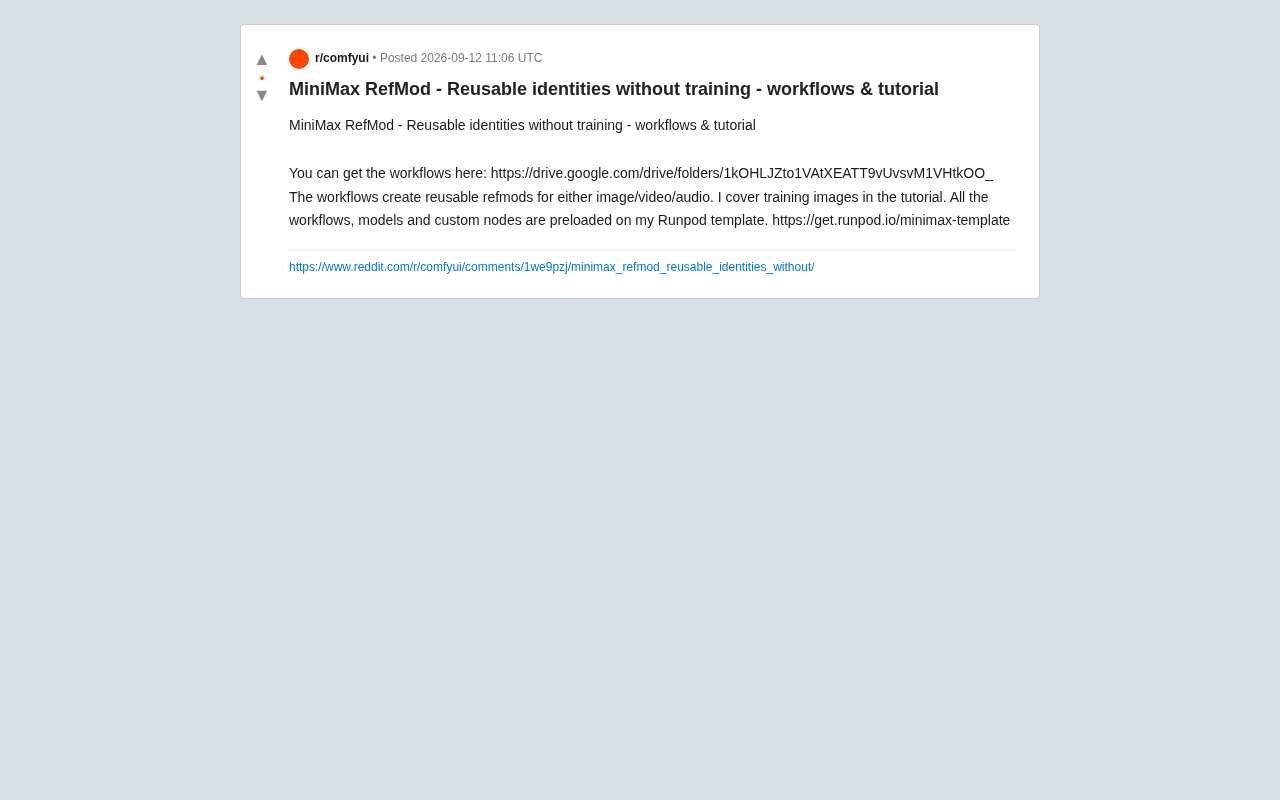
MiniMax RefMod: A Complete Guide to Training-Free Reusable Identity Workflows
MiniMax RefMod offers training-free reusable identity workflows for image, video, and audio generation. Includes Runpod template and tutorial for quick setup.

Invalid Source Material Notice
The source material provided lacks substantive information and is unrelated to AI/tech topics, making it impossible to produce a complete professional article.