What Is an AI Agent? A Clear-Eyed Look at How Intelligent Agents Actually Work
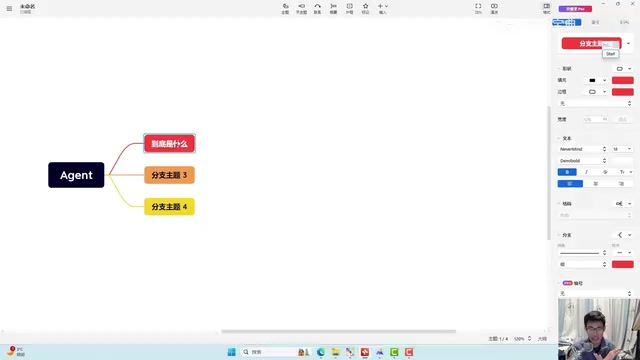
AI Agents are task orchestration systems built on LLMs, not truly autonomous intelligences.
Using the analogy of a roommate attending class on your behalf, this article breaks down the core logic of AI Agents: they are not a new species separate from LLMs, but rather task orchestration systems that repeatedly call LLMs to decompose and execute goals step by step. Crucially, the reliability of today's Agents depends almost entirely on developer-designed rules and prompts — not on autonomous model reasoning. LLM hallucinations mean that without rule-based constraints, Agent performance degrades significantly. The right way to understand Agents is as an engineering practice combining prompt engineering, task decomposition, and workflow orchestration.
Why AI Agents Suddenly Became So Hot
AI Agents (intelligent agents) have become one of the hottest topics in the AI world. Whether it's tech talks, open-source frameworks, or startup pitches, Agent is the word on everyone's lips. But for developers just getting acquainted with the concept, what exactly is an Agent? How does it differ from a large language model? And what kinds of problems can it actually solve?
This article is based on a beginner-friendly AI Agent tutorial and aims to strip away the hype surrounding Agents and get back to their technical fundamentals. As the original author emphasizes: there's no single, perfect definition of an Agent — it's more of a "living concept." What you want it to do and how you design its workflow is entirely up to you.

Understanding AI Agents Through a Simple Real-Life Example
The word "agent" generally translates to "proxy" or "representative." The easiest way to understand it is through a relatable example:
Imagine you can't drag yourself out of bed in the morning, so you ask your roommate to attend class for you. You've issued a single command — "go to class for me" — but that's not something that can be done in one step. Your roommate has to break it down themselves: answering "here" when the professor takes attendance, turning in your assignment, borrowing lecture notes, and even figuring out that you probably don't want to brave the cafeteria at lunch, so they bring food back to the dorm for you.
This is the core logic of an Agent: you provide a relatively abstract goal, and it automatically breaks that goal down into multiple subtasks and executes them step by step.
The Fundamental Difference Between AI Agents and LLMs
Many people confuse Agents with large language models (LLMs). The distinction is actually quite clear.
An LLM operates in a "question-and-answer" mode: you ask a question, it gives an answer; you ask again, it answers again. It's passive and single-turn.
An Agent works completely differently. Its workflow looks like this:
- Step 1: Understand your command;
- Step 2: Break the task down into subtasks (what to do first, second, third);
- Step 3: Execute each subtask in sequence to reach a final result.

Agents Still Rely on LLMs to Break Down Tasks
Here's an important misconception to correct: an Agent is not a "new species" that exists independently of LLMs — it doesn't have its own independent "brain."
So how does it break a command into subtasks? The answer is — still through an LLM.
Using the "attend class for someone" example: the Agent takes the original command along with relevant context and feeds it to an LLM as a prompt: "I need to attend class on behalf of this person. Here's their background information. Please break this task down into subtasks." The LLM then returns a series of steps.
In other words, every decision and every action an Agent takes involves a large number of interactions with an LLM. It continuously asks: "What is my current environment? What command have I received? What should I do next?" The essence of an Agent, therefore, is making fuller and more frequent use of an LLM's capabilities.

Can AI Agents Really "Understand" Humans?
A common misconception is that Agents are powerful enough to truly understand every human behavior. As of today, the technology is nowhere near that level.
The reason lies in the LLM itself — it is prone to hallucination, producing outputs that can be unfocused or unreliable. If an LLM is left to make decisions entirely on its own, the results are often poor.
Rules Are the Backbone of Any Agent
So how do mature Agents ensure stable execution? The answer is human-designed rules.
In practice, these rules are carefully crafted prompts. Taking the "attend class for someone" scenario: a developer would hard-code the workflow — must check in for attendance, must complete this task, must complete that task. They'd also inject richer context into the prompt, such as "this person generally dislikes attending class but likes reviewing notes before exams."
Packaging the task goal + personal information + behavioral tendencies + current environment into a single prompt, then handing it to the LLM — that's how you get a reasonably reliable next action.

The Real Limitations of Today's AI Agents
The original author makes a pointed observation: many current Agent projects, frameworks, and presentations oversell the technology — portraying Agents as fully autonomous, self-analyzing, and self-understanding. But nearly every successful real-world case, on closer inspection, is the result of developers designing the rules and workflows in advance.
Take AI-assisted coding as an example. The truly reliable approach mirrors a real software development process: a product manager (PM) role defines the requirements and step-by-step process, and then each phase is handed to a corresponding "developer" role to implement. The entire process is built on a clear, complete workflow orchestration — not on letting the Agent "think for itself" from scratch.
This isn't to say LLMs can't reason — they absolutely can at each step. But without rule-based constraints, output quality drops significantly. That is the central limitation of Agent technology at its current stage.
Summary: How to Think About AI Agents Correctly
Putting it all together, here's a grounded definition of an AI Agent:
An Agent is an intelligent system that helps us accomplish a task. It breaks a complex goal into subtasks, and for each subtask, combines pre-designed rules (prompts) with calls to an LLM to produce the desired output.
Three keywords worth keeping in mind:
- Decompose: Break an abstract goal into executable subtasks;
- Rules: Use prompts to constrain model behavior and compensate for the uncertainty introduced by hallucination;
- Call: Rely on an LLM at every step to generate decisions and actions.
For developers looking to get started with AI Agent development, this mental model is essential — don't mythologize Agents, but don't underestimate them either. At their core, they are a form of task orchestration + rule design engineering built around LLMs. Mastering prompt engineering, task decomposition, and workflow orchestration is the real foundation for building effective Agents.
Related articles
Claude Code Adds Agent View: A Research Preview for Unified Session Management
Claude Code's new Agent View feature (research preview) consolidates all coding sessions into a unified list, advancing AI tools toward multi-agent orchestration.
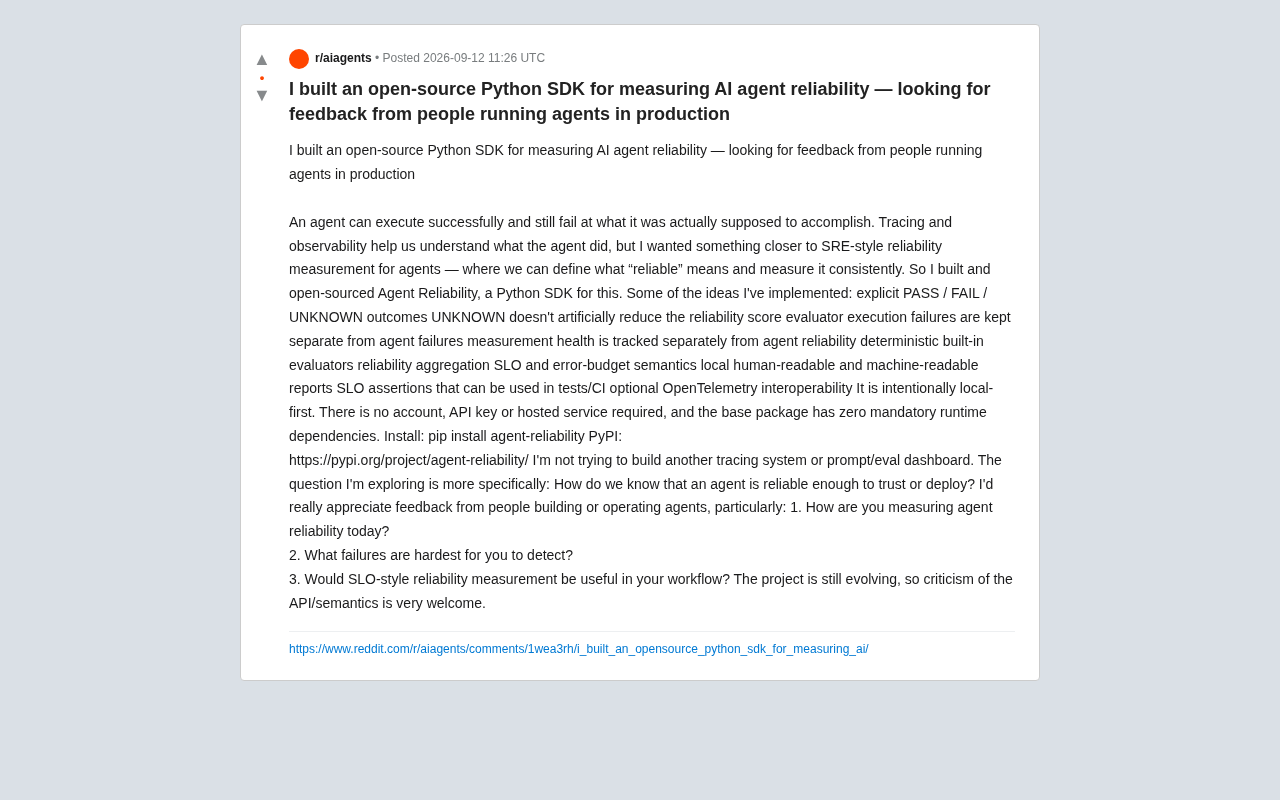
Open-Source Python SDK: Measuring AI Agent Reliability with SRE Principles
Agent Reliability is an open-source Python SDK that applies SRE's SLO and error budget concepts to AI Agent evaluation, with PASS/FAIL/UNKNOWN states, CI assertions, and zero forced dependencies.
MiniMax RefMod: A Complete Guide to Training-Free Reusable Identity Workflows
MiniMax RefMod offers training-free reusable identity workflows for image, video, and audio generation. Includes Runpod template and tutorial for quick setup.