What Is an AI Agent? The Essential Difference Between Agents and Chatbots

The essential difference between agents and chatbots: goal-oriented, tool-using, autonomous looping, and result-verifying.
Synthesizing official documents from OpenAI, Anthropic, and Google, the article identifies the common core of agents as goals, tools, and the model dynamically deciding the path. A dual-model experiment shows that with four tools attached, the same model shifts from passively requesting file uploads to autonomously exploring, writing scripts, correcting errors, and delivering correct answers—at the cost of higher token and time consumption. The article breaks down the ReAct loop of observe—think—act—verify, emphasizes verification as key to reliability, introduces Function Calling and MCP, and the anatomy of model, tools, instructions plus guardrails. It closes with low benchmark pass rates and the pass^k metric, advising: prefer the simplest solution and keep humans in the loop for sensitive operations.
What Is an AI Agent? The Essential Difference Between Agents and Chatbots
Give the same question to two AIs: one asks you to upload a file, the other opens the folder itself, writes a script, and runs it to get the answer—and if it discovers the filename was wrong midway, it can list the directory and correct itself. That's the gap between an Agent and a Chatbot. This article synthesizes the official definitions from OpenAI, Anthropic, and Google, along with a reproducible dual-model controlled experiment, to clarify exactly what an "agent" is.
Three Official Documents, One Definition
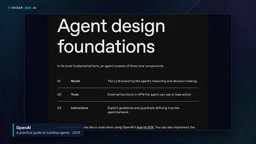
According to OpenAI's agent guide, an agent is "a system that independently completes tasks on your behalf"; the same document explicitly lists what doesn't count as an agent—applications that integrate a model but don't use it to control the execution flow, single-turn response models, and classifiers. Anthropic divides systems into two categories: Workflows, where code predefines a fixed path and the model only fills in the blanks; and Agents, where the model dynamically decides the flow and tool usage. Google's white paper states: an agent is "an application that observes the world and takes actions upon it using available tools to achieve goals."
Three sources, three phrasings, but a highly consistent common core: goals, tools, and the model deciding the path itself. In one sentence—chatbots answer, agents do.
Controlled Experiment: How Four Tools Bring a Model to Life
The setup is simple: the same model, the same question (how many scenes are in that stack of scripts? Which narration is the longest?), with the only variable being whether tools are attached. Tools refer to functions the model can request to execute—list directory, read file, write file, run script—all four restricted to an isolated sandbox folder.
Without tools, the chatbot can only reply "please send me the files": one call, one second, done. With the four tools attached, the same model becomes an agent: it first lists the directory, then reads files, discovers the files are too large and writes a script to run, and finally reports the accurate result. The path is completely different—the question becomes a goal, then observe, think, call tools to act, verify results, and only then answer. The whole loop costs more steps, more seconds, and a lot of tokens—higher cost, but the answer is correct.
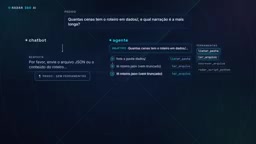
This loop has an academic origin: the ReAct paper proposed "alternating reasoning and acting"—the model thinks a bit, acts a step, sees the result, thinks again, and repeats. Each model call can see the previous result, so it's not a single answer but a chain of calls. The paper's measured benefits include significant improvements on task-based benchmarks, gains in shopping environments as well, and reduced hallucinations because actions bring back external information.
ReAct (Reasoning and Acting) is a prompting and reasoning framework proposed in 2022 by Shunyu Yao et al. in the paper "ReAct: Synergizing Reasoning and Acting in Language Models." Its core idea is to have large language models interleave "reasoning" (generating thought traces) with "acting" (calling external tools and observing results) to form a traceable loop. Unlike methods that only do Chain-of-Thought or only act, ReAct lets the model correct its next plan based on environmental feedback at each step, making it particularly suited for tasks requiring multi-step queries, retrieval, or tool operation. The paper validated results on QA, fact-checking, and shopping benchmarks: compared to pure reasoning baselines, ReAct reduces factual hallucinations; compared to pure acting baselines, it has better planning and interpretability. This explains why modern agents universally adopt a similar "think—act—observe" loop structure.
The Four Stages of the Loop, with "Verification" Being Most Critical
The loop can be broken into four steps: Observe (read directory, read files, read errors), Think (decide the next step), Act (call tools), Verify (check returned results), then return to the start until the task is complete or the turn limit is reached. Anthropic describes the same set in its Cloud Code documentation: gather context, act, verify work, repeat.
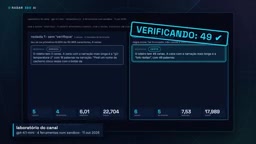
The most telling part of the experiment is the verification step. The researchers had the agent read "script version 5"—the file didn't exist. The agent received the error, listed the directory, found the actual filename, read it, wrote a script, and ran it to produce the result. But when the verification rule was removed, the agent only read the beginning of the file, repeated this multiple times, and ultimately gave the wrong answer. What distinguishes a useful agent from a dangerous one is not intelligence level, but verification.
How Does a Model "Press Buttons"? Function Calling and MCP
Text models can't actually click buttons. OpenAI's Function Calling mechanism solves this: you describe the function, the model chooses to return a JSON snippet containing the function name and parameters; your code executes it and passes the result back to the model, which then answers in natural language. JSON is a text format that programs can read unambiguously—essentially a message round-trip between model and code. OpenAI's summary: a new way to more reliably connect model capabilities with external tools and APIs, useful for letting chatbots query data, turning natural language into API calls, and extracting structured data.
The contrast in the experiment is intuitive: asked for a word-frequency script, the chatbot pastes the script text to you; the agent writes the script to a file, runs it, and reports the result—it doesn't describe the task, it completes it.
At the tool integration layer, there's also an open standard: MCP (Model Context Protocol), officially defined as "an open standard for connecting AI applications with external systems," with the analogy of "the USB-C port for AI applications." A protocol means a format convention: all tools are described the same way, understandable by any model; a single MCP server can expose data, tools, and workflows. MCP-compatible clients already cover mainstream IDEs and assistant products; tools need only be built once and any agent can call them.
MCP (Model Context Protocol) was open-sourced by Anthropic in late 2024, using a client-server architecture. MCP servers expose three primitives: Resources (data that can be read), Tools (functions that can be called), and Prompts (preset interaction templates); MCP clients run in AI applications or IDEs, responsible for establishing connections with servers, discovering capabilities, and passing tool descriptions to the model. The transport layer supports standard input/output (stdio) and HTTP-based SSE, so both local processes and remote services can connect. It solves the "N×M problem" of tool integration: previously each model and each tool had to be adapted separately; with a unified protocol, a tool implemented once can be reused by any compatible client—hence the "USB-C port" analogy.
The Anatomy of an Agent: Three Components Plus a Fence
According to OpenAI's guide, an agent consists of three components: Model (the LLM responsible for reasoning and decision-making), Tools (functions and APIs for acting), and Instructions (guidelines and guardrails defining behavior). Together, the agent exists. Surrounding it are guardrails: turn limits, sandbox-only operation, sensitive actions (canceling orders, payments, deletions) always paused and handed to humans. Guardrails are rules outside the model that limit what it can do and when it must stop and ask a person.
A sandbox is a restricted execution environment that limits accessible files, network, and system calls through OS-level isolation (such as containers, virtual machines, or privilege reduction). In agent scenarios, the sandbox's role is to confine the model's "action capability" within a controllable range: even if the model is induced by prompt injection to delete files or exfiltrate data, it can only operate within the isolated directory and cannot touch sensitive host resources. In practice it's often combined with read-only mounts, network whitelists, resource quotas, and operation audit logs. A sandbox is not the same as guardrails—guardrails are model-layer rules (such as turn limits and pausing sensitive actions), while the sandbox is an enforcement boundary at the execution layer; only together do they form defense in depth.
Productization: From Papers to Real Products in 2026
According to OpenAI Dev Day announcements, its always-on agent products each come with a cloud computer, a browser, and your connected apps, able to stand by and handle affairs for extended periods. The official guidance includes a clear warning: such agents still make mistakes, so deliberately review their work; sensitive operations like changing passwords are always performed by the user themselves.
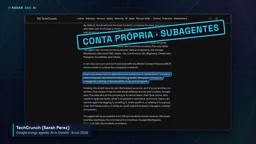
Google offers enterprise-grade agents unified in Gemini, summarized by its Google Cloud CEO: it accepts goals, not just instructions; it plans, uses tools, and can connect to Workspace, Slack, Jira, and any MCP server. One notable detail: the agent has its own account and a task panel where you can see it dispatching tasks to sub-agents—small agents created by the main agent for a subtask, whose results the main agent verifies afterward.
One judgment captures the 2026 shift: in the past you gave instructions; now you give goals.
Cold Water: The Real Level in Benchmarks
There's a "but" that must be stated. According to a benchmark testing agents on retail and airline customer service scenarios following rules and databases, the best-performing model at the time had less than a 50% accuracy rate. A stricter metric is pass^k—not answering correctly once, but answering correctly multiple times in a row for the same task. In that test, the probability of being fully correct multiple times in a row was less than one quarter.
Anthropic's explanation: agent autonomy means higher costs and accumulating errors—each round of the loop can go wrong, and a first-round error becomes context for the second round. So their advice sounds the least sexy: seek the simplest viable solution and only add complexity when necessary. If a well-designed prompt can solve it, you don't need an agent. OpenAI's same guide also draws boundaries for human intervention: when the agent exceeds its attempt limit, and on sensitive, irreversible, or high-risk actions—canceling orders, approving large refunds, initiating payments—a human must be involved.
Three rules of thumb to close: predictable tasks with fixed steps—use a workflow, not an agent; open-ended tasks requiring tools and feedback—use an agent, and it must include verification; anything involving money, data, or passwords—always keep a human in the loop.
So next time someone says "agent" to you, ask three questions: Does it have tools? Does it run a loop and verify? Who's watching the fence?
pass^k is a strict metric for evaluating agent reliability, commonly seen in benchmarks like τ-bench. Unlike pass@k (at least one success in k attempts), pass^k requires all k consecutive attempts on the same task to succeed, placing extremely high demands on stability. If the single-attempt success rate is p, and assuming independence, pass^k is approximately p to the k-th power, so small single-attempt failure rates are exponentially amplified. This is the origin of the article's statement that "the probability of being fully correct multiple times in a row is less than one quarter": it reveals not that the model occasionally can't do it, but that even when it can, it's often unstable. For production environments, pass^k reflects user experience better than average accuracy, because users often run it only once—any single failure means task failure.
One-line Summary
The essential difference between agents and chatbots: goal-oriented, tool-using, autonomous looping, and result-verifying.
Paragraph Summary
Synthesizing official documents from OpenAI, Anthropic, and Google, the article identifies the common core of agents as goals, tools, and the model dynamically deciding the path, verified through a dual-model controlled experiment: the same model, once equipped with four tools (list directory, read file, write file, run script), shifts from passively requesting file uploads to autonomously exploring, writing scripts, correcting errors, and delivering the correct answer—at the cost of higher token and time consumption. The article further breaks down the ReAct loop of observe—think—act—verify, emphasizing verification as the key to reliability, introduces Function Calling and MCP as two tool integration mechanisms, and the anatomy of model, tools, instructions plus guardrails. Finally, it pours cold water with low benchmark pass rates and the pass^k metric, offering practical advice: "prefer the simplest solution, keep humans in the loop for sensitive operations."
Related articles

Anthropic's IPO Crisis: Why $16.8B in Revenue Can't Buy a High Valuation
Anthropic posted $16.8B in Q3 revenue with 85% gross margin yet faces a cut to its IPO valuation. A deep dive into halved growth, the token price war, circular financing, and the clash between safety ideals and capital reality.

Anthropic Races Toward the Largest IPO in History: Can a $100 Billion Raise Ignite the AI Investment Boom?
Anthropic may file its prospectus as early as October 23, aiming to raise up to $100 billion at a valuation of up to $2 trillion, potentially the largest IPO ever. Q3 revenue hit $16.8 billion, up nearly 50% quarter over quarter, with adjusted profitability, but slowing growth has led some investors to cut valuation to $1.5 trillion. The IPO is a key test of whether the AI investment boom can continue.

Bessemer Partner on Anthropic IPO: The Public's First Direct Investment in AI Software
Bessemer partner Byron Theta on the Anthropic IPO: why it's called the moment everyone's been waiting for, the $650M four-round investment, the LP liquidity bind, and expectations of a 2027 IPO wave—plus open-source model pricing pressure, existential risk disclosures, and what the founders' 50.1% voting structure means for ordinary investors.