What Is Auracast? The Next-Generation Bluetooth Broadcast Audio Technology Explained

Auracast upgrades Bluetooth audio from one-to-one pairing to open broadcast, letting earbuds tune into public audio streams like a radio.
Auracast is a broadcast technology built on the Bluetooth LE Audio standard that fundamentally changes the traditional Bluetooth pairing model, allowing a single audio source to push streams to unlimited compatible devices simultaneously. Its most immediate value shows up in public settings like airport gates and large lecture halls, where speaker audio quality is often frustrating. For people with hearing impairments, it can also replace costly induction hearing loop systems with a far more accessible alternative. The main challenge today is limited ecosystem adoption, but as manufacturers accelerate support, a wave of innovative open audio broadcast applications is likely to follow.
Auracast: Letting Your Earbuds Receive Audio Like a Radio
Auracast is a new Bluetooth audio broadcast technology with a refreshingly imaginative premise: it lets your earbuds connect to an open audio broadcast source the same way your car stereo picks up an FM station. In other words, instead of the traditional Bluetooth "one-to-one" point-to-point connection, it enables a "one-to-many" open broadcast — any Auracast-compatible device can tune into the same audio stream.
The core value of this technology lies in breaking the closed nature of Bluetooth connections. In the past, a pair of earbuds could only connect to one phone or one playback device. With Auracast, a public venue can simultaneously push the same audio to countless pairs of earbuds, and users simply choose which broadcast they want to listen to — just like selecting a radio station.

On a technical level, Auracast is a standard officially released by the Bluetooth Special Interest Group (Bluetooth SIG) in 2022, built on the Bluetooth LE Audio (Low Energy Audio) specification. Its core protocol is called Broadcast Isochronous Streams (BIS). Unlike classic Bluetooth's point-to-point pairing, BIS allows a single transmitter to push the same audio stream to an unlimited number of receiving devices simultaneously — and receivers don't need to complete a traditional "pairing" handshake with the transmitter. They simply scan and join the broadcast. This also means Auracast natively supports encryption: broadcasters can set an access code for their audio stream, so only users with that passcode can listen, balancing openness with privacy. Another technical highlight is the LC3 codec introduced with LE Audio, which delivers better audio quality than the SBC codec used in classic Bluetooth at the same or lower bitrates, while also improving latency — particularly valuable for live performances and other scenarios where audio-visual sync is critical.
Real Problems It Can Actually Solve
Airport Announcements: Never Miss a Boarding Call Again
One of the most immediately relatable use cases is the airport. Plenty of travelers have experienced this: the gate announcement is muffled and garbled, and you genuinely can't tell which flight or gate is being called. As the original author put it: "That's my experience at the airport every time — is that my gate? Is that the one? Who are they even talking about?" Already stressed about travel, the added anxiety of not being able to hear the announcements makes the whole experience even worse.
With Auracast, airports could push gate announcements directly to your earbuds, letting you clearly hear exactly what's happening — no more guessing.

Classrooms and Lectures: Never Miss an Important Point
Another classic scenario is the classroom. If a professor wears an Auracast-enabled microphone, they can broadcast their lecture directly to students' earbuds, ensuring you don't miss anything that might show up on the final exam. For large lecture halls with poor acoustics, this kind of clear, point-to-many audio transmission is especially practical.

Enormous Potential for Accessibility
Auracast carries particular significance for people with hearing impairments or hearing difficulties. Compared to traditional hearing assistive devices, it can deliver a clean audio signal directly to the user's ears without relying on loudspeakers in a noisy environment. Whether it's public announcements, live performances, or museum audio guides, Auracast provides a cleaner and more reliable audio channel for accessible access.
Accessibility-focused designs like this tend to spark unexpected innovative uses once they become widespread — when a fundamental capability becomes ubiquitous enough, the applications built around it keep multiplying.
Looking at the history of assistive hearing technology, Auracast makes for an interesting comparison with traditional induction hearing loop (Hearing Loop / T-coil) systems. Hearing loops work by installing electromagnetic coils in venue floors or walls, converting sound signals into magnetic fields that are received by the T-coil built into a hearing aid. These systems have been widely deployed in European theaters, churches, and other public venues. However, they're expensive to install, complex to maintain, and only work for users wearing specialized hearing aids. Auracast, by contrast, requires no physical infrastructure modifications — you simply connect a Bluetooth LE Audio transmitter module to an existing audio system, and any Auracast-compatible hearing aid, earbud, or even smartphone can receive the signal. This zero-barrier access model has the potential to extend accessible audio services from specialized devices to mainstream consumer products, reaching a much broader population of people with hearing loss.
A Technology "In Search of a Problem"?
On the question of Auracast's current state, the original author offered a pretty fair assessment: until it's everywhere, it looks more like "a solution in search of a problem."
This observation captures the classic dilemma of new technology adoption: the technology itself is cool, but its true value only emerges when the ecosystem of supporting devices, venues, and infrastructure is broad enough. A single airport or a single classroom supporting it doesn't mean much. Only when airports, schools, theaters, gyms, and home TVs all widely adopt it will we start seeing genuinely compelling applications emerge at scale.

The good news is that major manufacturers appear to be adopting this technology at a fairly rapid pace. This kind of collective ecosystem-level push is exactly the prerequisite Auracast needs to go from "seemingly niche" to "genuinely useful." Once support becomes widespread, the new possibilities enabled by open audio broadcasting will be well worth watching.
Summary
Auracast represents a paradigm shift in Bluetooth audio — from point-to-point connections to open broadcasting. It demonstrates clear practical value in scenarios like airport announcements, classrooms, and accessibility assistance, but its true potential depends on how widely the ecosystem adopts it. Right now it may still be in a "waiting to reach critical mass" phase, but as more and more manufacturers come on board, this technology could very well deliver some genuinely surprising experiences in the not-too-distant future.
Related articles
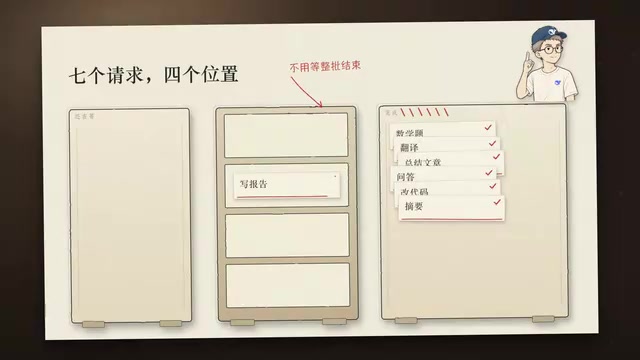
DeepSeek Open-Sources DeepInfer: What Is an Inference Framework Actually For?
DeepSeek open-sources its inference framework DeepInfer under Apache 2.0, supporting DeepSeek V4.1 Flash offline inference. This article explains its request scheduling, FlashMLA/DeepGEMM compute optimization, DSPark speculative verification acceleration, and what it means for developers and ordinary users.
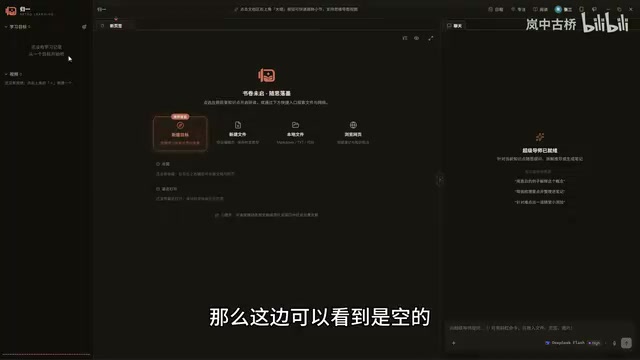
Open-Source AI Learning Agent: A Full Workflow Experience from Topology Graphs to Exam Generation
Explore an open-source AI learning agent: built on DeepSeek API, it constructs knowledge systems via topology graphs, with automatic document generation, notes, super documents, and exams. Learn about its Agent workflow and design highlights.

DeepSeek Whale Girl Open-Source MV Meme: AI Industry Coded Slang About Pivoting to Closed Source
Bilibili's DeepSeek Whale Girl rap MV uses fictional memes to tease the AI open-source vs. closed-source debate, with lyrics full of industry slang. This article explains the meme culture, the Whale Girl symbol, and the open/closed tension.