What Is Carbon-Aware Electricity Pricing? Daily Measurements Across 38 Grids Reveal a New Approach to Low-Carbon Power Consumption
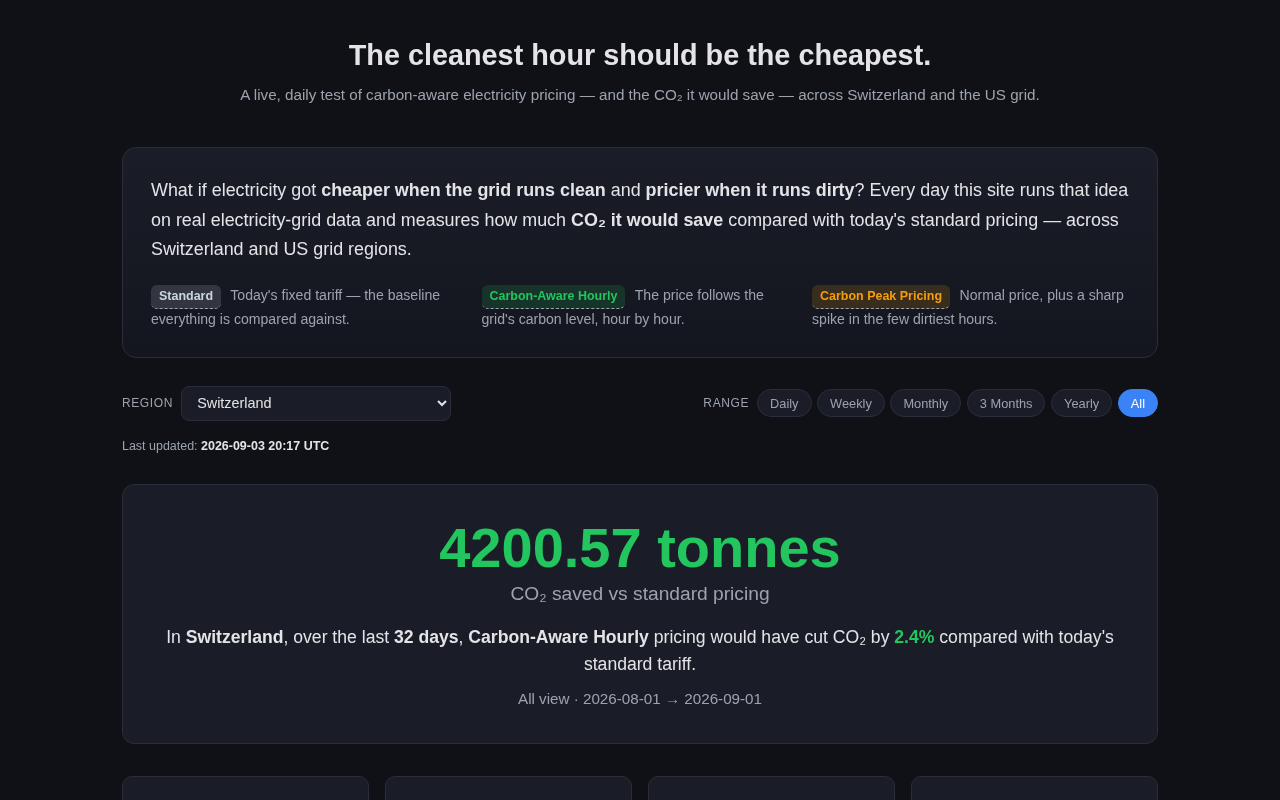
Carbon-aware electricity pricing uses real-time carbon intensity data from 38 grids to guide low-carbon power use.
Carbon-aware electricity pricing incorporates real-time carbon emission intensity into the power pricing system, incentivizing users to consume electricity during low-carbon periods. An open-source project measuring carbon-aware prices daily across 38 grids provides transparent data for researchers and policymakers. Applications include smart EV charging, data center load shifting, and energy storage optimization, though regulatory, market, and equity challenges remain before full implementation.
Introduction: When Electricity Prices Start to "Understand" Carbon Emissions
Amid the wave of energy transition, a seemingly simple yet profoundly impactful concept is quietly emerging — carbon-aware electricity pricing. The core idea is straightforward: electricity prices should reflect not only supply and demand dynamics but also the underlying carbon emission intensity. A recent open-source project that sparked discussion on Hacker News is centered on "daily measurement of carbon-aware electricity pricing across 38 grids," aiming to provide a quantifiable, trackable data foundation for this concept.
While discussion around this topic is still in its early stages, it touches on a critical question at the intersection of energy, climate, and technology: Can we use price signals to shift electricity consumption toward low-carbon time windows?
What Is Carbon-Aware Electricity Pricing
From "How Much You Use" to "How Much Carbon You Use"
Traditional electricity pricing mechanisms are primarily based on Time-of-Use (TOU) rates or real-time wholesale pricing, with pricing logic centered on supply-demand balancing. TOU pricing is a widely adopted mechanism globally, dividing the day into peak, off-peak, and shoulder periods with corresponding price levels to incentivize consumers to use electricity during off-peak hours. This mechanism was first proposed after the energy crisis of the 1970s. Real-time wholesale pricing is more granular, based on clearing prices in electricity spot markets at intervals ranging from 5 minutes to 1 hour, reflecting real-time supply-demand balance. For example, regional electricity markets in the U.S. such as PJM and ERCOT employ Locational Marginal Pricing (LMP) mechanisms, where prices can swing from a few cents to hundreds of dollars or even go negative within short periods. However, both mechanisms have pricing logic centered on economic costs and supply-demand relationships, without incorporating the carbon emission externalities of the generation process.
The same kilowatt-hour of electricity can have vastly different carbon footprints depending on the time of day and the grid it comes from.
For example:
- When the grid has a high share of wind and solar, the carbon emission intensity per kilowatt-hour (gCO₂/kWh) is relatively low;
- When the grid relies on coal or gas-fired units for peak generation, carbon emission intensity rises significantly.
Carbon emission intensity, measured in grams of CO₂ per kilowatt-hour of electricity generated, is the core metric for assessing how clean a power system is. The differences across generation technologies are enormous: coal-fired power generates approximately 800–1,000 gCO₂/kWh, natural gas combined cycle around 350–450 gCO₂/kWh, while wind and solar have near-zero operational emissions (approximately 10–50 gCO₂/kWh on a lifecycle basis). In a mixed grid, overall carbon intensity fluctuates in real time as the generation mix changes. For instance, the German grid can dip below 100 gCO₂/kWh on windy winter days, but may climb above 500 gCO₂/kWh during calm, overcast evening peaks. This variability is precisely the core variable that carbon-aware electricity pricing seeks to capture and translate into an economic signal.
The idea behind carbon-aware pricing is to incorporate these carbon intensity differences into the pricing system, making electricity during high-carbon periods "more expensive" and thereby incentivizing users to proactively avoid or shift consumption away from peak-carbon windows.
Why Daily Measurement Matters
The project's emphasis on "daily measurement" is a particularly crucial detail. Carbon intensity is not a static data point — it fluctuates with real-time changes in the generation mix. By conducting daily measurements across 38 grids, the project can construct a dynamic carbon cost map that closely reflects actual operating conditions, rather than relying on rough annual averages. This provides researchers, policymakers, and electricity consumers with much more granular decision-making support.
Technical Challenges of Covering 38 Grids
Diversity and Heterogeneity of Data Sources
Measuring carbon-aware electricity pricing across 38 different grids immediately presents a data heterogeneity challenge. Grid operators across countries and regions vary enormously in data disclosure levels, update frequencies, and format standards:
- Some grids provide real-time generation mix data;
- Others only offer statistics with delays of several days or even weeks.
The project needs to integrate publicly available data from various ISOs (Independent System Operators) and TSOs (Transmission System Operators) and convert it into a unified carbon intensity metric. The ISO model is more common in North America — examples include CAISO (California Independent System Operator), PJM, and MISO in the U.S. These entities don't own transmission assets but are responsible for operating electricity markets and dispatching generation resources to ensure supply-demand balance and system reliability. The TSO model is widely used in Europe — examples include RTE in France, TenneT and 50Hertz in Germany — where operators typically own and operate the transmission network. European TSOs coordinate across borders through ENTSO-E (European Network of Transmission System Operators for Electricity), whose transparency platform provides a relatively unified data interface for Europe. However, grid operators in many developing countries may only publish monthly or annual statistical reports, posing significant challenges for cross-regional data integration.
This process involves substantial data cleaning, unit conversion, and missing value imputation work.
Methodological Divergences in Carbon Intensity Calculation
Calculating carbon intensity itself also involves methodological divergences, with two mainstream approaches each suited to different scenarios:
- Average carbon intensity: Reflects the overall carbon emission level of the grid's generation mix;
- Marginal carbon intensity: Reflects the additional emissions caused by the generating units dispatched in response to incremental electricity demand.
The two approaches can lead to different conclusions when guiding electricity consumption behavior. The concept of marginal carbon intensity originates from marginal analysis in economics. In power systems, grid dispatch follows the principle of "economic dispatch" — calling on generating units in order from lowest to highest cost. Renewable energy, with its near-zero marginal cost, is typically dispatched first, followed by nuclear, gas, and coal units. Therefore, when electricity demand increases, the units additionally called upon are usually the fossil fuel plants positioned at the back of the dispatch order — these are the "marginal units." Marginal carbon intensity measures the emission characteristics of these marginal units. Organizations such as WattTime and Electricity Maps both provide carbon signal services based on the marginal method. Notably, during periods of renewable energy surplus, additional electricity consumption may absorb wind or solar power that would otherwise be curtailed, in which case the marginal carbon intensity could be near zero or even negative (if the avoided curtailment effect is considered).
For users who want to reduce emissions by shifting loads, marginal carbon intensity is often more instructive — because it reveals "how much additional carbon one extra kilowatt-hour of electricity would produce." Translating this carbon signal into a price signal is one of the core technical challenges of carbon-aware electricity pricing.
Application Prospects and Real-World Significance of Carbon-Aware Pricing
Enabling Intelligent Load Scheduling
The most direct application of carbon-aware electricity pricing is intelligent load scheduling. The following categories of large, schedulable electricity consumption can all be automatically optimized based on carbon-aware price signals:
- Electric vehicle charging: Automatically scheduling charging sessions during periods of low grid carbon intensity, such as nighttime or midday solar peaks;
- Data center computing: Scheduling non-real-time batch processing jobs to run during low-carbon periods;
- Energy storage charge/discharge cycles: Charging during low-carbon periods and discharging during high-carbon periods, achieving dual optimization of carbon reduction and economic returns.
Imagine a data center that can schedule non-real-time batch processing jobs during the periods of lowest grid carbon intensity — it could significantly reduce its operational carbon footprint without increasing costs. This is an extension of the carbon-aware computing practices already being pursued by major tech companies. Google released its carbon-intelligent computing platform in 2021, which can automatically shift deferrable computing tasks (such as video transcoding, machine learning model training, and data index updates) to time periods or geographic locations with lower carbon intensity. Microsoft launched its carbon-aware SDK and the Green Software Foundation initiative in 2022, providing developers with a tooling framework to embed carbon awareness into software design. According to data disclosed by Google, its carbon-intelligent computing has successfully shifted approximately 40% of schedulable workloads to low-carbon periods in some data centers. With the rise of Green Software Engineering as a concept, carbon-aware computing is gradually evolving from big-tech experiments toward an industry standard.
Advancing Climate Pricing in Electricity Markets
From a broader perspective, carbon-aware electricity pricing represents an attempt to move electricity markets toward "internalizing climate costs." In traditional markets, the social costs of carbon emissions are often borne externally and not factored into electricity prices.
Carbon cost internalization is a core concept in environmental economics, aiming to incorporate the external costs caused by carbon emissions — such as extreme weather losses from climate change, health impacts, and ecosystem degradation — into market prices. The Social Cost of Carbon (SCC) measures the discounted present value of future economic damage caused by each additional ton of CO₂ emitted. The U.S. Environmental Protection Agency under the Biden administration estimated the SCC at approximately $51 per ton, while some academic studies (such as research published in Nature in 2022) suggest the actual value could be as high as $185 per ton. Currently, two main market mechanisms are used globally to partially internalize carbon costs: carbon taxes (such as Sweden's carbon tax at approximately $120/ton CO₂, the highest in the world) and emissions trading systems (ETS), such as the EU Emissions Trading System (EU-ETS), whose allowance price briefly exceeded €100/ton in 2023. However, these mechanisms mostly operate on the generation or industrial side and have not yet directly penetrated to retail electricity prices for end consumers. The innovation of carbon-aware electricity pricing lies precisely in its attempt to transmit carbon signals at the end-user level.
By making carbon costs explicit, carbon-aware pricing mechanisms provide a reference pathway for building electricity markets that are fairer and more aligned with climate goals. Cross-regional data from 38 grids also makes comparative analysis of carbon reduction effectiveness across regions possible, providing empirical support for policy evaluation.
How Far Are We from Implementation: A Sober Assessment
Despite the appealing prospects, we must remain cautious. From "measurement" to actually influencing "pricing," carbon-aware electricity pricing still faces multiple barriers:
- Regulatory dimension: Current electricity pricing systems are subject to strict government regulation, and introducing a carbon cost factor requires adjustments to regulatory frameworks;
- Market mechanisms: How to effectively integrate carbon signals with existing wholesale electricity markets and ancillary service markets still needs exploration;
- Consumer acceptance: Whether consumers are willing to pay different electricity rates based on carbon emission differences is key to adoption;
- Equity concerns: How to prevent carbon signals from being distorted by speculative behavior, and how to ensure electricity affordability for low-income groups, are social issues that cannot be ignored.
In terms of integrating carbon signals with electricity markets, Europe is leading the way. The EU's electricity market reform proposal (2023) explicitly aims to strengthen the role of price signals in guiding renewable energy investment and stabilize clean energy revenues through Contracts for Difference (CfD) mechanisms. The UK's Ofgem (energy regulator) is piloting half-hourly settlement mechanisms to make electricity prices more closely track real-time carbon intensity changes. In North America, ERCOT (the Texas grid) has become a natural testing ground for carbon-aware pricing research due to its highly market-oriented pricing mechanism and rapidly growing wind power share — its wholesale prices frequently go negative during windy periods, indirectly reflecting the abundant supply of low-carbon electricity. However, retail electricity prices in most countries still use fixed rates or simple TOU rates, leaving end users unable to perceive real-time carbon cost fluctuations. Achieving truly carbon-aware retail pricing will require widespread deployment of smart meters, completion of demand response infrastructure, and supporting regulatory policy adjustments.
Currently, this project remains primarily at the "measurement and display" level — providing transparent carbon intensity data for the public and researchers, rather than directly changing existing electricity pricing. For a genuine carbon-aware pricing mechanism to be implemented, coordinated efforts from grid regulators, market operators, and even legislators will be required.
Conclusion
Carbon-aware electricity pricing is fundamentally an attempt to embed "environmental responsibility" into "price." The daily measurements conducted across 38 grids, while limited in scale and still garnering modest attention, provide invaluable empirical groundwork for this concept.
As the share of renewable energy continues to climb and the demand for grid flexibility becomes increasingly prominent, incorporating carbon intensity into electricity pricing systems may well become a key direction in the next phase of energy digitalization. This seemingly niche open-source project deserves ongoing attention from anyone interested in energy and climate technology.
Related articles

Workbuddy for Absolute Beginners: How a Desktop AI Agent Fits Into Real Workflows
A beginner's guide to the Workbuddy desktop AI agent: installation, claiming credits, file management, and building automated workflows—compared with CodeX for fit and cost, helping professionals shift from AI question-askers to AI managers.

OpenAI's New Agent Stack: Computer Use, Decisions API, and Ultra-Fast Workflows
OpenAI Dev Day unveiled a new agent stack: Computer Use outperforms humans, Decisions API delivers ultra-low-latency classification via Luna, Agents API opens the same Computer Use capabilities, and GPT-6.1 Sol costs only one-seventh of Astra. Core updates, benchmark data, and developer insights.

Liang Wenfeng Open-Sources DeepInfo Inference Framework, Takes On U.S. Ban
DeepSeek open-sources its DeepInfo inference framework after its models, featuring GPU/CPU cross-pipelining, small-model prediction with large-model verification, and full Huawei Ascend and NVIDIA chip support—facing the U.S. federal ban head-on. This article analyzes its significance for AI deployment and open-source strategy.