What Is Vibe Coding? Build Apps Without Writing Code

Vibe Coding lets people direct AI to write code in natural language—lowering the barrier, but complex systems still need human oversight.
The article introduces the emerging concept of Vibe Coding: developers describe ideas and their "vibe" in natural language while AI handles the mechanical work of coding, compressing the path from idea to product to almost nothing. It speeds up iteration, lets non-engineering roles like PMs and designers build prototypes directly, and helps developers enter a focused flow state. But it's no cure-all: conventional web apps, utility products, and MVP prototypes fit best, while high-concurrency, security-sensitive, or complex business logic systems still need human engineers to oversee architecture, performance, and security. The article closes with a practical path—clear requirements, iterative development, code spot-checks, and the right tools—concluding that Vibe Coding is a powerful assistant, not a replacement for programmers.
When AI Becomes Your Programmer: The Core Idea Behind Vibe Coding
A concept called Vibe Coding has recently taken off on platforms like YouTube. It describes a whole new way of building software: you simply describe your idea and the feeling (vibe) you want, and AI writes the actual code. As the video explains, "AI does the heavy lifting of writing code—you just guide the vision and the vibe."
This isn't about replacing programmers; it's about lowering the barrier to development to nearly zero. You don't need to memorize syntax or agonize over frameworks—you just need to clearly express "what I want." This model shortens the path from idea to product to almost nothing, making it especially well-suited to rapid idea validation.
The term Vibe Coding was coined by AI researcher Andrej Karpathy in early 2025 to describe a style of programming where you "barely read the code yourself and iterate entirely by feel in conversation with AI." It differs fundamentally from traditional AI code completion (like the early Copilot line-level suggestions): with the latter, humans still control the overall structure and review line by line, whereas Vibe Coding hands the act of "writing" entirely to the large model, with humans stepping back to the role of describing requirements and accepting results. What makes this possible is LLM coding agents with long context and multi-file editing capabilities—they can read project structure, run commands, and self-correct based on errors, which is why they can go straight from a natural-language description to a runnable product.
Does Vibe Coding Deliver Better Results?
The video raises a key question: how effective is Vibe Coding really? The answer is yes—but within limits.
Faster Iteration
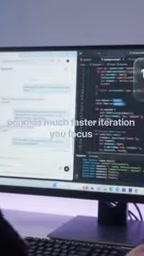
In traditional development, changing a feature might require repeated debugging, digging through docs, and refactoring. Vibe Coding lets AI handle this mechanical work so you can focus your energy on ideas and process. The video emphasizes that this approach "makes development accessible to everyone." That means product managers, designers, even business people can build prototypes directly without waiting for development resources.

Focusing on Creativity and Flow
When AI handles code details, developers more easily enter a "flow" state—a continuous, focused, creative rhythm of work. The video notes that this lets you "focus on creativity and process" instead of having your train of thought interrupted by syntax errors. For indie developers and small teams, this efficiency boost is especially pronounced.
Scope and Boundaries: Not a Cure-All
The video makes clear: Vibe Coding isn't suitable for every scenario.
Good for Standard Apps; Complex Systems Still Need Human Oversight
Vibe Coding excels at conventional web apps, utility products, and MVP prototypes. But the video stresses that "complex systems require more guidance, and human oversight remains essential." That means systems involving high concurrency, security sensitivity, or complex business logic can't rely entirely on AI-generated code.

"Standard apps" generally refers to scenarios with mature tech stacks and highly repetitive patterns—CRUD backends, form tools, static sites, or small programs that call public APIs. Solutions to these needs are abundant in training data, so the model's generated code quality tends to be stable. The difficulty with "complex systems," by contrast, often isn't the code itself but implicit constraints: concurrency and consistency, permission boundaries, data migration compatibility, failure recovery, and so on. These constraints are hard to spell out in a single natural-language sentence, and the model lacks awareness of the real runtime environment, so it easily produces implementations that "look like they run" but fail under load or in exceptional conditions. That's why the common industry practice is to use Vibe Coding for exploration phases and peripheral modules, while core paths are still designed and reviewed by engineers.
Human Oversight Is Irreplaceable
Even if AI can write runnable code, architecture design, performance optimization, and security review still require human engineers' judgment. The video's conclusion: Vibe Coding is a "powerful tool," not a replacement.
A typical risk with AI-generated code is the "hallucinated API": the model confidently calls functions, parameters, or config options that don't exist, or uses deprecated interfaces. Another risk is security flaws—SQL string concatenation, missing input validation, hardcoding keys into source code. There are also licensing and provenance issues—generated snippets may closely resemble existing open-source code. Effective human oversight typically includes: asking the model to explain key logic, reviewing data- and auth-related code line by line, using automated tests and static scanning as a safety net, and keeping commits small and clear in version control so problems can be traced back to their source.
How to Start Practicing Vibe Coding
If Vibe Coding interests you, start with these steps:
- Start with a clear requirement description: spell out in natural language the functionality, inputs and outputs, and UI style. The more specific, the easier it is for AI to understand.
- Iterative development: have AI generate a base version first, then add features incrementally, changing one thing at a time so problems are easy to pinpoint.
- Keep a review habit: spot-check AI-generated code, focusing on data handling and edge cases.
- Choose the right tools: there are now many AI coding assistants that support natural-language code generation—pick one based on your project type.
The essence of Vibe Coding is lowering the barrier to creation so more people can turn ideas into reality. It doesn't mean you don't need to learn programming—it brings programming back to its essence of solving problems and creating value. If you haven't tried it yet, start with a small tool and experience the rhythm of AI-assisted development.
There are two easily overlooked points in practice. The first is context management: the model's output quality depends heavily on how much relevant information it can see. Explicitly telling it the project structure, key interface contracts, naming conventions, and data model is far more effective than repeatedly describing "I want a nice-looking page." When conversations get long, proactively narrowing the context reduces inconsistencies. The second is verifiability: try to give every step runnable feedback—get the smallest closed loop working before expanding, and have AI generate test cases alongside the code, turning "it feels right" into repeatable, checkable results. This is also the key step from Vibe Coding toward maintainable projects.
One-line Summary
Vibe Coding lets people direct AI to write code in natural language—lowering the barrier, but complex systems still need human oversight.
Paragraph Summary
The article introduces the recently emerging concept of Vibe Coding: developers simply describe their ideas and "vibe" in natural language, and AI takes on the mechanical work of writing code, compressing the path from idea to product to almost nothing. It significantly speeds up iteration, lets non-engineering roles like product managers and designers build prototypes directly, and helps developers enter a focused flow state. But the article stresses this isn't a cure-all: conventional web apps, utility products, and MVP prototypes are the best fit, while systems involving high concurrency, security sensitivity, or complex business logic still need human engineers to oversee architecture, performance, and security review. It closes with a practical path—describe requirements clearly, develop iteratively, keep a habit of spot-checking code, and pick the right tools. The conclusion: Vibe Coding is a powerful assistant tool, not a replacement for programmers.
Related articles
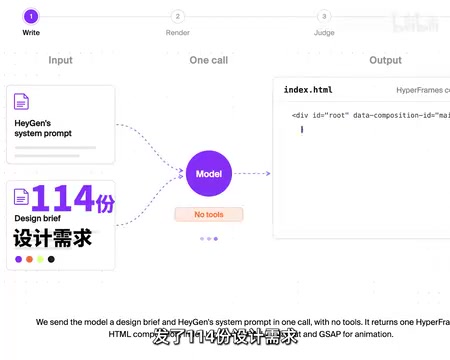
27-Model Code-to-Video Test: Claude Opus 5.5 Takes the Crown, But the Real Value King Is Someone Else
Artificial Analysis' Code2Video Benchmark has 27 models write HTML videos from pure code: Claude Opus 5.5 tops at 1536, while GPT 6.1 ranks fourth at ~1/10 the cost.

Writing Code with Claude Code Means Passing a Network Admin Exam First: The Pain of Configuring AI Programming Tools
Claude Code's real barrier isn't coding ability but account, network, and regional configuration. Why AI programming tools are painful to set up — and how developers should choose pragmatically.
Jev in Practice: A Decision Model That Replaces Token-by-Token Decoding with a Single Prefill
Breaking down Jev's inference paradigm: skip token-by-token decoding and use a single prefill forward pass to output choices, ordinal scores, and booleans. Comparing encoder and decoder paths, multi-question mask design, duplicate token pitfalls, and RLCD with GRPO for probability calibration training.