When AI Plays Differently: Conditional Distribution Tests Pinpoint Human-AI Behavioral Divergence
Study proposes a stratified conditional distribution testing framework to locate specific contexts of game AI-human behavioral divergence.
The article introduces a new study evaluating game AI-human behavioral similarity. Traditional session-level metrics (win rate, score) only reflect "how well one plays" with limited signal beyond mean comparisons; process-level metrics like per-move efficiency characterize decision paths. The study proposes a stratified framework that partitions gameplay into contextual cells, performs nonparametric difference tests within each, and uses subgroup rule discovery to automatically locate divergence conditions. In a commercial match-3 game, the testing bot significantly deviates from humans in some modes but shows no difference in others—a variation completely averaged out by aggregate metrics. The method directly benefits playtesting bot credibility assessment and generalizes to any AI-human behavioral similarity evaluation scenario, with an open-source implementation.
Evaluating whether an AI agent plays games like a human requires more than average win rates—it requires looking at the full behavioral distribution across different contexts. A recent study proposes a stratified framework that uses conditional distribution tests to locate behavioral divergence between agents and human players, uncovering significant differences masked by aggregate metrics in a commercial match-3 game.
Why Average Metrics Are Not Enough
Traditionally, evaluating the similarity between game AI and human players relies on session-level metrics such as win rate, score, and completion rate. These metrics are dominated by win/loss outcomes and reflect "how well one plays" rather than "how similarly one plays." The paper points out that such session-level metrics provide almost no additional signal beyond mean comparisons—two players with the same average score may take completely different decision paths.
What truly reveals behavioral differences are process-level metrics, such as per-move efficiency. These metrics characterize the decision process rather than the final outcome, capturing an agent's strategic preferences in specific contexts.
A Stratified Framework: Nonparametric Tests Within Contextual Slices
The core method proposed in the study is a stratified framework. It partitions gameplay into multiple contextual cells, computes nonparametric difference statistics within each cell, and then uses subgroup rule discovery to automatically identify the conditions under which agent behavior deviates from humans.
The value of this approach lies in "localization." A global distribution test can only tell you "there is a difference," whereas a conditional distribution test can tell you "in which game mode, which board state, and which type of action the difference occurs." For game testing and AI tuning, the latter is the actionable insight.
Nonparametric tests refer to statistical hypothesis testing methods that do not rely on a specific form of the population distribution (e.g., normal distribution), commonly including the Mann-Whitney U test, Kolmogorov-Smirnov test, and permutation tests. In game behavior analysis, the distribution of player action sequences (e.g., per-move efficiency) is typically highly skewed and multimodal, making it difficult to characterize with parametric models; therefore, nonparametric methods are more robust. The paper compares the empirical distributions of agent and human samples within each contextual cell rather than merely comparing means, capturing differences in distribution shape and tail behavior that means cannot reflect.
Conditional distribution tests focus on the distribution of behavioral metrics given contextual variables (e.g., game mode, board state, remaining moves), i.e., P(behavior | context), rather than the marginal distribution P(behavior). Aggregate metrics are essentially weighted averages over contexts; when an agent scores higher in some contexts and lower in others, the marginal distributions may nearly overlap, causing differences to be masked. Conditional distribution tests avoid this "Simpson's paradox"-style misjudgment by testing independently within each contextual slice.
Empirical Findings in a Commercial Match-3 Game
The paper applies the framework to a commercial match-3 game, yielding illuminating results: a playtesting bot shows substantial divergence from human players in certain game modes, while no significant difference is detected in others.
If only aggregate metrics were considered, this cross-mode variation would be completely averaged out. This is precisely the significance of conditional distribution testing—it decomposes "roughly similar on average" into "where the differences are large and where they are actually quite close."
Subgroup rule discovery is a class of methods in data mining that aims to automatically search data for "conditional rules" with statistical significance and coverage, typically in the form of "combination of contextual attributes → target attribute anomaly." Compared with global tests, it outputs readable rules such as "when the number of remaining colors on the board ≤ 4 and moves are tight, the bot's per-move efficiency is significantly lower than humans." Such rules directly correspond to specific, investigable, and intervenable scenarios, making them suitable as actionable items in test reports. In the paper's framework, subgroup rule discovery handles the task of screening out subsets with genuine divergence from a large number of contextual cells, while controlling for false positives from multiple comparisons.
Implications for Game AI Testing
The practical value of this work centers on game testing. Playtesting bots are used to simulate player behavior and identify issues in level design and difficulty curves, but if the bot's own behavioral patterns deviate from real players, the credibility of test conclusions is compromised.
Through conditional distribution testing, teams can quantify in which contexts the bot "does not behave like a human," then adjust its policy model or switch to human data in those contexts. The paper will release the implementation as open source to support reproducibility and adoption.
From a broader perspective, this methodology is not limited to games—any scenario that requires evaluating the similarity between AI and human behavior can draw on the "stratification + conditional testing" approach, transforming a vague similarity question into localized, interpretable subgroup difference analysis.
One-line Summary
Research proposes a stratified conditional distribution testing framework to pinpoint the specific contexts where game AI diverges from human behavior.
Paragraph Summary
This article introduces a new study evaluating the similarity between game AI and human behavior. Traditional session-level metrics (win rate, score) only reflect "how well one plays" and offer limited signal beyond mean comparisons; process-level metrics such as per-move efficiency can characterize decision paths. The study proposes a stratified framework that partitions gameplay into contextual cells, performs nonparametric difference tests within each cell, and uses subgroup rule discovery to automatically locate the conditions under which divergence occurs. In a commercial match-3 game, the testing bot significantly deviates from humans in some modes while showing no difference in others—a variation completely averaged out by aggregate metrics. The method has direct value for assessing the credibility of playtesting bots and can be generalized to any AI-human behavioral similarity evaluation scenario. The implementation has been open-sourced.
Related articles

AI Teams Up with Mathematicians to Attack the Riemann Hypothesis: 17 Million Lines of Code Tear Open a 167-Year Gap
In November 2026, Anthropic mathematicians and Claude claimed to have discovered a proof of the Riemann Hypothesis, publishing 17 million lines of Lean formalized code that passed machine verification. This article analyzes the event's impact on mathematics and cryptography, and the deeper questions raised by the separation of discovery and understanding.
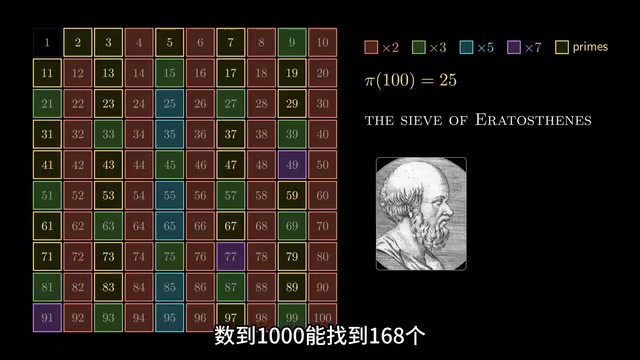
AI Claims Formal Proof of the Riemann Hypothesis — But Machine Verification Isn't a Mathematical Proof
In Nov 2026, Anthropic's Levent Alpöğe released a Riemann Hypothesis proof of 175,000 code files that passed machine formal verification. But machine verification isn't a mathematical proof: the kernel can't confirm the proposition is the Riemann Hypothesis humans understand, and there's no human-readable paper. This article breaks down how ζ function zeros determine prime-count deviation, and the core of the controversy.

Anthropic Raises Over $80 Billion in IPO, DeepSeek Secures $100 Billion in Funding: AI Weekly Roundup
This week in AI: Anthropic's Nasdaq IPO raises $93.5B in the largest ever, DeepSeek closes ~100B yuan round, AI claims formal Riemann proof, MiniMax breaks crypto candidates in seconds.