When an Entire Profession Loses Faith in Its Future: Collective Anxiety and Paths Forward in the AI Era

Exploring how collective loss of professional confidence in the AI era creates systemic risks and how to rebuild it.
As AI reshapes work at unprecedented speed, entire professional groups—especially software engineers and knowledge workers—are experiencing a collective crisis of confidence. This article analyzes how this phenomenon creates self-reinforcing negative cycles of talent drain, innovation decline, and quality deterioration, and proposes solutions at both individual and organizational levels, from building foundational capabilities to embracing antifragility.
A Quiet Crisis of Professional Confidence
In today's era of dramatic technological upheaval, a thought-provoking question is surfacing: What happens when an entire professional group collectively loses confidence in its career prospects? This is no longer a hypothetical philosophical question—it's a psychological reality being lived by software engineers, content creators, designers, and knowledge workers across the board.
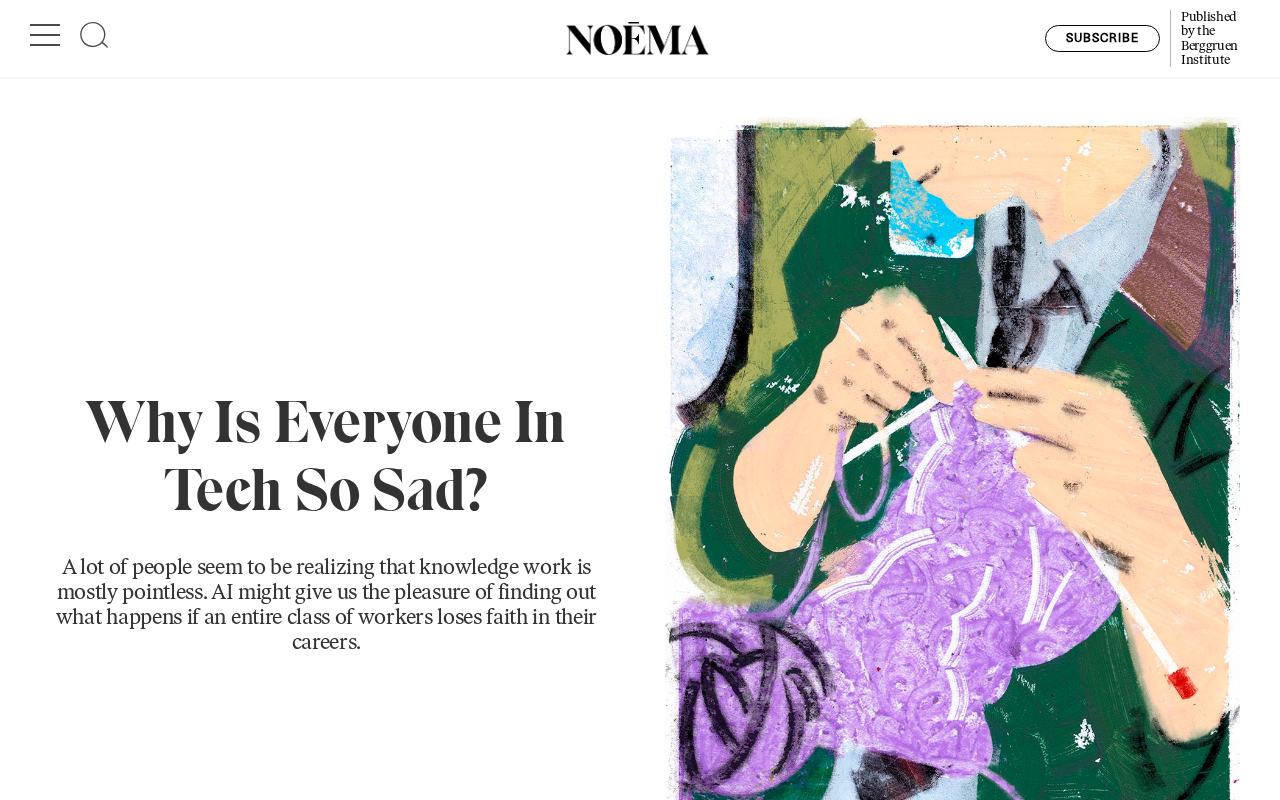
This topic sparked intense discussion on Hacker News (138 points, 223 comments), suggesting it strikes at the deepest anxieties of today's professionals. As AI tools reshape work at unprecedented speed, as waves of layoffs repeatedly hit the tech industry, and as the value of "ten years of experience" comes under question, the collective erosion of professional confidence is becoming a systemic risk.
Why Professional Confidence Matters So Much
Confidence Is the Invisible Foundation of Productivity
Professional confidence isn't some ethereal emotion—it's the core driving force behind long-term commitment. Psychologist Albert Bandura's Self-Efficacy Theory long ago revealed that an individual's belief in their own abilities directly determines how persistently they face difficulties, how high they set their goals, and their ultimate level of achievement. People with high self-efficacy are more willing to take on challenging tasks and recover faster from setbacks, while low self-efficacy leads to avoidance behavior and learned helplessness. The mapping of this theory to professional settings is quite direct—when an engineer believes their skills will appreciate over time and that continuous learning will pay off, they're willing to dive deep into complex problems, take on challenging projects, and invest time honing their expertise.
Conversely, once this belief collapses, behavioral patterns shift accordingly. People turn to short-termism—doing the bare minimum, refusing to learn new skills, redirecting energy toward job-hopping or side hustles. This "psychological exit" is actually far more profound than surface-level quiet quitting. In organizational behavior, this is called "psychological disengagement," which is highly correlated with the employee engagement metrics that Gallup has tracked over the long term. Research shows that psychological disengagement not only reduces individual output but also affects other team members through emotional contagion effects, exerting a corrosive influence on the long-term health of organizations and entire industries.
From Individual Anxiety to Collective Phenomenon
An individual practitioner's anxiety can perhaps be resolved through personal effort, but when anxiety becomes the prevailing sentiment of an entire professional group, the nature of the problem changes. The "emotional contagion" theory in social psychology points out that humans naturally tend to perceive and mimic the emotional states of those around them, and negative emotions typically spread faster than positive ones. In today's highly connected world of social media and developer communities, this contagion effect is enormously amplified—a viral post about "AI will replace programmers" can affect the emotional state of hundreds of thousands of practitioners within hours.
This creates a self-reinforcing negative feedback loop: pessimism is mutually contagious, top talent exits early, newcomers stop entering the field, and the entire profession's knowledge transmission and innovation capacity suffer. Economists call this type of phenomenon a "self-fulfilling prophecy"—if enough people believe a profession has no future, their collective behavior will actually drive that profession into decline.
The Professional Confidence Shock of the AI Era
Where Does the Fear of Skill Devaluation Come From?
The core anxiety that repeatedly surfaced in the discussion is the worry that "hard-won skills might become worthless overnight." In the past, mastering a programming language, becoming proficient in a framework, or accumulating domain knowledge were all "moats" one could rely on for years. Now, AI coding assistants can generate in seconds what used to take hours to write, leading many to question: Is the expertise I spent ten years developing still worth anything?
From a historical perspective, the fear of technological unemployment is nothing new. Early 19th-century Luddites in England smashed automated looms; in the 1960s, people feared computers would eliminate office clerks; the widespread adoption of ATMs in the 1990s didn't actually slash bank teller numbers as expected (it actually lowered the cost of opening branches, which paradoxically increased the total number of tellers). However, this round of AI transformation differs fundamentally from previous technological revolutions: this is the first time in human history that cognitive labor—analysis, creation, reasoning, programming—has been massively touched by technology. Previously, automation mainly affected physical labor and repetitive operations; knowledge workers were always considered the "safe zone." When the boundaries of this safe zone begin to blur, the nature and intensity of the fear are unprecedented.
What makes this fear particularly acute is its uncertainty. Technological change has historically eliminated old jobs while creating new ones, but the speed and breadth of this round of change makes it difficult to judge which direction to invest effort in. The capability boundaries of large language models expand every few months, and no one can say with certainty "these are things AI will never be able to do." When the direction of effort itself becomes unclear, confidence naturally becomes hard to sustain.
Career Development Paths That Can No Longer Be Planned
Traditional career development followed a relatively clear path: junior → senior → expert/management. This "Career Ladder" model assumes a relatively stable industry environment and a predictable return curve for skill accumulation. It supported the life planning of entire generations of knowledge workers—pick a direction, go deep for ten years, become an expert, and earn compensation and social status commensurate with your experience.
But we are living in what military strategists call the VUCA era—Volatile, Uncertain, Complex, and Ambiguous. In this environment, the traditional linear career ladder is being replaced by a "Career Climbing Wall" model: your next step is no longer a certain "upward" move, but requires finding the next foothold among multiple possible directions, sometimes even moving laterally or downward to find a new path upward.
When both the underlying technology and job requirements of an industry are changing rapidly, this path becomes unpredictable. A practitioner who invests five years becoming an expert in a particular area might discover that area has been automated or consolidated. This "planning failure" is an important source of professional confidence collapse. It strikes not only at current job security but at people's trust in the basic social contract that "effort will be rewarded."
The Chain Reactions of Collective Loss of Faith
Talent Drain and Generational Gaps
If a professional group collectively loses confidence, the most immediate consequence is an accelerated talent drain. Capable people will pivot to fields they consider more promising, while young people will bypass the industry when choosing careers.
History offers a profound lesson. After the dot-com bubble burst in 2000, enrollment rates in U.S. computer science programs experienced a cliff-like decline, not beginning a slow recovery until 2005-2006. This meant an entire generation of excellent students avoided the tech industry during the critical window of career choice, leading to severe talent supply shortages from 2007-2012—precisely when mobile internet was experiencing explosive growth. This case demonstrates that the talent gap caused by a collective collapse of professional confidence often has a lagging effect—the problem is planted when confidence collapses but only reveals its destructive power when the industry needs talent most.
This creates a talent gap—lacking both experienced core professionals and fresh blood. What's special about knowledge-intensive industries is that much core knowledge and engineering judgment cannot be transmitted through documentation alone; it depends on mentorship-style practical teaching. Once the middle generation is broken, this tacit knowledge is permanently lost.
Sustained Decline in Innovation Vitality
True innovation often comes from those who believe their work is meaningful and are willing to go deep over the long term. Innovation research has repeatedly shown that breakthrough outcomes often require more than 7-10 years of deep work in a field, experiencing extensive failure and iteration. This requires practitioners to have strong intrinsic motivation and confidence in the future.
When a group generally adopts a "ready to leave at any time" mentality, fewer people are willing to invest in solving difficult problems, fewer are willing to take risks in new directions, and the entire field's innovation vitality declines accordingly. People tend to choose short-term, low-risk projects rather than exploratory work that might reshape the industry but requires long-term commitment.
Decline in Product and Service Quality
Professional confidence is closely linked to work quality. Practitioners who have lost confidence are more prone to going through the motions, paying less attention to details, and feeling less accountable for outcomes. The "work identity" theory in psychology points out that when people no longer view their professional identity as an important source of self-worth, their quality standards for work output decline accordingly.
When this becomes a group phenomenon, the quality of products and services provided by the entire industry may suffer, ultimately harming the interests of all stakeholders. More dangerously, the quality decline itself further reinforces the narrative that "this industry isn't worth taking seriously," forming yet another negative feedback loop.
How to Rebuild Professional Confidence: Dual Paths for Individuals and Organizations
Shift from "Specific Skills" to "Foundational Capabilities"
One approach is to redirect attention from specific, easily automated "skills" to more enduring "capabilities"—such as problem-solving thinking patterns, cross-domain integration ability, judgment, and taste.
The theoretical basis for this strategy comes from the "T-shaped talent" model: the horizontal bar represents broad cross-domain knowledge and perspective, while the vertical bar represents deep expertise in a specific area. In the AI era, the specific content of the vertical bar may need more frequent updating, but the horizontal bar—the ability to connect different domains, reason by analogy, and define problems from a holistic perspective—will continue to appreciate in value. Research on "transfer learning" in cognitive psychology shows that people who can apply principles learned in one domain to another have a significant advantage when facing new problems. This metacognitive ability—"learning to learn"—is itself a higher-order skill, and precisely the area where current AI systems remain weak.
These foundational capabilities won't depreciate because of any particular tool's emergence; rather, they become even more valuable when augmented by tools. What has always been truly scarce is the judgment to know "what to do," not the execution ability of "how to do it." When AI can execute efficiently, the ability to define the right problem, make trade-offs, and exercise value judgment becomes even more precious.
The Responsibility Organizations Must Bear
Rebuilding confidence cannot rely solely on individuals. Companies and organizations need to shoulder responsibility: providing clear growth paths, investing in employee retraining, and communicating honestly about industry changes—rather than continuously eroding employee trust through layoffs and cost-cutting.
Notably, organizational trust requires long-term consistent behavior to build but only a single betrayal to destroy. The massive layoffs in the tech industry over the past few years—often accompanied by executive mega-compensation and stock buybacks—have severely eroded the psychological contract between employers and employees. Rebuilding this contract requires organizations to make substantive commitments: not merely lip service about "talent being our most important asset," but genuinely prioritizing employees' long-term development in resource allocation. An organization that treats employees well and invests in the future can serve as an anchor for employee confidence amid turbulence.
Embracing Uncertainty as a Professional Mindset
Perhaps most fundamentally, practitioners need to establish a new professional mindset—accepting that career paths are no longer linear and predictable, and treating continuous learning and adaptation to change as core competencies in themselves.
Stanford psychologist Carol Dweck's "Growth Mindset" research provides powerful theoretical support for this mindset shift. People with a growth mindset view abilities as developable through effort rather than fixed; they see challenges as learning opportunities rather than threats. In the AI era, this mindset means: rather than viewing AI as a threat that will replace you, see it as a tool that expands the boundaries of your capabilities.
Going further, Nassim Taleb's concept of "Antifragile" is equally instructive for career development. Antifragility isn't merely "surviving shocks" (that's resilience)—it's "benefiting from shocks." An antifragile career strategy means proactively placing yourself in moderate uncertainty—maintaining diversity in your skill portfolio, continuously conducting small-scale "career experiments," and having multiple options available when industry upheaval arrives. Rather than pursuing some once-and-for-all "sense of security," cultivate the antifragility to continue creating value in uncertain environments—and even profit from change.
Conclusion: Professional Confidence Is an Asset That Must Be Collectively Protected
"An entire professional group losing confidence" is not alarmist rhetoric but a real risk in an era of dramatic technological change. Its danger lies in its insidious nature and self-reinforcing character—once formed, it traps the entire industry in a vicious cycle through chain reactions of talent drain, innovation decline, and quality deterioration.
Addressing this challenge requires both practitioners adjusting their mindset and focusing on more enduring capabilities, and organizations shouldering the responsibility of rebuilding trust. Ultimately, professional confidence is a social asset that requires collective maintenance—it is both a core component of individual psychological capital and a necessary condition for the healthy functioning of industry ecosystems. In this era of uncertainty, how we protect and rebuild this confidence will determine the long-term fate of many industries.
Related articles

The Shoggoth Metaphor: Deep Anxieties and Reflections on AI Alignment
The Shoggoth metaphor compares LLMs to Cthulhu monsters wearing smiley masks, revealing core AI alignment challenges. Explore this AI cultural symbol's origins and its implications for RLHF limitations and the capability-understanding gap.

A Beginner's Guide to AI Economics Research: A Systematic Roadmap for Economics PhD Students
How should economics PhD students systematically enter the vast field of AI economics? This guide maps four research threads, literature methods, and technical priorities for building expertise.

Self-Hosted ASR Models vs. Cloud APIs: A Comprehensive Cost and Reliability Comparison
In-depth analysis comparing self-hosted ASR open-source models vs. cloud speech recognition APIs like Google, covering cost differences, reliability, and break-even calculations for Whisper, IBM Granite, and more.