When CNC Meets Gothic Stone Carving: The Digital Rebirth of a Traditional Craft
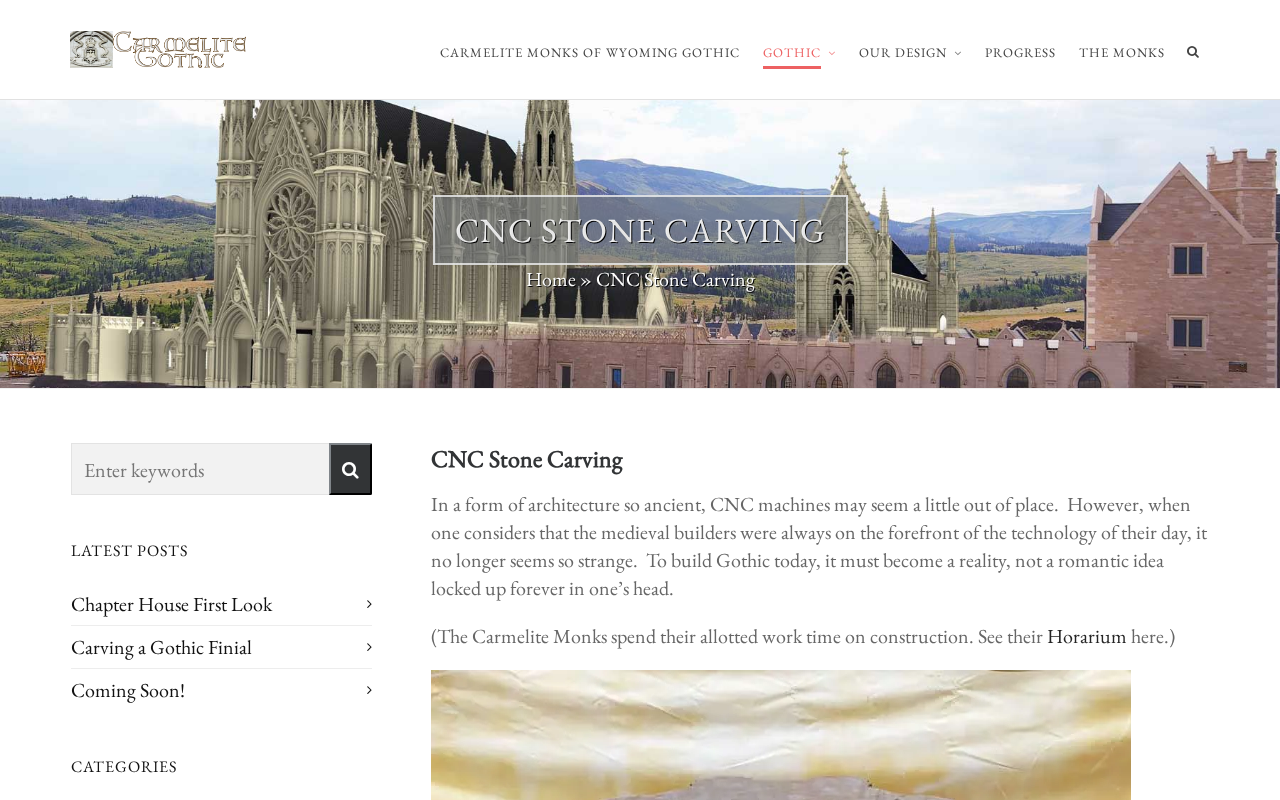
CNC stone carving reveals the tension and fusion between precision manufacturing and traditional stonemasonry.
The article discusses a Hacker News thread on CNC stone carving, where the author documents machining Gothic architectural stone components. The workflow covers 3D modeling, CAM toolpath planning, and roughing/finishing separation, but stone's heterogeneity complicates parameters far more than metal. Machining reproduces geometry precisely, while texture and edge trimming still depend on manual judgment. HN comments split between lowering the barrier to reproducing historical components and fears that traditional setting-out intuition will be lost. The author pragmatically treats CNC as a tool that extends the hands.
A post on Hacker News about CNC stone carving sparked hundreds of comments. The original article, from carmelitegothic.com, documents the author's hands-on experience machining Gothic architectural stone components with a CNC machine. What makes the topic so compelling is that it touches a deeper tension: when precision manufacturing meets a millennia-old stonemason tradition, who is really changing whom?
Why CNC stone carving deserves serious attention
Stone carving in Gothic architecture operates under extremely strict geometric constraints—the curvature of pointed arches, the intersections of rib vaults, the symmetry of tracery—all demand that stone be shaped precisely to the millimeter. Traditional stonemasons rely on templates, setting out, and experience to approximate these curves, whereas a CNC machine can drive the spindle path directly from a digital model, theoretically reproducing design intent more faithfully onto the stone.
But there is an easily overlooked precondition: stone is not a homogeneous material. The grain, hardness distribution, and internal fissures of natural stone mean that toolpaths cannot simply reuse parameters the way metal cutting does. In the author's practice, the most time-consuming part was not generating G-code but understanding the "temperament" of each piece of stone.
How digital tools enter the stonemason's workflow
From chisel to CAM software
The workflow the author presents can be roughly broken into three parts: 3D modeling to define the geometry, CAM software to plan toolpaths and roughing/finishing strategies, and finally cutting on the machine. Interestingly, roughing and finishing are clearly separated—the former uses large-diameter tools to quickly remove stock, while the latter uses smaller tools to preserve surface detail. This mirrors the logic of metal machining, but stone's brittleness forces much more conservative depths of cut and feed rates.
G-code and CAM software are fundamental to understanding the CNC stone carving workflow. G-code (RS-274) is a numerical control programming language used to control automatic machine tools, driving spindle motion through coordinate commands (such as G01 linear interpolation and G02/G03 circular interpolation). The role of CAM (computer-aided manufacturing) software is to convert 3D models into machine-executable G-code—it handles toolpath planning, tool selection, cutting parameter setup (spindle speed, feed rate, depth of cut), and simulation to avoid collisions. For stone carving, the challenge of CAM lies in stone's brittleness and heterogeneity: parameter libraries proven in metal machining cannot be applied directly, and operators must manually adjust strategies based on stone type, grain direction, and tool wear. The separation of roughing and finishing in the original article is a typical CAM strategy for balancing efficiency and surface quality.
Roughing and finishing are two clearly distinguished stages in CNC machining. The goal of roughing is to quickly remove most of the stock, typically using large-diameter tools, larger depths of cut, and higher material removal rates, with surface precision not being the focus; finishing uses smaller-diameter tools, smaller depths of cut, and tighter stepover to preserve detail and surface quality. This separation is common in metal machining but even more critical in stone: stone's brittleness means that if the depth of cut is too large during roughing, it easily causes chipping or internal fissure propagation; if the feed rate is too fast during finishing, it may cause surface spalling. As a result, the parameter window for stone CNC is far narrower than for metal, requiring operators to experiment repeatedly with each specific stone type.
Hand finishing remains an indispensable step
Surfaces after machining often require manual sanding and edge trimming. Readers in the comments pointed out that CNC can solve the problem of "form," while "texture"—the layering of chisel marks, the subtle undulations of edges—still depends on the stonemason's feel. This is echoed in the original article's narrative: machining shortens repetitive labor time rather than replacing judgment.
Setting out is one of the core skills of traditional stonemasons and building craftsmen, referring to the precise transfer of geometric shapes from design drawings to the work surface at full scale, usually accomplished with templates, ink lines, rulers, and compasses. In Gothic stone carving, the curves of pointed arches, rib vaults, and tracery cannot be described by simple formulas, and stonemasons must rely on setting out to approximate these complex geometries. Setting out is not merely a measurement technique; it also embodies an intuitive understanding of spatial relationships—how three-dimensional surfaces transition at rib intersections, how templates are segmented and assembled. CNC generates toolpaths directly from digital models, bypassing the setting-out step, which is precisely why commenters worry about the loss of traditional spatial intuition: when curves are automatically interpolated by software, the stonemason's "feel" for geometry may gradually degrade.
Divergences that emerged in the discussion
Comments on HN reveal two positions. One holds that CNC liberates Gothic stone carving from the monopoly of a few craftsmen, lowering the barrier to reproducing historical components; the other worries that when curves can be generated automatically by software, the spatial intuition behind traditional setting-out methods will gradually be lost.
There is no simple answer to this debate, but the original author's attitude leans pragmatic: he treats CNC as a tool that extends his hands, not a machine that replaces them. Tools change the boundaries of efficiency; the criteria for judging craft are still set by people.
Takeaways for makers
If you are working on digital fabrication projects, the value of this case is not the fact that "CNC can carve stone" itself, but that it demonstrates a mature view of tools—acknowledging the limits of machine capability and the irreplaceability of handwork, then stitching the two together through workflow. This way of thinking applies equally to woodworking, ceramics, and even metalwork.
One-line Summary
A CNC stone carving practice reveals the tension and fusion between precision manufacturing and traditional stonemasonry.
Paragraph Summary
The article centers on a Hacker News discussion about CNC stone carving, in which the author documents machining Gothic architectural stone components with a CNC machine. The core workflow includes 3D modeling, CAM toolpath planning, and the separation of roughing and finishing, but stone's heterogeneity makes parameter selection far more complex than in metal machining. Machining can precisely reproduce geometry, yet surface texture and edge trimming still rely on the stonemason's manual judgment. HN comments form two positions: one side argues that digitalization lowers the barrier to reproducing historical components, while the other worries that the spatial intuition behind traditional setting-out skills will be lost. The original author takes a pragmatic stance, viewing CNC as a tool that extends the hands, with craft standards still determined by people.
Related articles
Ollama Local Deployment Guide: Run Open-Source LLMs with Zero Experience
Ollama local deployment tutorial: what Ollama is, why choose it, how to download, install, and run open-source LLMs, and use its API for custom development. Beginner-friendly.

n8n: The 187K-Star Open-Source Automation Powerhouse That Turns Repetitive Work into Workflows
n8n is a 187K-star open-source visual workflow automation engine with 400+ nodes, Webhook/schedule/polling triggers, self-hosting for data security, and AI Agent support. Here's a guide to its core concepts, use cases, and pitfalls.
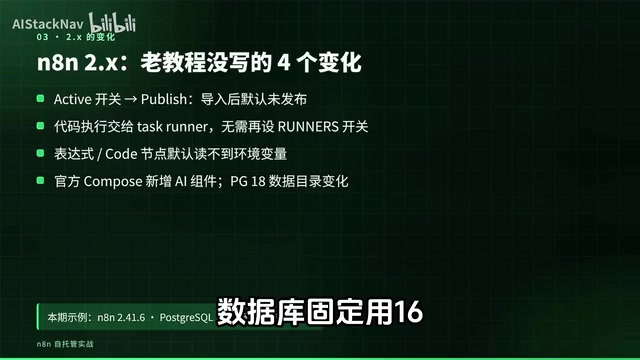
Self-Hosting n8n in Practice: Docker + PostgreSQL + Caddy Deployment Guide
A step-by-step guide to deploying a self-hosted n8n instance with Docker Compose, PostgreSQL, and Caddy automatic HTTPS, including env var pitfalls, Feishu alerting, and backup/upgrade/rollback tips.