When To-Do Apps Meet AI Agents: A Task Manager Built to Be Called by Intelligent Agents

A minimal to-do app that treats AI agents as first-class users, reflecting the emerging "built for agents" product paradigm.
A minimalist to-do app for iPhone, Mac, and AI agents appeared on Hacker News, with its core differentiator being that it treats AI agents as equal operators alongside human users — allowing agents to directly read and write task data. This aligns with the growing adoption of tool-calling standards like MCP, enabling scenarios such as auto-extracting to-dos from emails, intelligent priority reordering, and cross-tool automation. Built natively for the Apple ecosystem, it emphasizes a minimal front end backed by intelligent automation. Though the post gained limited traction (9 upvotes, 2 comments), reflecting fierce market competition and still-niche agent demand, the article argues this forward-looking approach holds structural value — for indie developers, betting on a shift in interaction paradigms may be a viable path to carving out a new moat in a mature category.
A To-Do App Redesigned for the AI Era
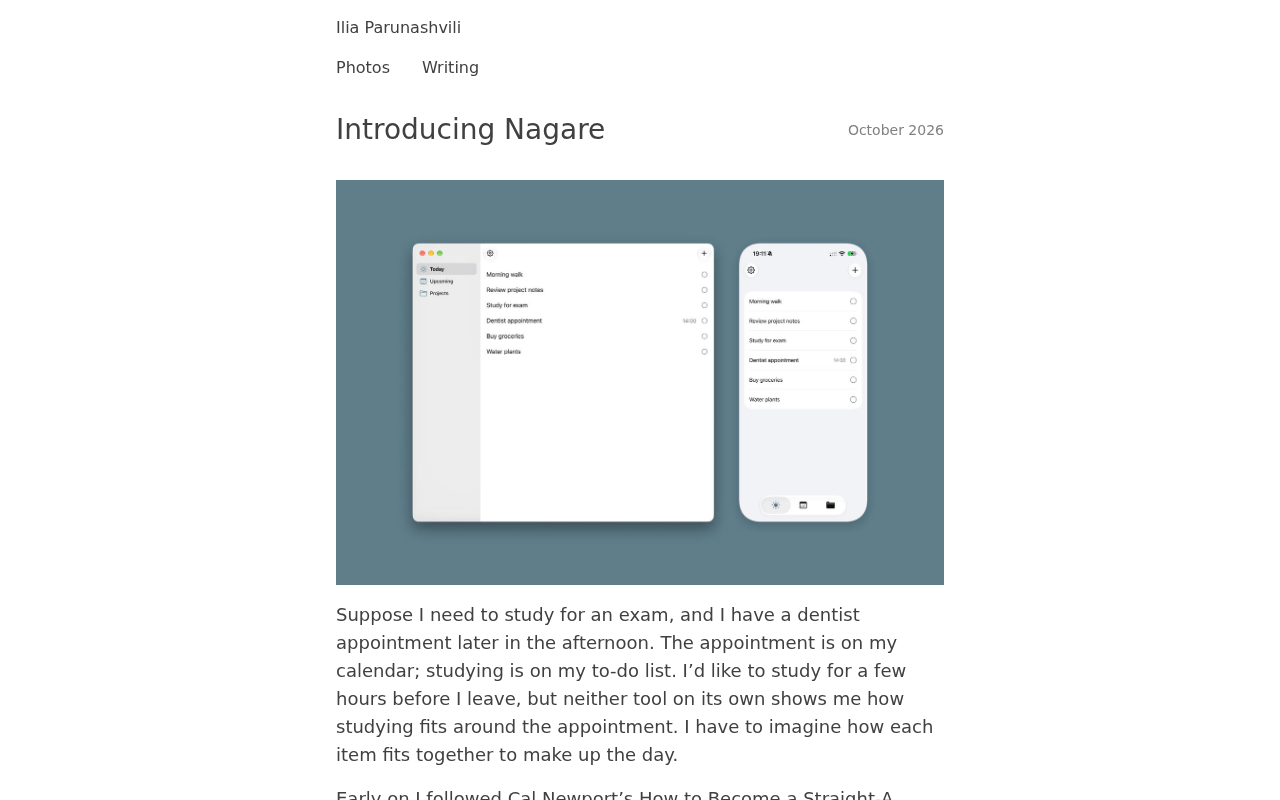
On Hacker News's Show HN section, a to-do application pitched as "For iPhone, Mac, and Your Agent" sparked a modest discussion. The app's core selling point isn't a polished interface — it's the fact that "AI Agent" is baked directly into its product positioning. Beyond letting human users manage tasks on iPhone and Mac, it exposes itself to be read and operated by AI agents.
This reflects an emerging product paradigm: software is no longer built solely for the person typing at a keyboard, but is increasingly designed to expose interfaces to automated agents. When your schedule, to-dos, and notes can be directly accessed and modified by an AI assistant, the very nature of how "task management" works could be fundamentally redefined.
Why "Agent-Readable" Is the Key Concept
Traditional to-do apps (like Things, Todoist, or Apple Reminders) are primarily designed around human interaction: you manually enter tasks, set reminders, and drag items to reorder them. This app treats the Agent as a first-class citizen, which means it places far greater emphasis on programmatic, structured data access.
In practice, this design philosophy could enable several new use cases:
- Automatic capture: An AI assistant extracts to-dos from your emails and chat history and writes them directly to your list — no manual copy-pasting required.
- Smart organization: An agent reorders your tasks based on priority, deadlines, or context.
- Cross-tool integration: When to-do data is open to agents, the app can serve as a node in an automated workflow, coordinating with your calendar, notes, email, and more.
As standards like MCP (Model Context Protocol) that enable large language models to call external tools become more widespread, "built for agents" applications are multiplying. A to-do app that natively supports agent read/write access is far easier to embed into an AI-driven personal workflow than a traditional one.
MCP (Model Context Protocol) is an open standard protocol proposed and open-sourced by Anthropic in late 2024, designed to solve the "last-mile" integration problem between large language models and external tools and data sources. Before MCP, any developer who wanted an AI model to call their application had to write custom adapter code for each model — costly and hard to reuse. MCP defines three unified interface types — Resource, Tool, and Prompt — so any application only needs to implement an MCP server once to be callable by any MCP-compatible AI client (such as Claude Desktop, Cursor, etc.). For a to-do app, integrating MCP means users don't need to manually switch between apps; an AI assistant can directly query, add, or complete tasks within a conversation, dramatically reducing friction in human-AI collaboration. Major tools including Notion, GitHub, and Google Drive have already launched MCP integrations, and the rapid expansion of this ecosystem is the underlying force driving the fast rise of the "built for agents" product paradigm.
Cross-Platform Meets the Apple Ecosystem
From the app's title, it's clear it covers both iPhone and Mac — a classic Apple-native application. For many users, native apps typically mean a smoother experience compared to web-based or cross-platform frameworks, along with better system integration (widgets, Shortcuts, system notifications) and more reliable local data sync.
"Simple" is another keyword the developer emphasizes. In the already overcrowded to-do app space, piling on features often backfires — what users truly need is usually just "quick capture, timely reminders, and easy completion." Offloading complexity to a background agent while keeping the front end minimal may be exactly the balance the developer is aiming for.
The most directly relevant native mechanism in the Apple ecosystem for "agent-operable" apps is Shortcuts and the App Intents framework. App Intents is an API Apple officially introduced in iOS 16 / macOS 13 that allows developers to expose core in-app actions (like "add task" or "mark complete") as structured intents to the system, making them callable by Siri, Shortcuts, and third-party automation tools. Unlike MCP, which relies on network requests, App Intents operates at the local system layer — lower latency and no internet connection required. If this to-do app implements both App Intents and an MCP interface, it could work with Apple's native agent (Siri) while also connecting to third-party AI assistants like Claude and GPT, achieving dual-track coverage. This is also a potential advantage native Apple apps hold over cross-platform solutions in the agent era — the depth of access offered by system-level interfaces far exceeds what web apps can achieve.
A Measured Response from the Community
It's worth being honest: this Show HN post received very limited attention — just 9 upvotes and 2 comments. This reflects a few real-world challenges.
First, the to-do app market is intensely competitive, and "agent support" alone is unlikely to displace the deeply ingrained habits of existing users in the short term. Second, "agent-compatible" remains a relatively niche requirement — the user base actually connecting AI agents to their personal task management systems is still quite small.
That said, from a product direction standpoint, this kind of exploration carries forward-looking significance. As personal AI assistants mature, applications that can be seamlessly operated by agents will gain a structural advantage. Features that seem niche today may become standard tomorrow.
Takeaways for Developers and Users
For independent developers, this case offers a product angle worth considering: rather than competing on features or design in an already mature category, bet on a shift in interaction paradigms. Building clean data interfaces and operational capabilities for AI agents could become a new moat in app design over the next few years.
For everyday users, it's worth staying aware while remaining pragmatic. Apps that support agents are mostly still in early exploration mode, and their actual value depends on whether you're already deeply using AI assistants in your daily life. If you're still managing tasks manually, mature traditional tools are probably the safer choice. But if you're building an AI-centric personal workflow, apps like this are worth trying.
Given the limited information available from the original source, this article is primarily an analysis based on product positioning and industry trends. Specific feature details, pricing, and real-world experience remain to be further verified.
Related articles

Chain of Thought Isn't Just for AI: How Humans Can Use CoT to Improve Thinking Quality
Chain of Thought isn't just a prompt trick for large models. Starting from a Hacker News discussion, this article analyzes why CoT works for human thinking too, breaks down actionable ways to transfer it, and highlights the key differences between human CoT and machine CoT.
Cloudflare Teams Up with OpenAI: Closi…
Cloudflare Teams Up with OpenAI: Closing the Loop from Vulnerability Discovery to Defense with AI
Cloudflare uses OpenAI Daybreak to investigate security vulnerabilities and generate reviewable remediation plans, while developers use Codex to boost coding efficiency and quality.

Orca Multi-Agent Orchestration in Practice: A Guide to Parallel Collaboration with Claude and Codex
Orca is Stable AI's free open-source agent workbench supporting 34 agents like Claude Code and Codex in parallel. Learn its Git worktree isolation, multi-model orchestration, and mobile management.