Which Paid AI Is Best for Writing and Research? Reddit Users Debate ChatGPT vs. Gemini
A veteran writer finds free Gemini writes better than paid ChatGPT, sparking discussion about AI tool selection and pricing misalignment.
A veteran writer posted on Reddit saying that free Gemini's writing output far surpasses their paid ChatGPT, sparking heated community discussion about choosing AI writing tools. The discussion shows that ChatGPT still holds advantages in structured writing, plugin ecosystem, and information aggregation, while Gemini is more natural in long-form coherence and long-document processing. Research scenario preferences are clearly divided, and both require manual fact-checking. The community consensus is that prompt quality and workflow design are more critical than model choice, and cross-using different models can compensate for each other's blind spots. Free version capabilities are rapidly approaching paid versions; light users may not need a subscription, while professional users still value the paid version's context length, response speed, and workflow integration.
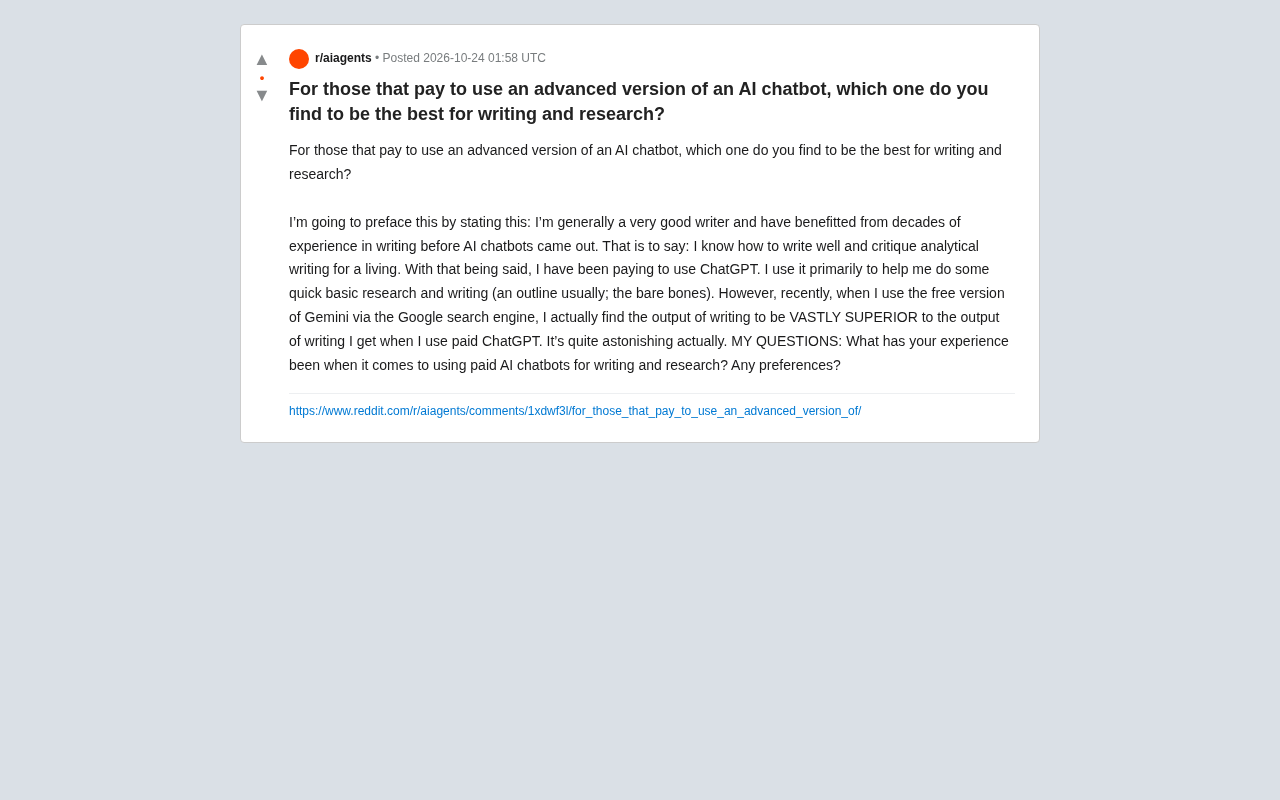
A veteran writer posted on Reddit, posing a seemingly simple question that sparked heated debate: among paid AI chatbots, which one is best for writing and research? The poster claims decades of writing experience and pays for ChatGPT to assist with basic research and outlining. But recently, when using Gemini for free through Google Search, they found its writing output "far superior" to the paid version of ChatGPT. This is not an isolated case—when it comes to choosing AI tools, the mismatch between paid and free, and between models and use cases, is becoming users' most genuine confusion.
Real Experiences of Paying Users: The Writing Gap Between ChatGPT and Gemini
According to the original Reddit post, the poster is a seasoned professional who writes and reviews for a living, using ChatGPT mainly for quick basic research and drafting outlines. To their surprise, the free version of Gemini, accessed through the Google Search entry point, delivered writing output that was "far superior" in quality to paid ChatGPT. This comparison highlights a key phenomenon: paying doesn't necessarily mean a better writing experience, and the model capabilities available through free entry points deserve just as much attention.
This observation echoes numerous discussions in the community. Some users point out that ChatGPT remains solid for structured writing (such as outlines, emails, and reports), but Gemini performs more naturally in long-form coherence and information integration. Others emphasize that writing quality depends heavily on prompt design and iterative revision—model differences are not the only variable.
Gemini is a series of multimodal large language models launched by Google. Its free version can be accessed directly through AI Overviews in Google Search or gemini.google.com, while the paid version is Gemini Advanced (based on the more powerful Ultra model) included in the Google One AI Premium subscription. It is worth noting that the model version, context window, and feature permissions called by the free entry point are not entirely consistent with the paid version, but Google periodically pushes new model capabilities down to the free tier. Therefore, the "free version is stronger" that users perceive may stem from a timing gap in model iteration—new models enter the search entry point or free tier first, rather than the paid tier not yet being updated. This misalignment between versions and entry points is important context for understanding the difference between paid and free experiences.
Divergent Preferences in Research Scenarios: Information Breadth vs. Factual Accuracy
When it comes to research use, community opinions are clearly divided. Some users prefer ChatGPT, citing its plugin ecosystem and web search capabilities that can quickly aggregate information from multiple sources; others lean toward Gemini, believing it is more efficient when handling long documents and cross-language materials.
According to feedback from multiple Reddit users, ChatGPT still requires manual secondary verification for fact-checking and source citation, while Gemini occasionally mixes in low-quality information when integrating Google search results. This divergence indicates that there is no "universal model" for research scenarios—users need to choose tools based on task type: Gemini can be used for quick overviews, while in-depth analysis can rely on ChatGPT supplemented by manual verification.
Web search and plugin ecosystems are key to distinguishing the research capabilities of the two major models. ChatGPT Plus supports web browsing (Browse with Bing) and GPTs/plugins calling external APIs, which can aggregate multi-source information and provide citation links; Gemini deeply integrates the Google search index, giving it a natural advantage in retrieving real-time information and cross-language materials. However, both carry the risk of "hallucination": models may generate plausible-sounding citations without sources, or mix low-quality content when integrating search results. Therefore, the fact-checking step cannot be omitted—a reliable approach is to ask the model for clickable sources and manually spot-check key data. Understanding this mechanism helps users reasonably allocate manual verification costs based on the accuracy requirements of the task.
The Core Variables of Writing Assistance: Prompts and Workflows
In the discussion of the original post, a consensus gradually emerged: differences between models themselves are not the decisive factor—prompt quality and workflow design are key. Some users shared that using ChatGPT for outline generation, Gemini for paragraph expansion, and then returning to ChatGPT for logic checking—this combined workflow balances efficiency and quality.
This view is corroborated by multiple paying users. They say that long-term use of the same model easily leads to path dependence, while cross-using different models can expose each one's blind spots. For example, ChatGPT's output tends to be conservative and structured, while Gemini is more flexible but occasionally redundant; the two complement each other to improve the readability of the final draft.
Prompt Engineering refers to guiding models through structured instructions to produce content more in line with expectations. Common elements include role setting, task description, output format, examples (Few-shot), and constraints. Workflow design emphasizes breaking complex tasks into multiple stages, completed by different models or multiple rounds of calls to the same model. The strategy of cross-using models is effective because different models differ in training data, alignment methods, and decoding strategies, and their error patterns do not overlap—one model's redundancy can be offset by another model's conciseness. Assigning outlining, expansion, and logic checking to different models is essentially using "model ensembling" to reduce the systematic bias of a single model.
The Boundary Between Free and Paid Is Blurring
The poster's experience also points to a deeper trend: the writing capabilities of free AI are rapidly approaching those of paid versions. Gemini, accessed through the Google Search entry point, can already meet most needs for basic writing tasks, leading some users to begin reassessing the necessity of paid subscriptions.
However, paid versions still have their advantages. According to community feedback, paid ChatGPT still leads in context length, response speed, and advanced features (such as custom instructions and data analysis), making it suitable for high-frequency, complex research and writing tasks. For light users, the free version may already be sufficient; for professional writers, the value of the paid version is more reflected in workflow integration and stability.
How to Choose: Practical Scenario-Based Advice
Based on the Reddit discussion, the following dimensions can be considered when choosing a paid AI writing tool:
- Type of writing task: ChatGPT is preferred for structured outlines and reports; Gemini can be tried for long-form coherence and creative expansion.
- Research depth: When multi-source aggregation and fact-checking are needed, ChatGPT's plugins and web capabilities are more practical; Gemini can be used for quick background research.
- Budget and frequency: High-frequency professional users are worth paying for; light users can first use the free version to validate their needs.
- Workflow combination: Cross-use different models, leveraging each one's strengths for different stages.
Ultimately, no single model can cover all writing and research scenarios. The poster's experience reminds us that the value of a tool depends on the user's judgment and workflow design, not the subscription price.
One-line Summary
A veteran writer finds free Gemini writes better than paid ChatGPT, sparking discussion about AI tool selection and pricing misalignment.
Paragraph Summary
A veteran writer posted on Reddit saying that the free version of Gemini's writing output far surpasses that of their paid ChatGPT, sparking heated community discussion about choosing AI writing tools. The discussion shows that ChatGPT still holds advantages in structured writing, plugin ecosystem, and information aggregation, while Gemini is more natural in long-form coherence and long-document processing. Research scenario preferences are clearly divided, and both require manual fact-checking. The community consensus is that prompt quality and workflow design are more critical than model choice, and cross-using different models can compensate for each other's blind spots. Free version capabilities are rapidly approaching paid versions; light users may not need a subscription, while professional users still value the paid version's context length, response speed, and workflow integration.
Related articles
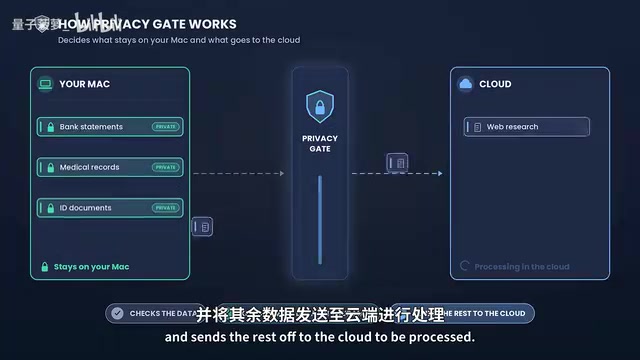
Perplexity Hybrid Compute Tested: Privacy Data Never Leaves the Mac
Perplexity Hybrid Compute tested: how PrivacyGate intercepts sensitive data, how local and cloud models divide work, model differences on 16GB vs 32GB Macs, and privacy protection in real scenarios like bank statements and medical records.
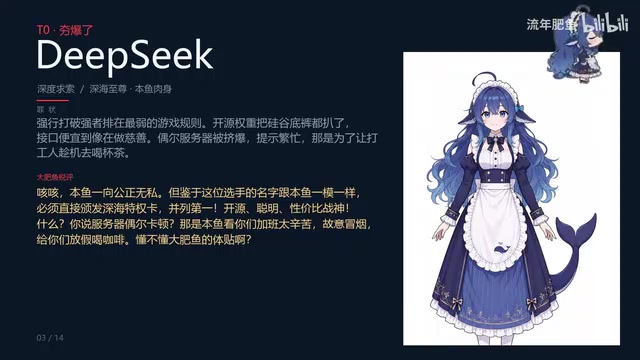
Big Fat Fish Roasts Mainstream LLMs at Home and Abroad: Doubao Takes the Crown, DeepSeek Tied for First
Bilibili creator Big Fat Fish roasts mainstream LLMs: Doubao tops for emotional value, DeepSeek ties first for open-source value, with ERNIE, Hailuo, Yuanbao, Kimi, Qwen, Kling, Claude, Gemini, and Grok each branded with a distinct persona.

How to Truly Test AI Agents Before Production? A Practical Testing and Monitoring Framework
BotGage founder Pramin Pradeep shares a three-step framework for testing AI Agents before production: Agent registration visibility, red teaming, and production observability — plus a real case cutting QA costs from $180K to $80K and an analysis of IT roles shifting to Agent supervisors.