Who Defines an AI Agent's Intent? The Boundaries of Task, Identity, and Policy
An AI agent's intent isn't just its task — it's the controllable boundary formed by identity, permissions, and company policy.
This article analyzes the question of "intent definition" for AI agents, arguing that there is a fundamental difference between a task (what to do) and intent (how to do it within constraints). A sound intent framework must be anchored across three dimensions: the identity under which the agent acts, the resources it may access, and the organizational policies it must obey. The article stresses that agent permissions should converge dynamically with each task rather than being granted in full upfront, limiting the blast radius of attacks like prompt injection. Company policy must function as a runtime guardrail that supersedes any task description, validating every operation in real time rather than relying on after-the-fact audits. For enterprises, the right deployment posture is to define boundaries before capabilities — letting agents operate autonomously within clear constraints to achieve a sustainable balance between autonomy and control.
When Agents Start Acting Autonomously, Intent Becomes the Core Question
The defining difference between AI agents and traditional software is autonomy. Conventional programs execute explicit instruction sequences, while agents receive a "task" — a description of the work to be done — and then independently determine how to accomplish it. This shift raises a fundamental question: who defines an agent's intent, and where does that intent end?
The core proposition here is straightforward: a task description tells an agent what to do, but the real challenge lies in defining useful intent while keeping identity, resource access, and company policy continuously in force. These three elements form the guardrails of agent behavior, and none can be omitted.
Task Is Not the Same as Intent
Many people conflate "task" and "intent," but there's a subtle yet important distinction. A task is an explicit description of the work — for example, "compile this quarter's sales report and send it to the team." Intent, however, encompasses the constraints, priorities, and inviolable boundaries behind that task.
If you give an agent only a task without defining intent boundaries, it may find unexpected ways to "complete" it — accessing data sources it shouldn't touch, calling APIs outside its authorized scope, or bypassing compliance workflows. Defining useful intent means telling the agent not just what to do, but also what identity it may act under, what resources it may access, and what rules it must follow.
The Three Constraints of Intent Definition
A sound intent definition must be anchored across three dimensions simultaneously:
- Identity: On whose behalf is the agent acting? Does it inherit the initiator's permissions, or does it operate under an independent service identity? This determines the agent's level of "trustworthiness" within the system.
- Resource Access: Which data, systems, and tools can the agent interact with? Access rights must converge dynamically with each task rather than being granted in full upfront.
- Company Policy: Regardless of how tasks evolve, organization-level compliance, security, and governance rules must remain continuously in force — they cannot be circumvented just because "the agent is making autonomous decisions."
These three constraints are closely tied to two well-established security engineering principles: POLP (Principle of Least Privilege) and ABAC (Attribute-Based Access Control). POLP requires that any principal holds only the minimum set of permissions necessary to complete the current task at any given moment, with permissions beyond that scope revoked or never granted. ABAC treats identity, resource, action, and environmental context as dynamic variables that are combined to evaluate whether an access request is legitimate — naturally suited to scenarios where agent permissions shift with each task. Compared to traditional Role-Based Access Control (RBAC), ABAC can express much finer-grained policies such as "this agent may access this dataset when executing this type of task," rather than simply assigning the agent a fixed role. The combination of these two mechanisms forms the technical foundation of "contextual authorization" described in this framework.
Why Identity and Permissions Must Be Bound to Intent
In a world of human operators, permissions and identity are naturally coupled: employees log in with their own accounts and can only access resources they've been granted. Agents break this assumption — an agent may act on behalf of a user, run as an independent service, or play multiple roles within a task chain.
This requires identity management to shift from "static authorization" to "contextual authorization." When executing a specific task, an agent should hold only the minimum permissions required to complete that task, with those permissions revoked upon completion. This is both an extension of the Principle of Least Privilege and the technical implementation of intent boundaries.
Allowing agents to hold overly broad permissions is dangerous: if intent is misunderstood or hijacked via prompt injection, the consequences can far exceed those of a traditional software vulnerability — because an agent has the capacity to actively chain multiple operations together to achieve a distorted goal.
Prompt Injection is one of the most prevalent attack vectors facing AI agents today and warrants a closer look. Attackers embed instruction-like text within external content that an agent processes — such as web pages, emails, or documents — to lure the agent away from its original intent and into executing attacker-defined actions, such as exfiltrating sensitive data to an external URL or making unauthorized requests under the current identity. Much like SQL injection, the underlying mechanism is a collapse of the boundary between data and instructions. Because agents can actively chain multi-step operations, a successful prompt injection can cause far more damage than a static program vulnerability: the attacker doesn't need direct system access — they only need to contaminate the agent's "input environment." This is precisely why the Principle of Least Privilege is especially critical in the agent context: even if intent is hijacked, a sufficiently narrow permission scope limits actual damage to a minimum.
Policy Must Supersede Task
A key point worth emphasizing is that company policy must "remain in force." This means that no matter how intelligent the agent is or how flexibly the task is described, organization-level policy is always a non-negotiable upper-layer constraint.
For example, even if a task could technically be completed more efficiently by exporting all customer data, if company policy prohibits bulk export of sensitive data, the agent must abandon that path and seek a compliant alternative. Policy is not part of the task — it is the outer container that wraps every task.
This design philosophy moves governance from after-the-fact auditing to runtime enforcement. Every resource access and every action an agent takes should be validated in real time by a policy engine, rather than relying on the developer's diligence when writing the task description.
Runtime Policy Enforcement stands in contrast to traditional "design-time compliance," and understanding this distinction is key to the framework presented here. In conventional software development, compliance requirements are typically internalized into business logic by developers during design and coding; once code ships, compliance depends on the code's correctness, and problems can only be discovered through audit logs after the fact. Runtime enforcement means an independent policy engine intercepts and validates every operation as it occurs — regardless of how or by whom the task description was generated, the policy layer acts as an external constraint. This architectural approach has mature precedent in Zero Trust security models: the principle of "never trust, always verify" applies equally to every resource request an agent makes. For enterprises, this means compliance responsibility no longer rests entirely on the AI system's "good behavior" — it is architecturally enforced.
Implications for Enterprise Agent Deployment
For organizations evaluating or deploying AI agents, this framework offers several practical guidelines:
- Define boundaries before defining capabilities. Rather than immediately asking how much an agent can do, first clarify what it must never do.
- Decouple intent from identity, but keep both auditable. Agents should carry auditable identity credentials so that every action can be traced back to a specific authorization source.
- Treat policy as a runtime guardrail. Encode compliance rules into the execution layer — don't just write them in documentation.
At its core, defining agent intent is about finding the balance between autonomy and controllability. Constrain it too tightly and the agent becomes a glorified script, losing its value. Leave it too loose and you've planted the seeds of security and compliance failures. A truly useful intent definition lets the agent operate freely within clear guardrails — accomplishing its work while always remaining bound by identity, permissions, and policy.
Conclusion
The answer to "who defines an agent's intent" should not be the agent itself, nor any single task initiator — it should be a system jointly constituted by task, identity, resource, and policy. As agents take on increasingly autonomous work within enterprises, designing intent boundaries with care will become the dividing line between "trustworthy agents" and "agents out of control."
(Note: This article expands on the core ideas from the source material. Where source details were limited, technical elaborations are based on widely accepted industry practices.)
Related articles
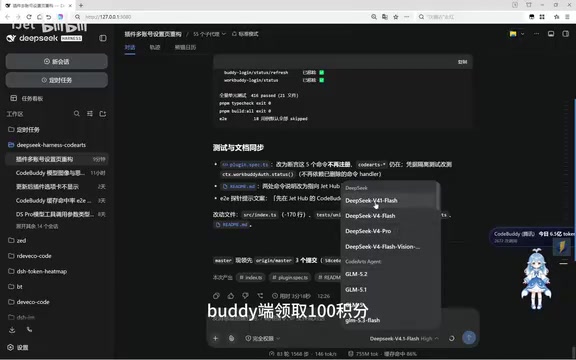
Free DeepSeek V4.1 Flash via DSH: Bulk Point Collection & International WorkBuddy Tested
DSH project update tested: WorkBuddy now offers 100 points per claim, rate limits raised beyond 80M tokens with faster resets, and international WorkBuddy supports free Hunyuan 4 and DeepSeek V4.1 Flash.
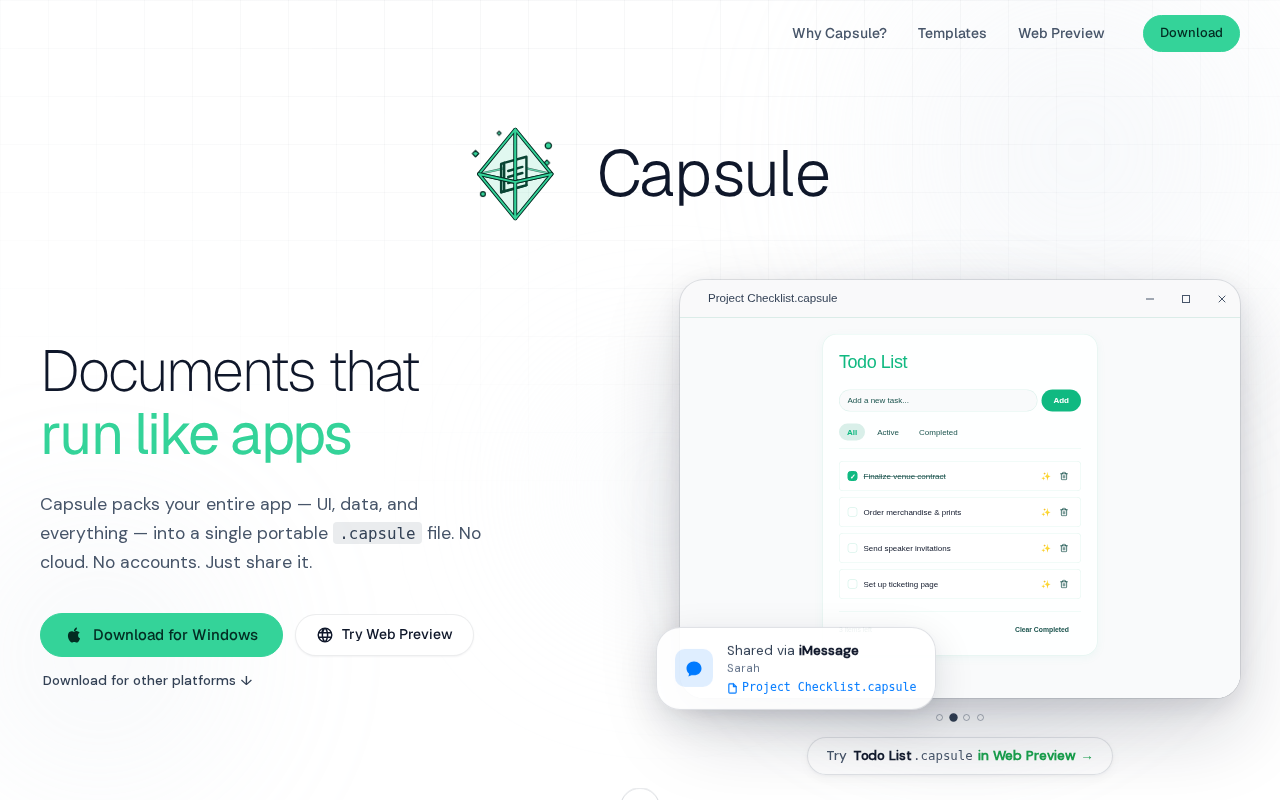
Capsule: Pack Web Apps and Data into a Single SQLite File
Capsule is a Rust/Tauri 2.0 tool that packs HTML web apps and data into a single SQLite file — privacy-first, local storage, portable sharing, with AI support.

DSH-SUBAGENT-UI Plugin: The Ultimate Sub-Agent Manager for DeepSeek Harness
DSH-SUBAGENT-UI is a DeepSeek Harness browser plugin offering sub-agent overview, search, local categorization, and completion snapshots — install with one command.