Why AI Agent Fleets Need a New Kind of Operating System, Not a Bigger Framework
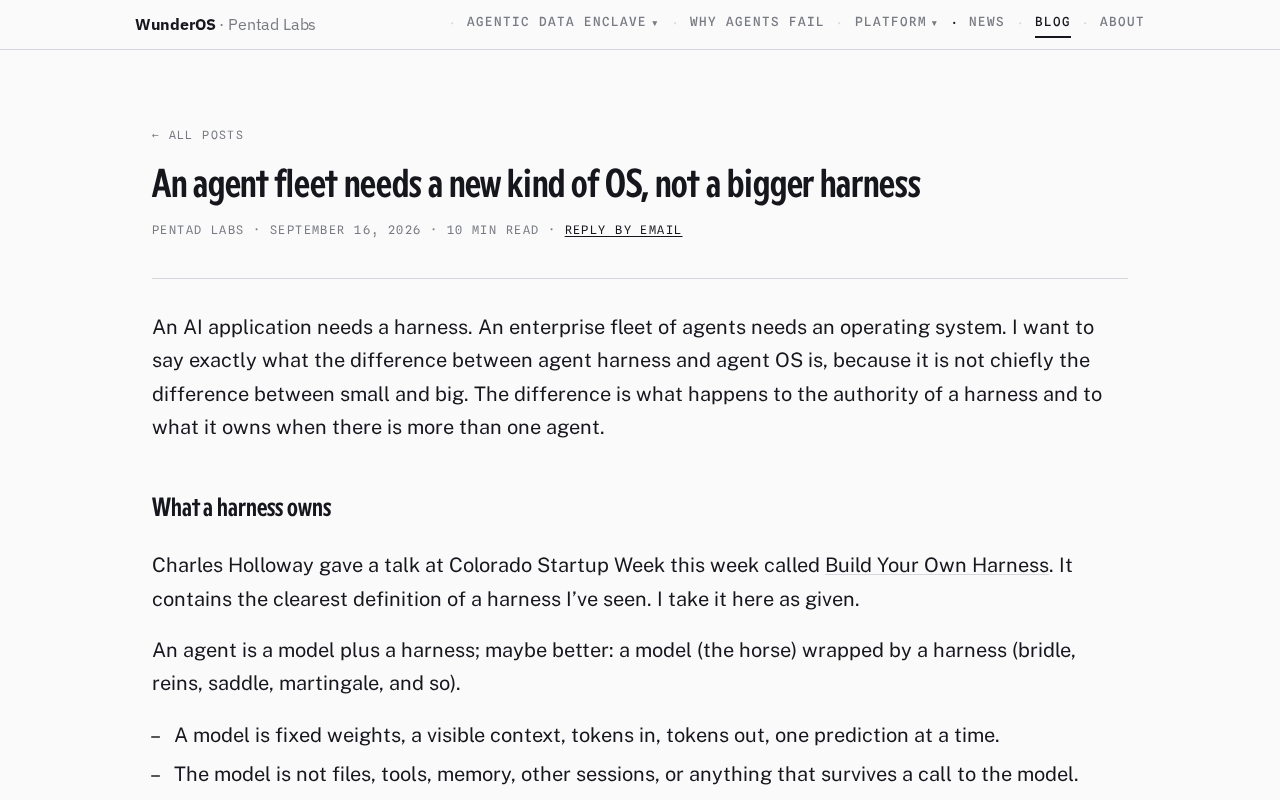
Agent fleets need OS-level infrastructure—scheduling, isolation, IPC, and observability—not just bigger frameworks.
Drawing on a Hacker News discussion, this article argues that managing hundreds of parallel AI agents requires a new operating-system-style abstraction, not an ever-larger invocation harness. Existing frameworks handle single-agent prompting and tool calls well, but fall short at fleet scale: they lack resource scheduling, cross-agent memory sharing, standardized communication protocols, and system-level observability. The article maps these needs onto classic OS design principles, frames the trend as AI's inevitable evolution from demos to production infrastructure, and notes that the "Agent OS" concept remains in its exploratory early stage.
From Single Agents to Agent Fleets
As AI agents move from the lab into production, a sharper question is emerging: when we need to run, coordinate, and monitor hundreds or even thousands of agents simultaneously, is our current tech stack still up to the task? A Hacker News discussion titled "An agent fleet needs a new kind of OS, not a bigger harness" cuts straight to the point — managing an agent fleet requires an entirely new kind of operating system, not just a larger and more complex "harness."
A harness typically refers to the invocation framework built around a large language model, handling prompts, tool calls, and context management. It works well for running a single agent, but when the scale rises to "fleet" level, simply expanding the framework's capabilities starts to fall short.
Why "A Bigger Framework" Isn't the Answer
Making a framework bigger is fundamentally about stacking features on top of single-point solutions: longer context windows, more sophisticated tool orchestration, finer-grained prompt templates. But the challenges of an agent fleet are systemic, not isolated.
When dozens or hundreds of agents are working in parallel, the truly hard questions become: How do you schedule compute resources? How do agents share state and memory? When an agent crashes or gets stuck in a loop, how do you isolate the failure and prevent it from cascading across the entire fleet? How do you enforce unified access control and security auditing across all agents? These are precisely the core problems that traditional operating systems solve when managing processes.
In other words, infinitely scaling up a framework designed for a "single process" doesn't automatically grant you "multi-process scheduling" capabilities. This is the central tension in the original post's title — quantitative growth (a bigger harness) cannot produce a qualitative leap (true fleet management).
What an "Agent Operating System" Actually Means
Drawing on operating system design principles, an "OS" for agent fleets should have at least four core capability layers:
Resource Scheduling and Isolation
Just as a traditional OS allocates CPU and memory across multiple processes, an agent OS needs to distribute compute, token budgets, and API call quotas across many agents — while isolating each agent's runtime environment to prevent single-point failures from spreading.
State and Memory Management
An agent's "memory" is analogous to the storage layer in an operating system. A fleet-level system requires a unified memory management mechanism that lets agents maintain their own private context while sharing global knowledge when needed, avoiding redundant computation and information silos.
Communication and Collaboration Protocols
Multiple agents collaborating on a task inevitably involves message passing, task delegation, and result aggregation. This is analogous to inter-process communication (IPC) in operating systems, requiring standardized protocols to ensure reliable cooperation.
Background: IPC and Multi-Agent Communication Inter-Process Communication (IPC) is a classic OS mechanism for coordinating concurrently executing units, encompassing pipes, message queues, shared memory, and sockets. In the context of agent fleets, this concept needs reinterpretation: "messages" between agents are no longer simple byte streams — they may be structured task descriptions, intermediate reasoning outputs, or tool call return values. Several protocol efforts targeting multi-agent communication have emerged, including Anthropic's MCP (Model Context Protocol), which aims to standardize interactions between models and tools/data sources, and Google DeepMind's Agent-to-Agent protocol, focused on direct agent-to-agent collaboration. However, these protocols have yet to converge on a unified standard, and "how to make agents built on different frameworks reliably collaborate" remains an unsolved engineering challenge.
Observability and Security
Operating an agent fleet requires logging, monitoring, tracing, and access control. Which agent called which tools, how many resources it consumed, whether it accessed sensitive data — all of this must be recorded and governed at the system level.
Background: Observability in Agent Systems In traditional software engineering, observability is built on three pillars — Logs, Metrics, and Traces — collectively known as "o11y." For AI agents, this framework faces additional complexity: agent behavior is highly non-deterministic, and the same input can produce wildly different tool call chains across runs. The reasoning process itself is a black box, and a seemingly simple user instruction can trigger an execution chain spanning dozens of sub-tasks. This makes traditional APM (Application Performance Monitoring) tools difficult to apply directly. Tools like LangSmith and Arize Phoenix are attempting to fill this gap with LLM-specific tracing capabilities. But at fleet scale — maintaining low-latency, low-overhead full tracing across thousands of concurrently running agents while satisfying compliance audit requirements for sensitive data access — remains a systemic challenge yet to be solved.
An Emerging Industry Consensus
Notably, the concept of an "Agent OS" has been surfacing repeatedly across the industry, reflecting a real shift from "getting a demo to work" to "operating at scale." When agents are no longer isolated toys but infrastructure that must run continuously, the level of abstraction naturally needs to rise from application frameworks to system platforms.
That said, it's worth being objective: the original discussion itself had limited traction (only 7 upvotes and 3 comments), making it more of a forward-looking provocation than a mature technical proposal. It asks the right question, but how an "agent operating system" should actually be designed, who defines the standards, and whether it can truly be realized in practice remain open questions.
Historical Parallel: From Application Frameworks to System Platforms From a broader technology history perspective, this kind of leap from "application framework" to "system platform" has happened before. In early web development, teams maintained their own standalone CGI scripts; as concurrency demands grew, general-purpose web servers like Nginx and Apache emerged, followed later by container orchestration platforms like Kubernetes. Data engineering went through a similar arc — from single-machine ETL scripts to Hadoop, then to Spark and Flink distributed compute frameworks. The trigger for each transition was the same: when scale and complexity exceeded what the application layer could manage on its own, infrastructure abstraction moved up one level. The AI agent space is currently on the steep early slope of this curve — frameworks like LangChain, AutoGen, and CrewAI represent the "CGI script era," while a true "agent operating system" is still in the exploratory definition phase.
Implications for Developers
For teams building AI agent products today, this perspective offers a valuable reminder: before endlessly adding features to a single agent, take time to think ahead about the architectural challenges of operating at scale. When the business needs to grow from one agent to a fleet, if the underlying infrastructure lacks scheduling, isolation, communication, and observability capabilities, technical debt will accumulate fast.
Drawing a clear line between "framework" and "operating system" may well be the defining fault line in the next generation of AI infrastructure competition.
Related articles
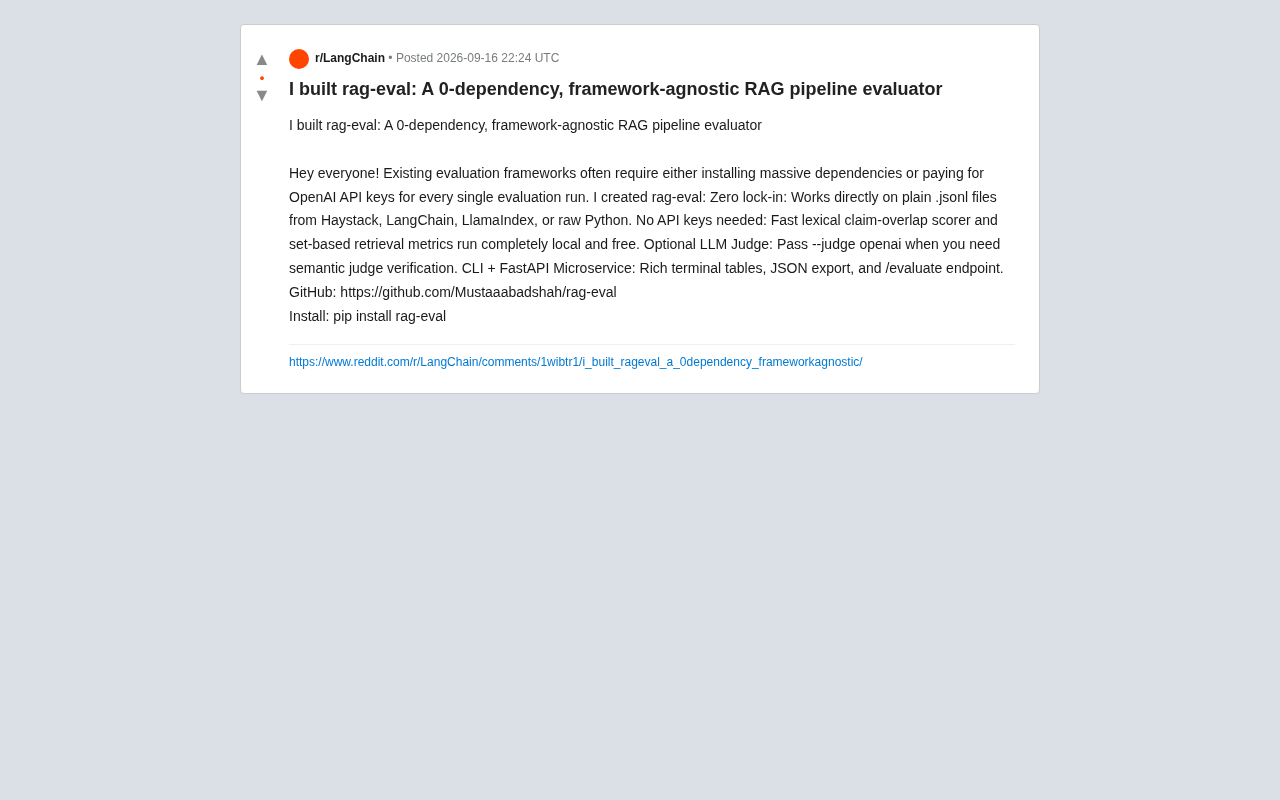
rag-eval: A Zero-Dependency, No-API-Key RAG Evaluation Tool
rag-eval is a zero-dependency, framework-agnostic open-source RAG pipeline evaluation tool. It supports free local lexical and retrieval metrics with no API keys required, and offers optional LLM Judge for semantic validation. Compatible with Haystack, LangChain, and LlamaIndex.
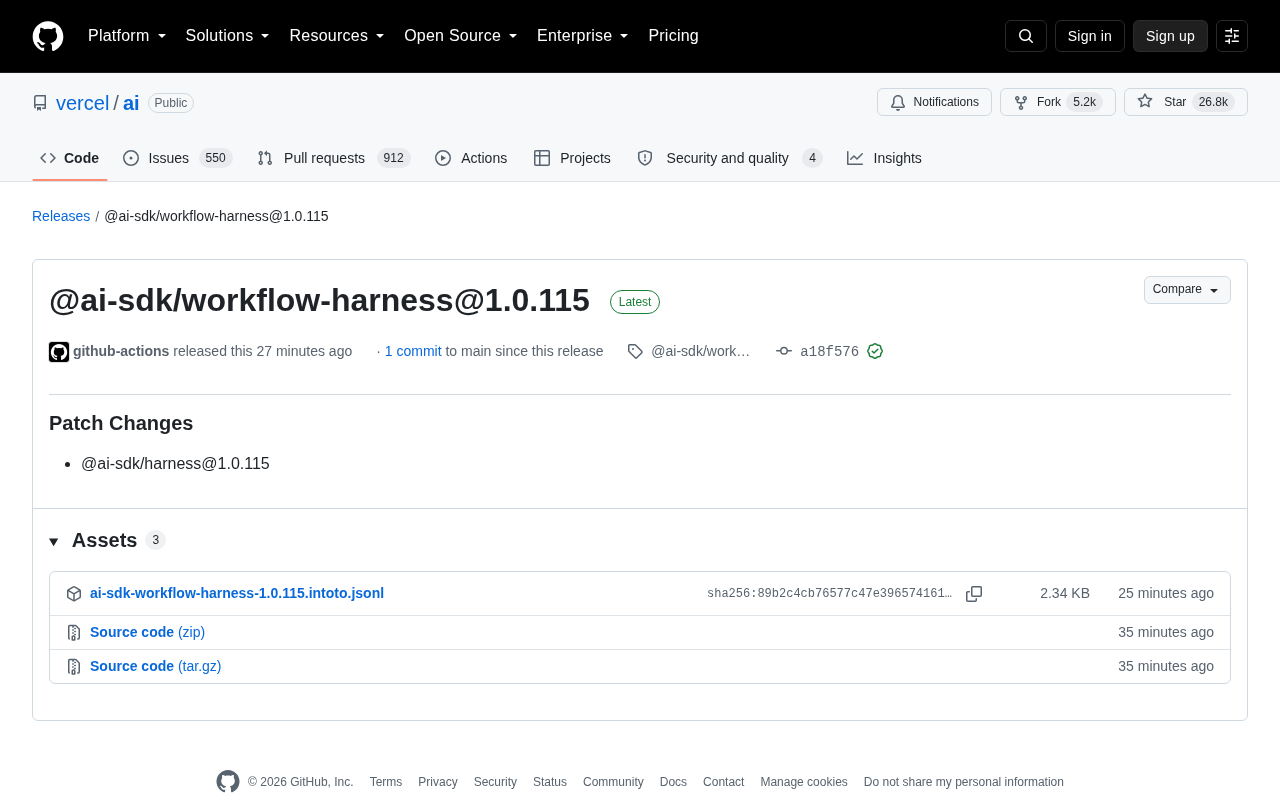
Vercel AI SDK Releases workflow-harness 1.0.115 Patch Update
Vercel AI SDK releases @ai-sdk/workflow-harness 1.0.115 patch update, syncing the @ai-sdk/harness dependency. Learn about the update, release mechanism, and what it means for developers.
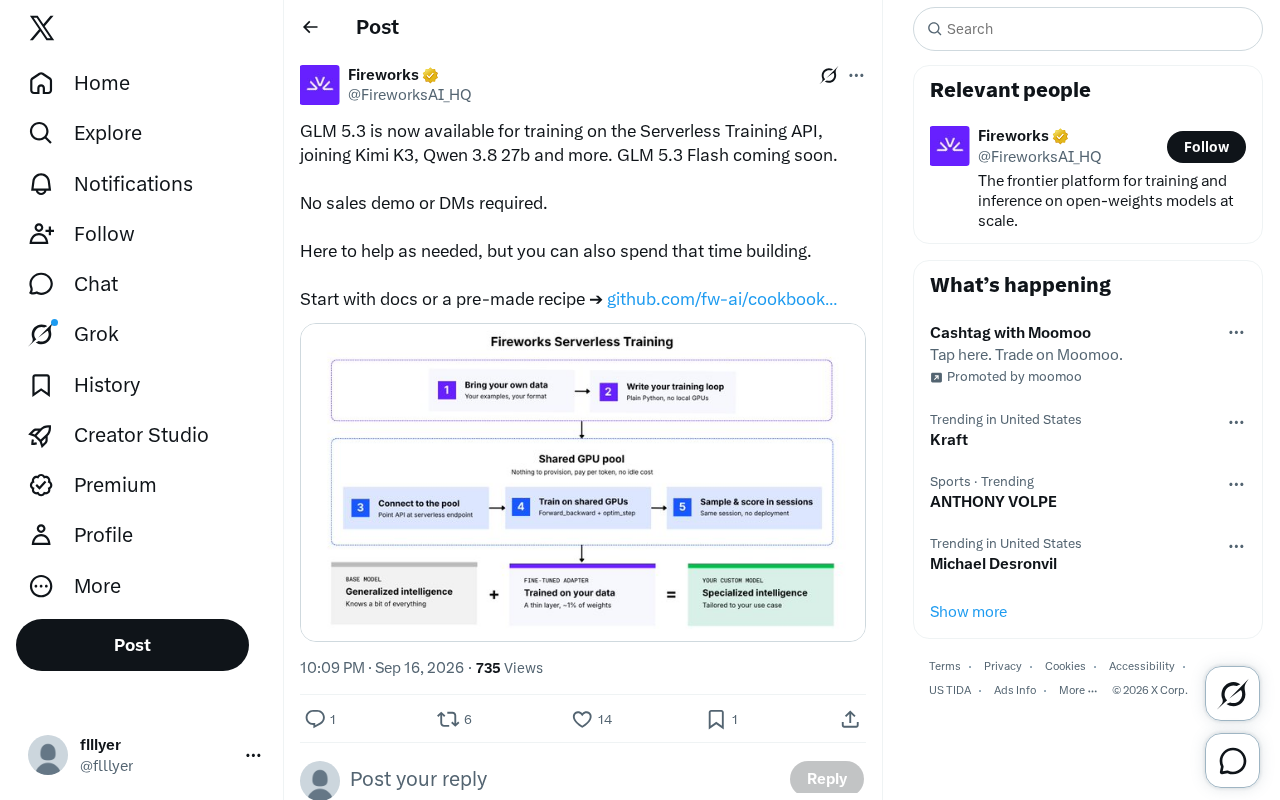
GLM 5.3 Now Available on Serverless Training API — No Sales Process Required
GLM 5.3 is now available on Serverless Training API alongside Kimi K3 and Qwen 3.8 27b. No sales process needed — start fine-tuning directly via docs or pre-made recipes.