Why Are 9/11 Memes Everywhere? How AI Is Reshaping the Spread of Disaster Humor

How technology transformed 9/11 disaster humor from niche emails into an AI-fueled cultural flashpoint.
Using 9/11-related humor as a lens, this article traces how disaster humor has evolved across three technological eras — from forwarded emails to AI-generated content. The internet broke through the critical mass barrier, enabling viral spread; generative AI then eliminated creative barriers entirely, allowing anyone to produce polished visual and audio jokes in minutes. This technological shift has produced a new social tension: algorithms push those who embrace disaster humor and those who find it deeply offensive into the same feeds, making value clashes unavoidable. The article concludes that technological progress has far outpaced the evolution of social norms, and the ubiquity of 9/11 memes is a direct reflection of that gap.
From Forwarded Emails to Viral Feeds: The Evolution of 9/11 Humor
For many millennials, their first encounter with 9/11-related jokes came through a forwarded email. Back then, creating and sharing this kind of content required a certain level of technical skill, limiting the pool of participants — which is why this genre of humor never quite reached a true "critical mass."
But disaster humor itself is nothing new. Scholars who study folklore and disaster humor note that 9/11-related jokes appeared almost simultaneously with the attacks on September 11, 2001 — folklorists researching disaster humor, humor cycles, and joke cycles were already collecting examples from the very moment the attacks occurred. In other words, the human impulse to process trauma and fear through humor has always been with us.
The Internet: Breaking Through the Barriers of Disaster Humor
What truly made 9/11 humor ubiquitous was the internet. According to experts interviewed on the subject, the internet enabled more people than ever before to transform a horrific event like 9/11 into something others could laugh at.
This represents a fundamental shift in how content spreads. In the past, creating a visual joke required image-editing skills and the right tools — a technical filter that kept participation limited. As social platforms and creative tools became widely accessible, that barrier collapsed. What had once been niche "in-group" humor now had the conditions for viral spread. Once enough people could create, share, and remix content, a topic gains the momentum to cross the threshold from the margins into mainstream visibility.

The concept of "critical mass" in communication theory comes from diffusion theory: when the number of participants in a given behavior or type of content exceeds a certain threshold, network effects cause it to grow exponentially and become self-sustaining. For disaster humor, early technical barriers — image-editing ability, platform accessibility — kept potential creators confined to a small group, preventing content from ever crossing that threshold. The rise of social media changed this structure entirely. Platforms like Reddit, Twitter, and TikTok not only provided distribution channels but also built in low-barrier creation tools like meme templates and short-video editing, making "anyone can participate" a reality. Algorithmic recommendation systems accelerated this further — platforms prioritize content that triggers strong emotional responses, and controversial disaster humor fits that profile perfectly, creating a positive feedback loop between technical incentives and content spread.
AI: Bringing the Creative Barrier Down to Nearly Zero
If the internet lowered the barrier to distribution, AI has all but eliminated the barrier to creation. Experts point out that with AI today, anyone can easily produce highly intricate visual and audio jokes centered on 9/11.
This is a significant technological inflection point. In the past, producing convincing synthetic images or audio required professional skills and a meaningful time investment. Generative AI tools now allow ordinary users to produce high-quality content in minutes. This means the production of disaster humor is no longer constrained by a creator's technical ability — it's limited only by their willingness. The simultaneous increase in both quantity and quality has contributed directly to the sense of "flooding" this content creates online.

The core capability of generative AI tools in this context is "deskilling" — breaking down creative tasks that once required specialized knowledge into simple natural-language prompts. In image generation, tools like Midjourney and DALL-E let users obtain realistic synthetic images simply by typing a description; voice-cloning tools can replicate a specific person's voice from just a small audio sample. When applied to historical events like 9/11, the "intricate quality" of this content is precisely what makes it problematic: the more realistic the generated content, the harder it is to quickly identify as fictional or satirical, and the more easily it slips through platform content moderation. The low cost of generative AI also means content can be batch-produced and customized for different audiences, generating variants that further amplify the scale effect behind that sense of ubiquity.
A New Cultural Clash: A Fundamental Divide Between Two Groups
Technology has brought more than just an increase in content — it has also created an entirely new kind of social tension. Online, two distinct groups now coexist in the same spaces: those who see nothing wrong with 9/11 humor and might even challenge critics with "why are you being such a boomer about it?" — and those who encounter this content and feel genuinely bewildered, fundamentally unable to understand why anyone would find it acceptable to joke about such an event.
This collision itself is new. In the past, disaster humor circulated primarily within specific subcultures, and those who embraced it rarely came face-to-face with those who didn't. Algorithm-driven open platforms have pushed two groups with fundamentally different values into the same feed, making conflict inevitable. This is no longer simply a question of whether a joke is funny — it's a battle over cultural boundaries: what can be subjected to humor, and what should remain off-limits.
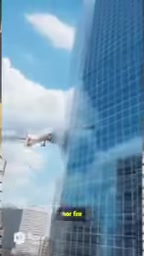
"Boomer" here is not simply a reference to the Baby Boom generation (those born between 1946 and 1964), but an attitude label that has evolved in internet culture to describe anyone who seems conservative or out of touch with emerging online culture — regardless of actual age. This usage itself reflects the generational and cultural dimensions of the conflict: for younger digital natives, turning historical events into memes is a perfectly normal mode of processing information and a familiar social language; refusing to participate or expressing discomfort is seen as "not keeping up with the times." For those who lived through or were deeply affected by 9/11, however, this kind of humor crosses a moral line concerning collective trauma. The fundamental disagreement between these two positions comes down to this: one side treats humor as a depoliticized game of cultural symbols, while the other insists that certain events possess a sacredness that cannot be entertainmentized. The two sides lack a shared frame of reference for meaningful dialogue.
How Technology Is Changing the Way We Collectively Process Trauma
Looking at the three stages together — niche circulation in the email era, mass diffusion in the internet era, zero-barrier production in the AI era — we can see clearly how technology has step by step reshaped an ancient human behavior. The psychological motivations behind disaster humor haven't changed; what has changed is its distribution efficiency, production cost, and reach.
Generative AI's role here is not merely that of a content tool — it is an amplifier. What it amplifies is not just the volume of content, but the value conflicts that underlie that content. As creation becomes this effortless, society's shared understanding of "what can be consumed as entertainment" has yet to catch up — and it is precisely this gap that lies at the root of so many current online culture clashes. The ubiquity of 9/11 memes is, in a sense, a mirror: it reflects the reality that technological progress has far outpaced the evolution of social norms.
Related articles

iPhone 18 Pro Camera Upgrades: The Value Hidden in the Details
iPhone 18 Pro's camera update focuses on subtle experiential improvements. This analysis examines Apple's shift from bold design leaps to incremental refinement, and the role of computational photography on a mature hardware platform.
From Enterprise Practice to a Reusable Template: Lessons from Building an AI Agent
A developer shares an open-source AI Agent template built from an enterprise project, covering natural language data Q&A, analysis, auto-generated PPTs, and email distribution.
Nintendo's Open-World Design Evolution: Breaking Down Fire Emblem Fortune's Weave
Nintendo brings the open-world design philosophy of Breath of the Wild to Fire Emblem with the massive Switch 2 title Fortune's Weave. Here's what it means.