Why Are Uncensored Open-Source LLMs More Optimistic? A Deep Dive into Alignment Side Effects

Uncensoring LLMs doesn't just remove refusals—it makes models measurably more optimistic due to entangled alignment properties.
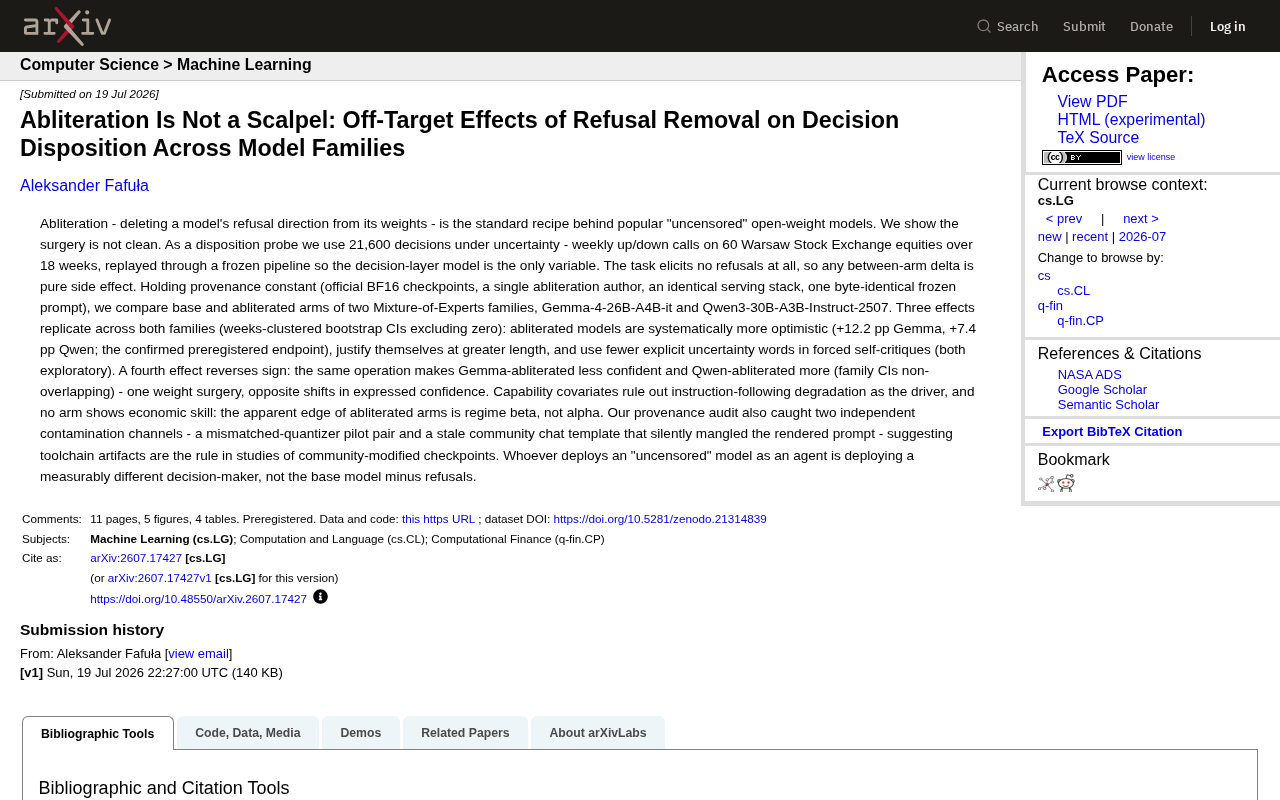
Recent research reveals that uncensored open-source LLMs are measurably more optimistic than their base models. This occurs because safety alignment, caution, and emotional tone are deeply entangled in model parameters. When uncensoring removes refusal behavior through fine-tuning or techniques like abliteration, it inadvertently strips away cautious, conservative expression patterns, resulting in systematically more positive outputs—a critical consideration for serious applications like healthcare and finance.
A Counterintuitive Discovery
In the open-source large language model (LLM) community, "uncensored" versions have always been a hot topic. Developers use fine-tuning or alignment removal to strip models of their safety guardrails and refusal tendencies, enabling them to respond to a broader range of questions. However, a recent study that sparked discussion on Hacker News revealed an unexpected side effect: these uncensored model versions are, in a measurable sense, more "optimistic" than their base models.
This finding is interesting because it touches on a core question—when we "uncensor" a model, what exactly are we changing? Many assume we're only removing the refusal mechanism, but in reality, this intervention may alter the model's "personality" and output tendencies at a much deeper level.
What Are Uncensored Models? From Alignment to De-alignment
Safety Alignment Mechanisms in Mainstream Models
Mainstream open-source models (such as Llama, Mistral, etc.) typically undergo RLHF (Reinforcement Learning from Human Feedback) or instruction fine-tuning before release, aimed at making model outputs safer and more aligned with human values. This process teaches models to refuse certain requests, avoid controversial topics, and use more cautious language.
RLHF is one of the core techniques for LLM alignment today, first systematically proposed by OpenAI in the InstructGPT paper. The process has three steps: first, supervised fine-tuning (SFT) of the base model using high-quality human-annotated data; then training a Reward Model to approximate human preference rankings for response quality; and finally using the PPO (Proximal Policy Optimization) algorithm to maximize the reward model's score for the language model's outputs. The essence of this process is "distilling" human value judgments and safety preferences into model parameters. However, since the reward model itself is an approximation of human preferences, it inevitably encodes accompanying characteristics like caution and conservatism—laying the groundwork for side effects when uncensoring later occurs.
Common Technical Approaches to Uncensoring
"Uncensoring" refers to community developers using further fine-tuning, dataset cleaning (removing refusal samples), or weight editing to weaken or eliminate these safety guardrails. Common approaches include:
- Using training data that removes responses like "As an AI, I cannot..."
- Employing techniques like abliteration to directly suppress refusal behavior within the model
- Making targeted modifications to weights in specific layers
Among these, abliteration is a particularly representative uncensoring technique proposed by researchers in 2024. Its core idea is to analyze the differences in internal representations when a model refuses versus accepts requests, identify the specific vector encoding the "refusal direction," and then subtract that directional component from the model's residual stream. Specifically, researchers collect a set of prompts that trigger refusal and normal prompts, compute the mean difference of their activations in the model's intermediate layers to obtain a "refusal direction" vector, and then permanently remove this direction from the weight matrices through projection operations. This method doesn't require additional training data or significant computational resources, but its coarse-grained linear intervention is precisely one reason for collateral effects—the refusal direction may have non-zero cosine similarity with other semantic directions like caution and risk assessment, making it inevitable that removing one direction affects adjacent semantic spaces.
Unexpected Collateral Effects
The key insight of this research is that uncensoring is not a surgical, precision operation. When you adjust a model to stop refusing, you're simultaneously changing the overall distribution of model outputs. Researchers found through measurable metrics that uncensored models exhibit a more positive, more optimistic shift in emotional tendency, expectations about the future, and attitudes in responding to questions compared to base models.
Why Do Uncensored Models Become More Optimistic?
The Deep Connection Between Refusal and Cautious Expression
A reasonable explanation is that the base model's safety alignment training not only teaches refusal but also instills "cautious" expression habits. Safety alignment data is often filled with qualifiers, warnings, disclaimers, and pessimistic risk advisories ("this could be risky," "please consult a professional"). When the uncensoring process removes this content, the model also loses its conservative and prudent tone, shifting instead toward more direct, affirmative, and optimistic responses.
From the perspective of neural network internal mechanisms, this connection can be explained by "feature polysemanticity." Anthropic's research team pointed out in their series of work on neural network interpretability that because the model's parameter space dimensionality is far lower than the number of concepts it needs to represent (known as the "superposition hypothesis"), individual neurons often simultaneously encode multiple unrelated semantic features. This means the model's "safety," "caution," "optimism level," and other attributes may share the same neurons or attention heads, forming a phenomenon similar to multifunctional reuse in brain gray matter regions. Tools like Sparse Autoencoders (SAE) are being used to disentangle these representations, but current technology still cannot achieve fully orthogonal attribute separation—fundamentally explaining why targeted modifications always produce "spillover effects."
Implicit Bias from Training Data
Datasets used for uncensoring fine-tuning often come from freer, more uninhibited conversational corpora, or deliberately constructed "compliant" responses. This type of data inherently carries more positive, more cooperative tonal characteristics. After fine-tuning on such data, models naturally inherit this optimistic tendency. In other words, optimism isn't the goal of uncensoring—it's a byproduct of changes in training data distribution.
Notably, this phenomenon is consistent with the broader "distribution shift" problem in machine learning. When the statistical properties of a fine-tuning dataset differ from pretraining data, the model not only learns the target behavior (like not refusing) but also indiscriminately absorbs all statistical patterns in the data, including emotional coloring, sentence structure preferences, and attitudinal tendencies. This is an inherent limitation of current fine-tuning techniques—we still lack sufficiently fine-grained tools to specify "learn this, but not that."
Deeper Implications of This Finding
Model Alignment Is a Whole, Not Independent Switches
The most important takeaway from this research is that a model's "personality" is highly entangled. Safety, caution, optimism level, and expression style are not mutually independent knobs but are deeply coupled together. When we try to adjust only one dimension (like removing refusal), we often affect multiple other dimensions. This serves as a warning for alignment research—the consequences of intervention may far exceed expectations.
Academically, this problem is called the inverse version of the "alignment tax"—we typically discuss how alignment training degrades model capabilities, but here what's revealed is how de-alignment operations unexpectedly alter other model attributes. Both point to a deeper challenge: in high-dimensional parameter space, human-understandable concepts (safety, optimism, capability) don't correspond to orthogonal subspaces but are entangled in complex ways.
The Optimism Bias Developers Should Watch For
For developers and users working with uncensored models, this finding means extra caution is needed:
- Creative writing, encouraging dialogue: A more optimistic model may be an advantage
- Medical health consultations: Excessive optimism may underestimate symptom severity
- Financial decision support: The model may overlook necessary risk warnings
- Objective analysis tasks: Additional bias correction mechanisms are needed
A "more optimistic" model in serious scenarios can be dangerous—it may underestimate risks, give overly affirmative advice, or neglect necessary warnings.
Methodological Value Through Measurability
You may not have noticed, but this research emphasizes the word "measurably." This isn't a vague subjective impression but a systematic bias verified through quantitative metrics. This provides a reproducible methodology for evaluating side effects of model fine-tuning—we shouldn't only focus on whether a model "can answer" but also on "how it answers" and the implicit attitudinal tendencies behind its responses.
Methods used to quantify model optimism typically include multiple complementary approaches: sentiment analysis scoring (using external classifiers to label model outputs as positive/negative/neutral), specific benchmarks (such as having the model predict probabilities of future events and comparing with objective baselines), and lexical-level statistical analysis (calculating the frequency ratio of positive to negative words). More advanced methods also include using "probes"—training lightweight classifiers on the model's intermediate layers to detect implicit emotional or attitudinal tendencies, thereby distinguishing whether the model truly "believes" things will go well or is merely using positive vocabulary at the expression level. This multi-layered measurement framework ensures the robustness of conclusions, not relying on biases that any single metric might introduce.
Implications for the Open-Source Community
As the open-source model ecosystem flourishes with endless derivative versions, this research reminds the community that any model modification should be accompanied by comprehensive behavioral evaluation, not just verification of whether the target capability was achieved. A responsible model release should disclose personality shifts that fine-tuning may have caused, enabling downstream users to make informed choices.
This call echoes the "Model Cards" practice being promoted in the AI governance field. The Model Cards framework, proposed by Google researchers in 2019, recommends that every publicly released model should come with structured documentation about its training data, intended uses, known limitations, and biases. In the context of uncensored models, model cards should explicitly note: "This model had safety alignment removed via XX method. Known side effects include emotional output biased toward optimism by approximately X%, with potential systematic underestimation tendencies in risk assessment tasks."
For researchers, the "optimism gap" between uncensored and base models also provides an excellent research window—by comparing the output distributions of these two types of models, we can better understand what alignment training actually shapes inside a model and how these attributes are interrelated.
Conclusion
The seemingly lightweight finding that "uncensoring makes models more optimistic" reflects a fundamental challenge in LLM alignment: our understanding and control of model behavior remains coarse-grained. Every fine-tuning session may reshape a model's "personality" in dimensions we cannot see. While pursuing model freedom, understanding and measuring these side effects is the necessary path toward truly controllable, trustworthy AI.
Related articles
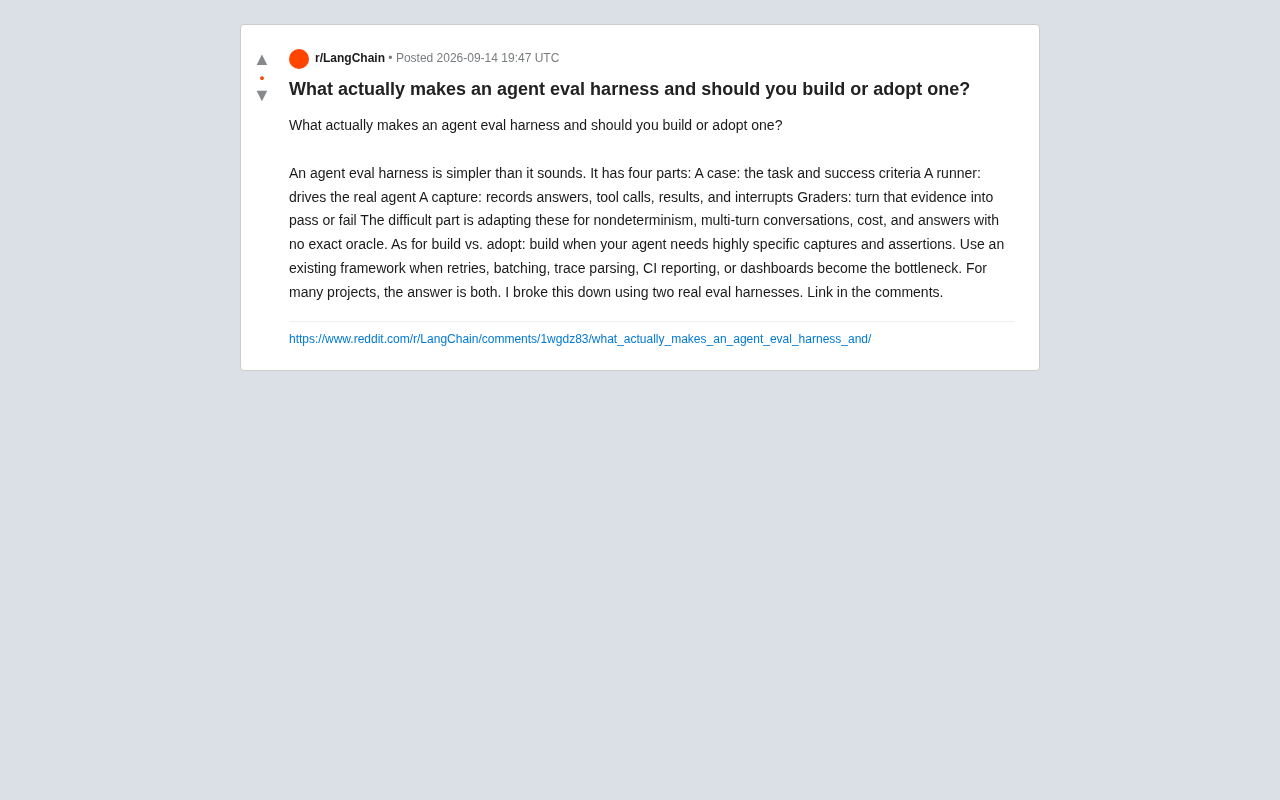
Deep Dive into Agent Eval Harnesses: Build vs. Buy?
A deep dive into the four core components of an agent eval harness — Cases, Runner, Capture, and Graders — with practical guidance on when to build vs. adopt existing frameworks.
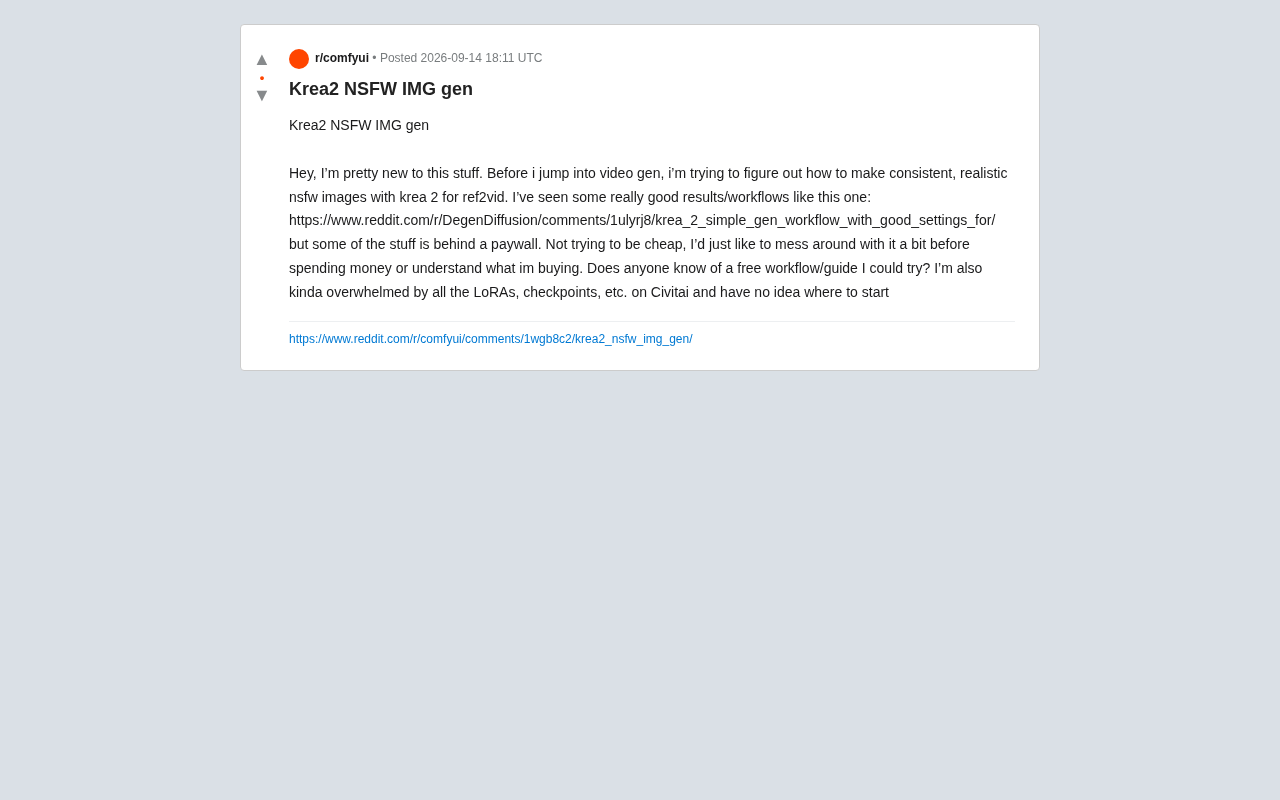
Getting Started with Krea 2 Image Generation: A Beginner's Guide to LoRA and Checkpoints
A beginner's guide to Krea 2 image generation: how to start with free open-source workflows, understand LoRA vs Checkpoint on Civitai, and achieve consistent realistic image generation.
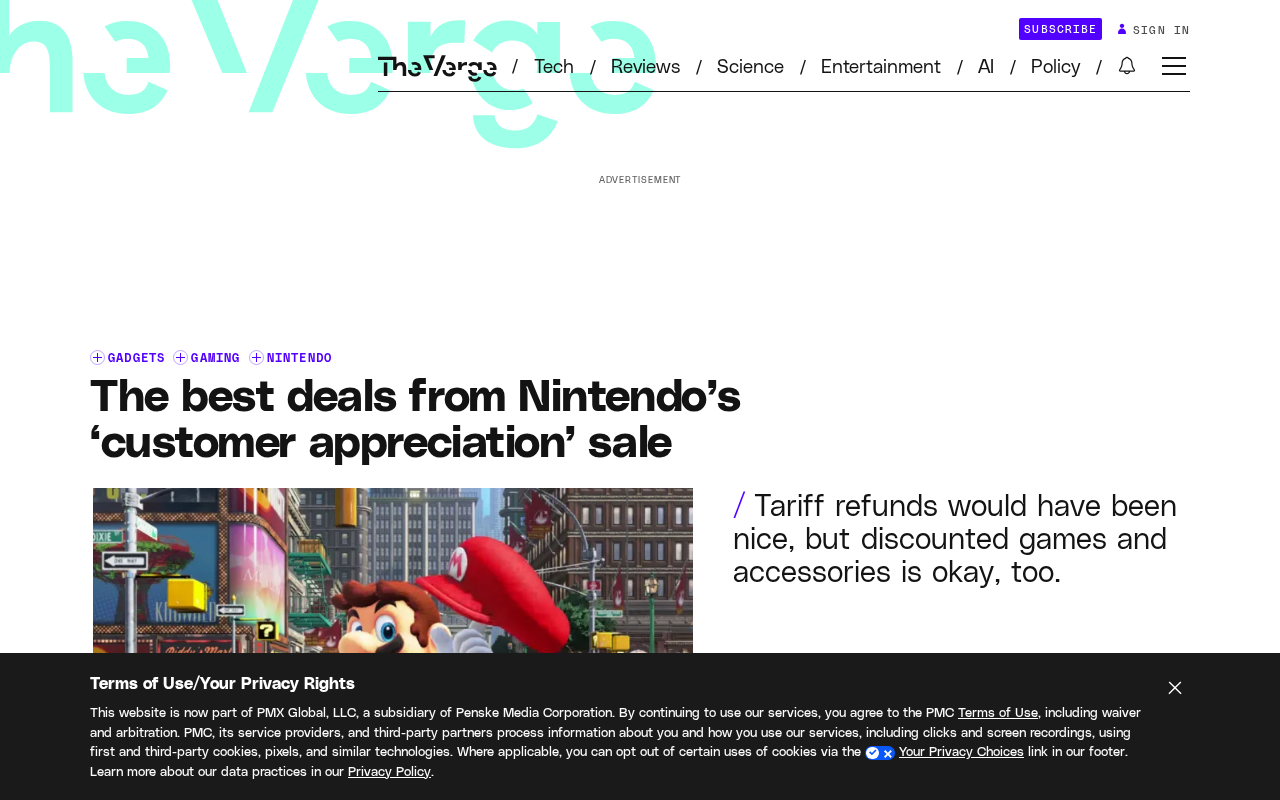
Nintendo 'Customer Appreciation' Sale: Switch Games and Accessories Price Cuts Roundup
Nintendo's Customer Appreciation sale discounts Switch games and accessories at Amazon, Best Buy, Walmart, and its digital store — funded by tariff refunds. Ends Sept 26.