Why Ban AI? A Debate About the Boundaries of Technology

A Current Affairs article on banning AI sparks HN debate on balancing efficiency with human agency.
The Current Affairs article 'Why We're Banning AI' sparked nearly 200 comments and 251 upvotes on Hacker News, with discussion expanding from education to open source and content creation. Supporters say AI undermines learning and critical thinking; opponents cite enforcement costs and AI's value as a tool. Open source projects restrict AI-generated code over copyright, quality, and review burden. The emerging consensus: AI is useful for retrieval, drafting, and code completion, but caution is needed for deep thinking and original judgment.
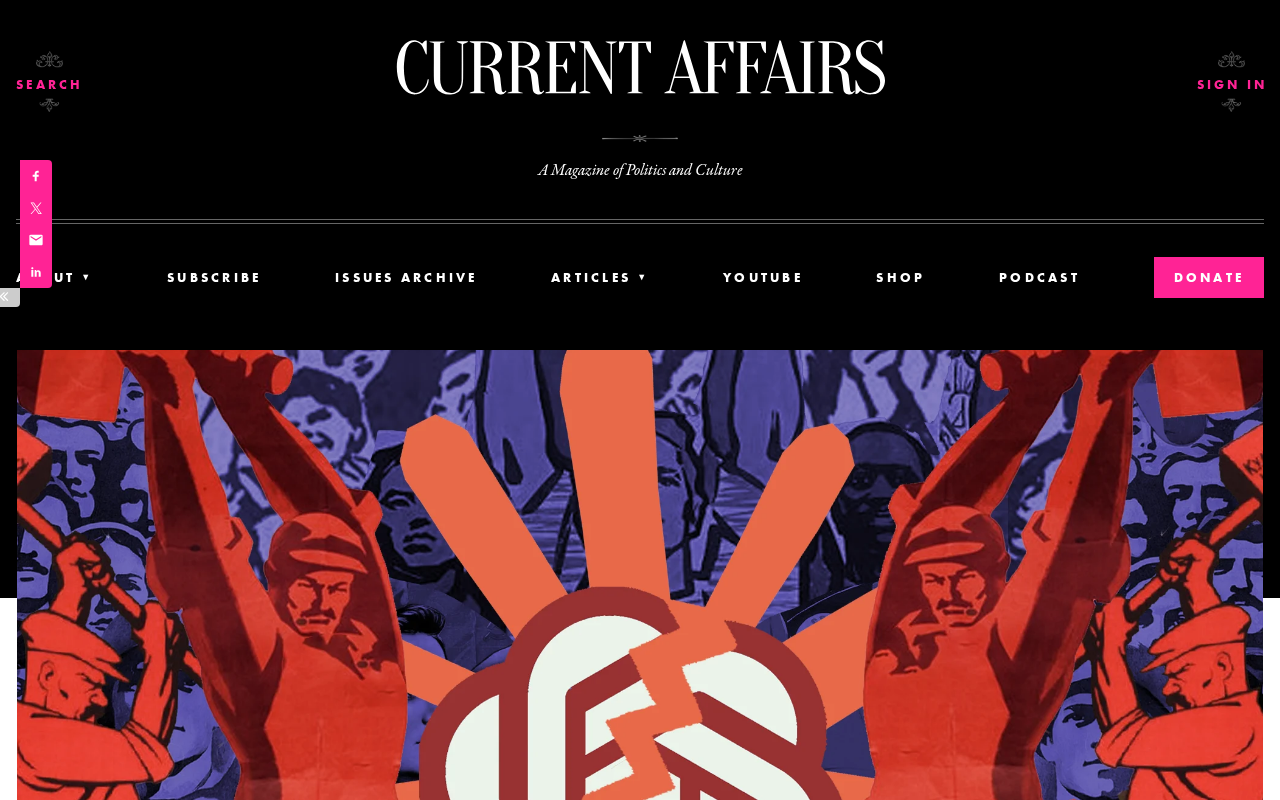
An article titled Why We're Banning AI sparked nearly 200 comments and 251 upvotes on Hacker News. Published by Current Affairs, the piece explores the rationale for banning AI tools in education and other specific contexts. The discussion touches on a deeper value conflict underlying technology adoption: which matters more—efficiency or human agency?
The Core Arguments for Banning AI
According to the article, banning AI is not simply technophobia—it is grounded in protecting the core values of certain domains. In contexts such as writing instruction, artistic creation, or critical thinking training, using AI tools may fundamentally undermine the meaning of these activities themselves.
The discussion on Hacker News was sharply divided. Supporters argue that banning AI in specific contexts is a necessary step to protect essential human capabilities; opponents question whether blanket bans are feasible and point out that they ignore AI's potential as an assistive tool.
The real question at stake is: what kind of relationship do we want the next generation to have with technology? Should AI become a crutch for thinking, or a tool used only in specific parts of a process?
Current Affairs is an American left-wing political and cultural commentary magazine known for long-form critical essays, often examining technology and capital through ethical and public-interest lenses. It is not a specialized tech publication, and its readership tends toward the humanities and social sciences. That it published an article on banning AI is itself symbolically significant: the debate is not confined to tech circles but is being discussed within a broader framework of social values. Meanwhile, Hacker News is a tech news aggregation community operated by Y Combinator, where comments typically come from engineers, entrepreneurs, and researchers. Upvote and comment counts are often used to gauge how much resonance a topic has within the tech community. 251 upvotes and nearly 200 comments indicate both broad agreement and clear disagreement—a classic high-controversy, high-engagement topic.
The AI Dilemma in Education
Education is the main battleground in this debate. If students use AI to write essays, solve math problems, or even complete programming assignments, education's assessment function faces a fundamental challenge.
Based on reactions from the tech community, many developers are sympathetic to these concerns. One commenter noted that they built genuine understanding through repeated trial and error while learning to program—if AI had simply provided the answers, that learning process would have been entirely skipped.
But this position also faces practical challenges: students always have ways to access AI tools, and enforcing bans is extremely costly. Rather than imposing blanket prohibitions, it may be more effective to redesign assessment methods so that AI cannot easily replace the core human thinking process.
Assessment is a key concept in the education debate. Traditional essays, problem sets, and exams are not only used for grading—they are also assumed to measure the learning process: the searching, reasoning, writing, and revising students do to complete assignments is itself where learning happens. Once generative AI can replace these intermediate steps, assessment may only measure the output of human-AI collaboration without being able to distinguish whether a student has truly mastered the knowledge. Some educators therefore advocate shifting to process-based assessment (such as in-class writing, oral defenses, or version history tracking) or creating exam environments where AI is unavailable. This approach is not about rejecting AI but about acknowledging that assessment tools and learning objectives must align—otherwise, the signaling value of diplomas and grades is weakened. However, redesigning assessment means heavier workloads for teachers and more complex institutional costs, which is also a major reason why bans are difficult to implement.
Tensions Between Open Source Communities and AI Tools
One notable dimension of the HN discussion is the open source community's attitude toward AI tools. In recent years, some open source projects have begun restricting submissions of AI-generated code, citing unclear copyright, inconsistent code quality, and the additional review burden placed on project maintainers.
This trend stands in sharp contrast to the rapid proliferation of AI coding tools. According to feedback from developer communities, AI-assisted programming can indeed boost efficiency, but it also introduces new technical debt problems. Banning AI in certain open source projects is more about concerns over code quality and community trust than a rejection of the technology itself.
Technical debt typically refers to short-term compromises made for rapid delivery that require additional costs to fix or refactor later. In the context of AI-generated code, technical debt can accumulate in many forms: inconsistent code style, tangled dependencies, insufficient handling of edge cases, comments that don't match the implementation, and developers who don't truly understand the generated logic. What's more troublesome is that AI code often looks complete and passes basic tests, with problems potentially only surfacing months later. For open source maintainers, reviewing such contributions requires cognitive effort equal to or even greater than writing the code themselves, while contributor accountability becomes more ambiguous. Open source license compatibility is another challenge: if AI training data includes copyrighted code, generated results may carry licensing obligations of unknown origin, posing a substantial risk for projects that prioritize legal clarity. Therefore, restrictions on AI-generated code submissions are often driven by both quality control and legal certainty considerations.
Rethinking the Boundaries of AI Application
Perhaps the most valuable part of this discussion is not the binary answer of "ban" or "don't ban," but rather that it prompts us to think about the reasonable boundaries of AI application.
From discussions across multiple independent sources, a consensus is emerging: AI tools are genuinely valuable for information retrieval, draft generation, and code completion, but in contexts requiring deep thinking, original judgment, and personal expression, over-reliance on AI may lead to skill degradation.
For content creators and tech professionals, consciously choosing when to use AI and when not to may be more rational than either embracing it entirely or rejecting it outright. That choice itself is a assertion of human agency.
The discussion continues on Hacker News, and the clash of different positions reveals a persistent tension in the technological society: maximizing efficiency and fostering holistic human development have never been an either-or choice.
Cognitive offloading is an important psychological concept for understanding this discussion. It refers to delegating thinking or memory tasks that one should complete oneself to external tools. Moderate cognitive offloading can free up mental resources—for example, using a calculator for arithmetic or search instead of memory. But when offloading occurs during a learning phase when abilities are still forming, it can hinder deep processing and the formation of long-term memory. Researchers often distinguish between "using AI to enhance existing abilities" and "using AI to replace abilities that haven't yet formed": the former is a lever, the latter is a crutch. The article's emphasis on "consciously choosing usage scenarios" essentially requires users to recognize which stage they are in and whether the task demands original judgment. This judgment ability itself requires training, so metacognitive reflection on AI use may be more important than simple prohibition or laissez-faire.
One-line Summary
A Current Affairs article on banning AI sparked heated debate on HN, with the core question being how to balance efficiency with human agency.
Paragraph Summary
The Current Affairs article Why We're Banning AI generated nearly 200 comments and 251 upvotes on Hacker News, with discussion quickly expanding from education to open source communities and content creation. Supporters argue that in contexts like writing instruction and critical thinking training, AI undermines the meaning of the activity itself and leads to skill degradation; opponents point out that bans are extremely costly to enforce and ignore AI's value as an assistive tool. Open source projects restricting AI-generated code submissions cite unclear copyright, inconsistent quality, and review burden. The emerging consensus is that AI is useful for information retrieval, draft generation, and code completion, but caution is needed in contexts requiring deep thinking and original judgment. The rational approach is neither full embrace nor rejection, but actively choosing where to draw the boundaries.
Related articles

Amphibious Transforming Drone: Beyond 100x Power Savings, What Are the Real Needs?
Is the amphibious transforming drone just a gimmick? Starting from the 100x power difference of the M4 Morphobot, explore real application scenarios and thesis topic ideas, analyzing boundary conditions where pure drones and pure ground robots both fail.

Warhound Raises $200 Million: Genetically Engineered "War Dogs" Paired with Anduril Gear
Warhound raises $200M, backed by Ben Lamm and Palmer Luckey, to genetically engineer dogs for military and law enforcement use and equip them with Anduril gear. This article analyzes its technology direction, funding logic, and ethical controversy.

Claude API Comes to Google Cloud: IAM Integration and SDK Access Guide
Anthropic hosts the full Claude API on Google Cloud with IAM-controlled permissions and unified billing. This guide covers the Vertex AI and Anthropic-hosted entry points, IAM role configuration, and SDK access.