Why Did The New York Times Ban Photographers From Using the Latest Version of Photoshop?

The New York Times' ban on the latest Photoshop reflects the news industry's systemic vigilance toward AI retouching authenticity.
The New York Times has told its photographers not to use the latest version of Photoshop, and the news drew attention in photography and post-processing communities after being discussed on Hacker News. The article argues that the ban likely targets AI-driven features in the latest version, such as generative fill and content-aware expansion—capabilities that make it easy to "generate pixels from nothing" and pose authenticity risks for photojournalism, which emphasizes documentary integrity. The wording of the ban is telling: it targets the latest version rather than all versions, reflecting a pragmatic strategy of front-loaded risk management—preserving controllable edits such as cropping, exposure, and color grading while cutting off the risks of generative content at the tool source. For photographers, this means workflow adjustments and preservation of original RAW files; for content creators more broadly, it signals that the smarter the tool, the greater the responsibility in using it. This event is a continuation of the news industry's systemic vigilance toward AI-generated content as applied to image tools.
A Ban from the Newsroom
According to a discussion on Hacker News, The New York Times has told its photographers not to use the latest version of Photoshop. The news quickly drew attention in photography and post-processing communities—after all, Photoshop is practically synonymous with the digital darkroom, and as one of the world's most influential news organizations, The New York Times' internal technical standards are often seen as an industry bellwether.
The original discussion had only 6 points and 3 comments—quite limited information. But behind this brief news item lies a long-standing tension in photojournalism when it comes to digital tools: the balance between efficiency and authenticity, convenience and trust.
News Authenticity and the Sensitive Relationship with Post-Processing Tools
The biggest difference between photojournalism and commercial or artistic photography is that its core value is documenting facts. Any modification to an image—even adjusting brightness, cropping the composition, or removing sensor dust—can be interpreted as an intervention in reality.
For this reason, mainstream news organizations generally have strict rules about post-processing. The New York Times' cautious stance toward the latest version of Photoshop is likely related to AI features. In recent years, Adobe has continued to introduce generative AI capabilities into Photoshop, making it easier than ever to "expand the frame," "remove objects," and "generate content." For photojournalism, which emphasizes documentary integrity, these features are both productivity tools and compliance risks.
If a photographer accidentally triggers generative fill while editing, a news image could be plunged into a controversy over authenticity. Banning the latest version is essentially a form of front-loaded risk management: rather than reviewing every image after the fact, it's better to cut off the risk at the source—the tool itself.
Generative Fill is an AI feature Adobe introduced in Photoshop in 2023, based on the Firefly model. Users simply select an area and enter a text prompt to generate new pixels that match the lighting and perspective of the original image within seconds, or seamlessly extend the edges of the canvas. Its underlying logic is "creating from nothing" rather than "retouching what exists"—this is the fundamental difference between it and traditional clone stamp or healing brush tools. For photojournalism, the traces of the latter are usually traceable and explainable, while pixels produced by generative fill have no source record in the original file. Once mixed into a news image, they constitute a substantive intervention in documentary integrity.
Why the "Latest Version" and Not "All Versions"
The most intriguing part of this news is the wording—The New York Times is targeting the latest version of Photoshop, not banning it entirely.
This suggests a pragmatic strategy. Older versions of Photoshop also have powerful retouching capabilities, but lack the AI-driven features in the latest version that can generate pixels from nothing. What news organizations need is "controllable editing capability": traditional operations like cropping, exposure, and color correction remain acceptable, while generative content crosses the line.
In other words, the ban is not a rejection of Photoshop, but a rejection of the parts of the latest version that go beyond the boundaries of documentary integrity. This also explains why the industry reaction was more discussion than shock—many newsrooms had already established similar rules internally; The New York Times simply brought it into the open.
RAW files are uncompressed or lightly compressed data output directly from a camera sensor, retaining the full dynamic range and metadata (such as capture time, device model, and GPS). Unlike JPEGs that have been processed by software, RAW is regarded as a "digital negative"—the technical proof of an image's authenticity. News organizations typically require photographers to archive original RAW files so that provenance can be verified if an image becomes controversial. Even if the final published image has been cropped or exposure-adjusted, the original file can still prove that the main subject was not added or removed. This is why, in the context of the ban, "preserving RAW" and "disabling generative features" are two ends of the same authenticity assurance system.
Practical Impact on Photographers and Content Creators
For photographers working at news organizations, this rule means adjusting their workflow. They may need to:
- Complete basic color grading and cropping on a controlled version;
- Avoid using AI features such as generative fill and content-aware expansion;
- Preserve original RAW files as proof of authenticity.
For content creators more broadly, the signal is equally clear: the smarter the tool, the greater the user's responsibility. In social media and self-media environments, audiences are becoming more sensitive to image authenticity, and once AI retouching traces are identified, the damage to personal or brand credibility far exceeds the convenience that retouching brings.
A detail worth noting: The New York Times' approach is not an isolated case. The news industry's vigilance toward AI-generated content is systemic—from text to images, from gathering to publishing, guardrails are being established at every stage. This Photoshop ban is simply the same logic extended to image-processing tools.
Tools and Ethics: An Endless Game
From darkroom masking in the film era to layers and masks in the digital era, and now to generative AI, photojournalism has always kept its distance from the possibilities technology brings. The New York Times' ban reminds us once again: the boundaries of post-processing are ultimately defined by trust.
Readers trust a news photograph because they believe it faithfully records the scene. Any tool that could undermine that trust—no matter how powerful or convenient—needs to be treated cautiously in the newsroom. This may be the part most worth pondering for the industry behind this brief news item.
Content Credentials is a provenance technology under the C2PA standard led by Adobe. By embedding cryptographically signed metadata into files, it records the complete chain of an image from capture to editing to publishing. In theory, news organizations could use it to label "this image was only cropped and color-graded" or "this image contains AI-generated elements." However, the technology depends on participation across the entire chain—cameras, editing software, and publishing platforms all need to support it, and metadata can be deliberately stripped. For organizations like The New York Times, Content Credentials currently serve more as a supplementary measure and are not yet sufficient to replace hard rules that "disable at the tool source."
One-line Summary
The New York Times' ban on the latest version of Photoshop reflects the news industry's systemic vigilance toward the authenticity of AI retouching.
Paragraph Summary
The New York Times has told its photographers not to use the latest version of Photoshop, and the news drew attention in photography and post-processing communities after being discussed on Hacker News. The article argues that the ban likely targets AI-driven features in the latest version, such as generative fill and content-aware expansion—capabilities that make it easy to "generate pixels from nothing" and pose authenticity risks for photojournalism, which emphasizes documentary integrity. The wording of the ban is telling: it targets the latest version rather than all versions, reflecting a pragmatic strategy of front-loaded risk management—preserving controllable edits such as cropping, exposure, and color grading while cutting off the risks of generative content at the tool source. For photographers, this means workflow adjustments and preservation of original RAW files; for content creators more broadly, it signals that the smarter the tool, the greater the responsibility in using it. This event is a continuation of the news industry's systemic vigilance toward AI-generated content as applied to image tools.
Related articles

Zero-Code Replication of a $10,000 3D Website with Claude Code: A Six-Tool Breakdown
Bilibili creator Yomi used Claude Code plus five free tools to build a 3D product landing page quoted at $10,000 overseas—zero code. Breakdown of the six-tool division of labor, image-to-3D workflow, and the core collaboration method: "give AI a reference, not 'make it look better.'"
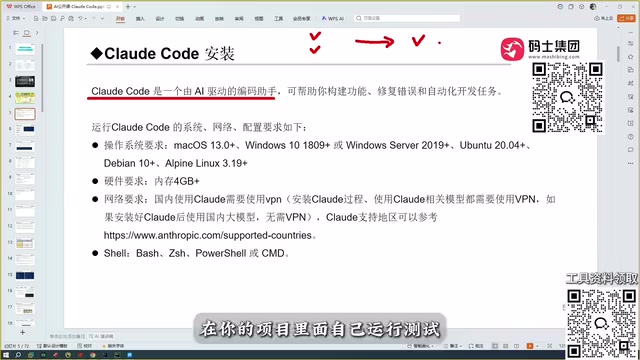
Claude Code in Practice: Install, Connect Models, Calculate Tokens, and Ship a Full-Stack Project with a Single Document
Based on a Bilibili public course demo, this covers Claude Code installation, model connection, token cost calculation, and the practical path of shipping a full-stack project with a single document, plus comparisons with Copilot, Cursor, Trae, and other coding assistants.
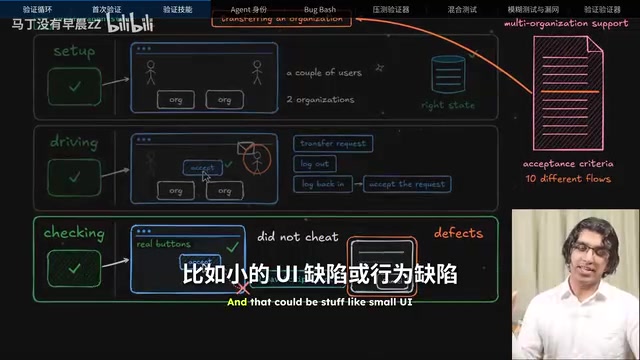
Who Accepts AI-Written Code? A 25-Minute Deep Dive into Verification Loops and the New Code Review Paradigm
After AI writes lots of code, how should Code Review verify it? This article breaks down the Claude Code team's verification loop framework: surface-level end-to-end verification, setup/drive/check three-stage skills, hybrid end-to-end testing and reliability checklists, and how to tighten the loop when issues slip through.