Why Do People Always Test New AI Models by Simulating the Real World?

Why simulating reality is everyone's first instinct when testing a new frontier AI model.
Every time a new frontier model launches, users instinctively test it by simulating the real world — physics, lighting, scene logic. The article argues this is because the real world is humanity's most familiar benchmark: no complex evaluation suite needed, the brain just knows when something looks "off." At a deeper level, this intuitive test points to the AI concept of the "world model" — the idea that truly intelligent systems should maintain internal representations of physical and causal relationships. The article also warns that convincing simulation is not the same as true understanding, and asks: are we testing for surface-level realism, or genuine reasoning?
A Tweet That Got People Thinking
Every time a new frontier model drops, the community's first wave of reactions looks almost identical: people rush to see whether it can simulate the real world — from physical laws and light reflections to city streets, human motion, and even fully interactive virtual environments.
A tech observer posted on X (formerly Twitter): "Interesting how most people's first instinct with a new frontier model is to see how well it can simulate the real world. It almost feels like we all want to simulate reality."
What reads like an offhand observation actually touches on something central to the current generative AI wave — a psychological and technical question worth unpacking: why does "simulating reality" feel like the natural benchmark for measuring a model's capabilities?
Simulating Reality: An Intuitive Capability Test
From a user behavior standpoint, there's a straightforward logic at work. The real world is the benchmark dataset we know best — and the hardest one to fake. When a model generates a convincing water reflection, objects falling with realistic weight, or scenes with coherent perspective, we can almost instantly tell whether it "gets" the world.
In other words, simulating reality is a low-barrier, high-information test. You don't need to design a complex evaluation suite — you just watch the generated image or video and let your brain decide whether something feels "off." This is precisely why, the moment Sora or Veo launched, people zeroed in on physical consistency and object permanence.
The Implicit Expectation of a World Model
At a deeper level, this testing impulse points toward the concept of the "World Model" in AI research. A truly world-aware agent should maintain internal representations of physics, causality, and spatial relationships. The ability to simulate reality is, in some sense, treated as external evidence that a model has built such an internal world representation.
When a model can coherently "imagine" how a scene evolves over time, it's no longer just stitching pixels or tokens together — it's, in some meaningful sense, reasoning. That's the part researchers and enthusiasts find genuinely exciting.
The concept of the "world model" was first proposed by cognitive scientist Kenneth Craik in 1943, referring to the internal representation of external reality that organisms maintain in their minds. In deep learning, researchers like Yann LeCun reintroduced the idea, arguing that next-generation AI systems need causal and structural understanding of the physical world — not just statistical pattern fitting. DeepMind, Meta, and others all have dedicated world model research programs. Unlike purely generative models, world models emphasize predictability and generalizability: given a current state and an action, the model should be able to predict the next state — a core requirement in game AI (such as AlphaZero's internal board simulation) and robotics. Current diffusion models and autoregressive video models can generate visually convincing outputs, but the research community broadly agrees they have not yet built truly manipulable internal world representations, and are better described as "high-dimensional interpolation."
The Psychology Behind "We All Want to Simulate Reality"
The most thought-provoking line from the original tweet is: "It almost feels like we all want to simulate reality."
This pulls the technical discussion into more philosophical territory. Humanity's obsession with simulating reality runs deep — from cave paintings and perspective drawing to photography, film, and now generative AI. Every major technological leap has been accompanied by the impulse to recreate, and even reinvent, the real world.
Generative AI simply takes this impulse to a new level: we're no longer satisfied with recording reality; we want machines to understand and generate it. That's both a form of technical curiosity and a subtle desire for control — if we can simulate the world, does that mean we're closer to understanding it?
From Evaluation Method to Capability Boundary
One thing to keep in mind: "can simulate reality" is not the same as "truly understands reality." Even the most impressive models still stumble on physical consistency, long-horizon logic, and causal reasoning — water passes through solid objects, characters sprout extra hands out of nowhere.
These failures are a reminder that while simulating reality is an intuitive testing approach, what it actually measures is surface-level fitting ability, not deep world understanding. A genuine world model remains an open research frontier.
For both developers and users, the value of this tweet lies in the question it raises: when we use "simulate reality" as our first test, what kind of intelligence are we actually expecting from the model? Convincing appearances, or reliable reasoning? The answer might well determine the direction of next-generation model evaluation.
Researchers have categorized the failure modes that models expose in visual simulation into several patterns: object permanence failure — objects change shape or quantity after being occluded and reappearing; fluid and soft-body dynamics distortion — the motion of water and fabric violates the physical laws described by the Navier-Stokes equations; long-horizon inconsistency — over videos longer than a few seconds, lighting direction and shadow positions contradict each other. The root cause is that current generative models predict outputs frame-by-frame or token-by-token, without explicit encoding of global physical constraints. Proposed solutions include incorporating physics engine simulation data into training, designing reinforcement learning pipelines that reward physical consistency, and introducing neuro-symbolic hybrid architectures. These failure modes provide more objective anchors for evaluation than subjective aesthetics, and have driven the development of benchmarks specifically targeting physical plausibility — such as EvalCrafter and PhyGenBench.
Closing Thoughts
A brief social media observation reflects the industry's collective mindset toward frontier models: we are simultaneously testing machines and projecting onto them humanity's age-old desire to recreate the world. As world model research matures, the question of how to move beyond surface-level fitting toward genuine world understanding will be one of the most important challenges AI faces in its next phase.
Related articles
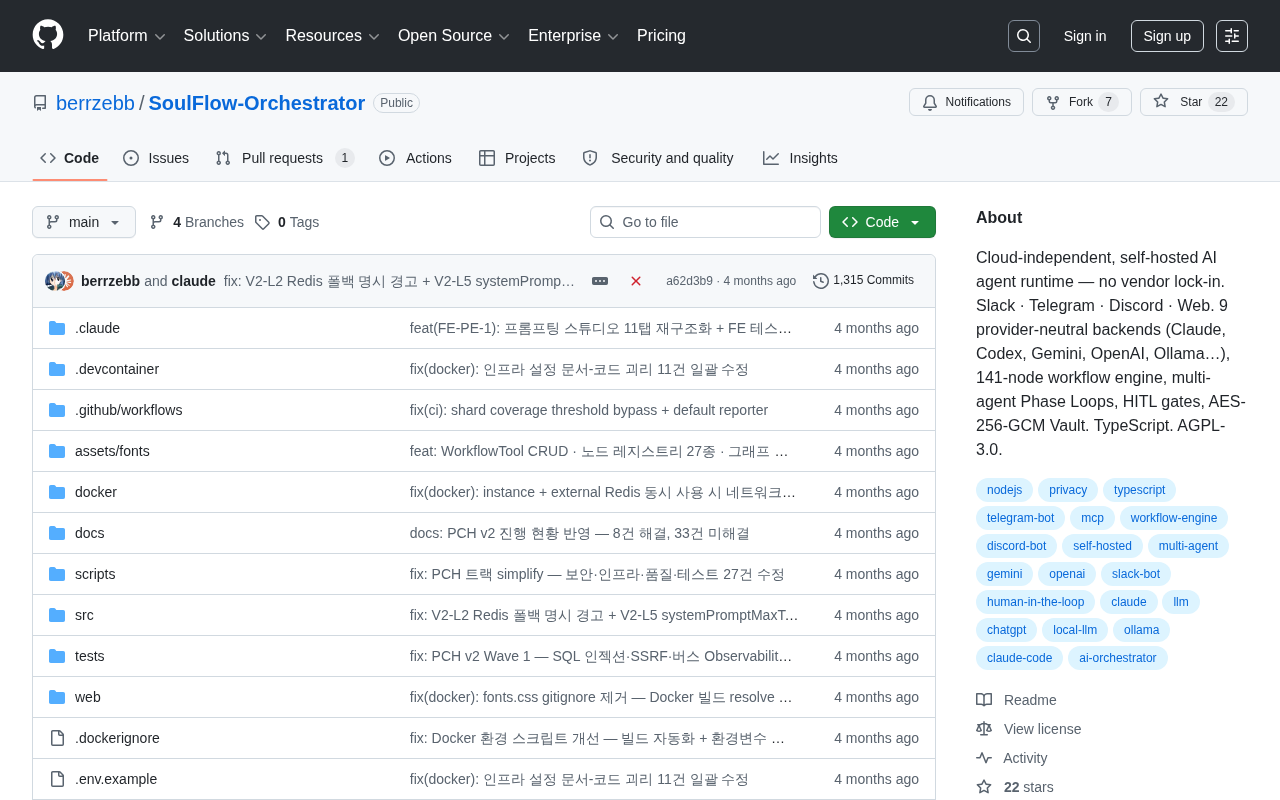
SoulFlow-Orchestrator: A Self-Hosted, Vendor-Lock-In-Free AI Agent Runtime
SoulFlow-Orchestrator is an open-source, self-hosted AI agent runtime with no vendor lock-in. Supports 9 neutral backends (Claude, OpenAI, Ollama), 141-node workflow engine, multi-agent loops, and HITL gates.
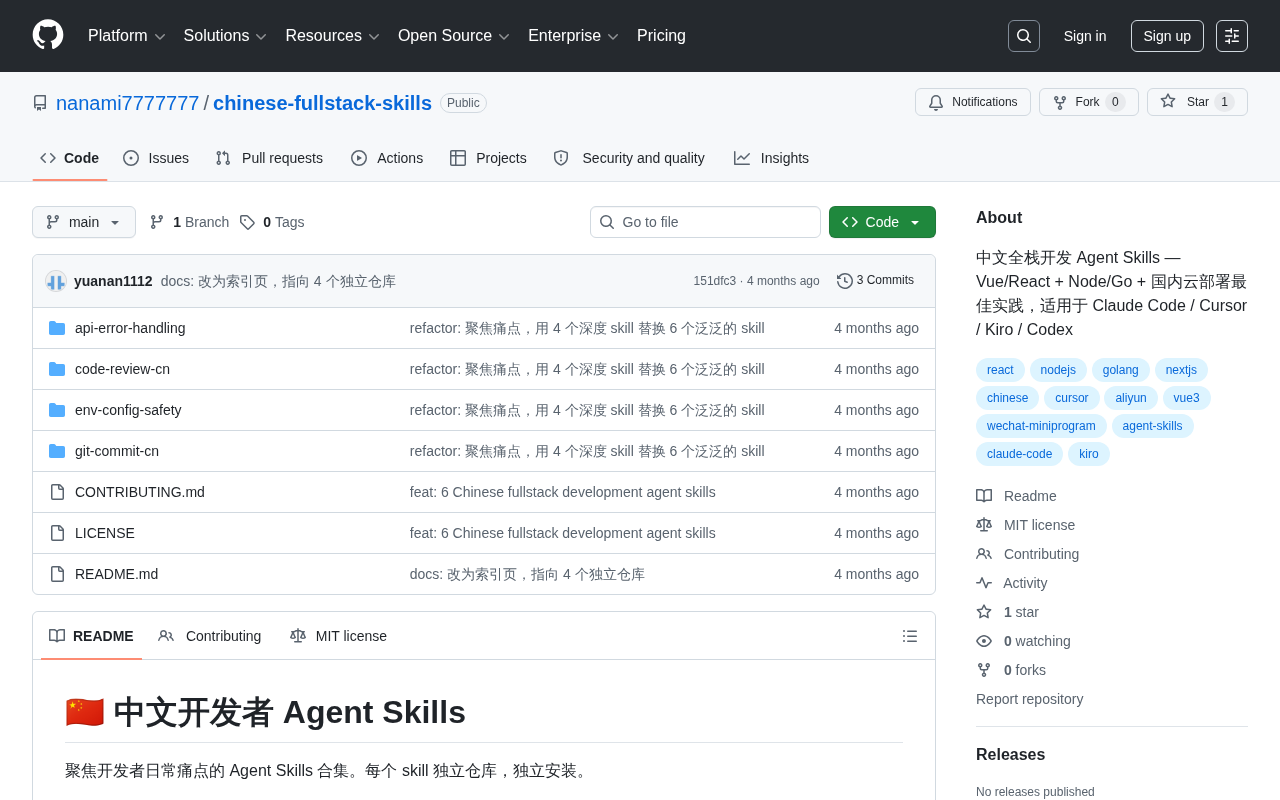
Chinese Full-Stack Agent Skills: A Skill Library Tailored for Domestic AI-Assisted Development
chinese-fullstack-skills is an Agent Skills library for Chinese full-stack development, covering Vue/React, Node/Go, and domestic cloud deployment best practices. Compatible with Claude Code, Cursor, Kiro, and Codex.

Paradigm Memory: A Local-First Memory System for AI Coding Assistants
paradigm-memory is a local MCP memory tool for Claude Code, Cursor, and Cline. It uses SQLite local storage, zero cloud, full audit trails, and a navigable cognitive map instead of bloated context files.