Why Does the Plague Return in Cycles? A Millennia-Old Mystery Science Still Can't Solve

The plague is an animal disease with humans as collateral damage, and the driver of its millennial cycles of return remains unknown.
The article reexamines the plague from a disease ecology perspective, noting it is fundamentally a rodent and flea disease with humans only occasionally drawn in. *Yersinia pestis* forms biofilms in flea guts, driving frantic feeding and bacterial regurgitation—a flea-lethal but human-efficient strategy that prevents self-sustaining spread in humans. What truly puzzles scientists is its millennial outbreak cycle: what causes dormancy and re-emergence remains unanswered. The article warns that human activity is altering spillover conditions, and that the real threat lies in ecologically extreme "outlier" pathogens for which current surveillance is inadequately prepared.
The plague is an extraordinarily strange disease. It never establishes itself permanently in human populations—each outbreak eventually fades, and the lineage responsible goes extinct. Yet centuries later, it comes surging back from some unknown corner. The mechanism behind this remains unsatisfactorily explained to this day.
It's Not Really a "Human Disease"
The first step to understanding the plague is recognizing one fact: this is an animal disease, and humans are merely collateral damage.
The plague is a classic vector-borne disease, having evolved an extremely efficient transmission strategy within fleas. An analysis cited by a YouTube science channel describes a chilling process: Yersinia pestis forms a biofilm in the flea's gut, blocking its digestive tract and inducing intense hunger. The flea then feeds frantically, simultaneously regurgitating bacteria back into the host's bloodstream.
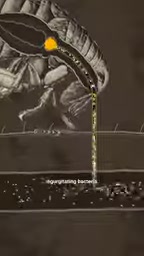
The reason this mechanism works is precisely because it's lethal to the flea itself—a blocked flea won't survive long, but before it dies, it has already injected bacteria into multiple hosts. The pathogen spreads through flea populations, and humans are only drawn in under specific conditions.
Because the plague's "true hosts" are rodents and their parasites, human populations are not a necessary transmission link for Yersinia pestis. After it causes mass casualties among humans, the chain breaks as the infected dwindle or containment measures take effect. It's not that humans defeated it—it simply "moved on" on its own.
Vector-borne disease refers to diseases where pathogens are transmitted between hosts by blood-feeding arthropods—such as fleas, mosquitoes, and ticks. The key to understanding this concept is that the pathogen's transmission chain typically does not depend on humans; humans are often inadvertently drawn in as "dead-end hosts." Plague, Lyme disease, dengue fever, and Zika all fall into this category. The transmission efficiency of vector-borne diseases depends on the ecological habits of the vector organism, not on population immunity—which is why these diseases are difficult to eradicate through vaccines or herd immunity the way measles or smallpox were.
Biofilm is a structured community of bacteria that forms when they attach to a surface and secrete an extracellular polysaccharide matrix. Biofilms dramatically increase bacterial resistance to disinfectants, antibiotics, and host immunity. In the case of Yersinia pestis, the biofilm blocks the flea's proventriculus, preventing normal feeding and instead driving repeated biting and regurgitation of bacteria—creating an extremely efficient inoculation mechanism. Biofilms also appear in dental cavities and infections on implanted medical devices, making them a core concept in microbiology spanning both medicine and ecology.
The Unknown Driver Behind the Millennial Cycle
What truly puzzles epidemiologists is the timescale.
Plague outbreaks follow a kind of ultra-long cycle—not once a decade, not once every five hundred years, but recurring on the order of millennia. The original discussion raises a pointed question: What causes it to go dormant? And what causes it to re-emerge?

Currently, science has no good answer. What is known is that Yersinia pestis exists in rodent populations in Central Asia and may spread outward under specific ecological conditions. But the causal chain from "endemic presence in some rodent population in Central Asia" to "a pandemic sweeping half a continent" is far from being fully understood.
The core argument here is: if you truly understand the basic principles of disease ecology and evolution, you'll realize that the current situation is itself profoundly abnormal. A rodent disease from Central Asia should not have the capacity to periodically wipe out half a continent's population. It shouldn't recur, and yet we know almost nothing about its periodicity.
Endemic and epidemic are two fundamental scales in epidemiology. Endemic refers to a disease persisting at a stable, predictable level within a specific geographic area—for example, Yersinia pestis in certain rodent populations in Central Asia. Epidemic refers to disease incidence significantly exceeding the expected baseline within a short period. The jump from a stable animal endemic reservoir to a cross-continental human pandemic requires a spillover event—where the pathogen first breaches the species barrier to infect humans—followed by subsequent human-to-human or vector transmission chains. This transition involves multiple variables including host density, vector abundance, climate, and human behavior, and no universal model currently exists to predict it.
The evolutionary history of Yersinia pestis itself is also noteworthy. Genomic research shows that the three historical plague pandemics—the Justinian Plague, the Black Death, and the third pandemic of the late 19th century—were not descendants of the same strain, but rather different lineages that independently evolved from the same ancestral pool at different times. This means that after each pandemic ended, the relevant lineage did indeed go extinct, but the ancestral pool remained in rodent communities in Central Asia and elsewhere, waiting for the next spillover conditions to mature. This pattern of "lineage extinction but population persistence" is the key ecological foundation for the plague's millennial periodicity.
Human Activity Is Creating New Risks
There is an easily overlooked but critically important judgment in the original discussion: certain things humans are doing in the environment are creating conditions for pathogens to evolve and exploit.

This means the plague's periodic outbreaks may not be a purely natural phenomenon. Land-use changes, urban expansion, and the broadening interface between humans and wildlife may all be altering the probability of pathogen spillover and transmission. As humans continue encroaching into once-remote ecological niches, pathogens previously "locked" within animal populations gain more opportunities to contact humans.
This also explains why the plague's recurrence should not be simply attributed to "bad luck." Disturbances to ecosystems may be systematically increasing the frequency of such events.
Spillover refers to the process by which a pathogen crosses the species barrier from an animal host population to infect humans. The probability of spillover depends on the product of three variables: the prevalence of the pathogen in the animal host, the frequency of human-host contact, and the transmission probability per contact. Land-use change, deforestation, agricultural expansion, and urbanization can alter all three simultaneously—for example, pushing human settlements to the edges of former host habitats and increasing contact frequency; or affecting rodent and flea population densities by changing vegetation structure.
The host-vector-pathogen triad is the core focus of disease ecology research. A pathogen's transmission efficiency is not determined solely by the pathogen itself, but by the coupling of all three under specific environmental conditions. Environmental changes can alter vector lifespan, biting behavior, or host immune status—thereby changing disease dynamics without any change in the pathogen's genome. This means that monitoring pathogen sequence changes alone is insufficient to predict outbreaks; simultaneous monitoring of host and vector ecological states is also required.
The Real Threat Often Comes from "Outliers"
There is a warning in the original discussion worth taking seriously: the next pandemic could come from avian flu, or from other known candidate pathogens. But what should truly worry us are the extremely anomalous, bizarre pathogens—the ones we haven't even placed on our surveillance lists.
The plague is a prime example of such an "outlier." It is not the kind of pathogen that circulates stably in human populations and gradually attenuates in virulence. Its transmission mechanism within fleas is so extreme that it faces no evolutionary pressure to "mild itself"—whether humans live or die has little bearing on its ability to complete its transmission cycle.

This means that for such pathogens, we cannot use conventional epidemiological models to predict their trajectory. It doesn't follow the textbook rule that "virulence necessarily declines with transmission time," nor does it have a trackable mutation rhythm like influenza. All we can seemingly do is wait and observe.
The original discussion ends with the repeated refrain "We're going to have to wait and see"—the almost anxious repetition itself conveys a message: in the face of the plague's periodic return, humanity currently has no initiative.
Virulence evolution theory classically holds that pathogens typically evolve toward lower virulence during transmission—because killing the host too quickly shortens the transmission window. But there are important exceptions to this rule: when a pathogen's transmission does not depend on the host's mobility, high virulence may actually be the optimal strategy. Yersinia pestis is transmitted by fleas; host death does not interrupt the transmission chain and may even accelerate fleas' search for new hosts, so there is no selective pressure forcing it to reduce virulence. Similar logic applies to mosquito-borne diseases and certain environmentally transmitted pathogens.
Outlier pathogen is not a formal term, but it points to a real methodological problem: pandemic preparedness systems are typically based on lists of known high-risk pathogens, and those lists themselves derive from historical experience. When a pathogen is ecologically extreme, has transmission mechanisms beyond conventional models, and lacks a trackable mutation rhythm, it is neither on the list nor easily captured by routine surveillance. The history of the plague demonstrates that the impact of such pathogens may far exceed the risk level implied by their surveillance priority.
Implications for Disease Surveillance
While this analysis comes from a science communication dialogue, it points to a serious policy question: is the current disease surveillance system paying sufficient attention to "anomalous" pathogens?
Mainstream pandemic preparedness resources are concentrated on known high-risk pathogens—influenza, coronaviruses, Ebola, and others. But the history of the plague shows that what can cause civilization-level impact may be pathogens that are ecologically extraordinary and whose transmission mechanisms are difficult to predict. They may lie dormant for centuries, then reappear at a moment no one anticipates—and we know nothing about the trigger conditions.
This is not a problem that can be solved by simply adding more surveillance stations. It requires deeper basic research into pathogen ecology and the host-vector-pathogen triad, especially in regions where human activity is rapidly reshaping ecological landscapes.
At least for now, the honest answer science gives regarding why the plague returns periodically remains: we don't know.
One-line Summary
The plague is an animal disease with humans as collateral damage, and the driver of its millennial cycles of return remains unknown.
Paragraph Summary
The article reexamines the plague through the lens of disease ecology, pointing out that it is fundamentally a disease of rodents and fleas, with humans only occasionally drawn in as collateral damage. Yersinia pestis forms a biofilm in the flea gut, driving fleas to feed frantically and regurgitate bacteria—a strategy lethal to fleas but highly efficient for humans—which prevents the plague from sustaining itself in human populations. What is truly puzzling is its outbreak cycle on the order of millennia—what causes it to go dormant and what triggers its re-emergence, science still has no answer. The article further warns that human activity is altering spillover conditions, and that the real concern should be "outlier" pathogens that are ecologically extraordinary and do not follow conventional virulence evolution rules—pathogens for which current surveillance systems may be inadequately prepared.
Related articles

Amphibious Transforming Drone: Beyond 100x Power Savings, What Are the Real Needs?
Is the amphibious transforming drone just a gimmick? Starting from the 100x power difference of the M4 Morphobot, explore real application scenarios and thesis topic ideas, analyzing boundary conditions where pure drones and pure ground robots both fail.

Warhound Raises $200 Million: Genetically Engineered "War Dogs" Paired with Anduril Gear
Warhound raises $200M, backed by Ben Lamm and Palmer Luckey, to genetically engineer dogs for military and law enforcement use and equip them with Anduril gear. This article analyzes its technology direction, funding logic, and ethical controversy.

Claude API Comes to Google Cloud: IAM Integration and SDK Access Guide
Anthropic hosts the full Claude API on Google Cloud with IAM-controlled permissions and unified billing. This guide covers the Vertex AI and Anthropic-hosted entry points, IAM role configuration, and SDK access.