Why Is AI Agent Development So Fragmented? The Real Causes and How to Work Around Them
AI Agent development is fragmented due to scattered logic, framework coupling, and non-portable prompts.
A Reddit developer's question resonated widely: why does AI Agent development feel so fragmented? The core issue is that an Agent's logic is spread across prompts, config files, framework abstractions, tool wiring, and memory modules — eliminating the single source of truth that a traditional repo provides. Prompt engineering is model-specific, frameworks lack interoperability standards, and the toolchain is still extremely immature. Practical coping strategies include versioning prompts, reducing framework lock-in, and building evaluation pipelines for model migrations. The industry is exploring open tool-calling protocols and memory management standards to drive convergence.
The Starting Point: The Repo Is No Longer the Single Source of Truth
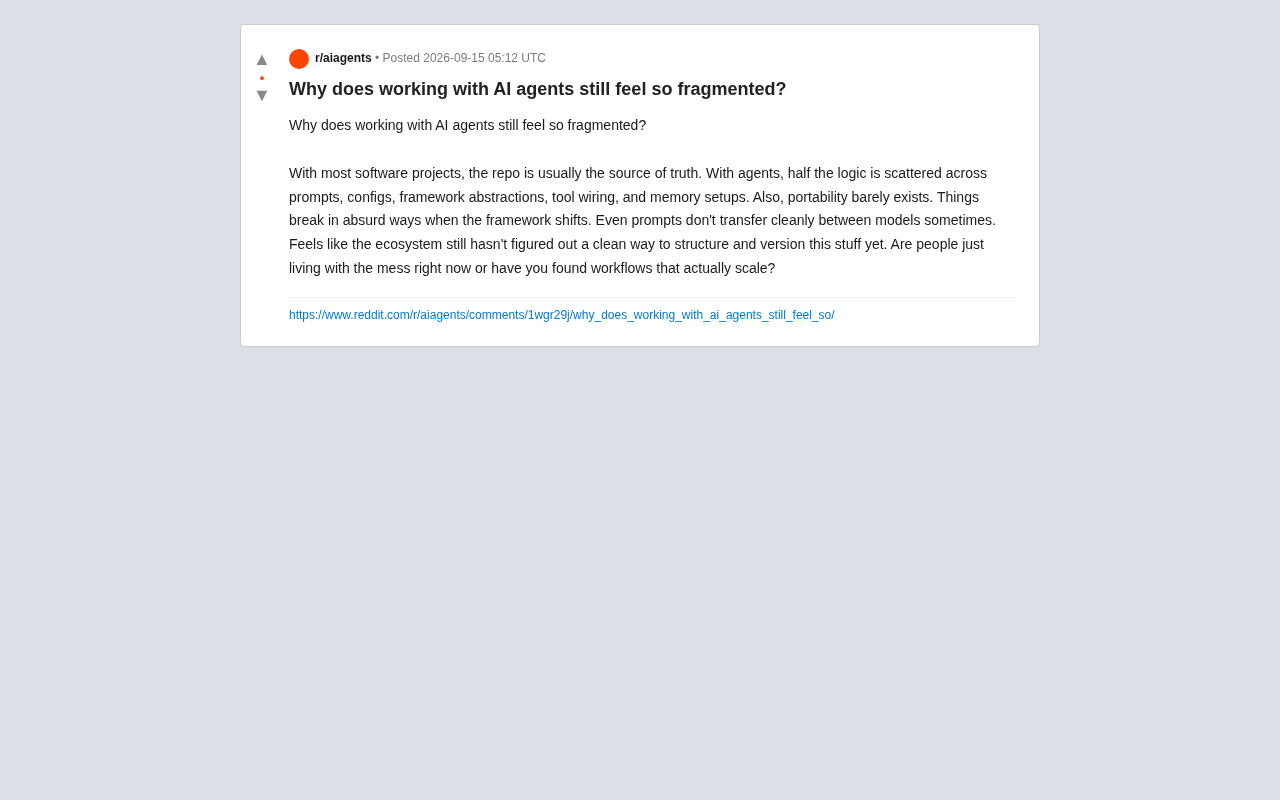
In traditional software engineering, the code repository (repo) is essentially the single source of truth for a project. If you want to understand how a system works, you look at the code, the commit history, and the branches — that's enough. But a developer on Reddit recently raised a question that struck a chord with many: why does working with AI agents still feel so fragmented?
Their observation was blunt — in Agent development, half the logic is scattered everywhere: prompts, config files, framework abstraction layers, tool wiring, and memory settings. There's no single place where you can look and immediately understand what the whole system is doing. This "scattered logic" is the first wall many teams hit when trying to ship Agent applications in production.
Where Exactly Does the Fragmentation Show Up
Based on the original post, Agent development fragmentation manifests on at least three levels.
Logic is scattered — there's no single source of truth. An Agent's "behavior" is determined by multiple components working together: the system prompt defines its role and boundaries, config files control parameters, the framework abstraction layer encapsulates scheduling logic, tool wiring determines what it can call, and the memory module affects what it retains. These pieces are often spread across different files, different systems, and even different services. Changing one part can ripple through the whole system, but there's no single place where you can review the full picture.
Portability is nearly nonexistent. The original poster noted that when frameworks change, things break in "absurd ways." This is a genuine pain point — much of the logic isn't written in your own code but is tightly coupled to the abstractions of a specific framework. The moment you want to switch frameworks, or the framework itself upgrades, things that used to work can fall apart entirely.
Prompts don't migrate cleanly across models. This one stings the most. The same prompt that works well with Model A might fail completely with Model B. Prompt engineering is fundamentally about "tuning" for a specific model's behavior. Without standardization, meaningful reusability is out of the question.
Why This Happens: The Fundamental Difference Between Agents and Traditional Software
This fragmentation isn't the result of developers cutting corners — it has structural causes.
Traditional software behavior is deterministic: given a fixed input, the code path is fixed and the output is predictable. But the core of an Agent is a large language model, and its behavior is probabilistic and model-dependent. This means "logic" is no longer entirely carried by the code you write. A significant portion is offloaded to the model itself and to the natural language instructions you use to guide it.
What makes it worse is that the toolchain around Agents is still in its very early stages. Frameworks are proliferating, abstractions vary wildly, and there are no widely accepted standards. The things you take for granted in traditional web development — version management, dependency locking, reproducible builds — don't yet have mature equivalents in the Agent world. The original post's line about the ecosystem not having figured out "how to cleanly organize and version this stuff" hits the nail on the head.
How People Are Coping Right Now
The original post was essentially an open question: are people just "tolerating the chaos," or have they found workflows that actually scale? Based on common community practices, a few coping strategies are emerging.
Putting prompts and configs under version control. Rather than letting prompts scatter across various parts of your codebase or live inside a notebook, treat them as standalone assets to be managed independently — check them into the repo and track their history. This at least partially restores the "single source of truth" quality, and makes A/B testing and rollbacks feasible.
Reducing deep coupling to specific frameworks. The more you push core logic into a framework's proprietary abstractions, the higher the cost of migrating away. Some teams opt for lighter wrappers that decompose model calls, tool calls, and memory management into relatively independent, swappable modules — reducing the risk of cascading failures when switching frameworks.
Accepting model-specificity as a reality. The fact that prompts don't port cleanly across models isn't going to be solved quickly. The pragmatic approach is to maintain model-specific variants of critical prompts and build evaluation workflows so you can quickly verify behavior when switching models — rather than assuming seamless portability.
How Long Will This Fragmentation Last
It's worth asking: is this chaos a normal "growing pain" of an early-stage Agent ecosystem? Looking back at the evolution of any new technology stack — from web frameworks to container orchestration — they all went through a phase of "many competing approaches with no interoperability" before gradually converging on standards and best practices.
Agent development is currently sitting in that pre-convergence window. The directions the industry is exploring — such as open protocols around tool calling and more standardized specifications for memory and context management — are all attempting to re-aggregate the scattered logic into units that are manageable, versionable, and portable.
For developers working in this space today, rather than waiting for a perfect standard to emerge, it's better to proactively establish your own discipline: treat prompts like code, treat framework dependencies like risks to be managed, and treat model migrations like changes that require testing. The chaos won't disappear anytime soon, but deliberate engineering practices can help you avoid a lot of "absurd breakage" along the way.
Related articles
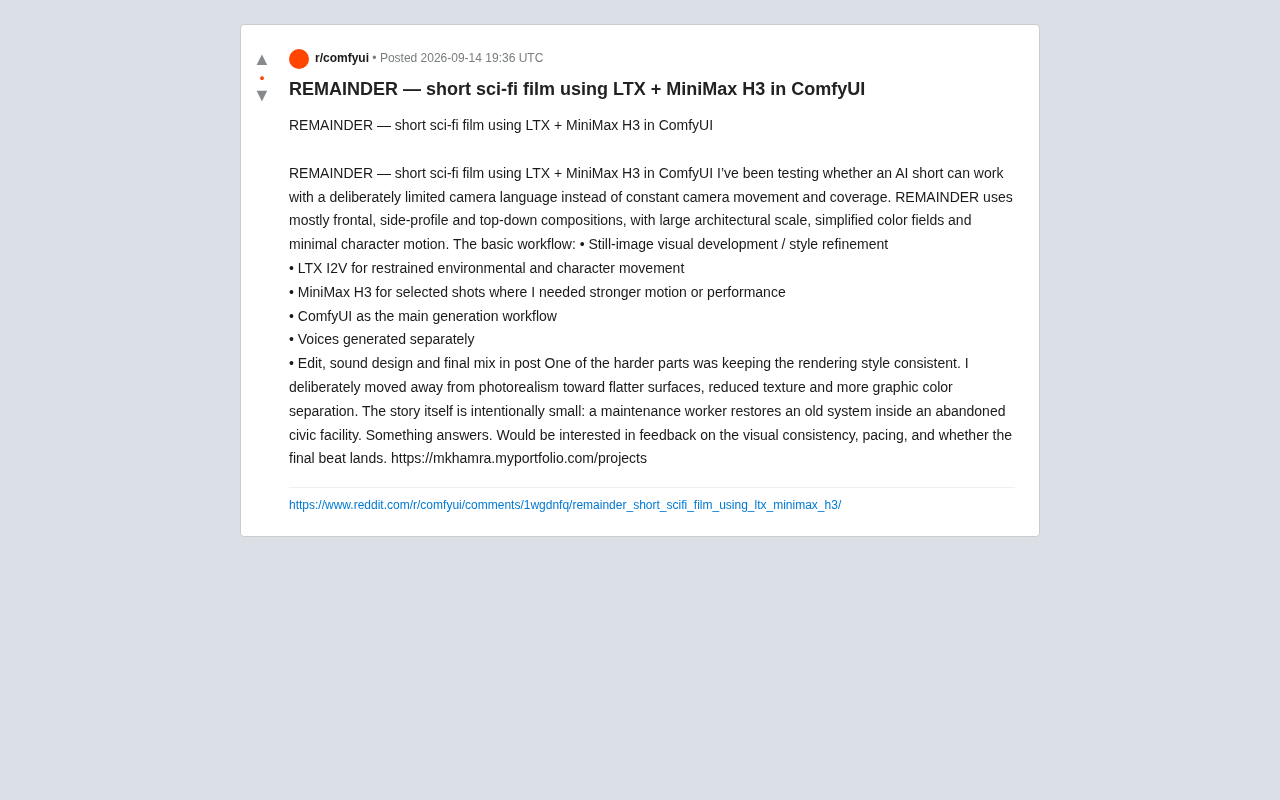
Building an AI Sci-Fi Short with LTX + MiniMax H3: Restrained Cinematography in ComfyUI
Sci-fi short REMAINDER uses LTX, MiniMax H3, and ComfyUI with restrained cinematography and flat aesthetics to solve visual consistency in AI filmmaking.
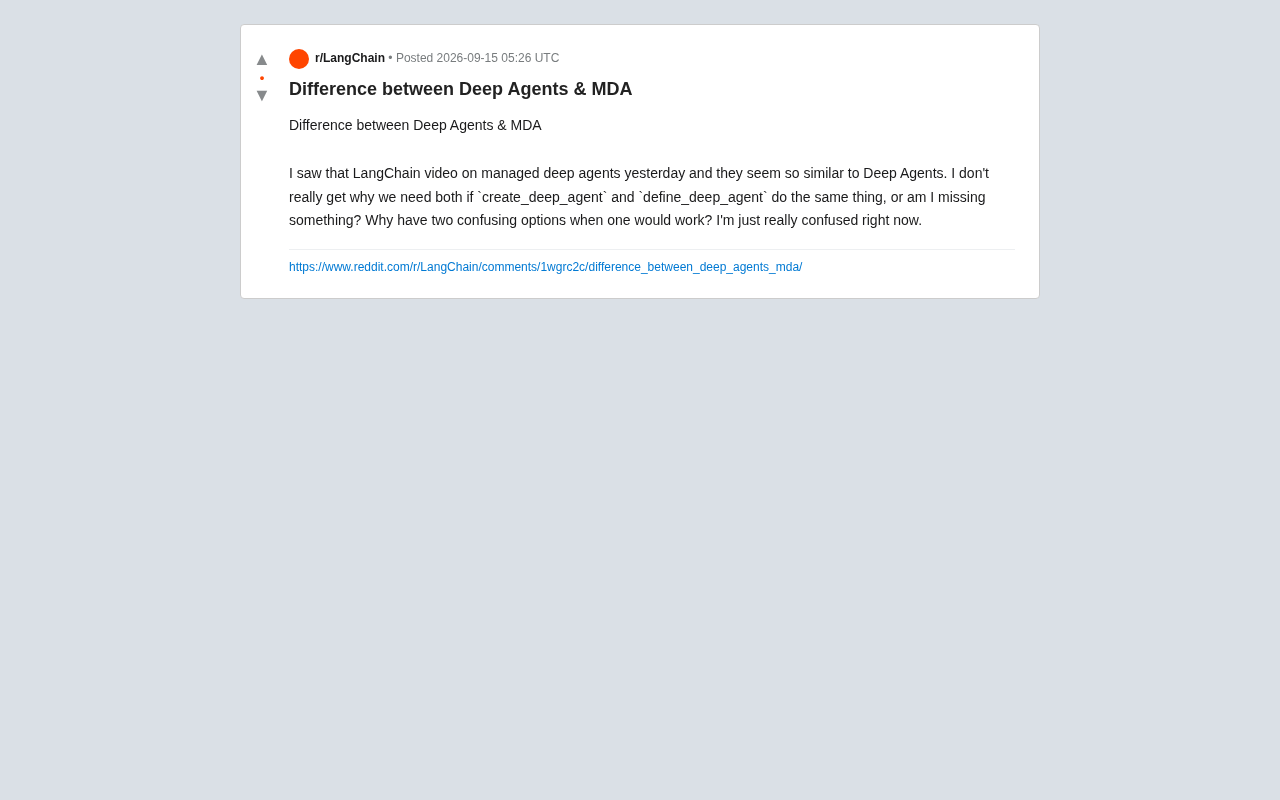
LangChain Deep Agents vs. MDA: Clearing Up the Confusion for Developers
What's the difference between LangChain's Deep Agents and MDA (Managed Deep Agents)? We break down create_deep_agent vs. define_deep_agent and help developers choose.
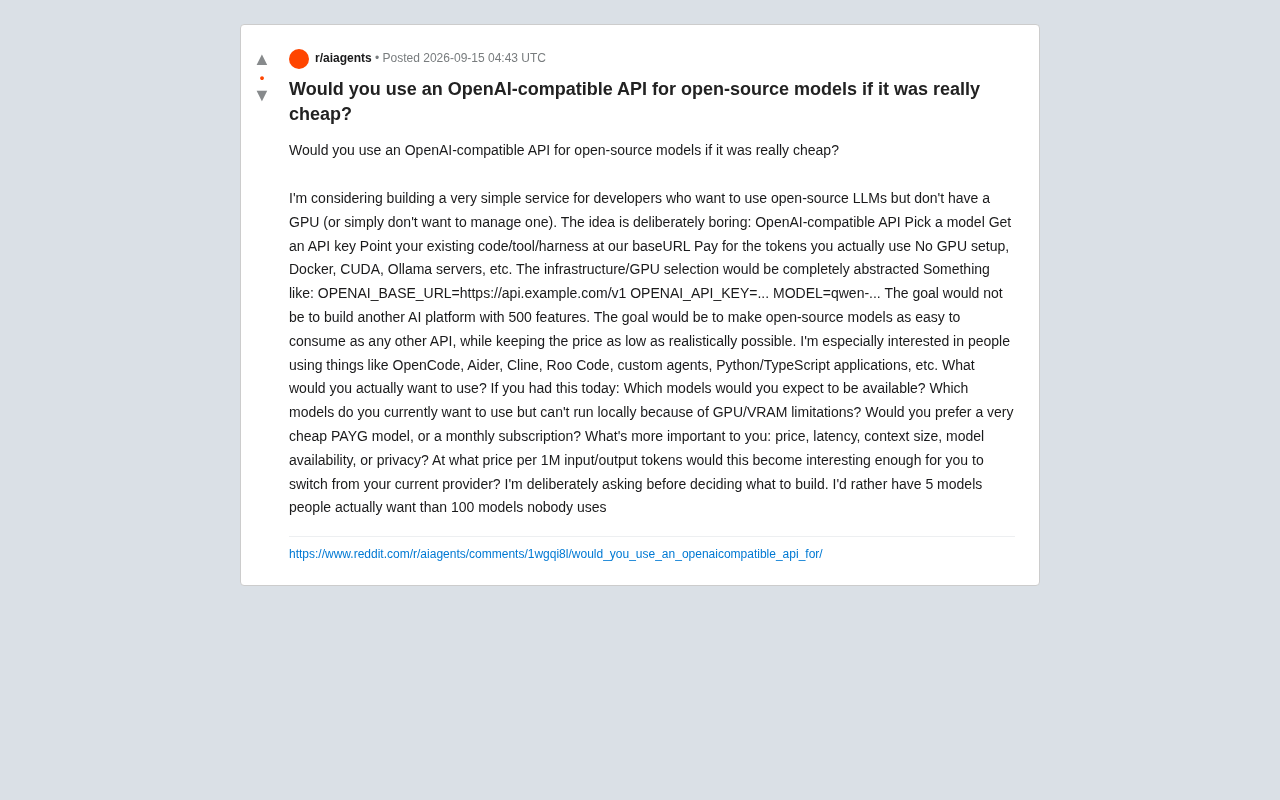
Cheap OpenAI-Compatible APIs: The Opportunity and Pain Points of Cloud-Hosted Open-Source LLMs
A developer explores building a cheap, OpenAI-compatible API for open-source LLMs like Qwen and Llama — no GPU required. Analysis of pain points, pricing models, and market challenges.