Why Is the NFL Betting Big on Flag Football? A Dual Play on Safety and Business

The NFL is investing in flag football to hedge against CTE backlash while tapping into women's sports and Olympic growth.
The NFL, America's dominant professional sports league, is grappling with the shadow of CTE — studies show at least one in four former players who died between 2016 and 2021 had the disease. In response, the league is investing heavily in flag football, a no-tackle alternative. But safety is only part of the story: flag football is headed to the Olympics, women's sports have become a multi-billion-dollar industry, and the NFL — backed by a Tom Brady-supported professional league — is positioning itself to own football's future in any form it takes.
The NFL's Hidden Anxiety and a New Playing Field
American football is the undisputed number-one sport in the United States, and the NFL (National Football League) reigns supreme among all professional sports leagues. NFL games have long dominated television ratings by a margin that few can challenge. But beneath this flourishing surface, the league faces a shadow it can no longer ignore.
A study found that at least one in four former NFL players who died between 2016 and 2021 tested positive for chronic traumatic encephalopathy (CTE). This statistic points directly to the long-term health toll that professional football takes on its players — and has become a key factor forcing the league to reckon with its future direction.
Perhaps that's why the NFL has recently begun investing in a version of football without tackling: flag football. In this format, defenders pull a flag from a ball carrier's waist instead of bringing them to the ground, fundamentally reducing the risk of concussions and collision injuries.

Chronic Traumatic Encephalopathy (CTE) is a neurodegenerative disease triggered by repeated head impacts, characterized by the abnormal accumulation of tau protein in the brain. CTE can only be diagnosed posthumously through autopsy, and its symptoms include memory loss, emotional instability, depression, and dementia. Long-term research from Boston University has shown that CTE diagnosis rates among former NFL players far exceed those of the general population. The tragic fates of several high-profile players — including suicides and violent incidents — sparked widespread public concern in the United States about football's safety. The NFL long denied or downplayed this connection, and in 2015 reached a class-action settlement with former players' families for nearly $1 billion, though the settlement did not constitute an admission of legal liability. The CTE controversy has already had a measurable impact on youth football enrollment, with some parents refusing to let their children play — a trend seen as a potential long-term threat to the NFL's fan base and player pipeline.
Safety Is Only Half the Story
The NFL has never publicly stated that its investment in flag football is a direct response to the CTE issue, but that context is impossible to ignore. Analysts note, however, that the league's motivations extend well beyond safety concerns.
Flag football is making its official Olympic debut, with both men's and women's events scheduled, opening the sport to a global stage. And an even more significant variable is at play: women's sports have grown into a multi-billion-dollar business. The NFL clearly hopes to leverage the rise of women's flag football to attract broader audiences to its core product.

In other words, flag football is both a lower-risk alternative format and a brand-new commercial growth engine. For the NFL, this is a dual-purpose move that simultaneously hedges against risk and opens new markets.
Flag football follows rules largely consistent with American football, with one core difference: instead of tackling the ball carrier to the ground, defenders must pull a colored flag from the carrier's waist to end the play. This rule change eliminates the most physically destructive collisions in the game, dramatically reducing the likelihood of concussions and skeletal injuries — which is why it has long been promoted as the format of choice for youth and recreational football. The International Federation of American Football (IFAF) has championed flag football as its preferred format for global expansion precisely because it demands far less from players in terms of size and physicality, making it far easier to grow in countries without an established football tradition. The 2028 Los Angeles Olympics will mark flag football's first-ever appearance at the Games — a historic milestone and a key reason why the NFL has become so deeply involved.
An Insurance Policy for the Future of Tackle Football
Beyond the Olympics, the NFL is building a professional flag football league for both men and women, backed by Tom Brady. This move signals a deeper layer of strategic intent.
Some analysts argue that if public enthusiasm for the high-contact, tackle-based game ever wanes — as some forecasts fear — flag football could serve as the NFL's "second safety net." It would allow the league to maintain ownership over "football" as a sport even if traditional football loses its cultural dominance.

What the NFL wants is ownership over the future of football itself — whatever form that future takes. Flag football may never replace tackle football, but it gives the league a flexible fallback and an expansion pathway.
The Pioneers Finally Getting Their Due
Behind this new wave of commercial opportunity stand athletes like Vanita Crouch — women who spent decades playing this sport and building it up, long before the world decided it was worth money.
"I've seen people get nervous about saying they play flag football, because people used to laugh at it and not take it seriously," Crouch recalled. "But now, athletes say it standing tall, making sure the people in the back can hear — yes, I play flag football — and with that 'come get some' energy."
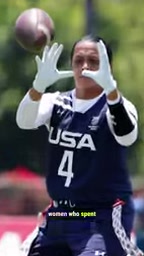
This reflects a genuine shift in flag football's status: from a marginalized pastime that was once dismissed, to a high-potential arena now embraced by capital and the Olympic movement. The women athletes who stayed the course through those lean years are perhaps the most symbolically powerful beneficiaries and witnesses of this transformation.
Conclusion: The NFL's Two-Sided Bet
The NFL's investment in flag football is, at its core, a carefully calculated hedge on two fronts: managing the health controversy and potential public backlash surrounding CTE on one side, while capitalizing on the rise of women's sports and the commercial windfall of Olympic exposure on the other.
Flag football may never replace tackle football's dominant position, but the NFL's goal was never to choose one over the other — it's to ensure the league can shape football's future in any form it takes. For a league already sitting atop the pyramid, this is a quintessential winner's mindset: getting ahead of every possible scenario before it plays out.
Related articles

Claude Pro Doesn't Include API Access? Max and Team Plans Now Add API Credits Explained
Claude Pro has no API access; API is billed separately. But Max and Team plans now include monthly API credits: Max 5x $100, Max 20x $200, Team up to $500 per seat. This article details each tier's credits, how to claim them, and the impact on developers.

Testing the 350K-Star REA in an Isolated Environment: 4-Second Install, but Watch Out for Two Pitfalls
Isolated lab test of the 350K-star open-source reverse-engineering tool REA: 4-second install, 15 seconds to list a screenshot tool's outbound addresses, 565 communication channels mapped, while exposing two pitfalls—user-level settings writes and 31 high-risk tool permissions—plus three safety rules.
Reverse Engineering + AI Agents: The T…
Reverse Engineering + AI Agents: The Technical Truth Behind Cloning Adobe Apps in Weeks
A developer used AI Coding Agents for reverse engineering to build 7 open-source Adobe alternatives in weeks. We explore how it works, the MCP Server that hit 100K stars in 6 days, and the real technical and legal limits.