Why Nintendo Isn't Afraid of GTA VI: The Confidence Behind Differentiation and Its Industry Lessons
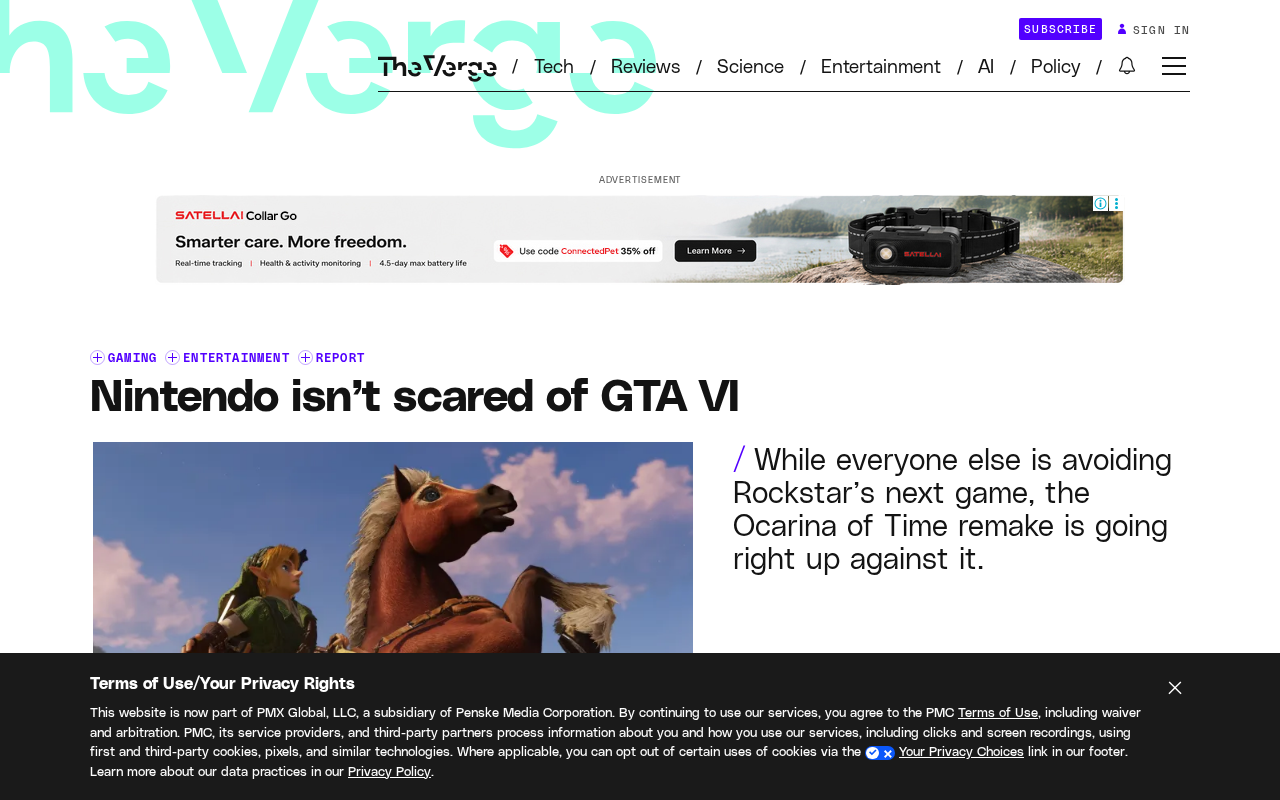
Nintendo's differentiation strategy makes it immune to GTA VI's industry-shaking gravitational pull.
As GTA VI reshapes the gaming industry's release calendar, Nintendo remains unfazed — holding a Zelda-focused showcase without adjusting for the blockbuster's shadow. This article explores how Nintendo's exclusive IP moat, independent Switch hardware ecosystem, and long-standing differentiation strategy insulate it from cross-platform competition, offering lessons for the broader industry on why content uniqueness beats scale.
A Fearless Showcase
Grand Theft Auto VI (GTA VI) hasn't even officially launched yet, and it has already reshaped the release calendar of the entire gaming industry. This highly anticipated title's mere existence has been enough to force numerous publishers to reconsider their launch timelines. Almost everyone in the industry is trying to avoid a head-on collision with GTA VI, fearing their own releases will be devoured by this behemoth.
The Industry Standing of the GTA Series and Rockstar Games
Rockstar Games, founded in 1998, is the flagship studio under Take-Two Interactive. Its Grand Theft Auto series has been one of the most influential gaming IPs in the world since GTA III pioneered the 3D open world in 2001. After GTA V launched in 2013, it had sold over 200 million copies worldwide by 2024, setting revenue records in entertainment product history. The series is renowned for its massive open worlds, highly freeform gameplay, satirical social narratives, and continuously updated online modes. Rockstar Games is known for its perfectionism, with an average development cycle of 5–8 years per title, making every new release an industry-defining event. As the first mainline sequel in over a decade, GTA VI's market expectations and industry influence have transcended the scope of a mere game product.
Nintendo, however, is the exception. Just this morning, Nintendo held a 30-minute showcase entirely focused on The Legend of Zelda franchise, without the slightest adjustment to its strategy in response to GTA VI's shadow.
How Powerful Is GTA VI's "Gravitational Pull"?
To understand Nintendo's composure, you first need to grasp the "gravitational pull" GTA VI has created across the industry. When a game is widely expected to break sales records and dominate headlines for months, other publishers typically choose to steer clear of its launch window to avoid being outgunned in the battle for marketing mindshare and consumer wallets.
Release Window Strategy in the Gaming Industry
The release window is a strategic decision in the gaming industry that directly impacts market performance. The widely recognized "golden windows" include: the holiday season before Thanksgiving in November, the fiscal year-end in March–April, and the back-to-school season in September–October. However, when multiple blockbusters crowd into the same window, it leads to market saturation, fragmented media coverage, and competition for player budgets. There have been multiple historical cases of "blockbuster collisions" — for instance, the concentrated November 2011 releases of Call of Duty: Modern Warfare 3, The Elder Scrolls V: Skyrim, and Uncharted 3 caused some titles to underperform sales expectations. As a result, major publishers engage in intelligence sharing and release date adjustments to avoid direct conflicts. Since the news broke that GTA VI is expected to launch in 2025, multiple publishers have announced schedule changes — this "gravitational pull" reflects the industry's reverence for the market dominance of a super IP.
This phenomenon is rare in gaming history. There have been heavyweight releases before, but few have ever put the entire industry into a state of "strategic avoidance" based on a single trailer alone. This reflects both the powerful brand appeal of Rockstar Games and the highly concentrated competitive landscape of the modern AAA game market.
The Definition and Market Landscape of AAA Games
AAA Game is an industry term for high-budget, high-development-cost, high-marketing-investment blockbusters, analogous to Hollywood blockbuster films. A typical AAA game has a development budget ranging from $50 million to $300 million, a development cycle of 3–7 years, and a team of hundreds to thousands. These games pursue cutting-edge technology (next-gen visuals, physics engines), massive content scale (50+ hours of gameplay), and commercial returns (million-unit first-week sales). The current AAA market is highly concentrated among a few major publishers: Sony Interactive Entertainment (PlayStation Studios), Xbox Game Studios, Activision Blizzard, Ubisoft, EA, and others. As development costs skyrocket and market risks intensify, the number of AAA titles has decreased in recent years while the impact of individual titles has grown, creating a winner-take-all Matthew Effect dynamic.
Nintendo's Differentiation Strategy: Why It Can Ignore GTA VI
The reason Nintendo can afford to ignore the threat of GTA VI lies at the core of its long-standing "differentiation" strategy.
Differentiation Strategy Theory Applied to the Gaming Industry
Differentiation Strategy originates from Michael Porter's competitive strategy theory. Its core principle is to avoid direct price wars and homogeneous competition through product differentiation. In the gaming industry, differentiation manifests as: platform differences (console vs. handheld vs. mobile), genre differences (action vs. strategy vs. casual), audience differences (hardcore gamers vs. families vs. younger players), and aesthetic differences (photorealistic vs. cartoon art styles). Nintendo is the quintessential practitioner of this strategy: when Sony and Microsoft were engaged in a hardware performance arms race, Nintendo launched the Wii with its motion-control innovation; when open-world games pursued photorealistic graphics, Nintendo achieved success with The Legend of Zelda: Breath of the Wild through its artistic visual style and physics-engine gameplay innovation. This strategy has allowed Nintendo to avoid the hardware cost arms race, maintain higher profit margins, and cultivate an extremely loyal fan base. For small and mid-sized developers, deep specialization in niche categories (such as indie games, roguelikes, and narrative adventures) is equally an effective path for differentiation.
Nintendo has never tried to compete with Sony, Microsoft, or studios like Rockstar on hardware specs or photorealistic graphics. Instead, it carves out its own market space through unique first-party IPs and gameplay innovation.
The Moat Built by Exclusive IPs
The Legend of Zelda, Mario, Pokémon, Animal Crossing, and other franchises form Nintendo's virtually impregnable content moat. These IPs command exceptionally high user loyalty and cross-generational audience reach, and their player bases don't overlap significantly with titles like GTA VI, which skews toward mature, photorealistic open-world experiences.
In other words, a player eagerly awaiting a new Zelda title won't necessarily change their purchasing decision because of GTA VI's launch. The two serve different emotional needs and gameplay experiences. This natural market segmentation means Nintendo doesn't need to get involved in a head-to-head battle over release dates.
Hardware Ecosystem Independence
Another source of Nintendo's confidence is its independent hardware ecosystem. GTA VI primarily targets the PlayStation and Xbox platforms, while the Nintendo Switch family has its own closed yet massive user base.
Nintendo's Hardware Strategy and the Switch Ecosystem
Since launching the Famicom (NES) in 1983, Nintendo has consistently pursued an integrated hardware-software strategy, forming a stark contrast to the high-performance console approaches of Sony and Microsoft. The Switch, released in 2017, adopted a hybrid architecture — functioning as both a handheld and a home console — breaking through via innovative form factor rather than raw performance. As of 2024, the Switch has sold over 140 million units worldwide, making it one of the best-selling game consoles of all time. The core of the Switch ecosystem is Nintendo's closed first-party content library: exclusive blockbusters like The Legend of Zelda: Breath of the Wild, Animal Crossing: New Horizons, and Super Mario Odyssey form the platform's primary draw. Due to hardware performance limitations, the Switch cannot run most modern AAA multiplatform games, but its unique portability and Nintendo's IP portfolio attract a distinct user base, forming an ecological island that runs parallel to the PlayStation/Xbox/PC platforms.
Players buy Nintendo hardware fundamentally to experience Nintendo's exclusive content, which makes Nintendo largely immune to the impact of cross-platform blockbusters.
Industry Lessons: Differentiation Is the Path to Long-Term Success
Nintendo's stance offers a thought-provoking case study for the entire gaming industry. In a market where blockbusters pile up and release windows grow increasingly crowded, blindly pursuing a technology arms race or going head-to-head with giants is often a high-risk proposition.
Content Is King, Not Scale
Nintendo's success proves that a game's core competitive advantage ultimately comes down to the uniqueness and quality of its content. Rather than battling opponents with deeper pockets and more advanced technology on the same playing field, it's better to double down on your strengths and create experiences that no one else can replicate.
This strategy not only reduces competitive risk but has also allowed Nintendo to maintain robust profitability and brand premium throughout long industry cycles. While other publishers agonize over how to dodge GTA VI, Nintendo can roll out new titles at its own pace.
What Can Small and Mid-Sized Developers Learn?
For resource-constrained small and mid-sized developers, Nintendo's approach holds equally valuable lessons. Identifying a niche market, strengthening a differentiated positioning, and building a loyal core user base is far more realistic and sustainable than trying to slug it out in the shadow of blockbusters. GTA VI's "gravitational pull" is formidable, but it primarily affects products with vague positioning and a lack of uniqueness.
Conclusion
Nintendo's fearlessness in the face of GTA VI doesn't stem from arrogance — it's built on long-term strategic conviction and crystal-clear market positioning. While the entire industry racks its brains over how to coexist with a titan, Nintendo answered with a showcase dedicated entirely to its own IP: True competitiveness comes from being the best version of your unique self.
In today's increasingly fierce gaming industry, this philosophy of embracing differentiation and refusing to blindly follow trends may be more worthy of the industry's study than any single blockbuster hit.
Related articles
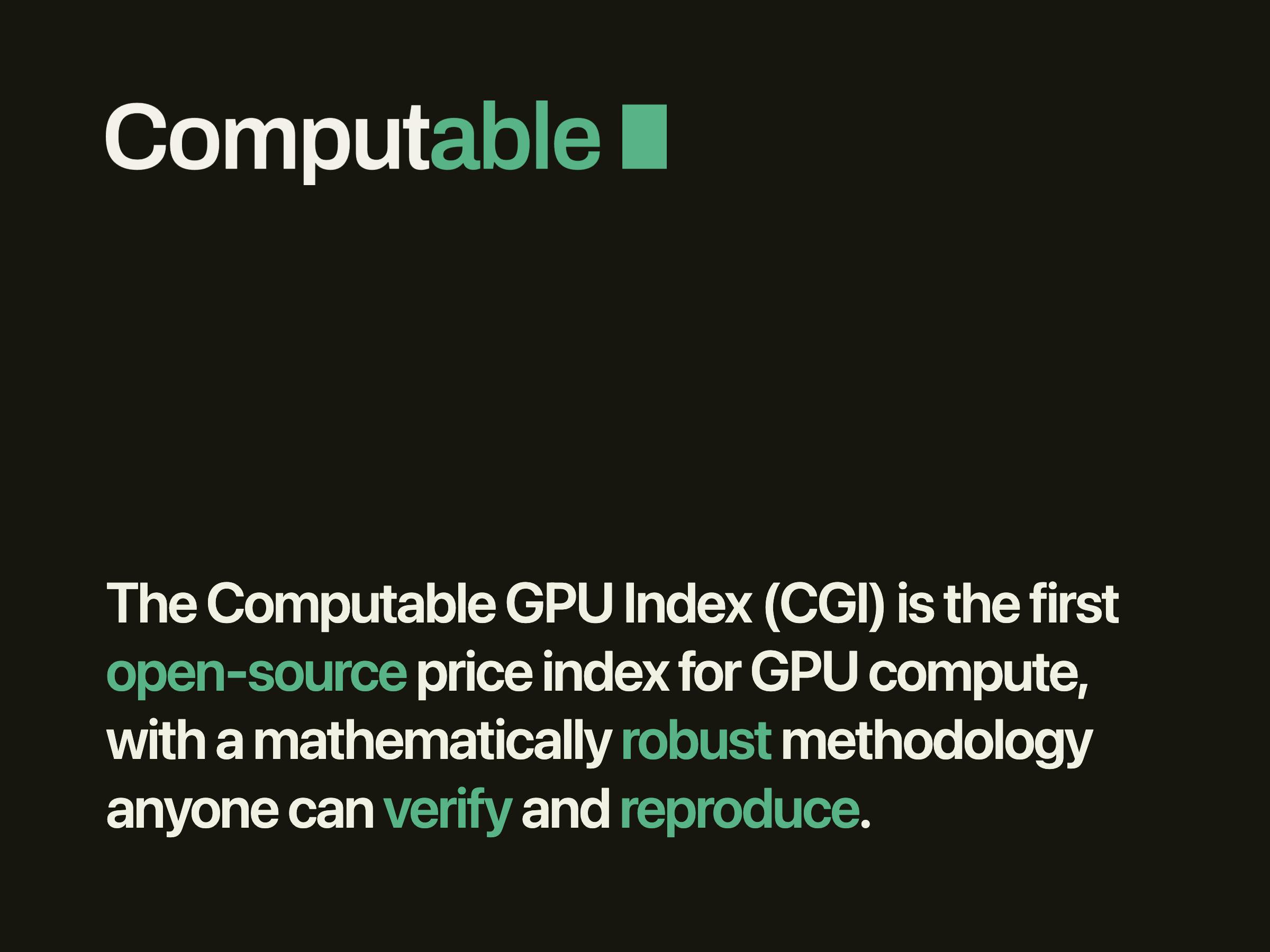
CGI: The First Open-Source GPU Compute Pricing Index, Making Compute Pricing Transparent
Computable GPU Index (CGI) is the first open-source GPU compute pricing index, denominated in USD per GPU-hour, calculated from a fixed provider panel with mathematical rigor and full verifiability. This article analyzes CGI's core features, the importance of compute pricing indices, and the potential for compute financialization.
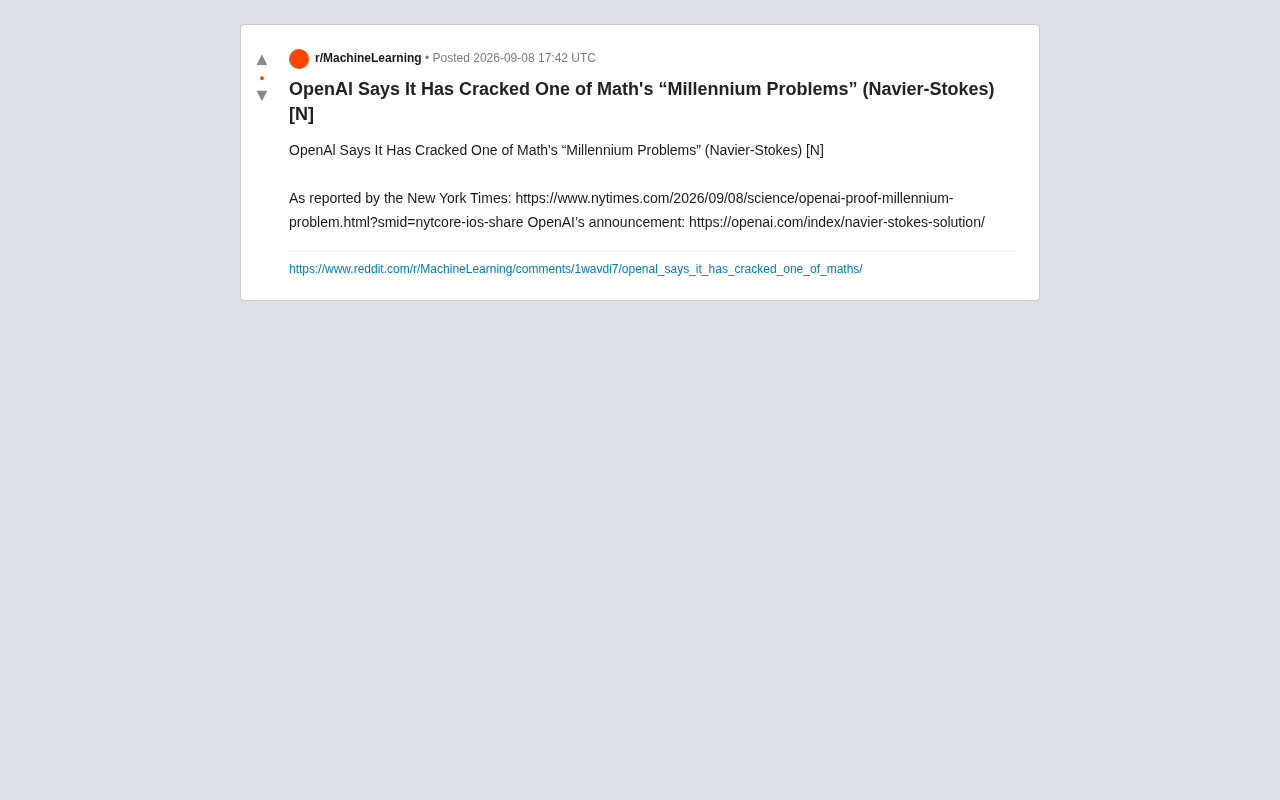
OpenAI Claims Breakthrough on Millennium Problem: The Truth and Controversy Behind Navier-Stokes Progress
OpenAI claims its AI system achieved a breakthrough on the Navier-Stokes equations Millennium Problem. This article analyzes what the claim really means, the difference between partial progress and complete proof, and AI's rise in mathematical proof.

BetterClaw: Deploy AI Agents for Free in 60 Seconds — A No-Code Automation Assistant
BetterClaw is a no-code AI agent platform with 60-second deployment and BYOK model for free usage. Connect Gmail, Slack, and Telegram to automate inbox sorting, briefings, and monitoring tasks.