Why Property Management Software Must Embrace AI and the MCP Protocol
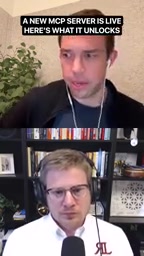
Property software launches MCP servers and open APIs, signaling a shift from closed ecosystems to AI agent access.
Based on a YouTube interview, the article notes that a property management system has launched an MCP server and is preparing a cloud connector, signaling that closed ecosystems are loosening. MCP lets AI agents read work orders, query tenant data, and trigger automation in a standardized way, while open APIs shift workflow control to users. The article argues that openness should be a key procurement criterion.
The era of closed systems is coming to an end
The property management industry has long relied on closed software ecosystems, with data trapped inside a single platform and workflows difficult to connect across systems. But as AI agents begin to take on more real work, this closed model is facing a fundamental challenge.
A clip from a YouTube interview reveals a key signal: a certain property management system has already launched an MCP server (Model Context Protocol Server). Although it has not yet been publicly released, a companion cloud connector is also in preparation. This means property management software is no longer just a tool for people to operate—it is beginning to proactively provide standardized access channels for AI agents.
MCP and open APIs: infrastructure for AI agents
MCP is an open protocol proposed by Anthropic, designed to let AI models connect to external tools and data sources in a standardized way. For property management software, supporting MCP means AI agents can directly read work orders, query tenant information, and trigger automated processes without requiring people to move data between multiple interfaces.
The core philosophy emphasized in the interview is "build what you want to build"—control over workflows is handed to users rather than preset by the software vendor. This openness stands in sharp contrast to the traditional closed SaaS model. Combined with open APIs, third-party developers and property teams alike can build customized automation workflows on the same set of interfaces.
MCP (Model Context Protocol) is a communication protocol open-sourced by Anthropic in late 2024. It uses a client-server architecture: AI applications act as clients, while external systems (such as property management software) implement MCP servers to expose their capabilities as standardized tools. The protocol defines three types of primitives—tool invocation, resource reading, and prompt templates—so that models do not need to write separate integration code for each data source.
The difference between MCP and open APIs lies in the level of abstraction. Open APIs are aimed at developers and require manually written invocation logic; MCP is aimed at AI agents, and models can autonomously discover available tools and decide the order of invocation. For property scenarios, this means an agent can, within a single conversation, sequentially query work orders, verify tenant contracts, and trigger maintenance dispatch—without integrating separately with each system.
It is worth noting that MCP itself only specifies the communication format, not the permission model or data boundaries. Therefore, when software vendors implement MCP servers, they still need to design their own authentication, auditing, and rate-limiting mechanisms. The degree of openness is in practice determined by the vendor's strategy.
The collaboration model between property managers and AI is taking shape
The other party in the interview points out that as AI agents take on more work, the openness of a partner will become an increasingly important consideration for property managers when choosing collaborators. A partner that supports agentic workflows and provides MCP and open APIs can enable property teams to introduce AI capabilities without replacing their core systems.
The logic behind this is not complicated: property management involves multiple areas such as leasing, maintenance, finance, and compliance, and no single vendor can cover all scenarios. Open interfaces allow specialized tools to each play their role, while AI agents act as coordinators, passing information between systems and executing decisions.
Agentic workflows refer to a way of working in which AI agents autonomously plan steps, call tools, and complete multi-step tasks—distinct from traditional automation that only triggers rules at a single point. Traditional RPA executes according to preset scripts and halts when it encounters interface changes or exception branches; agents instead dynamically select tools based on goals, process intermediate results, and attempt alternative paths when they fail.
In property management, this model suits long-chain cross-system tasks—for example, after a tenant reports a repair, automatically verifying the contract's warranty terms, determining liability, generating a work order, and notifying the corresponding vendor. The cost is reduced explainability and controllability—an agent's decision path is not always predictable, so log tracing, human approval nodes, and permission isolation are needed as safeguards. This is also why, when evaluating "openness," one should not only look at whether interfaces exist but also at governance capabilities.
Openness becomes a new selection criterion
For enterprises currently evaluating property management software, this interview conveys a pragmatic suggestion: add "whether it supports MCP and open APIs" to the procurement checklist. A system willing to let AI agents connect means lower integration costs and a higher automation ceiling; a platform that refuses to open up is very likely to become a data silo in the future.
The partner "boom" mentioned in the interview is described as a representative of openness and support for agentic workflows, which also shows that players using openness as a selling point have already emerged in the market. Competitive pressure will drive more vendors to follow suit, ultimately making open interfaces an industry standard.

Final thoughts
This interview does not carry a huge amount of information, but its direction is clear: the competitive dimension of property management software is shifting from feature lists to ecosystem openness. Behind technical terms such as MCP servers, cloud connectors, and open APIs is a more fundamental judgment—for AI agents to truly take root in property scenarios, the software must first open the door.
One-line Summary
Property software launches MCP servers and open APIs, marking the industry's shift from closed ecosystems to AI agent access.
Paragraph Summary
Starting from a YouTube interview, the article points out that a certain property management software has launched an MCP server and is preparing a cloud connector. Although not yet publicly released, it signals that closed ecosystems are loosening. As an open protocol proposed by Anthropic, MCP enables AI agents to read work orders, query tenant information, and trigger automated processes in a standardized way. Combined with open APIs, control over workflows shifts from vendor presets to users. The article argues that property management involves multiple areas such as leasing, maintenance, finance, and compliance, and no single vendor can cover them all. Open interfaces allow specialized tools to each play their role while agents act as coordinators. Therefore, enterprises should include whether MCP and open APIs are supported in their procurement checklist when selecting software—openness is becoming the new competitive dimension after feature lists.
Related articles
Three New Metapunk Skills: Building a Closed Loop for AI Software Development
Metapunk's new version adds Implement Spec, PR, and Retro skills to complete the AI software development loop. This article analyzes each skill's features and workflow to help improve AI Agent development efficiency and code quality.

6 Dark Tales of Terror: TED-Ed Uses Animation to Illustrate Fables of Human Nature
TED-Ed's six horror stories collection includes The Monkey's Paw, the Japanese tale of Oiwa, Death's Godfather, Beowulf, Poe's The Masque of the Red Death, and Hoichi the Earless. This article analyzes how these animated shorts use cross-cultural fables to explore desire, betrayal, and the price of death—and why they suit classroom discussion.
A Practical Guide to Calling Lightweight Ollama Models from Python
A complete hands-on guide to installing Ollama, pulling a 0.8B lightweight model, and calling it from Python—covering service startup, model name matching, first-load delays, and other pitfalls, with a measured 0.23s per call.