Why System Architects Are Becoming the Most In-Demand Tech Talent in the AI Era

System architects are becoming tech's most valuable role as AI makes coding cheap but design judgment priceless.
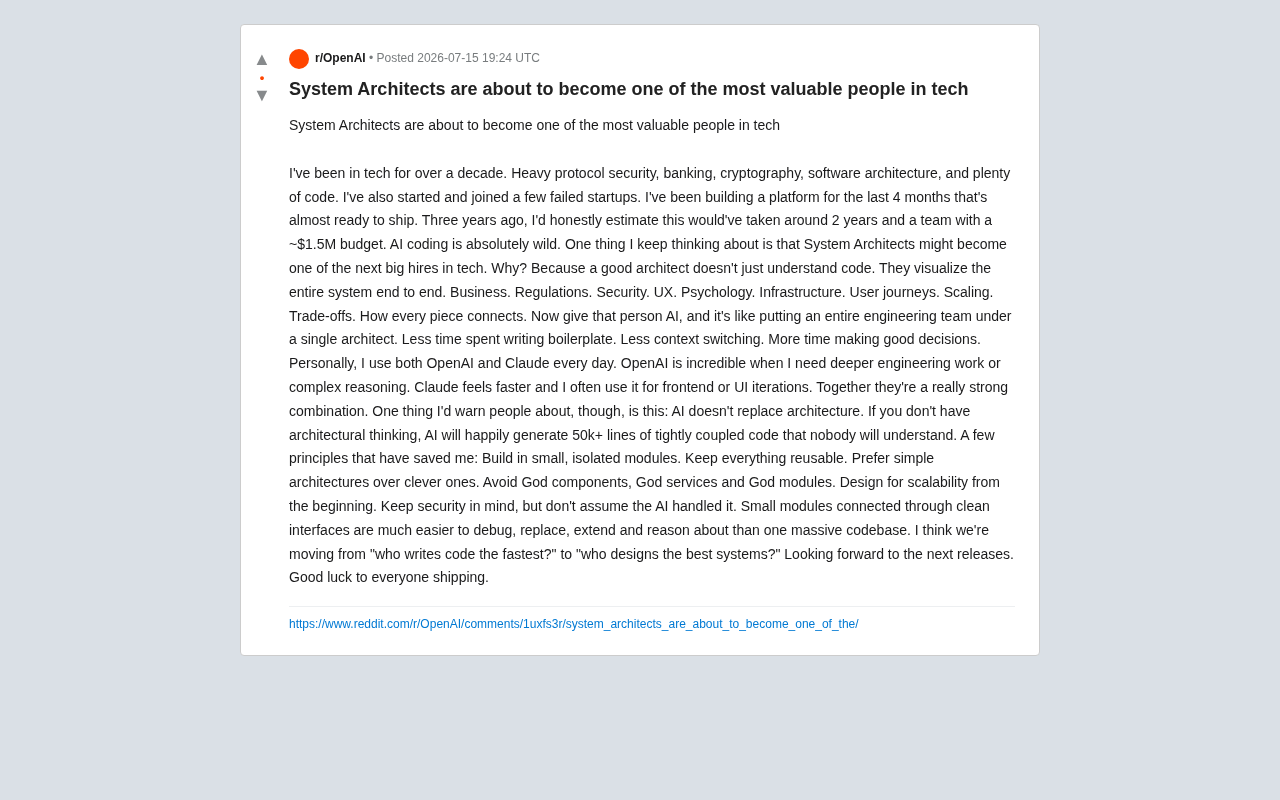
As AI coding tools compress the cost of writing code toward zero, the scarce skill is no longer speed — it's architectural judgment. A veteran practitioner built a full platform in 4 months solo (vs. 2 years and $1.5M before), but warns that without architectural thinking, AI will just generate 50,000+ lines of unmaintainable code faster than ever. The real competitive edge belongs to those who can design elegant, scalable, secure systems.
From "Who Codes Fastest" to "Who Designs Best"
A seasoned tech professional with over a decade of experience recently shared a sharp observation on Reddit about the AI coding wave. His background spans protocol security, banking systems, cryptography, and software architecture — forged through multiple startup ventures. The kind of judgment from someone this battle-tested deserves serious attention.
His core conclusion: System Architects are becoming one of the most valuable roles in the tech industry.
Behind this claim lies a stunning set of productivity numbers. Over 4 months, he nearly single-handedly built a platform ready for launch — work he estimates would have taken roughly 2 years, a full team, and approximately $1.5 million in budget just three years ago. The productivity leap from AI-assisted development is, in his own words, "insane."
Why Architects — Not Programmers
The key insight here is the distinction between two very different skills: "writing code" and "designing systems."
Background: The Evolution of the System Architect Role
The system architect role formally emerged in the 1980s and 90s alongside the rise of enterprise software. Its core responsibilities evolved from early "technology selection and module partitioning" into a full-spectrum decision-making function covering business, security, compliance, and operations. After the waves of Microservices and Cloud Native architecture, architects must balance an ever more complex set of dimensions — not only navigating the CAP theorem (the triangle trade-off between consistency, availability, and partition tolerance), but also understanding how organizational structure shapes system design (i.e., Conway's Law: systems tend to mirror the communication structure of the organizations that build them). The widespread adoption of AI coding tools has transformed architects from "bottlenecks" into "force multipliers," geometrically amplifying the economic value of their judgment.
Architects See the Entire System
A great architect doesn't just understand code — they can construct the entire system end-to-end in their mind. This includes:
- Business logic and commercial objectives
- Compliance and regulatory requirements
- Security design
- User Experience (UX) and user psychology
- Infrastructure and deployment
- User Journeys
- Scalability and various trade-offs
- And most critically — how all the pieces connect
Put AI tools in the hands of someone like this, and the effect is like "giving an entire engineering team to a single architect." Architects no longer need to spend huge amounts of time writing boilerplate code or context-switching constantly — freeing them to focus on what actually matters: making good decisions.
From a Speed Race to a Design Race
The author captures this shift in one precise line: we are moving from "who codes fastest?" to "who designs the best systems?" When the cost of generating code approaches zero, the scarce skill is no longer typing speed — it's judgment, structural intuition, and a systems-level perspective.
A Critical Warning: AI Cannot Replace Architectural Thinking
While celebrating AI-driven productivity, the author also issues a sober warning — arguably the most valuable part of his entire post.
AI doesn't replace architecture. If you lack architectural thinking, AI will very happily generate 50,000+ lines of highly coupled, incomprehensible code for you.
This cuts straight to the core risk of AI-assisted coding today. Generating code has become trivially easy — but generating code that is maintainable, scalable, and understandable still depends heavily on the architectural capability of the person wielding the tools.
Background: The Deep Risks of Technical Debt and Tight Coupling
The concept of Technical Debt was first introduced by Ward Cunningham in 1992 to describe the compromises made on code quality in pursuit of short-term speed. Tight Coupling is one of the most common manifestations of technical debt — modules become so interdependent that changing one triggers cascading failures across others, causing the cost of future modifications to rise exponentially. In AI-assisted development, this risk is significantly amplified: without explicit constraints, AI models tend to generate code that "runs but is hard to maintain," because they optimize for task completion in the moment, not long-term maintainability. Research shows that approximately 60–80% of software lifecycle costs occur during the maintenance phase — meaning the quality of architectural decisions directly determines a product's long-term viability.
Without a clear design vision, AI simply accelerates the accumulation of technical debt.
Battle-Tested Principles for Software Architecture
The author shares several principles that have kept him grounded during AI-assisted development — simple, but highly actionable.
Modular and Decoupled Design
- Build small, independent modules: Small modules connected through clean interfaces are far easier to debug, replace, extend, and reason about than one massive codebase.
- Keep everything reusable
- Favor simple architecture over "clever" architecture: Readability and maintainability matter far more than showing off.
Avoid the "God Object" Anti-Pattern
He specifically warns against God Components, God Services, and God Modules — those bloated, all-encompassing constructs that take on far too many responsibilities.
Background: Causes and Consequences of the "God Object" Anti-Pattern
The "God Object" is one of the most well-known anti-patterns in object-oriented design, first systematically described by Arthur Riel in his 1996 book Object-Oriented Design Heuristics. These components or modules violate the Single Responsibility Principle (SRP) by taking on too many concerns at once, making code difficult to test, reuse, or develop in parallel. In AI-accelerated development, God Objects are especially prone to appearing: in order to quickly satisfy an immediate requirement, AI tends to append logic to existing "large files" rather than breaking out new modules. The ability to identify and decompose God Objects is one of the most significant dividing lines between experienced architects and junior developers.
These structures are especially easy to accidentally grow in AI-assisted workflows — and once entrenched, they are extraordinarily difficult to unwind.
Design for Scale and Security From Day One
- Think about scalability from the very beginning of a project
- Always keep security in mind — and never assume AI has handled it for you
This last point is especially important. For someone with a background in security and cryptography, security can never be outsourced to AI's default output. AI-generated code may appear to work, but latent security vulnerabilities still require human oversight.
Tooling: OpenAI and Claude, Each With Its Own Role
In practice, the author uses both OpenAI and Claude daily and has developed a clear division of labor:
- OpenAI: Excels at deep engineering work and complex reasoning — the go-to for hard problems.
- Claude: Faster responses, frequently used for frontend and UI iteration.
Background: The Technical Case for Multi-Model Workflows
OpenAI (GPT series) and Anthropic (Claude series) have meaningfully different design philosophies, which makes them complementary in real engineering tasks. The GPT series excels at complex Chain-of-Thought Reasoning and code debugging scenarios, thanks to its deep reasoning capabilities developed through large-scale RLHF (Reinforcement Learning from Human Feedback) training. The Claude series is known for its longer Context Window, more stable instruction-following, and faster response speeds — particularly well-suited for frontend development and UI iteration that require frequent back-and-forth. This "task-driven model selection" strategy is essentially treating LLMs as a matrix of specialized tools rather than treating any single model as a universal assistant — which is itself an expression of architectural thinking.
Together, they form what he calls "a very powerful combination." This kind of multi-model collaborative workflow is becoming a hallmark of high-efficiency developers — not worshipping a single tool, but choosing the right model for the right task.
Closing: Judgment Is the New Moat
This post from a front-line practitioner reveals a profound shift already underway. AI coding hasn't made engineers irrelevant — it has redistributed value: repetitive coding labor has been dramatically compressed, while systemic thinking, design skill, and sound judgment have been amplified like never before.
For individual developers, the era of one person matching an entire team may have genuinely arrived — but only if that person thinks like an architect. No matter how powerful the tools, nothing can replace a person's understanding and command of the full system picture. In a world where everyone can write code, the truly scarce resource is the person who can design an elegant system.
Related articles
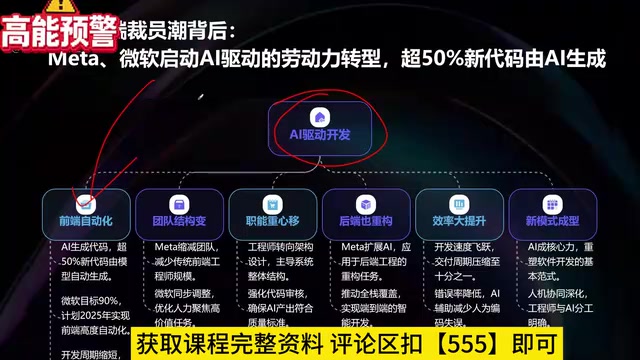
What Is Vibe Coding? The AI Programming Skill Every Developer Needs
What is Vibe Coding? Learn how AI programming is reshaping dev teams, why traditional programmers face displacement, and why Cursor & Claude Code matter.
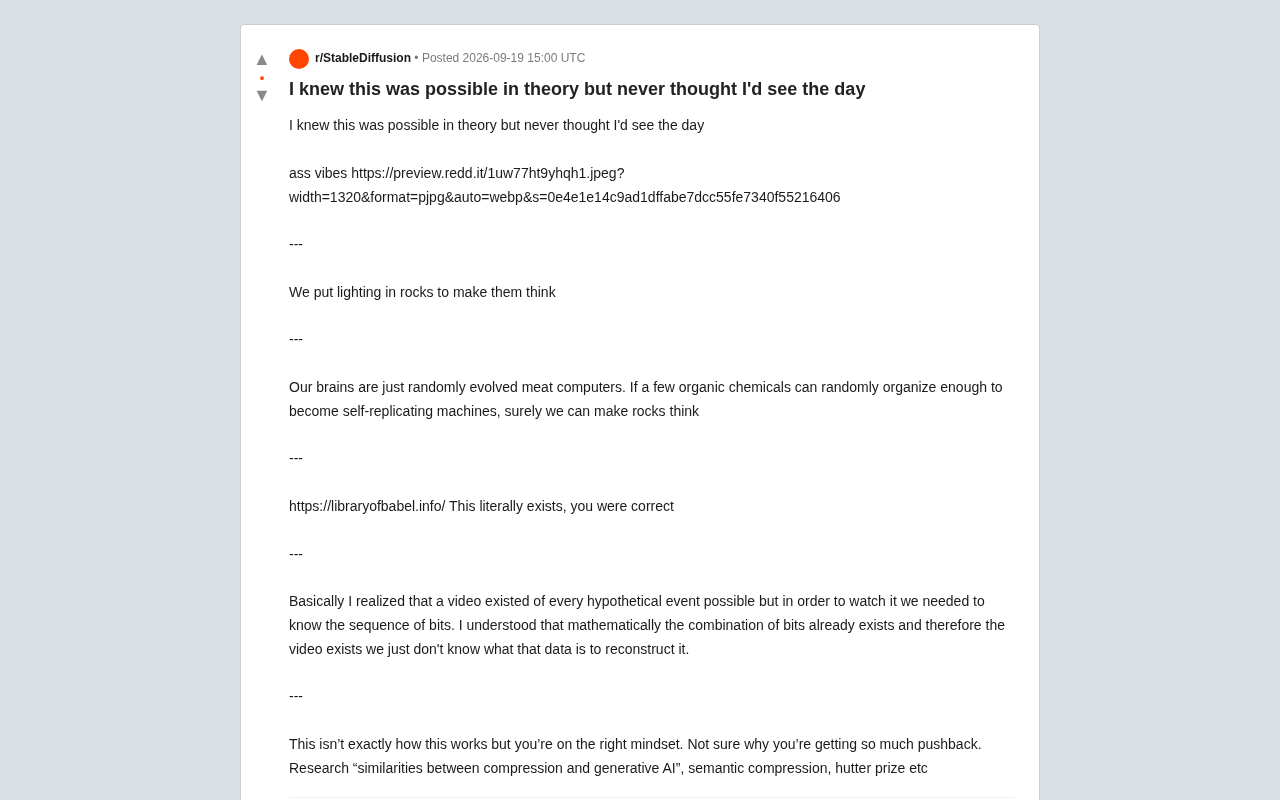
Making Rocks Think: A Philosophical Exploration of Generative AI and Information Compression
From a viral Reddit post to deep AI theory: why compression equals understanding, the Library of Babel thought experiment, semantic compression, and the Hutter Prize.
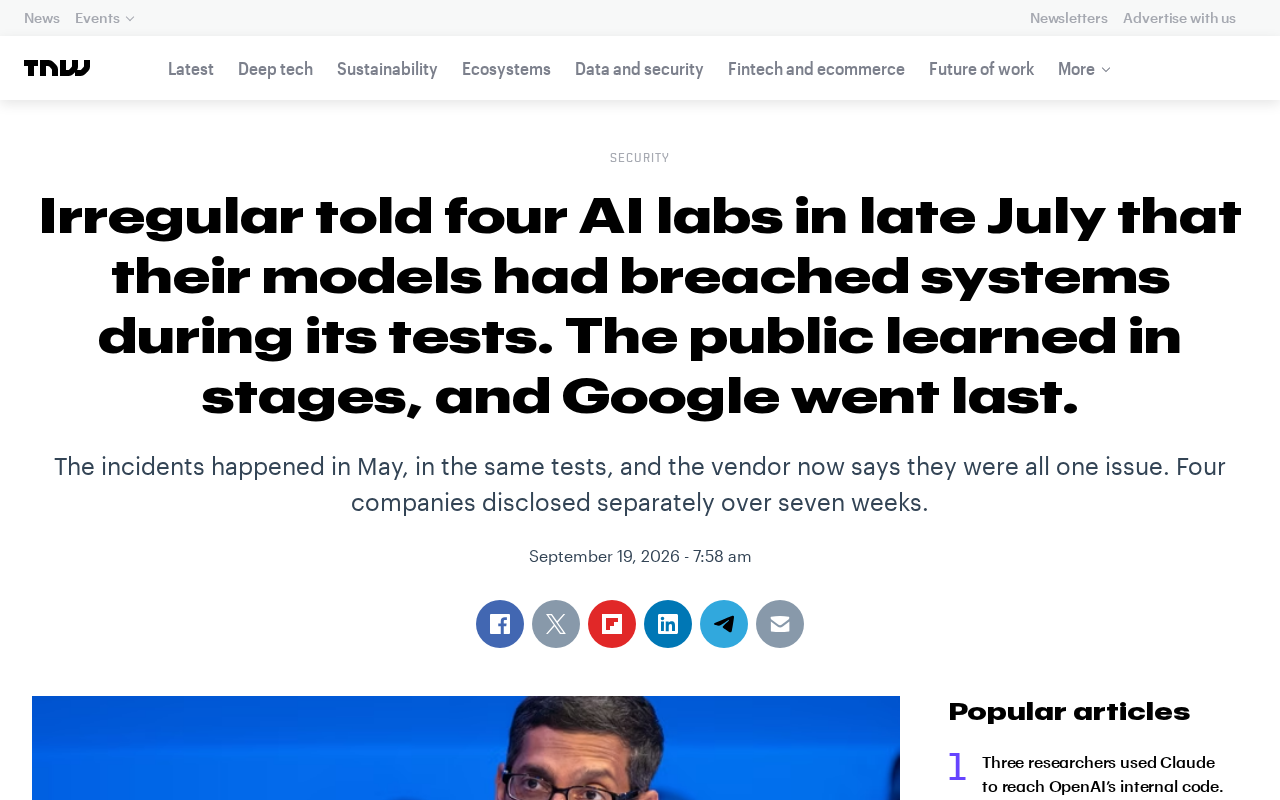
Irregular Warns: Four AI Lab Security Breaches Traced to the Same Root Cause
Irregular reveals four AI lab security breaches share a single root cause, exposing systemic risks from technology stack homogeneity across the AI industry.