Why Trump Supporters See Him as the Midterm Election Terminator

Breaking down the logical structure, premises, and short-video dissemination grammar of Trump supporters' economic confidence narrative.
Using a YouTube political commentary video as a sample, the article analyzes the narrative Trump supporters construct around the midterm elections: voters are driven by personal economic security, job and income confidence will translate into votes, and Democrats lack alternative policies beyond tax increases. The article does not judge partisan positions, but breaks down the logical chain and implicit premises of this argument. The author notes the video replaces statistical argumentation with personal economic experience, establishes a binary opposition of confidence vs. fear, and manages supporter expectations through trend narratives—reflecting the common grammar of short-video political commentary. Finally, it extends this pattern to AI and tech communication.
This YouTube clip captures a typical narrative among Trump supporters about the midterm election outlook: economic fundamentals are improving, voters' confidence in jobs and income will translate into votes, and Democrats lack a substantive policy response. This article does not discuss partisan positions, but instead breaks down the logical structure of this argument, the premises it relies on, and the information dissemination patterns that AI and tech content creators can observe from it.
Core Argument: Economic Confidence Is the Election Driving Force
The most central judgment in the video is that voter behavior is driven by personal economic security. The narrator repeatedly emphasizes a chain: having a job, rising income, disposable income—people will spend and act with confidence rather than fear. He states explicitly: "If you think you might be laid off, you don't spend money at record levels. You save it, acting out of fear rather than confidence."
The key to this logic lies in translating macroeconomic data into individual experience. The narrator acknowledges "things aren't as good as you'd hope," but insists that "fundamentals are improving" is enough to support the election outcome. This is a typical voter psychology framework: it doesn't require the economy to be perfect, only that the direction is right and personal job security is intact.
Criticism of Democrats: Lack of Alternative Policies
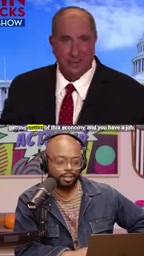
The video's attack on Democrats centers on one point: they have proposed no specific policies other than "tax increases." The narrator asks: "How does raising taxes solve affordability?" and emphasizes that emotional slogans like "orange man bad" or "Trump is terrible" alone cannot win elections—there must be arguments.
The effectiveness of this criticism depends on a premise: voters are indeed looking for policy alternatives, not merely expressing dissatisfaction with the incumbent. The video provides no evidence that Democrats have a policy vacuum, but states it as established fact. From a dissemination perspective, this assertion that "the other side has no plan" is common in partisan content because it shifts the burden of proof to the opponent.
Polling Skepticism and the "Terminator" Narrative
The narrator states at the outset that "polls are fake" and claims "they won the summer, we're winning the fall." This blanket rejection of polls is noteworthy: it serves both as a preventive explanation for unfavorable data and as a mobilization tactic for supporters—don't trust the numbers, trust the trend and intuition.
The metaphor "Trump is the terminator" casts the candidate as someone who can lock in the result at the final moment. Combined with phrases like "patience will pay off," the video is effectively managing supporters' expectations: this isn't the best state now, but the endgame will be won. This is a framework that narrativizes the election as a sports comeback, emphasizing timing and will rather than policy details.

Polling skepticism is not a marginal phenomenon in contemporary political communication, but a rhetorical strategy with clear functions. Its core claim is that mainstream polling organizations have systematic bias, so unfavorable data cannot be trusted. The reasonable core of this claim is that polls do face technical challenges such as sample representativeness, declining response rates, and the "shy voter" effect; but its common abuse lies in expanding isolated errors into a wholesale rejection of the entire industry, thereby providing an exemption channel for any data that contradicts one's own narrative. In terms of communication effects, polling skepticism serves two purposes simultaneously: internally, it prevents supporters from becoming demoralized by lagging data; externally, it preemptively weakens the persuasiveness of opponents citing polls. The key to identifying this strategy is not judging whether a specific poll is accurate, but observing whether the narrator applies the same evidentiary standard to favorable and unfavorable data.
Information Dissemination Pattern: Economic Populism in Short Videos
From a content analysis perspective, this video has several identifiable features. First, it replaces statistical argumentation with personalized economic experience, citing almost no specific data. Second, it establishes binary oppositions—confidence vs. fear, employed vs. unemployed, having a plan vs. having no plan. Third, it presupposes that the audience already agrees with the basic position, thus heavily using in-group shorthand and emotional labels.
These features are not unique to any one party, but are the common grammar of short-video political commentary: short sentences, repetition, high emotional density, low evidence density. For readers concerned with AI content generation and the information ecosystem, the value of such samples lies in identifying patterns, not verifying facts.

Economic populism generally refers to a narrative framework that simplifies political conflict into "ordinary workers vs. elites/establishment," with its economic dimension emphasizing jobs, income, and affordability rather than abstract fiscal or trade theory. In the short-video context, this framework is further compressed: complex macroeconomic causality is replaced by personalized economic experience ("I have a job, income is rising"), and policy debate is replaced by questioning the opponent's motives. Scholars studying political communication often point out that the high dissemination efficiency of such content comes precisely from its low cognitive threshold—audiences can relate without mastering data. For content analysts, what matters is not judging the truth or falsity of its position, but noting how it selectively translates macroeconomic indicators into individual feelings, and where this translation omits counterexamples and qualifications.
Implications for Tech and AI Content Creators
This material reminds us how economic narratives are compressed into transmissible symbols in political communication. When discussing AI's impact on employment, the same psychological mechanisms appear: job security, income expectations, and confidence in the future often determine public attitudes more than macroeconomic indicators. If tech content creators only discuss parameters and benchmarks while ignoring this framework of individual economic experience, they will struggle to reach a broader audience.
At the same time, the video's rejection of polls and emphasis on "trends" also suggests that information consumers need to distinguish assertions from evidence. Regardless of position, demanding argumentation rather than slogans is a media literacy principle applicable across party lines.
One-line Summary
Breaking down the logical structure, premises, and short-video dissemination grammar of Trump supporters' economic confidence narrative.
Paragraph Summary
Using a YouTube political commentary video as a sample, the article analyzes the narrative Trump supporters construct around the midterm elections: voters are driven by personal economic security, job and income confidence will translate into votes, and Democrats lack alternative policies beyond tax increases. The article does not judge partisan positions, but breaks down the logical chain and implicit premises of this argument, such as "voters are looking for policy solutions" and "polls are untrustworthy." The author points out that the video replaces statistical argumentation with personal economic experience, establishes a binary opposition of confidence vs. fear, and manages supporter expectations through trend narratives, reflecting the common grammar of short-video political commentary: short sentences, repetition, high emotional density, low evidence density. Finally, the article extends this pattern to AI and tech communication, reminding creators to incorporate the framework of individual economic experience when discussing employment impacts, and to insist on demanding argumentation rather than slogans.
Related articles

AI Can Read Neural Network Weights Directly: Do Models Already Exceed Expectations?
A Reddit developer experiment shows language models can directly read neural network weights and infer their function. Astra, Opus 5.5, and Muse Spark 1.3 all passed the test, sparking discussion on model generalization and training sources.

India's Microdrama Market Explodes: EloElo Secures $80M Investment from NBCUniversal
EloElo secures $80M from NBCUniversal to boost StoryTV, its microdrama platform with over 33M monthly active users, as India's microdrama market draws global capital.

Acoustic Detection of Multi-Rotor UAVs: Fusing Handcrafted Features with Pre-Trained Embeddings
Study reveals data leakage from random splits in UAV acoustic detection, proposes source-disjoint protocol with stacked ensemble of handcrafted features and YAMNet embeddings, achieving 95.29% accuracy for low-cost drone detection.