Why You Should Keep a Close Eye on AI Capabilities in Materials Science and Bioscience
AI's quiet advances in materials science and bioscience may reshape civilization more than any generative app.
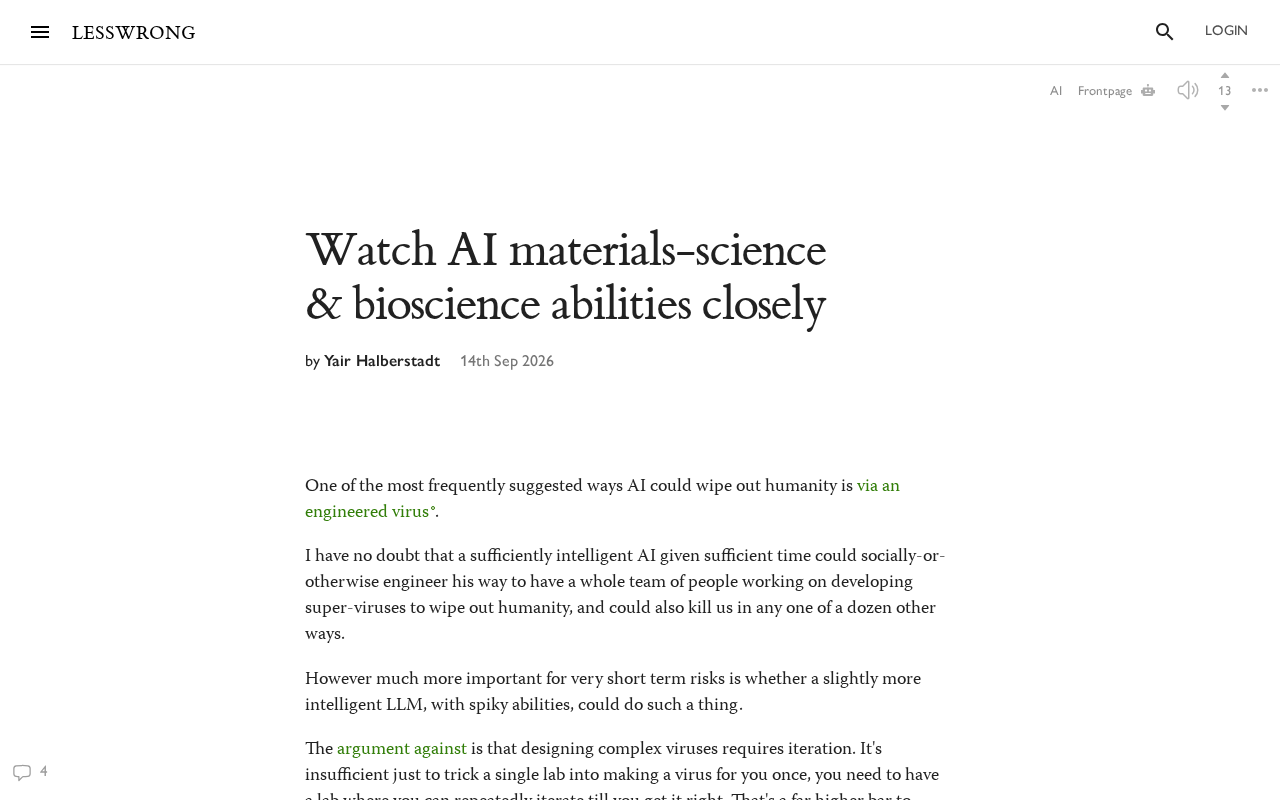
A brief Hacker News post urges observers to closely track AI's evolving capabilities in materials science and bioscience. These fields, defined by vast search spaces and costly experiments, stand to benefit most from AI's ability to compress physical trial-and-error into algorithmic iteration — sometimes generating candidate solutions humans would never have conceived. Yet the acceleration is a double-edged sword: while it could yield efficient energy materials and precise drugs, it may also lower barriers to designing dangerous substances, making bioscience especially sensitive. Unlike the generative AI applications dominating public discourse, these advances attract little social media attention yet quietly reshape the foundations of research and industry. Shifting focus from consumer AI toward the hard sciences may be the key to understanding AI's true potential and risks.
A Signal Worth Heeding
A brief but thought-provoking discussion on Hacker News put forward a compelling idea: we should closely monitor how AI capabilities evolve in materials science and bioscience. The post itself was remarkably concise, yet it touched on a dimension of AI development that is repeatedly emphasized but chronically underestimated — AI's potential to accelerate and reshape the scientific discovery process.
Unlike high-visibility applications such as chatbots and code generation, AI's advances in the hard sciences tend to unfold quietly, yet they may carry far deeper structural consequences. The core message of the original post was straightforward: these two directions deserve serious attention.
Why Materials Science and Bioscience
These two fields were singled out for a reason — they share two defining characteristics: enormous search spaces and high experimental costs.
In materials science, the range of possible molecular structures and crystalline combinations is virtually infinite. Traditional R&D relies on extensive trial-and-error experimentation; developing and validating a single new material can take years. By modeling existing data, AI can pre-screen promising candidate materials computationally, compressing the physical trial-and-error of the laboratory into rapid algorithmic iteration.
The same logic applies to bioscience. Protein folding, drug molecule design, and gene function prediction are all extraordinarily complex problems — and AI's demonstrated ability to handle high-dimensional pattern recognition tasks is changing how researchers formulate and test hypotheses. When AI can generate candidate solutions that humans would never have conceived of on their own, the pace of scientific discovery can undergo a qualitative shift.
The Double-Edged Sword of Acceleration
The original post used the word "closely," a choice that carries a note of caution. This isn't simply enthusiasm for technological progress — it also implies awareness of potential risks.
AI-accelerated scientific discovery is a double-edged sword. On one hand, it could give rise to more efficient energy materials, more precise therapeutics, and more sustainable chemical processes, delivering tangible social benefits. On the other hand, the same capabilities, if misused, could lower the barrier to designing dangerous substances or biological agents. Bioscience is particularly sensitive in this regard — the democratization of technology benefits research while simultaneously expanding the potential attack surface.
This is precisely why "keeping a close eye" is both a call to seize opportunity and a call for governance and safety. When a technology's capability frontier expands faster than regulatory and ethical frameworks can keep pace, sustained vigilance itself becomes a necessary defensive posture.
Out of Step with the Mainstream AI Narrative
Public understanding of AI is largely shaped by large language models and generative applications. People talk about AI writing, drawing, and coding — but rarely notice its role inside the laboratory. This misalignment of attention is exactly what the original post sought to correct.
What may truly alter the trajectory of human civilization is not yet another model that converses more fluently, but AI systems capable of accelerating breakthroughs in materials and life sciences. These advances generate no social media buzz, yet they are quietly reshaping the foundational logic of industry and research. For those concerned with AI's long-term impact, shifting focus from consumer applications toward the hard sciences may be the right way to understand AI's true potential.
What One Short Post Can Teach Us
The Hacker News thread had only 9 points and 3 comments — hardly a viral discussion. But its value lies not in information density, but in the angle from which it frames the question. It reminds technology observers: don't fixate only on the noisiest tracks.
Among AI's many application domains, materials science and bioscience are the kind of fields where impact is delayed but enormous in scale. What looks like a peripheral development today may become a game-changing force within a few years. Continuously tracking capability advances in these two directions — whether for the purpose of capturing opportunity or guarding against risk — is a worthwhile investment of attention.
Related articles

The Hidden Risks of Culvert Failure: An Overlooked Infrastructure Hazard
Culverts are hidden drainage structures buried beneath roads. Their failure can silently hollow out road beds, cause localized flooding, and trigger deadly collapses — yet they remain chronically overlooked.

Naoma AI Demo Agent V2: Turning Website Traffic into Booked Meetings with AI Sales
Naoma AI Demo Agent V2 replaces demo request forms with an AI sales rep that demos products, qualifies leads, and books meetings in real time. 50K+ demos run.
Slashy Assistant: The AI Email Assistant That Handles Your Inbox for You
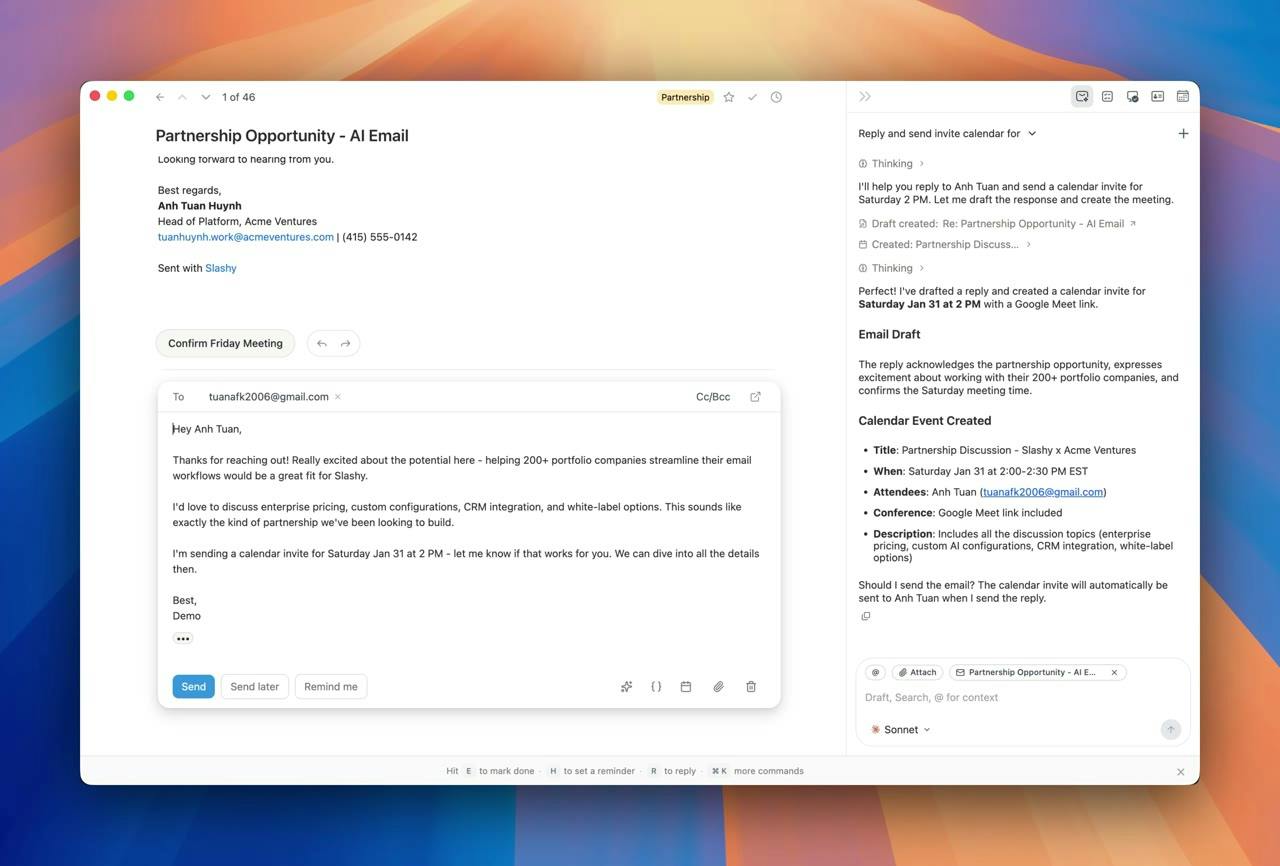
Slashy Assistant is an AI-native email client with a built-in smart assistant that drafts replies in your voice, organizes email, schedules meetings, and tracks follow-ups. Accessible via iMessage, Slack, and phone — set up in five minutes.