Wikimedia Foundation Staff Vote to Unionize, Joining CWA
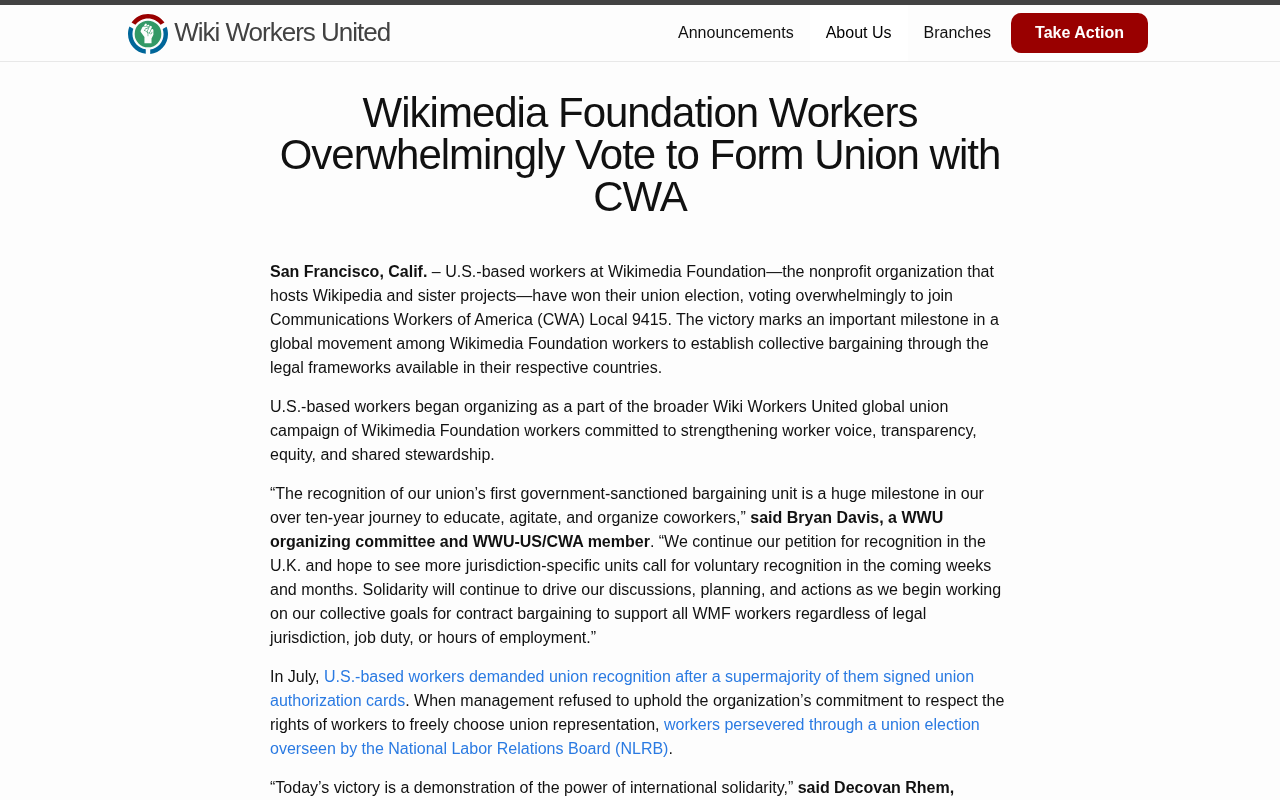
Wikimedia Foundation employees vote overwhelmingly to unionize, joining CWA.
Wikimedia Foundation employees have voted by an overwhelming majority to form a union and join the Communications Workers of America (CWA). This milestone event reflects the broader tech industry unionization wave and raises important questions about balancing employee rights with the nonprofit's public interest mission, financial sustainability, and the Wikipedia ecosystem's long-term health.
Wikimedia Foundation Staff Vote to Unionize: Event Overview
Recently, employees of the Wikimedia Foundation voted overwhelmingly to form a union and join the Communications Workers of America (CWA). The news garnered 249 upvotes and 111 comments on Hacker News, sparking widespread discussion in the tech industry about labor rights at nonprofit organizations.
The Wikimedia Foundation operates Wikipedia and its sister projects. As a nonprofit organization, it has long relied on global volunteers to sustain its content ecosystem. Headquartered in San Francisco, the foundation employed approximately 700 full-time staff as of 2024 and has an annual budget exceeding $150 million. Its funding comes primarily from small individual donations, major philanthropic grants, and corporate sponsorships — with Wikipedia's year-end fundraising banners being among the most recognizable crowdfunding campaigns on the internet. The foundation's core responsibilities include maintaining the MediaWiki technical platform, ensuring server infrastructure uptime, setting content policies, managing legal affairs, and coordinating the global volunteer community. Notably, the vast majority of Wikipedia's content is contributed by over 300,000 active volunteer editors worldwide; foundation employees don't directly write encyclopedia articles but instead serve in technical support and community governance roles.
This unionization effort marks a new milestone in internal labor relations for an institution whose core philosophy centers on "openness, collaboration, and free knowledge."
A Landmark Event in the Tech Industry's Unionization Wave
A New Trend in Collective Action Among Tech Workers
In recent years, the unionization movement in the U.S. tech industry has been steadily gaining momentum. The tech sector was long considered a "union desert" — high salaries, generous benefits, and Silicon Valley's libertarian culture kept demand for collective bargaining low. But 2018 became a turning point: Google employees organized a global walkout over the company's involvement in Project Maven (a military project using AI to analyze drone imagery) with the U.S. Department of Defense and its mishandling of executive sexual harassment cases. More than 20,000 employees participated.
Since then, from the formation of the Alphabet Workers Union in 2021 to collective bargaining efforts at multiple game companies, an increasing number of tech workers have pursued collective action for better pay, benefits, and working conditions. In the gaming industry, QA testers at Blizzard Entertainment, Sega of America employees, and staff at Microsoft-owned ZeniMax Studios have all successfully unionized. Amazon warehouse workers' organizing efforts have been rocky, but the 2022 vote to unionize at the Staten Island warehouse in New York sent shockwaves through the business world. The Wikimedia Foundation employees' vote represents yet another significant milestone in this broader trend.
Interestingly, as a nonprofit institution, the Wikimedia Foundation's organizational culture already emphasizes equality, transparency, and community participation. Employees choosing to unionize is, in a sense, an extension of these values into internal governance — formalizing mechanisms that give workers a greater voice in decision-making.
CWA's Expansion into the Tech Sector
The Communications Workers of America (CWA) is one of the largest communications and media unions in the United States. Founded in 1938, it originally represented telephone company operators and technicians. Over decades, it has grown into a major union organization with approximately 700,000 members spanning telecommunications, media, aviation, the public sector, and more. In recent years, CWA has been actively expanding into the tech and internet sectors.
In 2020, CWA officially launched CODE-CWA (Campaign to Organize Digital Employees), an initiative specifically targeting the tech, gaming, and digital media industries. CODE-CWA has successfully helped employees at several prominent tech companies form unions, including multiple game studios under Activision Blizzard, The New York Times' technology department, and digital teams at media organizations like NPR. CWA's strategic rationale for expanding into tech is clear: membership in traditional telecom has been steadily shrinking due to automation and industry consolidation, while the rapid growth of the tech industry and its labor rights vacuum present new organizing opportunities.
Wikimedia Foundation employees joining CWA means they will gain access to an established union's professional resources in collective bargaining, legal support, and more.
The Legal Framework for Union Elections in the U.S.
Understanding this event also requires some background on the legal process for unionization in the United States. The legal foundation for forming unions is the National Labor Relations Act (NLRA), enacted in 1935, which grants most private-sector employees the right to organize unions, engage in collective bargaining, and take collective action. The typical unionization process works as follows: employees first collect authorization cards, and when more than 30% express support, they can petition the National Labor Relations Board (NLRB) for a formal election. If a simple majority votes in favor, the union is certified, and the employer is legally obligated to bargain in good faith. The fact that Wikimedia Foundation employees passed the vote by an "overwhelming majority" indicates strong internal support for unionization, which puts added pressure on management in upcoming negotiations.
Potential Impact of Unionization on Wikipedia's Open Knowledge Ecosystem
Balancing Employee Rights with the Public Interest Mission
The Wikimedia Foundation's core mission is to enable all of humanity to freely share knowledge. Behind this ambitious goal, however, are hundreds of full-time employees working hard across technology development, community operations, legal compliance, fundraising management, and more. The establishment of a union could have an impact in several areas:
- Pay and benefits transparency: Nonprofits often can't compete with for-profit tech companies on compensation. Collective bargaining through a union could help improve this situation.
- Job stability: Against a backdrop of frequent tech industry layoffs, a union can provide employees with stronger job security.
- Participation in decision-making: Employees can use union mechanisms to participate in discussions about major organizational decisions.
Unique Challenges of Unionizing Nonprofits
Unlike for-profit companies, nonprofits are primarily funded by donations. This means that when unions advocate for employee interests, they must find a balance between employee welfare, the organization's public interest mission, and financial sustainability.
Nonprofit unionization operates under a fundamentally different financial logic than at for-profit companies. In the corporate world, union negotiations center on redistributing profits — companies have profit margins they can share with workers. But nonprofit funds come from donors' "entrustment," and every dollar spent faces public scrutiny. The Wikimedia Foundation's financial transparency has long been a focal point for the community: in recent years, the foundation's cash reserves have been growing steadily, with net assets exceeding $240 million as of fiscal year 2023. This has raised questions from some donors and volunteer community members — why does the foundation continue fundraising while accumulating substantial reserves? On the other hand, while foundation employee salaries are higher than at typical nonprofits, they still lag significantly behind comparable technical positions at companies like Google and Meta in the Bay Area. This tension between "Silicon Valley cost of living + nonprofit salary levels" is considered one of the key economic drivers behind the push to unionize.
How to improve employee compensation without undermining public trust or donor willingness to give will be a challenge both sides must navigate together.
Community Discussion: Support and Concerns Coexist
The 111 comments on Hacker News reveal a diversity of perspectives on this event:
Some believe that for an organization that champions openness and equality, it's only natural for Wikimedia Foundation employees to unionize — perfectly consistent with its longstanding values. They point out that even at mission-driven organizations, employees should have reasonable labor protections.
Others have raised concerns: operational costs at a nonprofit could rise due to unionization, potentially limiting its ability to direct resources toward core public interest programs. Some commenters have also focused on the foundation's financial situation and spending efficiency in recent years, suggesting that tensions between management and staff may be a deeper underlying cause of the unionization effort.
A New Paradigm for Labor Governance at Mission-Driven Organizations
The unionization of Wikimedia Foundation employees is not just an internal labor relations adjustment — it reflects a profound transformation in labor rights across the tech and internet industries. When the principles of "openness, collaboration, and equality" extend from products and community engagement into internal organizational governance, how to build a sustainable model that both fulfills a public interest mission and safeguards employee well-being becomes a question every mission-driven institution must confront.
For the Wikipedia ecosystem, which depends on global volunteers and public donations, a healthier and more stable workforce will ultimately benefit its long-term pursuit of the grand vision to "give every person free access to the sum of all human knowledge." This unionization effort may serve as a valuable reference case for other nonprofit tech organizations.
Key Takeaways
Related articles
Employees Refuse to Train AI: Workplace Ethics Dilemmas and Coping Strategies
What to do when your company asks you to train AI that might replace you? This article explores employee stance, corporate responsibility, coping strategies, and balancing tech progress with job security amid AI replacement.
Why C Is So Hard to Replace: The Deep Reasons Behind the Struggles of Rust, Zig, and Other Alternatives
Deep analysis of why C is hard to replace by Rust, Zig, Go and other new languages, examining ecosystem, ABI stability, migration costs, and the evolution trends in systems programming.
Midjourney V8.2 Style Reference: A Practical Guide to Vintage Editorial Illustration Aesthetics
Explore a unique vintage editorial illustration style reference in Midjourney V8.2, analyzing its loose ink lines, restrained palette, and negative space design to help creators escape AI-ness and achieve hand-drawn warmth.