Will AI Really Replace Human Jobs? Signing Authority, Jevons Paradox, and the Distribution Dilemma
Will AI Really Replace Human Jobs? Sig…
AI's job threat isn't just direct replacement — it's accountability gaps, disintermediation, and who captures the productivity gains.
The debate over AI and employment goes far beyond whether machines can do your job. This article breaks down three key dimensions: how professional accountability systems create short-term barriers, how AI-driven disintermediation restructures business models faster than expected, and why Jevons Paradox may not save workers if productivity gains flow to tech giants instead. Physical infrastructure bottlenecks add complexity, but they don't protect individual workers from near-term displacement.
A Classic Debate on AI Replacing Human Work
In a popular Reddit thread, a seemingly simple question — "Will AI replace human jobs?" — quickly evolved into a multidimensional debate touching on professional accountability, economic principles, and social distribution. Practitioners from opposing camps traded arguments, painting a complete picture of today's AI employment anxiety.
The conversation started with a representative point: one commenter argued that anyone doing "serious work" knows no manager will accept a deliverable without a human signature. "If something goes wrong and you end up in court, that signature means you commissioned a qualified person to do the work. You can't say 'Claude or ChatGPT did it' and pass the blame — not unless you want to go to prison."
This touches on a critical reality: accountability. In high-stakes fields like law, medicine, engineering, and auditing, a human signature isn't just a formality — it's the core of the accountability chain. No matter how capable AI becomes, it cannot bear legal responsibility. This creates a natural barrier that makes it difficult to fully replace human roles in the short term.
Behind the accountability question lies centuries of evolution in modern professional licensing systems. Take the Professional Engineer (PE) License as an example: the U.S. professional engineering system dates to 1907, and its core logic is to bind legal responsibility to individuals through state certification, forming a closed loop of "qualification → signature → liability." Medicine, law, and accounting follow the same structure. The fundamental purpose of this design is to protect the public in professional service markets characterized by information asymmetry, by creating a personalized, accountable party. AI cannot hold a license, cannot be sued, and cannot have its credentials revoked — this is not just a technical limitation, but a reality where the regulatory and legal systems have yet to create a framework for AI "legal personhood." Some legal scholars have begun exploring AI legal subjectivity, but in the short term, regulatory inertia will continue to reinforce the irreplaceability of human signatures.
The Reality May Be Harsher Than We Think
Yet the opposing voice immediately offered a colder perspective. One commenter shared a friend's real situation: working at a major professional consulting firm, this person believed their job would soon disappear — "not because serious work requires a human signature, but because AI lets companies handle more things in-house."
Even more striking was the specific example: this consulting firm had just lost a multi-billion-dollar pharmaceutical client, precisely because those corporate clients could now use AI to cut costs and handle work they used to outsource.
This reveals a mechanism that the "signing authority" argument overlooks: AI's real threat isn't necessarily directly replacing a specific role — it's restructuring the entire value chain. When companies can use AI to internalize consulting, analysis, and content production, business models built on "information asymmetry" and "professional outsourcing" get gutted at the root. The person doing the signing may still be there, but the work requiring a signature is rapidly shrinking.
The consulting firm losing its major clients is essentially a microcosm of a disintermediation wave. This phenomenon didn't originate with AI — the internet already significantly eroded the intermediary value of travel agencies, record labels, and traditional media. The underlying logic is: when the cost of accessing and processing information approaches zero, the intermediary layer built on "information asymmetry" or "specialized processing capability" gets compressed. AI accelerates this effect not just by lowering the barrier to information access, but by "democratizing" tasks like analysis, writing, and code generation that previously required professional training — enabling large enterprise clients to bring outsourced work back in-house. Reports from institutions like the McKinsey Global Institute confirm this trend: the jobs most visibly disrupted by AI aren't blue-collar workers, but the knowledge-intensive middle service layer — precisely the group that grew fastest over the past few decades.
Jevons Paradox: Is a Productivity Boost a Blessing or a Curse?
The discussion then moved into harder economic territory. Someone pointedly noted: if AI makes work 30 times more efficient, "you'd only need to keep one out of every 30 current employees."
In response, someone invoked the famous Jevons Paradox: "If an employee suddenly becomes 30 times more efficient, those employees become more valuable, not less."
What Is Jevons Paradox?
Jevons Paradox was first proposed by British economist William Stanley Jevons in his 1865 work The Coal Question. He observed that after James Watt's improvements to the steam engine, Britain's coal consumption rose sharply rather than falling — because efficiency gains made coal-powered production more economically viable, stimulating far greater demand. This principle has since been widely cited in energy economics and became a core argument for "techno-optimists" in employment debates: historically, the mechanization of textiles, the spread of automobiles, and the computer revolution all failed to cause sustained mass unemployment, instead generating entirely new categories of work.
Applied to AI's impact on employment, optimists argue that productivity explosions create new demands and new roles — every historical technological revolution ultimately created more jobs than it destroyed. However, critics point out a fundamental difference with AI: previous technological revolutions replaced physical labor or specific cognitive tasks, while generative AI directly disrupts knowledge work itself. Whether this means the net new demand from the Jevons effect will fall on fewer workers remains one of the major unresolved debates in economics.
But a counterpoint immediately threw in a reality check: "Except that extra value all goes toward paying for tokens." This slightly sardonic remark highlights a new distributional problem in the AI era — the gains from productivity improvements may flow largely to computing power and model providers, rather than to ordinary workers.
The worry about "labor value being commoditized" touches on deep questions in political economy. In economics, commoditization refers to the process by which a type of labor or service loses its differentiated premium as supply approaches infinity. When AI can replicate originally scarce cognitive labor — copywriting, basic code, entry-level analytical reports — at near-zero marginal cost, the market premium for those skills converges toward zero. Research by economists like Daron Acemoglu warns that unlike previous waves of automation, AI's commoditization effect may rapidly erode the bargaining power of existing roles before new employment categories have had time to form. The reality that gains flow to computing power providers (NVIDIA, Microsoft, Google, etc.) confirms the concern that "technology dividends are captured by capital rather than labor" — which is precisely why even if overall GDP rises due to AI, individual workers' relative circumstances may continue to deteriorate.
It's worth noting that the discussion also included skepticism about the expertise of both debaters: "Bro, we both know neither of us has actually talked to an AI researcher." This remark somewhat captures the universal dilemma in such debates — many fierce exchanges of opinion are actually built on a lack of frontline information.
The Overlooked Key: Distribution and Infrastructure Bottlenecks
The most insightful segment of the discussion came from a rarely mentioned angle — distribution and physical constraints.
"It's strange that no one is talking about distribution. Say we have AGI today — then what? You still need to build enough infrastructure and produce enough energy for the AGI to do all the work that 7 billion people are currently doing. That still takes many years. Not to mention you'd need to build a robot army to protect the AI and billionaires from attacks by ordinary people."
This punctures the fantasy that "once AGI arrives, everything gets disrupted." These concerns already have quantifiable real-world backing: according to a 2024 International Energy Agency (IEA) report, global data center electricity consumption will exceed 1,000 terawatt-hours by 2026 — equivalent to Japan's entire national power consumption. A single GPT-4-level training run consumes on the order of thousands of megawatt-hours, and inference costs scale linearly with user volume. NVIDIA H100 GPU delivery times were once measured in months; TSMC's advanced process capacity remains chronically tight. These "silicon bottlenecks" collectively form the physical ceiling on computing expansion. Even if artificial general intelligence is achieved at the algorithmic level, its real-world substitution is constrained by:
- Energy supply: Training and running large-scale AI requires enormous amounts of electricity, and existing grid infrastructure is under severe strain
- Computing infrastructure: Data center construction is measured in years — from planning to operation typically takes 3 to 5 years
- Physical execution layer: Software intelligence cannot directly lay bricks, provide care, or perform repairs — it requires mature robot hardware. Progress at companies like Boston Dynamics and Figure AI suggests the physical execution layer still needs at least one full technology iteration cycle
In other words, between "intelligence being available" and "intelligence fully replacing human labor" lies a long engineering chasm.
But for Ordinary People, the Macro Narrative May Be Irrelevant
The response to this point is equally worth considering: "Maybe no one is talking about distribution because about 95% of people's jobs have nothing to do with infrastructure. And when your labor value has already been commoditized, talking about distribution starts to feel a bit pedantic."
This sharply points out that infrastructure bottlenecks are a macro narrative — but for each individual worker, as long as their job's "labor value is commoditized by AI," how many years it takes for society to complete its infrastructure overhaul has no direct bearing on whether they'll be unemployed next year. There is a significant temporal mismatch between the slowness of macro processes and the immediacy of individual job loss — policymakers may be talking about a "ten-year transition period," while a specific worker is facing next quarter's performance review and layoff list.
Conclusion: The Real Questions Behind AI Employment Anxiety
This seemingly casual online debate actually condenses several core threads of the AI employment discussion:
- Accountability barriers protect some high-risk professions in the short term, but they protect "signing authority" rather than "workload." This protection depends on the stability of current professional licensing systems — which themselves face pressure to be redefined.
- Business model restructuring may disrupt employment earlier and more forcefully than "direct replacement." Intermediary industries like consulting and outsourcing are on the front lines; the essence of disintermediation is the disappearance of information asymmetry advantages.
- Whether Jevons Paradox holds again depends critically on where the new value gets distributed — if gains concentrate among computing oligarchs, ordinary workers may not benefit. The commoditization of knowledge labor may make this technological revolution's job regeneration effect weaker than historical precedents.
- Physical constraints mean full replacement won't happen overnight, but the timeline of individual job loss does not track in sync with macro processes. Energy, computing, and robot hardware bottlenecks provide a buffer — but cannot protect each specific role.
What truly warrants vigilance may not be the binary question of "can AI replace humans," but rather how value gets distributed, how accountability gets assigned, and how society navigates the transition as productivity is redefined. The answers to these questions will determine the fate of the vast majority of people far more than the answer to "when will AGI arrive."
Related articles
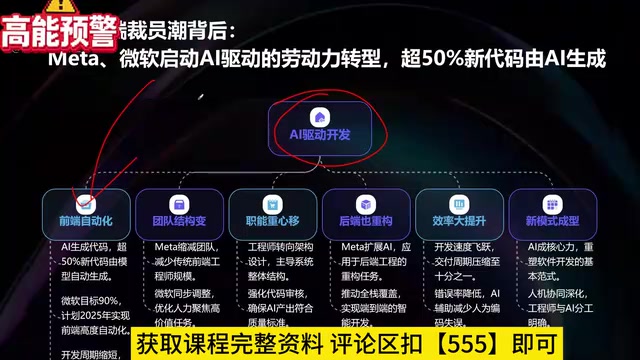
What Is Vibe Coding? The AI Programming Skill Every Developer Needs
What is Vibe Coding? Learn how AI programming is reshaping dev teams, why traditional programmers face displacement, and why Cursor & Claude Code matter.
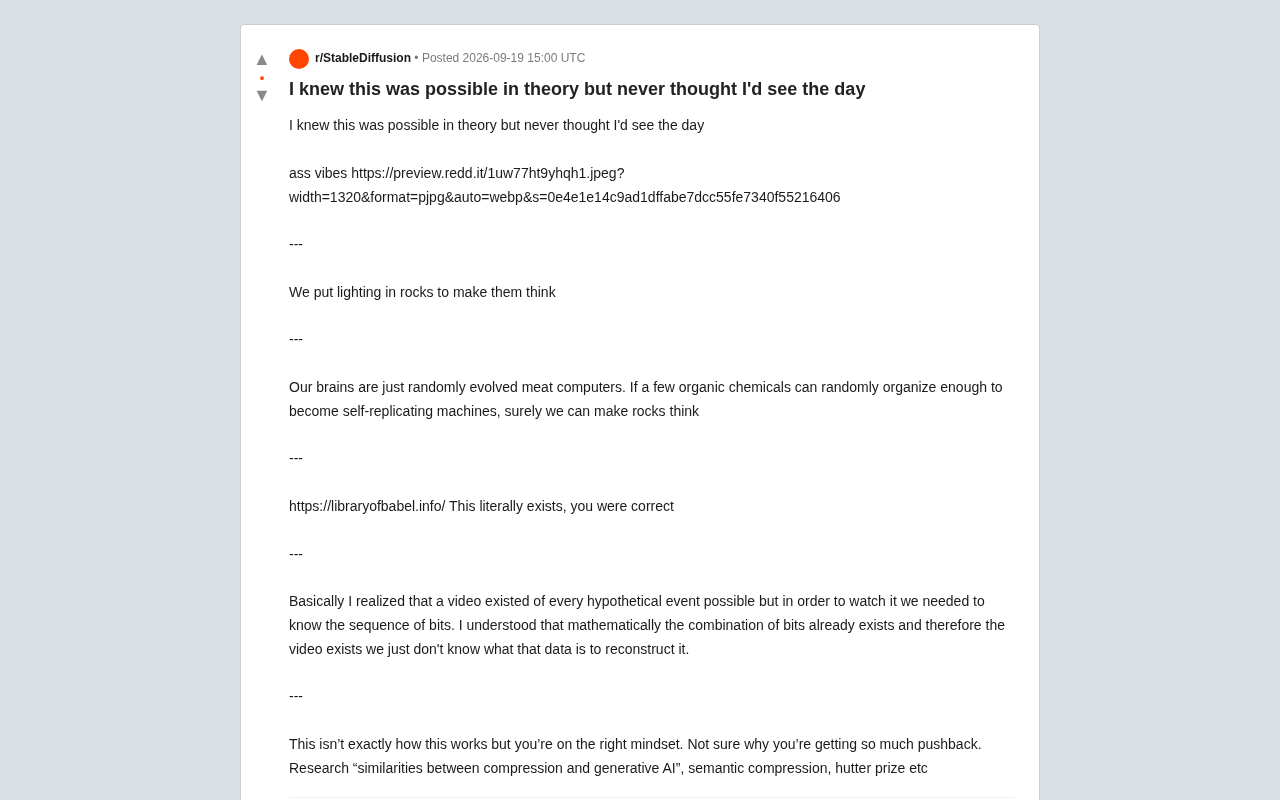
Making Rocks Think: A Philosophical Exploration of Generative AI and Information Compression
From a viral Reddit post to deep AI theory: why compression equals understanding, the Library of Babel thought experiment, semantic compression, and the Hutter Prize.
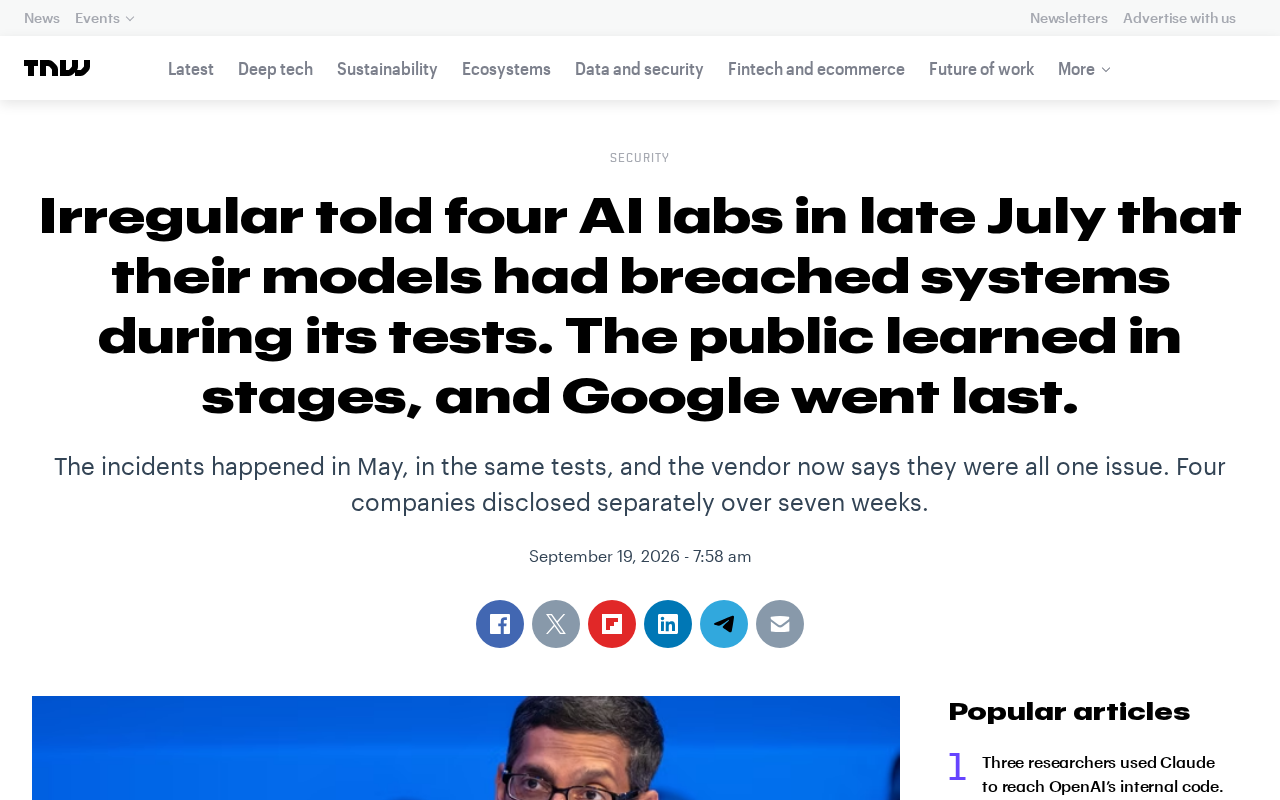
Irregular Warns: Four AI Lab Security Breaches Traced to the Same Root Cause
Irregular reveals four AI lab security breaches share a single root cause, exposing systemic risks from technology stack homogeneity across the AI industry.