Wyndham Hotel App Exposed Hardcoded Credential Vulnerability, Customer Data at Risk

Wyndham's customer app exposed customer data due to a hardcoded credential, with actual breach scope unknown.
Wyndham Hotel Group exposed customer data due to a hardcoded credential in its customer app, allowing anyone who discovered the credential to access customer information. Wyndham declined to state whether it can detect past unauthorized access, leaving the actual breach scope and duration unconfirmed. Hardcoded credentials are a common high-impact flaw in mobile apps that attackers can easily extract through reverse engineering to bypass authentication. The article analyzes root causes including test credentials entering production and CI/CD pipelines lacking sensitive data detection, and notes mature defenses such as key management services, static scanning, and regular reverse engineering audits. The incident underscores data security governance challenges for hotel chains in mobile services, requiring enterprises to integrate app security into overall risk management.
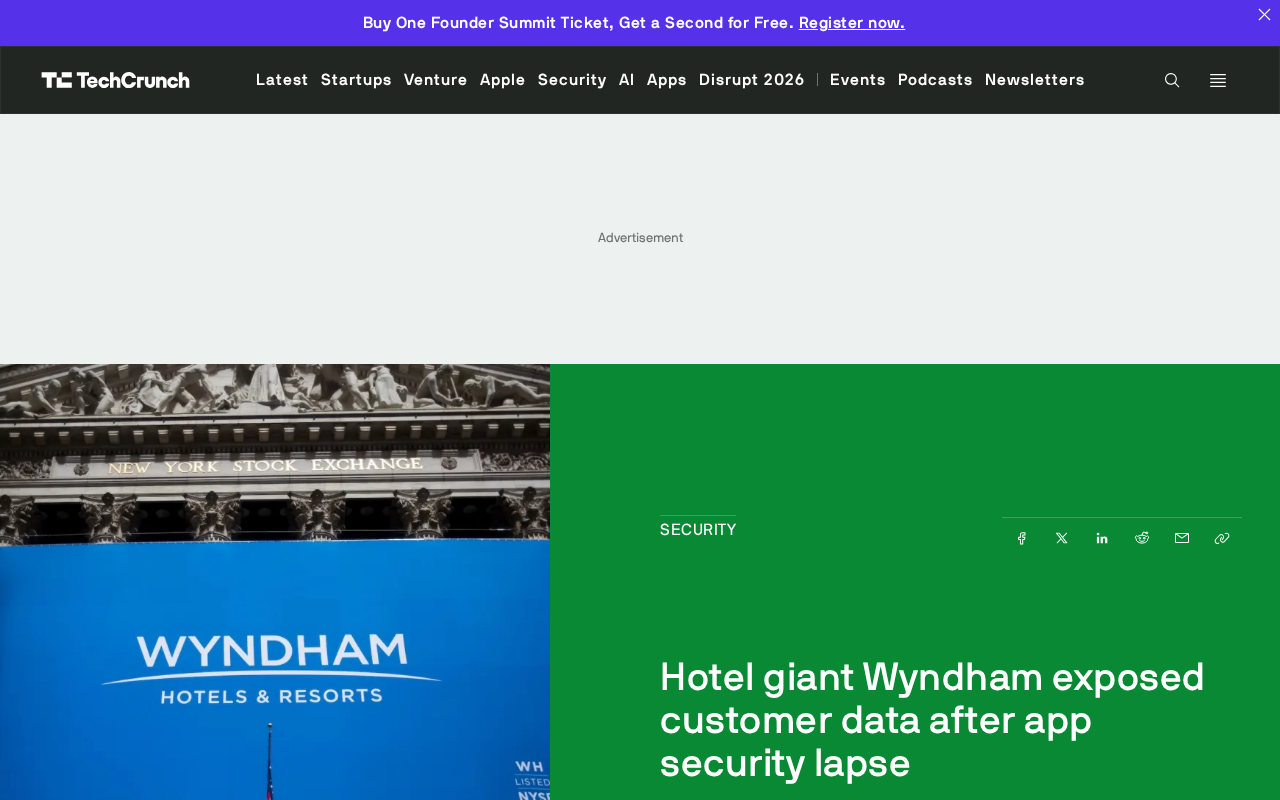
According to an exclusive report by a security media outlet, hotel giant Wyndham has exposed customer data due to a hardcoded credential in its customer app. This security lapse allowed anyone who discovered the credential to access customer information, and Wyndham declined to state whether it has the capability to detect past unauthorized access.
The Nature of the Vulnerability: Why Hardcoded Credentials Are Dangerous
Hardcoded credentials refer to developers writing passwords, API keys, or tokens directly into application code. This practice is especially dangerous in mobile apps because app installation packages can be downloaded and reverse-engineered by anyone. Once a credential is extracted, attackers can bypass normal authentication flows and directly access backend services.
This is precisely the core of the Wyndham incident: a hardcoded credential left in its customer app enabled "anyone" to access customer data. The report did not disclose the specific type of credential (whether it was an API key, database password, or service account token), but clearly stated the consequence—customer data exposure.
From a security engineering perspective, hardcoded credentials are a classic "low-level but high-impact" error. It does not require attackers to possess advanced penetration skills—only static analysis of the app package is needed to discover it. Such issues should have been easily caught in code audits and automated scanning, yet they appeared in a customer-facing app of a global hotel group, indicating a clear gap in its Secure Development Lifecycle (SDL).
Reverse Engineering is the key background for understanding this type of risk. Mobile app installation packages (such as Android APKs or iOS IPAs) are essentially distributable containers that anyone can obtain and then unpack, decompile, or inspect strings, resources, and bytecode using dynamic analysis tools (such as Jadx, Ghidra, Frida). Attackers do not need to run the app to extract hardcoded API keys, tokens, or passwords through static analysis. Even if developers use code obfuscation (such as ProGuard) or string encryption, these measures typically only raise the cost of analysis and cannot fundamentally stop determined attackers. Therefore, the industry security consensus is: any long-lived secret should never appear in client-side code and should instead be replaced by backend dynamic delivery or short-lived token mechanisms.
Wyndham's Response and Unknown Risks
The report states that Wyndham was unwilling to say whether it has the capability to check for past unauthorized access. This stance is worth scrutinizing: if an enterprise cannot confirm whether a credential has been abused, it cannot determine the actual scope and duration of a data breach.
For affected customers, this means they cannot know whether their information has been obtained by third parties. Hotel customer data typically includes names, contact information, stay records, and even payment-related information. Once leaked, it could be used for phishing attacks, identity theft, or targeted fraud.
This is not the first time Wyndham has faced data security issues. As one of the world's largest hotel groups, its brand portfolio covers numerous mid-range and economy hotels, with a massive customer base. This incident once again reminds the industry: while advancing mobile services, hotel chains must incorporate app security into their overall risk management framework.
Secure Development Lifecycle (SDL) is a framework that embeds security practices throughout the entire software process from requirements, design, development, testing to deployment and operations. It typically includes threat modeling, secure coding standards, Static Application Security Testing (SAST), Dynamic Application Security Testing (DAST), dependency component scanning, and pre-release security reviews. Issues like hardcoded credentials should have been intercepted during SAST scanning at the code commit stage or secret detection in the build pipeline. The presence of such a vulnerability in Wyndham's app suggests possible gaps in automated detection or mandatory gates within its SDL. A mature SDL also requires regular audits of third-party components and legacy code, because test credentials being mistakenly carried into production environments is often the result of process control failures.
The Industry-Wide Prevalence of Hardcoded Credential Issues
Hardcoded credentials are not a problem unique to Wyndham. In recent years, mobile apps from multiple well-known enterprises have been exposed with similar vulnerabilities, spanning social media, transportation, retail, and other sectors. The root cause often lies in development teams bringing test credentials directly into production environments for rapid deployment, or lacking automated detection of sensitive information in CI/CD pipelines.
From a defense perspective, mature practices already exist in the industry: using key management services (such as Secrets Manager provided by cloud vendors) to dynamically inject credentials, integrating static scanning tools at the code commit and build stages, and conducting regular reverse engineering audits of mobile apps. These measures are not costly; the key is whether they are incorporated into mandatory processes.
For Wyndham, the immediate priority is to rotate all potentially affected credentials and provide transparent explanations to external security researchers and customers. Refusing to disclose detection capabilities will only deepen external doubts about its security governance level.
Secrets Manager is a centralized sensitive information management solution provided by cloud vendors for securely storing, distributing, and auditing access to secrets such as API keys, database passwords, and tokens. Its core mechanisms include: encrypted storage of secrets, fine-grained access control (such as IAM-based policies), automatic rotation, and access audit logs. In mobile application scenarios, backend services can dynamically obtain credentials at runtime through Secrets Manager rather than packaging them into the client. Additionally, CI/CD pipelines can integrate secret detection tools (such as TruffleHog, GitGuardian) to automatically identify suspected hardcoded keys at the code commit or build stage and block releases. These practices can significantly reduce the risk of credential leakage, but only if enterprises incorporate them into mandatory processes and continuously monitor them.
Implications for Consumers and Enterprises
Ordinary users can do little in such incidents, but they can pay attention to whether enterprises proactively notify them and whether they offer free credit monitoring services (if financial information is involved). The more important lesson is for enterprises: the security defenses of mobile apps cannot rely solely on front-end obfuscation. The backend must perform strict authentication and authorization checks on every request. Any design that "trusts the client" is equivalent to planting a landmine.
The specific scope of impact of the Wyndham incident remains to be further disclosed, but it has already sounded the alarm for all enterprises operating customer apps—a seemingly low-level error like hardcoded credentials is enough to put massive amounts of customer data at risk.
One-line Summary
Wyndham's customer app exposed customer data due to a hardcoded credential, with the actual scope of the breach unknown.
Paragraph Summary
Wyndham Hotel Group exposed customer data due to a hardcoded credential in its customer app, allowing anyone who discovered the credential to access customer information. Wyndham declined to state whether it has the capability to detect past unauthorized access, making it impossible to confirm the actual scope and duration of the breach. Hardcoded credentials are a common high-impact flaw in mobile apps; attackers can easily extract them through reverse engineering and bypass authentication. The article analyzes the root causes of such issues, including test credentials mistakenly entering production environments and CI/CD pipelines lacking sensitive information detection, and notes that mature defense practices such as key management services, static scanning, and regular reverse engineering audits already exist in the industry. The incident highlights the data security governance challenges that hotel chains face in mobile services, and enterprises must incorporate app security into their overall risk management framework.
Related articles

ChatGPT Plus Subscription Pitfall Guide: Go/Plus/Pro Tier Comparison and Quick Activation
A complete ChatGPT Plus subscription guide based on a Bilibili tutorial: from registering an account, comparing Go/Plus/Pro tiers, to the practical steps for quickly completing your subscription.

GPT-6.2 Sol/Astra Released! A Step-by-Step ChatGPT Plus Subscription Guide and Tier Comparison
GPT-6.2 Sol/Astra is out—here's a ChatGPT Plus subscription guide: register an account, compare Go/Plus/Pro tiers, and subscribe in a minute.

Comparing Three Channels for Subscribing to GPT Plus in China: Is Website Top-Up the Easiest?
How to subscribe to GPT Plus in China? This article compares website top-up, credit card, and mobile top-up channels—process, cost, and risk—with steps and tips to help you choose wisely.