X Launches Cashtag Stock Trading, Blurring the Line Between Social Media and Markets
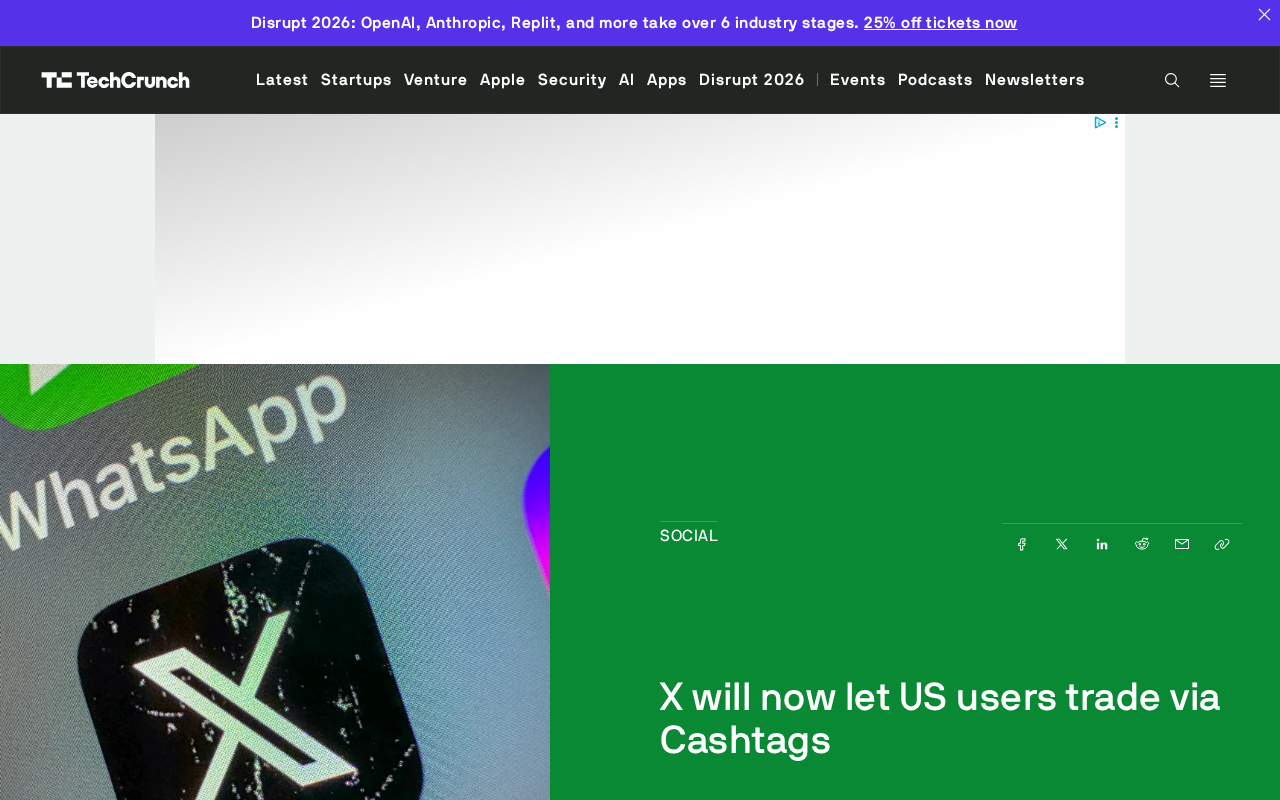
X upgrades Cashtags into trading entry points, eliminating the gap between social discussion and stock execution.
X (formerly Twitter) has announced that U.S. users can now trade stocks directly through Cashtags like $AAPL, eliminating the friction between market discussion and actual order placement. Previously a tool for information aggregation, Cashtags are now trade execution entry points — no need to switch to a third-party broker. The move is a key piece of X's "everything app" strategy, but raises concerns around impulsive trading, social sentiment amplifying market volatility, and regulatory compliance. Key details such as partner brokerages, supported assets, and fee structures have yet to be fully disclosed.
X Bridges the Gap Between Discussion and Trading
X (formerly Twitter) has announced that U.S. users can now trade directly through Cashtags — dollar-sign ticker tags like $AAPL. The core significance of this move is that it closes the gap between market discussions on the timeline and actual market trades.
For years, X has been a gathering place for investors, traders, and finance enthusiasts. Users discuss stocks, cryptocurrencies, and all kinds of assets using Cashtags, creating a vibrant financial conversation ecosystem. But until now, those discussions have always stayed at the level of talk: if a user spotted a trending post about a stock and wanted to act on it, they had to leave X and switch to a separate brokerage or trading app.
That friction is now gone. Users can move from browsing market discussions to executing a trade — all without leaving the platform. Discussion and execution have become one.
Cashtags: From Topic Tags to Trading Entry Points
Cashtags themselves aren't new. The format — a dollar sign followed by a ticker symbol — has long been the common language of financial discussion on X. Clicking a Cashtag takes users to a live feed of conversation around that asset.
The key upgrade here is transforming Cashtags from a pure "information aggregation point" into a "trade execution point." The logic is straightforward: users visiting a Cashtag page are already watching prices, reading bullish and bearish takes, and tracking market sentiment. Letting them place an order on that same screen dramatically shortens the path from "forming a trading intention" to "completing a trade."
For X, this is a significant step toward its "everything app" vision. Incorporating financial trading into the platform's feature set signals that X wants to be more than a social and information platform — it wants to become a venue for real economic activity.
The Promise and Peril of Social Trading
Tightly coupling social discussion with trade execution is a double-edged sword.
On the positive side, it lowers the barrier to trading and makes financial participation more accessible. For the active retail community on X, the ability to instantly convert an opinion into action undeniably boosts platform stickiness and utility. It also aligns with the broader trend of "social investing" — where investment decisions are increasingly shaped by community sentiment and public discourse.
But the risks are equally real. When there's zero friction between a market discussion and a one-tap trade, the likelihood of impulsive trading rises sharply. The emotional contagion, hype cycles, and potential for market manipulation that are native to social platforms could all be amplified by a "discuss-and-trade" model. Social media-driven market dislocations among retail investors have played out multiple times in recent history, and embedding trading directly into the discussion environment could intensify such volatility.
Regulatory considerations are also significant. The feature is currently limited to U.S. users — likely a reflection of the varying financial regulatory frameworks across different regions. Securities trading is a heavily regulated domain, and rolling out such functionality requires meeting compliance requirements, which is why features like this are typically launched regionally and in phases.
The most iconic social media-driven market event in history occurred in early 2021: retail investors on the Reddit forum WallStreetBets collectively discussed and acted on GameStop ($GME), pushing the video game retailer's stock price up more than 1,700% in just a few days and inflicting billions of dollars in losses on several hedge funds that had shorted the stock. The episode vividly illustrated the positive feedback loop between social sentiment and market volatility — when large numbers of users are driven by the same narrative and move in the same direction within a very short window, prices can diverge dramatically from fundamentals. If X's Cashtags feature is deeply integrated with one-tap trading, it will structurally replicate and potentially amplify this mechanism: discussion momentum itself could become fuel for price moves, while rising prices attract more discussion and buying, creating a spiral with no predictable endpoint.
Redefining the Boundaries of a Platform
X's move reflects the broader trend of tech platforms continuously expanding their operational scope. Social networking, payments, trading, and content distribution are increasingly converging within a single entry point. For users, the gain in convenience comes with a responsibility to stay rational — market discussions on social platforms are a mixed bag, and the ease of one-tap trading should not become a reason to abandon independent judgment.
Publicly available details remain limited. Information about partner brokerages, supported asset classes, fee structures, and specific risk control mechanisms has yet to be fully disclosed. But one thing is clear: X is transforming itself from "a place where people talk about markets" into "a place where people participate in markets," and the boundary between social media and finance is quietly dissolving.
X's "Everything App" vision directly mirrors the WeChat model that Elon Musk has openly admired. WeChat in China integrates instant messaging, social media, mobile payments (WeChat Pay), a mini-program ecosystem, ride-hailing, food delivery, and more into a single entry point — generating enormous user stickiness and platform leverage. Since acquiring Twitter in 2022 and rebranding it as X, Musk has repeatedly stated his intention to replicate this path, with plans to gradually embed payment, banking, and investment services into the platform. The launch of the Cashtags trading feature is a concrete signal of this strategy taking shape; the previously launched X Money account feature represents the foundational layer of its financial infrastructure. Together, they point toward a single goal: transforming X from an advertising-driven media platform into a super app with financial services as its core revenue pillar.
Related articles
Automattic Executives Signed Reciprocal Severance Agreements During Mullenweg's Brief Ouster
Automattic's CFO and General Counsel signed reciprocal severance agreements during Matt Mullenweg's brief ouster, covering one year's salary and accelerated equity vesting, raising corporate governance concerns.
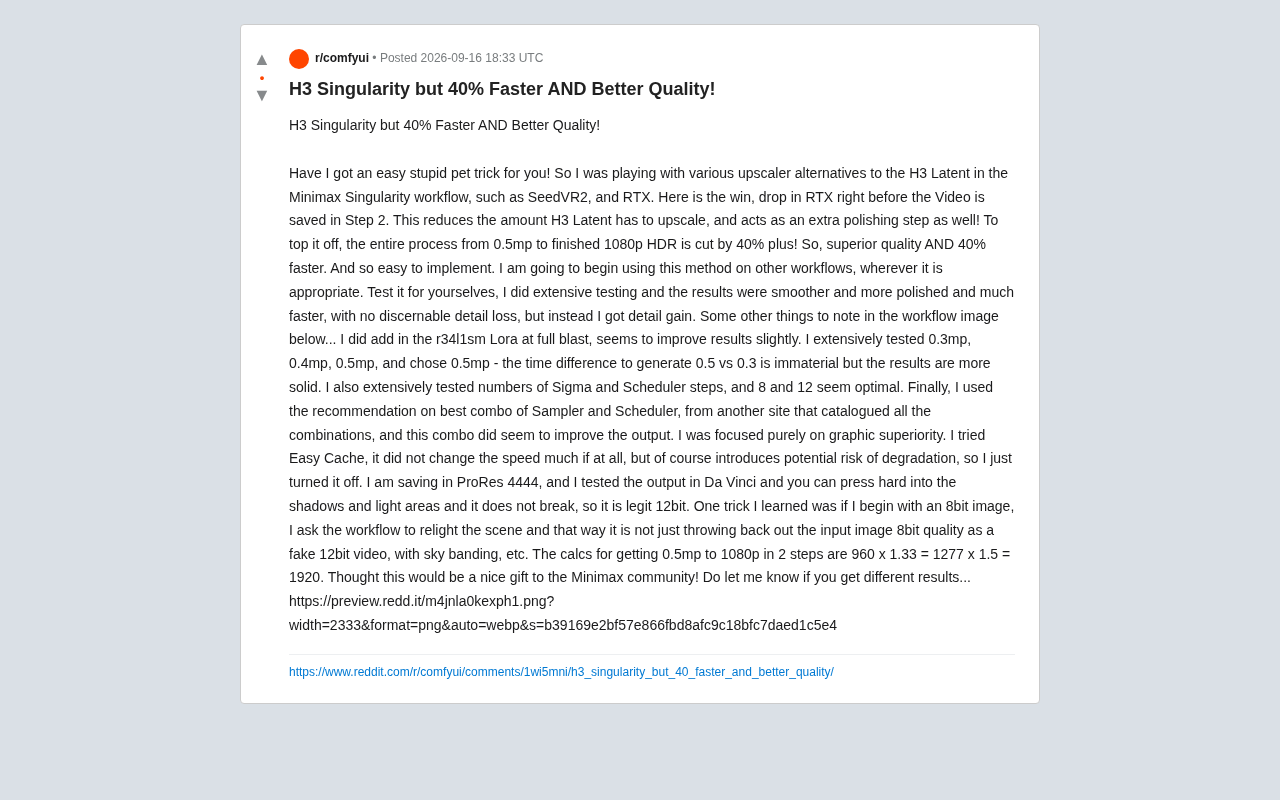
H3 Singularity Optimization: 40% Speed Boost With Better Image Quality
A Reddit user's Minimax Singularity workflow tip: insert an RTX upsampler before H3 Latent for 40%+ speed gains and better quality. Covers parameters, 12-bit output, and more.
Glyph: A Multi-Strategy Agent System for Automated Enterprise Data Catalog Annotation
Glyph is a multi-strategy LLM agent system for enterprise data catalogs that automates column description generation and sensitivity ontology tagging, grounding outputs in pipeline source code to improve accuracy.