Xbox Brand Dilution Accelerates: The Strategic Crisis Behind 3,200 Layoffs

Microsoft's mass layoffs accelerate Xbox's studio collapse and brand identity crisis.
Microsoft's latest round of roughly 3,200 layoffs is consolidating and closing Xbox game studios, deepening a profound identity crisis for the brand. Studios are the creative and emotional core of any gaming brand, and their dissolution erodes Xbox's ability to deliver quality exclusives. Meanwhile, Microsoft's push toward Game Pass subscriptions and cloud gaming — transforming Xbox from a hardware platform into a ubiquitous service — risks undermining the very brand recognition it depends on, especially if first-party content continues to shrink. Whether this represents deliberate strategic reinvention or reactive cost-cutting, the Xbox players once knew is becoming increasingly unrecognizable.
Xbox's Identity Crisis
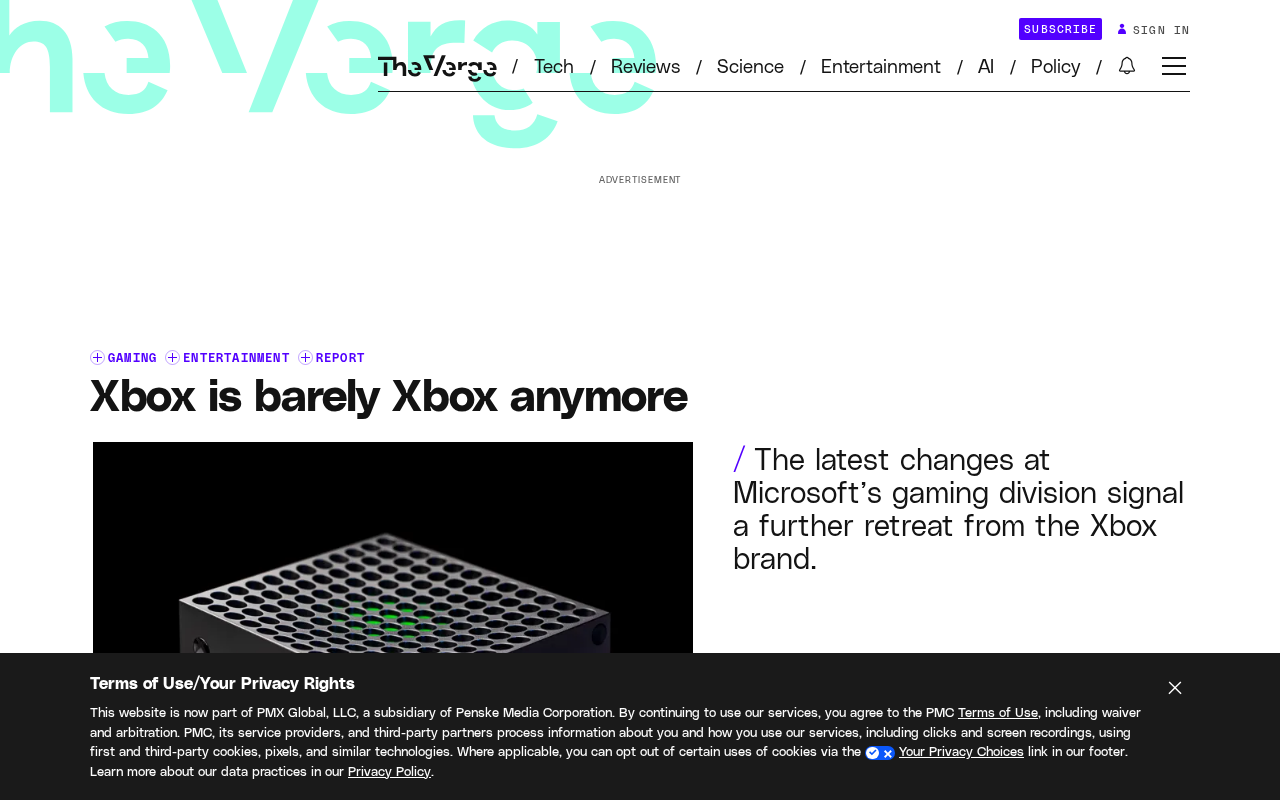
Xbox is becoming less and less like Xbox. As part of a sweeping round of layoffs affecting approximately 3,200 employees, Microsoft has announced a series of changes that will further dilute the brand. Multiple studios are being consolidated, others are on the verge of closure, and some of Xbox's most iconic assets are facing unprecedented upheaval.
Based on initial reports, Xbox has been reduced to a hollow shell of its former glory — and things appear to be getting worse. For a brand that once stood toe-to-toe with Sony PlayStation in the console wars, that's a damning assessment.
The Ripple Effects of Layoffs and Studio Consolidation
At roughly 3,200 positions, this round of layoffs represents a significant chapter in Microsoft's ongoing cost-cutting efforts. The headcount reduction is concerning enough on its own, but the structural changes that accompany it — studio mergers and teams teetering on the edge of full closure — deserve even closer scrutiny.
Studios are the creative engine of any gaming brand. They don't just make games; they carry the brand's creative DNA and serve as the emotional anchor for player communities. When these teams are consolidated or dissolved, the short-term effect may look like cost optimization on a balance sheet, but the long-term consequence is a measurably diminished capacity to produce high-quality exclusive content.
For a console platform that relies on first-party titles to build its competitive moat, the loss of creative talent is an invisible cost that no spreadsheet can fully capture. Once iconic IPs become disconnected from the core teams that built them, the brand's distinctiveness erodes piece by piece.
Microsoft completed its acquisition of Activision Blizzard in 2022 for approximately $68.7 billion — the largest deal in gaming history — giving Xbox a portfolio of over 30 studios and top-tier IPs including Call of Duty, World of Warcraft, and Candy Crush. But such an expansive studio network also introduced management complexity and redundant functions. Some analysts view the current wave of layoffs as an inevitable cost of digesting that acquisition — post-merger headcount reduction is standard corporate practice. However, the gaming industry's unique challenge is that the chemistry and cultural momentum of creative teams are nearly impossible to rebuild after a restructuring. Once a development team forged through years of collaboration is disbanded, its accumulated institutional knowledge is gone permanently.
What "Brand Dilution" Actually Means
The use of the word "dilute" to describe Xbox's current state is telling. Brand dilution typically refers to a once-clear, powerful brand identity becoming blurred through overexpansion, strategic inconsistency, or the loss of core assets.
For Xbox, this dilution may be playing out across several dimensions: a declining hardware presence, a shrinking first-party studio roster, and a weakening association between the brand and exclusive gaming experiences. When players can no longer clearly articulate what Xbox stands for, the dilution has already taken hold.
It's worth noting that Microsoft has been aggressively pushing its Game Pass subscription service and cross-platform strategy, aiming to transform Xbox from "a console" into "a gaming service that's everywhere." This strategic pivot has its own commercial logic. But if it's executed at the expense of traditional console business and first-party content, it risks accelerating the collapse of the brand identity it was built upon.
Game Pass, launched by Microsoft in 2017, is a gaming subscription service that lets users access hundreds of games for a monthly fee — essentially a "Netflix for games." Xbox Cloud Gaming extends this further, allowing users to stream games on phones, tablets, or browsers without needing console hardware. Together, these two services form the backbone of Microsoft's "platform-agnostic" strategy — in theory, players don't need an Xbox console; they just need a subscription to access Microsoft's gaming ecosystem. Yet this logic introduces a fundamental contradiction: if console hardware is no longer a prerequisite for accessing games, the very rationale for Xbox as a hardware brand is significantly undermined. Meanwhile, Game Pass's long-term viability depends heavily on a steady supply of high-quality first-party content — precisely the capability being eroded by layoffs and studio consolidations, creating a self-defeating strategic loop.
Strategic Reinvention or Reactive Retreat?
There's a critical interpretive divide here: are these changes an intentional strategic transformation, or a reactive cost-cutting exercise?
From an optimistic standpoint, Microsoft may be deliberately shedding the traditional console manufacturer mindset, redirecting resources toward subscription models, cloud gaming, and cross-platform distribution — areas better aligned with where the industry is heading. Under this narrative, studio consolidation is resource reallocation, and layoffs are organizational efficiency gains.
From a more critical perspective — the tone that comes through in the original reporting — this looks more like a passive retreat lacking any coherent vision. When a company simultaneously executes mass layoffs, studio mergers, and brand restructuring, it's hard not to wonder whether there's a consistent long-term plan at work, or whether leadership is simply responding to financial pressure.
Regardless of which interpretation holds, the most immediate reality for everyday players is this: the Xbox that once brimmed with landmark exclusives and a distinct identity is becoming increasingly unrecognizable.
What This Means for the Industry and Players
Xbox's predicament reflects the profound transformation the entire gaming industry is undergoing. The rise of subscription services and cloud gaming is reshaping the traditional console business model, while relentless pressure from capital markets for profitability is forcing major players to continually trim teams and cut costs.
For players, this signals that the way games are accessed in the future may look very different from the past. The console as the central hub of gaming may be marginalized, replaced by a cross-device, subscription-based consumption model. This shift brings its own conveniences, but also carries real risks: fewer exclusive titles and a potential decline in creative diversity.
For the industry at large, Xbox's story offers a cautionary example: when a brand loses its grip on its core identity during a period of transformation, even the backing of a giant like Microsoft can't prevent the slow unraveling of what made it distinctive.
(Note: This article is based on a single source report. Specific details of the strategic adjustments and their downstream effects remain to be confirmed by additional reporting.)
Related articles

Gemini 4 Argon Launches Globally: Key Highlights from the AI Daily Brief
Google opens Gemini 4 Argon globally across Pro and Ultra subscriptions and the API, and demonstrates robot control. This article rounds up open-source models, Agent infrastructure, cost transparency, and safety governance updates.

OpenCode Surpasses Cursor with 213.5k Stars: The Three-Way AI Coding War Behind a $60 Billion Sale
OpenCode overtakes Cursor with 213.5k stars as Cursor reportedly seeks a $60B sale. We break down the business models, user scenarios, and moats of open-source OpenCode, commercial IDE Cursor, and Anthropic's Claude Code, plus three possible endings for the AI coding tool landscape.

Vercel CEO's AI Coding Workflow: 7 Key Principles
Vercel CEO shares his complete workflow for collaborating with AI agents: validate ideas with an MVP, use the direction command to prevent drift, scan security debt with DeepSec, use a breaker agent to attack the app, test from a first-visit user perspective, and close the customer feedback loop through MCP—plus seven actionable AI coding practices.