Xiaodu Z20 Plus Learning Tablet Review: Wenxin LLM AI Teacher 1-on-1 Tutoring Experience

Xiaodu Z20 Plus centers on a 13.3-inch eye-protection screen and Wenxin LLM AI tutoring; we break down its real performance and purchase tips.
The Xiaodu Z20 Plus optical eye-protection learning tablet features a 13.3-inch large screen, Wenxin LLM AI teacher, and free all-subject textbooks, aiming to replace some human tutoring with conversational Q&A. Based on a Bilibili creator's video, we analyze its actual performance: AI explanations help with homework but fluctuate on open tasks; the large split-screen is good, though eye protection needs distance reminders; textbook sync requires checking local versions; gamified incentives boost initiative but need parental control. Suitable for elementary to middle school families with limited parent tutoring time.
The Xiaodu Z20 Plus optical eye-protection learning tablet features a 13.3-inch large screen and a Wenxin large language model (LLM) AI teacher as its core selling points, emphasizing free all-subject textbooks and homework tutoring. This article, based on an actual experience video by a Bilibili creator, breaks down the real performance of this learning tablet in terms of AI precision learning, eye-protection design, and tutoring functions.
Core Selling Point: How 1-on-1 AI Teacher Tutoring Works in Practice
The biggest differentiator of the Xiaodu Z20 Plus is its integration of the Wenxin LLM, packaging an "AI teacher" as a conversational tutoring companion. According to the Bilibili creator's demonstration, the device can explain homework questions and adjust the pace of explanation based on the child's responses. In the video, the creator mentions "I have a teacher who follows along," referring to this synchronized, always-online tutoring experience. Compared with traditional learning tablets that only offer recorded courses, LLM-driven Q&A is closer to replicating some scenarios of a real human tutor.

What needs to be viewed rationally is that the accuracy and depth of AI explanations depend on model capabilities and question bank coverage. For open-ended tasks such as mathematical step-by-step derivations and essay corrections, the AI teacher's performance still fluctuates, and parents should not completely let go.
Wenxin LLM is a series of large language models developed by Baidu, with capabilities in natural language understanding, multi-turn dialogue, and content generation. In the learning tablet scenario, the model is used to parse questions, generate step-by-step explanations, and adjust answers based on the child's follow-up questions. Unlike traditional question bank retrieval-based Q&A, large models can handle questions not included in the question bank, but output quality is limited by training data, prompt design, and inference computing power, and may exhibit skipped steps or factual errors. Therefore, manufacturers typically overlay textbook knowledge bases and manual review rules on model outputs to improve reliability in academic scenarios.
Optical Eye Protection and 13.3-Inch Large Screen
13.3 inches is a "large screen" specification among learning tablets, approaching the field of view of a thin and light laptop, suitable for long periods of viewing courseware and doing homework. The Xiaodu Z20 Plus emphasizes "optical eye protection," reducing eye fatigue by lowering flicker and adjusting color temperature. The advantage of a large screen is more comfortable split-screen operation—for example, questions on the left and AI explanations on the right—so children don't need to switch pages frequently.
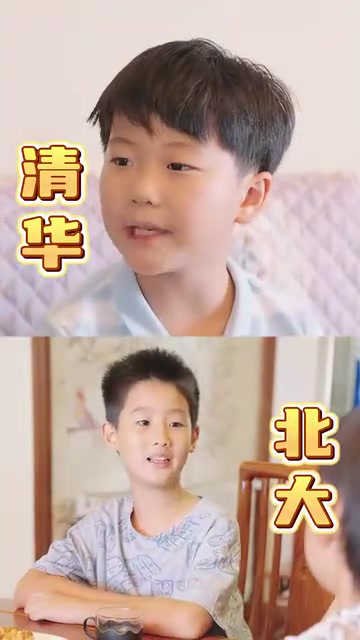
Eye protection effects are difficult to fully quantify with parameters; actual experience depends on viewing distance and ambient light. Parents are advised to use the device's distance reminder function rather than treating eye protection as insurance that "once bought, you can relax."
Flicker refers to high-frequency brightness changes in the screen backlight that are difficult for the human eye to detect. Low flicker (such as DC dimming or high-frequency PWM dimming) can reduce visual fatigue and headache risk. Color temperature adjustment changes the screen's white point toward warmer or cooler tones, reducing the proportion of short-wavelength blue light and lowering interference with melatonin secretion during nighttime use. These two are the most common hardware methods in learning tablet "eye protection" marketing, but eye protection effects are also affected by screen brightness, ambient illuminance, viewing distance, and duration; a single parameter cannot represent overall eye health.
Free All-Subject Textbooks and Synchronized Tutoring
The official standard configuration emphasizes free all-subject textbooks and synchronized home tutoring for homework. For parents, this saves the additional annual expense of purchasing supplementary materials and memberships. The creator mentions "little children's books handed to me for hugging," corresponding to the device's built-in picture books and reading resources, covering enlightenment content for younger age groups.

Textbook synchronization is a basic capability of learning tablets; the real gap lies in whether content updates keep pace with textbook revisions. When purchasing, it is advisable to confirm whether the local textbook version is supported, to avoid "all subjects" becoming "only some subjects available."
Textbook synchronization means that learning tablet content is organized by publisher (e.g., PEP, BNUP, SPP, etc.), grade, and semester, aligned with school teaching progress. Different regions use different textbook versions, and the same subject may have multiple versions in parallel. Therefore, whether "free all subjects" is practical depends on whether the device covers the version used in the user's location. When textbooks are revised, synchronized content needs to be re-proofread and updated; lagging updates can lead to chapter mismatches. When purchasing, check the list of supported versions and pay attention to the manufacturer's content update frequency commitments.
Incentive System: Learning Exchange Rewards and Gamification Design
The Xiaodu Z20 Plus introduces a learning reward mechanism: completing learning tasks earns virtual rewards such as coins. In the creator's video, the child says "I can play games when I learn" and "I can earn coins by playing games," reflecting the product's attempt to use gamification to boost learning initiative.
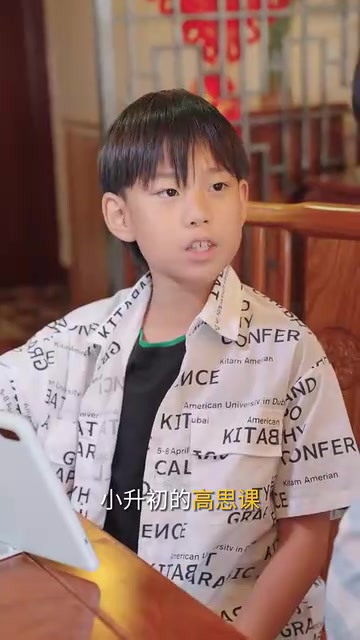
Gamification is a double-edged sword. Moderate rewards can establish positive feedback, but poor design can easily lead children to perfunctorily complete tasks just for rewards. Parents need to control entertainment time and the scope of reward redemption in settings, using the incentive system for habit formation rather than letting it become a new entry point for addiction.
Gamification design refers to introducing game mechanics such as points, levels, badges, and redemption into non-game scenarios to enhance user engagement. In learning products, a common approach is to earn virtual coins by completing tasks, then use coins to redeem game time or virtual items. "Variable rewards" in behavioral psychology can reinforce habits, but overly strong external rewards may weaken intrinsic learning motivation, causing children to view learning as a tool for exchanging rewards. A reasonable approach is to link rewards to the quality of the learning process and gradually reduce the weight of external incentives, transitioning to self-achievement-driven motivation.
Purchase Advice and Target Audience
The Xiaodu Z20 Plus is suitable for families that need a large screen and value AI Q&A and textbook synchronization, especially for elementary to middle school stages where parents have limited tutoring time. If the child has weak self-motivation, gamified incentives and AI tutoring can provide some assistance; but if you expect AI to completely replace a human tutor, reality will fall short.
When purchasing, pay attention to the official standard configuration and after-sales terms of nationwide warranty. Learning tablets are hardware for long-term use, and the warranty policies for the screen and battery are worth confirming in advance.
One-line Summary
The Xiaodu Z20 Plus centers on a 13.3-inch eye-protection large screen and Wenxin LLM AI tutoring; this article breaks down its real performance and purchase considerations.
Paragraph Summary
The Xiaodu Z20 Plus optical eye-protection learning tablet features a 13.3-inch large screen, Wenxin LLM AI teacher, and free all-subject textbooks, attempting to replace some real human tutoring scenarios with conversational Q&A. Based on a Bilibili creator's experience video, this article analyzes its actual performance in AI precision learning, eye-protection design, and tutoring functions: AI explanations are helpful for homework tutoring, but accuracy fluctuates on open-ended tasks; the large-screen split-screen experience is good, but eye protection still requires distance reminders; textbook synchronization requires confirming the local version; gamified incentives can boost initiative, but parents need to control entertainment time. Overall, it is suitable for families with elementary to middle school children where parents have limited tutoring time.
Related articles
Anthropic Security Chief's Remarks Spark Debate: Is AI a Security Crisis or a Scapegoat?
Anthropic security chief's remarks spark Reddit debate: Is AI worsening the internet security crisis or merely exposing long-standing vulnerabilities? Community clashes over the 18-month timeline, regulatory dilemmas, and the F1 nuclear engine analogy.

Rumors of a Touchscreen MacBook Resurface, and Lenovo's Yoga 9n Offers a Good Blueprint
Rumors of a touchscreen MacBook resurface as foreign media cites Lenovo's Yoga 9n as a reference, arguing touch laptops need systematic design across form, performance, and ecosystem. This article analyzes the challenges Apple may face and the industry signals.

Claude Code MCP Tasks: A New Paradigm for Long-Running Tasks and Proactive Questioning
Claude Code supports MCP Tasks and elicitations, enabling tool calls to run as long tasks and ask users questions mid-execution. This article explains the conditions, current gaps, and required server changes.