Xiaomi Opens Live Dashboard for Mimo 2.6 Post-Training, Sparking Debate on AI Transparency
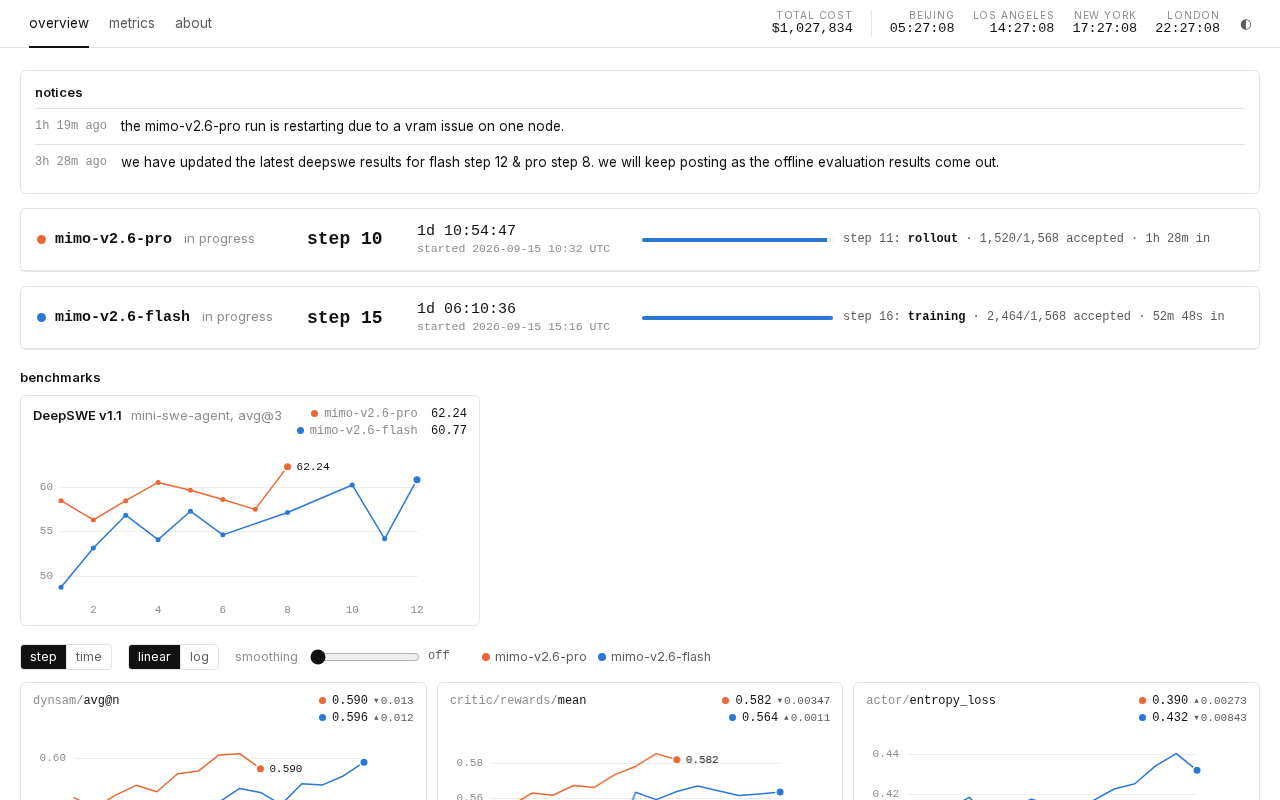
Xiaomi opens a live post-training dashboard for Mimo 2.6 — a rare transparency move in AI's black-box culture.
Xiaomi has publicly exposed the post-training process of its Mimo 2.6 model via a live dashboard, an unusually transparent move in an industry where such details are closely guarded. Post-training — covering SFT, RLHF, and related techniques — is the critical stage that shapes a model's final behavior and has long been treated as a core competitive secret. The dashboard may surface dynamic metrics like loss curves, reward scores, and benchmark results, letting outsiders observe model capability as it evolves rather than just seeing a curated final report. However, the community has raised questions about data authenticity, potential methodology exposure, and whether the transparency is genuine or primarily marketing. The article argues such practices could lower barriers to external reproduction and raise industry standards, but true openness still requires supporting technical reports and reproducible evaluation protocols.
An Unusual Transparency Experiment
At a time when AI model development is typically shrouded in secrecy, Xiaomi has publicly exposed the post-training process of its Mimo 2.6 model through a live dashboard — a move that quickly caught attention on Hacker News, earning 60 upvotes and 21 comments in a short period.
Post-training refers to the phase that follows base model (pre-training) completion, where techniques such as supervised fine-tuning (SFT) and reinforcement learning from human feedback (RLHF/RLAIF) are used to align model behavior and enhance specific capabilities. This stage is often the decisive factor in a model's final performance, and it has long been the "black box" that most companies guard most closely. Xiaomi's choice to surface this process in real time via a public dashboard is itself a signal worth examining.
Several mainstream paradigms have emerged for the post-training phase. Supervised fine-tuning (SFT) directly adjusts model output style and format using high-quality, human-annotated example data. RLHF trains a separate reward model to simulate human preferences, which then guides policy model optimization. The more recent RLAIF (Reinforcement Learning from AI Feedback) replaces part of the human annotation with a stronger AI model, reducing data costs. Direct Preference Optimization (DPO), a simplified alternative to RLHF that eliminates the need for a separate reward model, has also been gaining traction. Each approach involves trade-offs in data efficiency, stability, and alignment quality — and these trade-offs are at the heart of what differentiates each company's post-training "recipe."
What a Live Dashboard Actually Reveals
A "live" post-training dashboard typically surfaces dynamic metrics as training progresses: loss curves, reward model scores, intermediate benchmark results, and compute resource utilization. For researchers and engineers, this kind of information is highly valuable — it allows outside observers to watch how model capabilities evolve across training steps, rather than seeing only a polished final result.
This stands in stark contrast to the traditional "publish when finished" model. Most companies release a clean scorecard only after training is complete, while the fluctuations, failed experiments, and metric regressions that occur along the way stay hidden behind closed doors. Xiaomi's live dashboard pulls back that curtain, at least partially.
The loss curve is the most fundamental tool for understanding training progress. During post-training, a declining loss value doesn't always mean the model is getting "better" — excessively low loss can indicate overfitting, where the model memorizes training data and loses generalization ability. Meanwhile, a continuously rising reward model score can sometimes trigger "reward hacking," where the model learns to game the objective rather than genuinely following human intent. For this reason, researchers observing a dashboard typically need to track the interplay between multiple metrics rather than following a single curve. The choices Xiaomi makes about which metrics to show — and at what level of granularity — are themselves a deliberate editorial judgment about what to expose.
What the Community Is Talking About
Given the discussion volume on Hacker News, the technical community clearly has strong interest in this kind of transparency experiment. Conversations tend to orbit a few key questions: the authenticity and reproducibility of the dashboard data, whether publishing these metrics risks leaking core methodological secrets, and whether this level of openness is genuine or primarily a marketing move.
It's worth noting that disclosing post-training metrics involves delicate trade-offs. On one hand, transparency helps build technical credibility and attracts research community engagement. On the other hand, the training recipe and data composition are often a company's most critical competitive moat — excessive disclosure could undermine that advantage. How Xiaomi is navigating this balance is one of the most interesting dimensions of this experiment.
Potential Industry Impact
If the live dashboard format proves effective and well-received, it could push more companies to raise the bar on model development transparency. For open and semi-open model ecosystems, making the training process observable lowers the barrier for external reproduction and gives the community a more informed basis for evaluating model capabilities.
That said, caution is warranted. The metrics displayed on any dashboard are chosen and framed by the company itself — viewers are still seeing a curated perspective. True transparency also requires accompanying technical reports, data documentation, and reproducible evaluation protocols. A dashboard alone is just one piece of the transparency puzzle.
The industry currently spans a wide spectrum on model development openness. At one end, Meta's LLaMA series provides model weights and limited technical reports, but training data and the full recipe remain undisclosed. At the other end, companies like OpenAI and Anthropic reveal almost no training details at all. In between sit organizations like EleutherAI and Allen AI, which follow a "fully open" approach that includes publishing training logs and datasets. In spirit, Xiaomi's live dashboard aligns more closely with this latter approach — but whether it meets the bar for academic reproducibility still depends on what supporting materials accompany it. This context makes the experiment's position in the broader industry landscape particularly worth watching.
Takeaway
Xiaomi's live post-training dashboard for Mimo 2.6 represents a proactive transparency experiment from a domestic large model team. It speaks directly to the AI community's long-standing frustration with "black box" training, and opens a new window for observing how a model evolves. Whether this kind of practice becomes an industry norm remains to be seen — further details and follow-up verification will matter. But for now, it offers a valuable case study for the conversation.
Note: This article is based on publicly available discussion from Hacker News. For specific dashboard metrics and technical details, please refer to Xiaomi's official releases.
Related articles
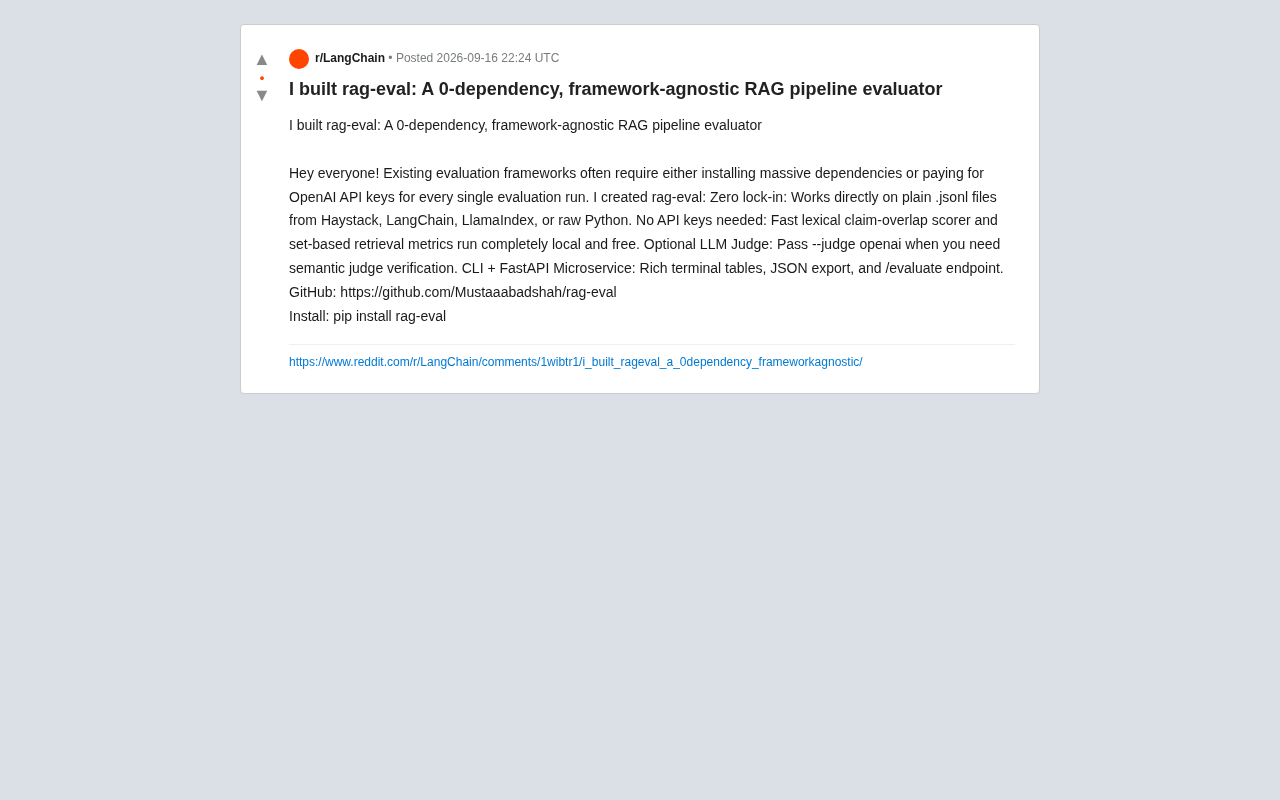
rag-eval: A Zero-Dependency, No-API-Key RAG Evaluation Tool
rag-eval is a zero-dependency, framework-agnostic open-source RAG pipeline evaluation tool. It supports free local lexical and retrieval metrics with no API keys required, and offers optional LLM Judge for semantic validation. Compatible with Haystack, LangChain, and LlamaIndex.
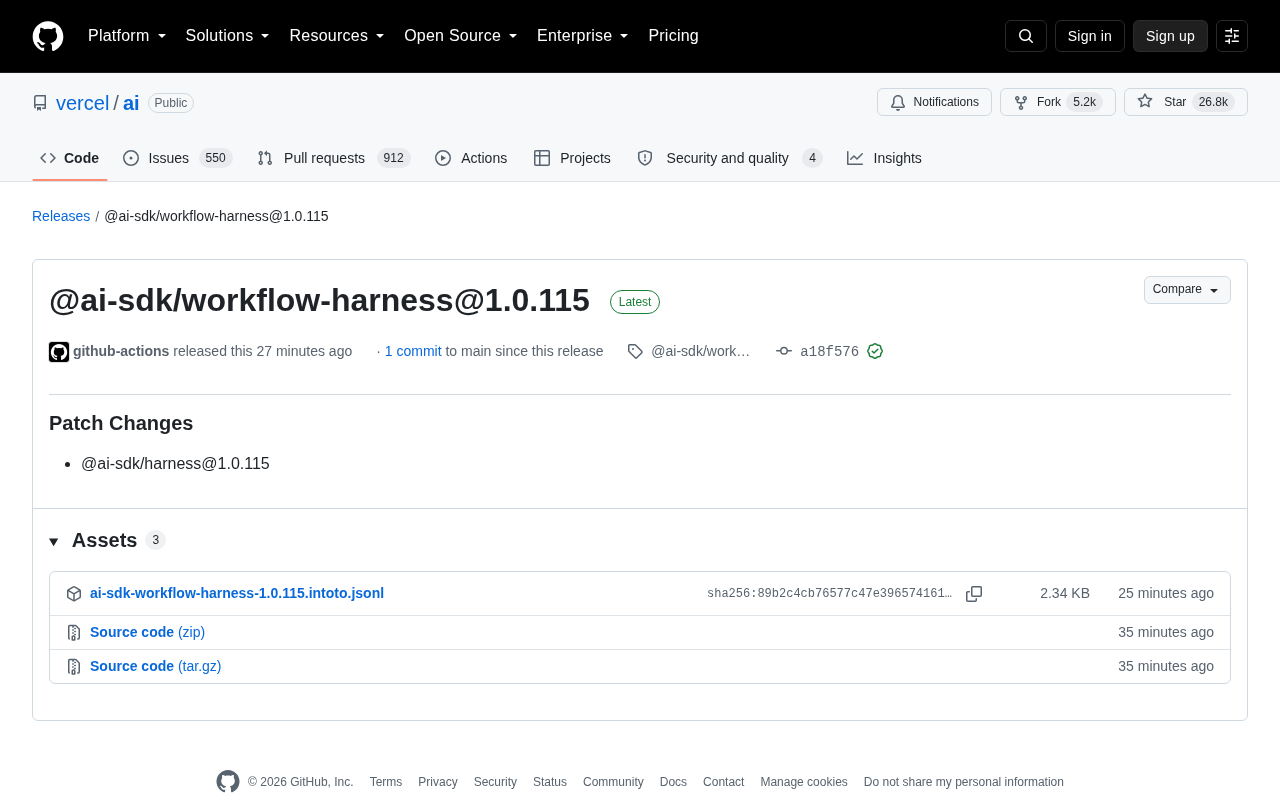
Vercel AI SDK Releases workflow-harness 1.0.115 Patch Update
Vercel AI SDK releases @ai-sdk/workflow-harness 1.0.115 patch update, syncing the @ai-sdk/harness dependency. Learn about the update, release mechanism, and what it means for developers.
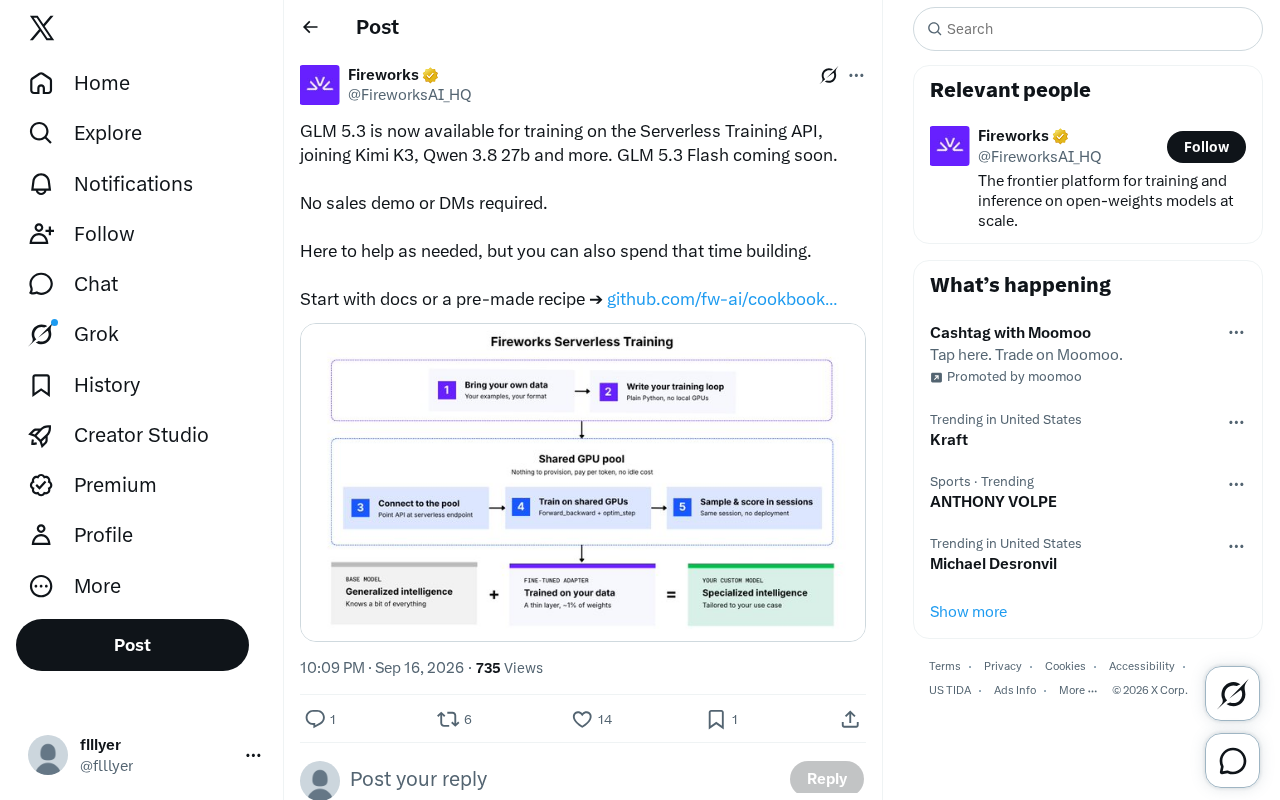
GLM 5.3 Now Available on Serverless Training API — No Sales Process Required
GLM 5.3 is now available on Serverless Training API alongside Kimi K3 and Qwen 3.8 27b. No sales process needed — start fine-tuning directly via docs or pre-made recipes.