YCloud June Update: A Deep Dive into Five Core Capability Upgrades for WhatsApp AI Agent

YCloud's June update upgrades WhatsApp AI Agent, service continuity, analytics, Shopify automation, and attribution.
YCloud's June update spans five areas: AI Agent now supports structured messages and self-optimizing recommendations, Inbox and Calling share service context, template analytics migrates to Meta's official API, Shopify order fields expand, and ChatLink enables full-chain traffic attribution—collectively boosting WhatsApp marketing and customer service efficiency.
Article
As an enterprise-focused WhatsApp business marketing and customer service platform, YCloud rolled out a broad-reaching product update in June. This update centers on five dimensions—AI Agent, service continuity, template analytics, Shopify automation, and traffic attribution—with the core goal of making AI replies smarter, customer service more coherent, and data analytics and automation workflows more complete.
It's worth noting that the space YCloud operates in has a unique ecosystem background. The WhatsApp Business API is a programming interface that Meta (formerly Facebook) opens up to medium and large enterprises. Unlike the WhatsApp Business App aimed at micro and small merchants, the API version allows businesses to conduct large-scale message sending, build automation workflows, and integrate customer service systems through licensed third-party platforms (i.e., BSPs, or Business Solution Providers). A BSP is essentially a Meta-authorized technical partner responsible for key duties such as compliance review, number registration, and message routing. Enterprises cannot call the API directly—they must access it through a BSP. Notably, Meta's qualification review for BSPs is quite strict, and the number of licensed BSPs worldwide is limited, which creates a certain industry barrier. YCloud is one such licensed BSP. Globally, WhatsApp has over 2 billion monthly active users, with extremely high penetration in emerging markets such as Southeast Asia, the Middle East, Latin America, and India, making it a core channel for cross-border e-commerce and outbound enterprises to reach overseas customers. Around this ecosystem, a complete business model has formed, encompassing conversational marketing, customer service automation, and private-domain traffic operations.
Below, drawing on the details officially released, we break down the value of this update item by item, along with the product logic behind it.
AI Agent: From Plain Text to Structured Interaction
The most noteworthy part of this update is the significant enhancement of AI Agent capabilities. In the past, AI replies mainly stayed at the plain-text level; now they support WhatsApp's custom interactive messages—beyond text, they can send structured content such as buttons, quick replies, images, videos, and documents.
An AI Agent refers to an AI system capable of perceiving its environment, planning autonomously, and executing multi-step tasks—distinct from a simple Q&A bot. Modern AI Agents are typically built on large language models (LLMs), combined with technologies such as tool use, retrieval-augmented generation (RAG), and memory management, enabling them to handle complex business logic. Among these, RAG allows the AI to retrieve external knowledge bases in real time when generating replies, rather than relying solely on the knowledge internalized during model training—this is especially important for enterprise scenarios that require frequent updates to product information. WhatsApp's structured interactive messages are message types officially defined by Meta, including List Message, Button Message, and Quick Reply. Compared with plain text, they can significantly boost user click-through rates and guidance efficiency. Combining LLM capabilities with WhatsApp's native interactive components is precisely the direction of technical evolution for current conversational commerce platforms—AI can not only "speak" but also proactively "guide" users through operational paths.
Even more practical is the newly added knowledge base attachment types. When a customer asks for a product manual, quote, or certification document, the AI can push the corresponding file directly based on context, rather than just throwing out a link. This improvement may seem minor, but it substantially reduces the friction in customers obtaining information, making conversations easier to sustain. For scenarios heavy on document delivery, such as B2B sales and cross-border e-commerce, this means AI can truly take on the role of "first responder."

AI Recommendations: Enabling the AI Agent to Continuously Self-Evolve
Another highly imaginative feature is AI Recommendations. It analyzes high-quality replies from human agents, identifies knowledge, data, or actions missing from the current AI configuration, and automatically generates optimization suggestions.
The idea behind this feature involves a "learning from human feedback" approach, similar to the concept of RLHF (Reinforcement Learning from Human Feedback) in reinforcement learning—identifying knowledge blind spots the AI hasn't yet covered by analyzing high-quality conversations from human agents. RLHF was first used by OpenAI to train ChatGPT, with the core idea of using human preferences as reward signals to continuously optimize model behavior. AI Recommendations applies this idea to enterprise knowledge base maintenance: the system does not actively modify model parameters, but rather identifies knowledge gaps and generates reviewable supplementary suggestions, transforming "model-layer learning" into "knowledge-layer iteration"—which better meets enterprise requirements for controllability and compliance. In the practical implementation of enterprise AI, the cold start and ongoing maintenance of knowledge bases are among the biggest pain points, often requiring extensive manual annotation. An automated recommendation mechanism semi-automates this process, and also makes the path for expanding AI capabilities interpretable and auditable.
Specifically, it can recommend which key information should be added, which external data sources should be connected, or which complex support actions can be converted into AI Skills. The operations team simply needs to review these suggestions and choose to accept or reject them to continuously improve the AI's self-service and automation coverage.
This mechanism essentially builds a closed loop of "human backup—AI learning—coverage improvement," distilling the quality experience of human agents into AI capabilities. It lowers the barrier for enterprises to maintain AI knowledge bases and makes the AI's growth path more controllable and interpretable.
Service Continuity: Omnichannel Coordination Between Inbox and Calling
In terms of customer service experience, YCloud has strengthened the coordination between Inbox and Calling, with the core idea being to maintain the continuity of service context.
The core challenge of omnichannel customer service lies in synchronizing context across channels. When a customer has already described a problem in a WhatsApp text conversation and then makes a phone call, traditional systems often force agents to re-familiarize themselves with the background due to data silos, resulting in a fragmented service experience. This update connects CRM data with call routing logic—that is, the ACD (Automatic Call Distribution) system can read information about the current conversation ownership and assign incoming calls accordingly. This is essentially an extension of traditional "skill-based routing" into WhatsApp's multichannel scenario. Skill-based routing refers to a call center's mechanism for dynamically assigning incoming calls based on dimensions such as agent expertise, language ability, and current workload. In the WhatsApp scenario, "the agent already handling this customer" is itself the strongest routing weight, because context continuity affects customer satisfaction far more than professional skill matching. This design allows text and voice channels to share the same customer context, representing a new form of enterprise-grade CTI (Computer Telephony Integration) systems in the instant messaging era.
When a contact is assigned an Owner, the system will only assign the contact's unassigned conversations to the owner, without interrupting ongoing conversations already assigned to other agents, teams, or AI. This logic effectively prevents conversations from being forcibly "snatched away," ensuring stable service handovers.

The calling feature likewise supports prioritized routing to the owner of the current conversation. When a customer calls in, the system attempts to route the call to the agent currently handling that customer's conversation, keeping the service context consistent between text and voice channels. For customers who require multiple rounds of communication, this means there's no need to repeatedly explain background information, making the service experience smoother.
Template Analytics: Integrating Meta's Official Analytics API
At the data analytics level, YCloud completed an important underlying upgrade—migrating from Webhook-based aggregation to Meta's official Analytics API.
To understand the significance of this migration, one needs to understand how WhatsApp template messages work. WhatsApp's marketing template messages (Template Messages, also known as HSM, Highly Structured Messages) are the only compliant way for businesses to proactively reach users. They must be reviewed and approved by Meta in advance to prevent the proliferation of spam. Early BSP platforms relied on Webhook event streams for data aggregation, which suffered from problems such as event loss, delays, and inconsistent metrics—the data essentially came from "client-side reporting," and accuracy was hard to guarantee. A Webhook is a "push-style" data delivery mechanism, where the client actively sends an HTTP request to the server when a specific event occurs. This mechanism is prone to data gaps when the network is unstable or the client isn't running properly, resulting in statistics that are too low or incomplete. By contrast, the official Analytics API that Meta opened up in recent years provides authoritative server-side data, upgrading the statistical basis to "platform-level statistics," significantly improving accuracy and completeness, and laying a data foundation for cross-platform marketing attribution analysis.
After the upgrade, businesses can view more complete template performance data, including button clicks, reply counts, and failure reasons, with button clicks supporting both URL buttons and quick reply buttons. This is crucial for measuring the actual conversion effect of marketing templates—in the past, many click and interaction data points were hard to track precisely, whereas the official API provides more authoritative and fine-grained statistical metrics, also laying a data foundation for cross-platform marketing attribution analysis.
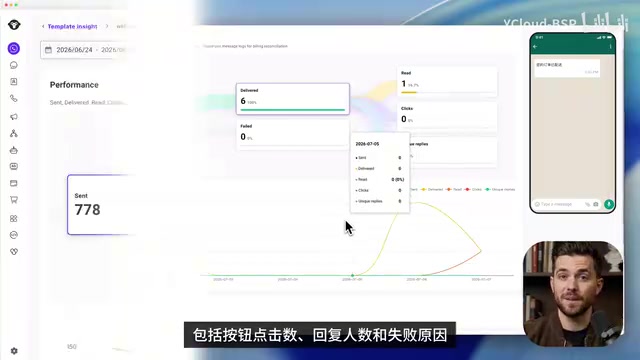
As a detail, the old analytics remain available as a compatibility option. Accounts that have not yet enabled the official analytics can authorize and enable it themselves in the YCloud console. This smooth-transition design balances data consistency with the migration cost for existing users.
Shopify Automation: Order Field Expansion and Full-Chain Attribution
For e-commerce scenarios, Shopify and Journey (journey automation) also received updates. When sending WhatsApp template messages, more Shopify order fields are now supported, including Order Name and Tracking URL.
Shopify is one of the world's most mainstream independent-site building platforms, with an extremely high market share in cross-border e-commerce. Its open API ecosystem allows third-party platforms to read data such as order status, logistics information, and customer behavior in real time. Connecting the Shopify order system with the WhatsApp messaging channel enables automated outreach across the entire lifecycle, including order confirmation, payment reminders, shipping notifications, logistics tracking, and abandoned-cart recovery. Journey falls under the category of marketing automation, using visual workflow orchestration tools (often called "canvas-style orchestration" or "Workflow Builder") that let operations staff build multi-step message sequences triggered by user behavior without coding—for example, when Shopify detects that an order status has changed from "shipped" to "in transit," it automatically triggers a WhatsApp message with a real-time logistics tracking link. This kind of event-driven automation architecture is the mainstream design paradigm for current SaaS marketing tools.
This means merchants can embed more accurate order information and logistics links into automated notifications such as order confirmations, shipping updates, and after-sales follow-ups, making the notification content more complete and improving the customer experience. For cross-border e-commerce, the automated pushing of logistics tracking links can significantly reduce high-frequency inquiries like "Where is my package?"—research shows that such queries often account for 30%-50% of cross-border e-commerce customer service tickets, and automated pushing can free up substantial customer service resources.
ChatLink: Enabling WhatsApp Traffic Source Tracking
ChatLink has added a traffic source tracking capability that can record the complete path of users entering WhatsApp conversations from different entry points, including source webpage information, as well as the full journey from clicking the link to entering WhatsApp to triggering a conversation.
This capability directly solves the long-standing "black box" attribution problem in WhatsApp marketing. Traditional web-side attribution relies on UTM parameters and cookie tracking, but as a standalone app, once users jump from ads or external links into WhatsApp's closed conversation environment, the original attribution chain breaks—this is a technical challenge common to all instant-messaging marketing platforms. UTM (Urchin Tracking Module) parameters are an industry-standard method of appending channel identifiers to URLs, first popularized by Google Analytics; but when users jump to a native app like WhatsApp, browser cookies and UTM parameters cannot be passed along, causing an attribution break. ChatLink embeds channel identifiers into the redirect link and writes the source information into the contact profile when the conversation is initiated, achieving attribution continuity from "ad click" to "conversation start"—this follows the same line of thinking as Google Analytics' event tracking and Facebook Pixel's conversion attribution, but with dedicated adaptation for the WhatsApp instant messaging scenario, making ROI analysis of marketing budgets possible.

More importantly, source information can be synced to the contact and conversation level, helping businesses gain in-depth analysis of traffic sources and conversion performance. In today's increasingly refined ad delivery landscape, this full-chain attribution from "click entry" to "final conversation" allows marketing budgets to be allocated with a more solid basis.
Conclusion: A Smarter, More Continuous, More Complete Product Iteration
Overall, while this YCloud update introduces no disruptive new concepts, it wins on being solid and systematic:
- Smarter AI: Structured messages + AI self-optimizing recommendations, with continuously improving coverage;
- More continuous service: Cross-channel context coordination between Inbox and Calling;
- More complete data: Integration with Meta's official Analytics API for more precise template analytics;
- More practical automation: Shopify field expansion and ChatLink full-chain traffic attribution.
These improvements all point in the same direction—reducing the complexity of operating WhatsApp private domains and customer service for enterprises, and truly integrating AI into the complete chain of sales, service, and marketing. For enterprises relying on WhatsApp to conduct cross-border business, the continuous refinement of these platform-level capabilities is pushing "conversational commerce" toward a more mature stage.
Related articles
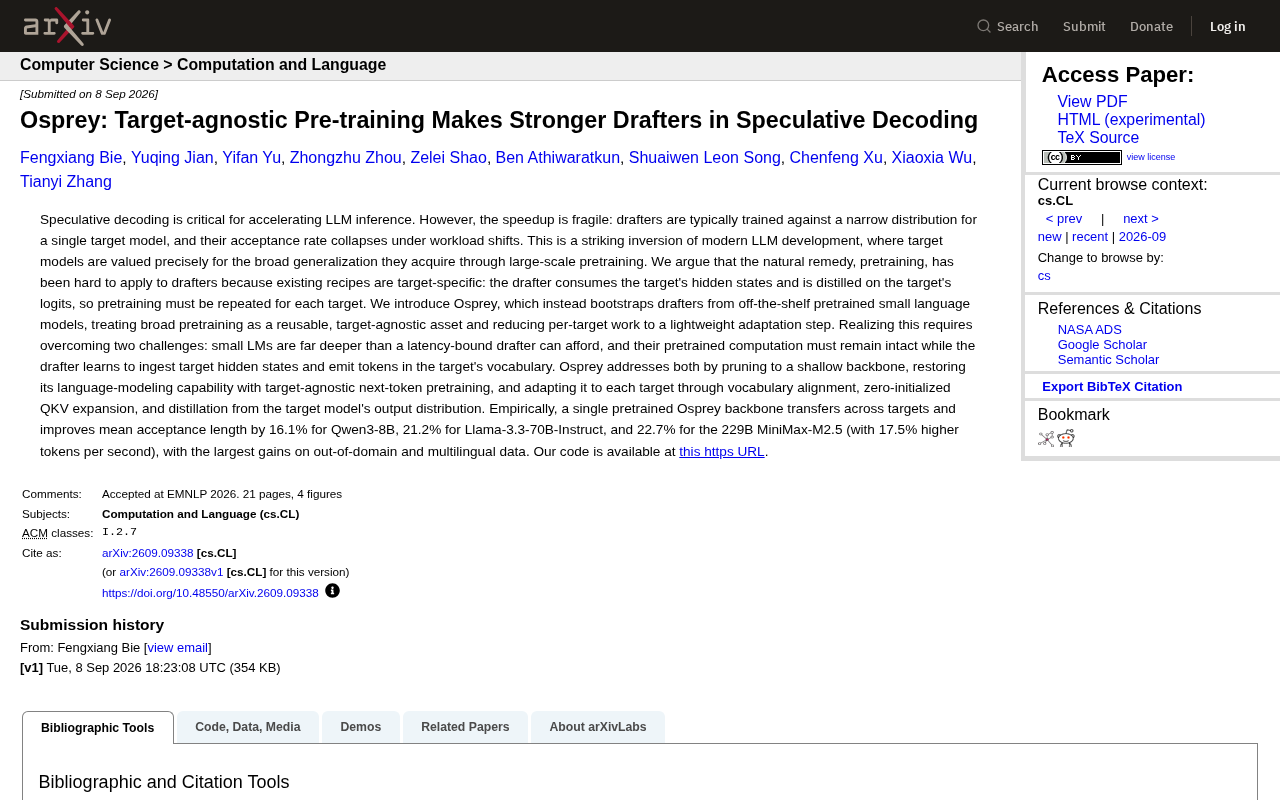
Osprey: General-Purpose Pretraining Makes Speculative Decoding Draft Models More Efficient
Osprey treats pretraining as a reusable, target-agnostic asset. Through pruning and lightweight adaptation, a single draft model transfers across multiple LLMs, boosting mean acceptance length by 16%-22%.
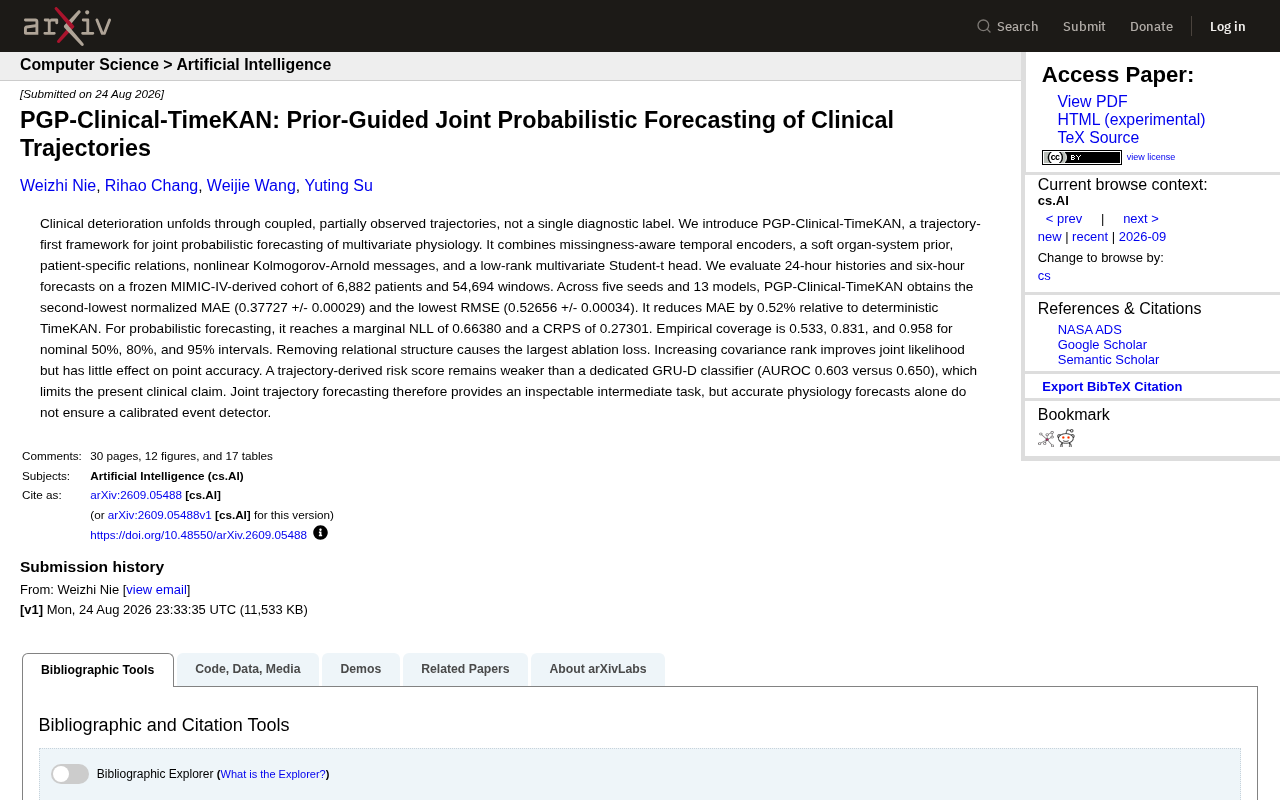
PGP-Clinical-TimeKAN: A Detailed Guide to the Multivariate Physiological Indicator Joint Prediction Framework
An in-depth analysis of the PGP-Clinical-TimeKAN framework for joint probabilistic prediction of multivariate physiological indicators, covering trajectory-first paradigm, KAN message passing, MIMIC-IV validation, and ablation studies.
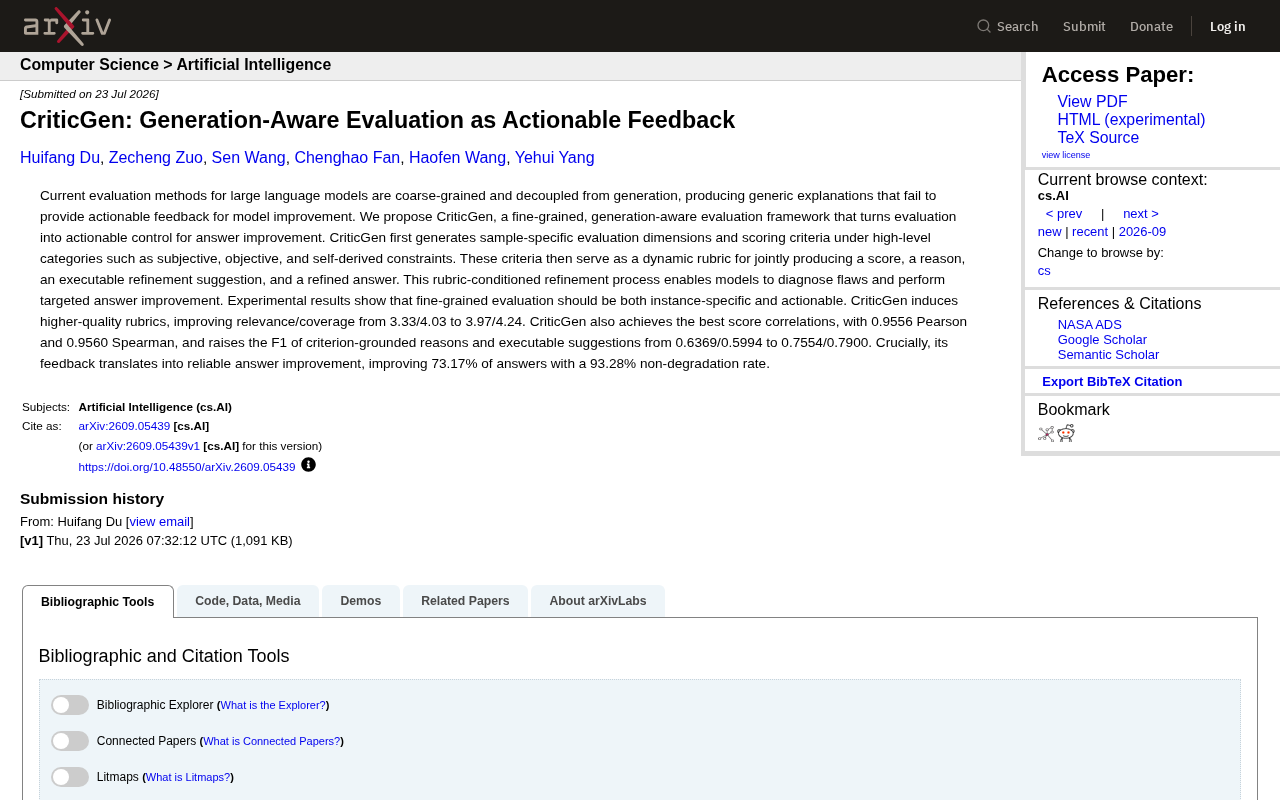
CriticGen: A New Framework That Transforms AI Evaluation into Actionable Improvement Feedback
CriticGen proposes a generation-aware evaluation framework that transforms AI assessment from passive scoring to an active optimization loop, achieving 73.17% answer improvement and 93.28% non-degradation rate.